
How a Real Estate Advertisement Became the Hollywood Sign
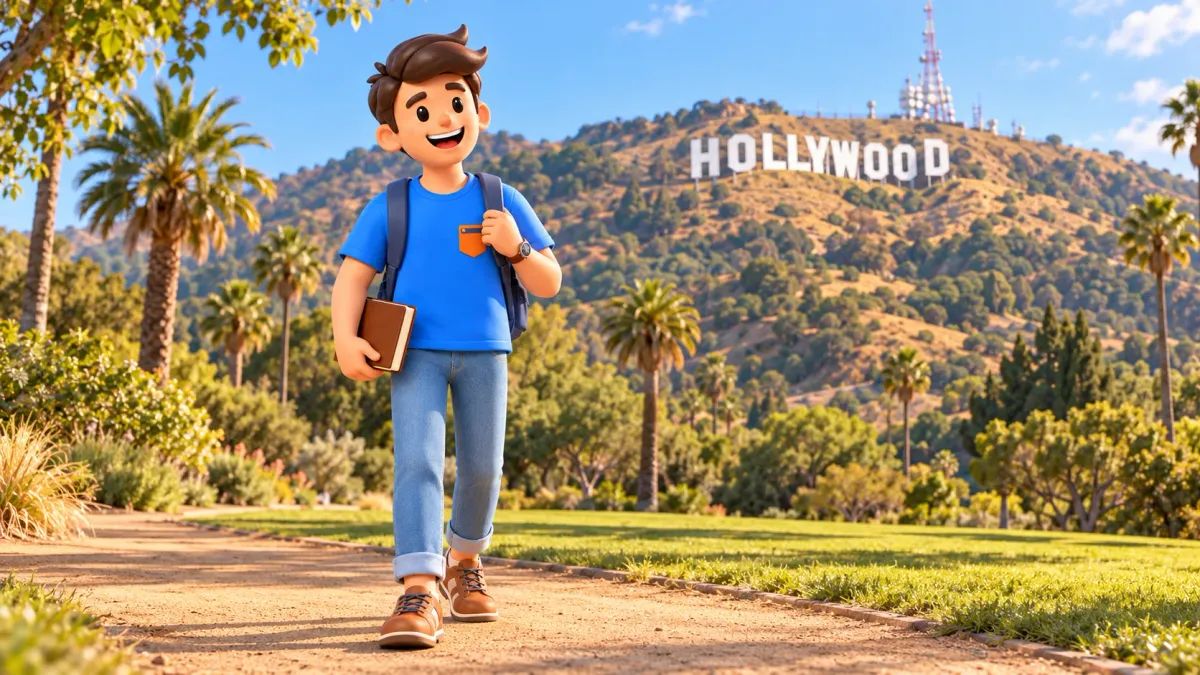
The Hollywood Sign began in 1923 as advertising for a housing development called Hollywoodland. It originally had thirteen letters; the familiar nine-letter name came later, when LAND was removed. A symbol now associated with cinema and the city's dreams started with an offer of real estate. Knowing that change makes a short stop with a view more interesting than a familiar photograph alone.
Its story reveals several versions of Los Angeles: a city being built, a growing cultural centre and a place learning to preserve its own image. You do not need to approach the letters or undertake a major hike to appreciate it. A little knowledge of the wording and time to see its place in a real landscape can be enough.
First, it named a housing development
Hollywoodland was a residential development in the Hollywood Hills. The enormous hillside wording promoted the area and its property offering. Los Angeles Times publisher and investor Harry Chandler was part of that advertising story. The white letters worked as a highly visible announcement for a particular project, rather than an entrance to a film studio or a monument to a completed cinematic era.
Let RoadMe develop a complete personal trip plan around your interests, dates, budget and pace. The app makes it much easier to connect city stories with suitable walks, main visits, meals and rest than to assemble a whole journey from individual famous symbols.
The distinction between Hollywood and Hollywoodland matters. Developers used a name connecting the project with its location; the sign did not invent the word Hollywood or establish the film industry. Mentally restore its last four letters when you look at it today. For a moment, the familiar image becomes a specific advertising message again, designed to attract attention to land and future homes.
Housing and cinema developed within the same larger urban setting. UCLA Library places Hollywoodland's emergence alongside the growth of film production and the city's cultural identity. That relationship helps explain the sign's later life. Property advertising and film advertising remain different things, however. The original commission was not a tribute to actors, directors or one particular studio.
This gives a traveler a useful way to look at the city. Behind a striking object there may be a practical purpose: selling, identifying or attracting attention. Recognising that purpose need not remove romance. It can make a symbol feel more alive, revealing human decisions, a neighbourhood's economy and the scale of the hopes accompanying urban growth. The story begins with people making choices rather than with a monument destined for fame.
A temporary advertisement outlived its intended term
According to the Hollywood Sign Trust, the original sign was intended to last around eighteen months. Its life far exceeded that purpose. Bulbs illuminated the early letters, making them noticeable at night as well as during the day. That is a detail of the past, not a promise for today's visitor: the sign is not normally lit at night now.
The temporary intention makes the story particularly expressive. We often imagine a famous landmark as something designed from the beginning to last. Here the city's image developed differently: an advertising structure survived its initial task and gradually acquired another meaning. That is one way to read its history without crediting its creators with predicting worldwide recognition or a future tourist audience.
Survival was not an uninterrupted success story. Maintenance required resources, the structure deteriorated and attitudes towards it changed. In 1944 it became city property. Do not jump directly from the first bright advertisement to today's clean white wording. Between those images were periods when its future was uncertain and preserving it had not yet become an obvious or fully resourced decision.
Archive photographs help explain change. Compare the length of the wording, the condition of the letters and the surrounding landscape. An old image does not establish current hillside access or a walking route. Treat it as evidence from its own period. A brief comparison before traveling can reveal more than trying to reproduce a camera position without knowing when or why the photograph was made.
1949: four letters disappeared and the meaning broadened
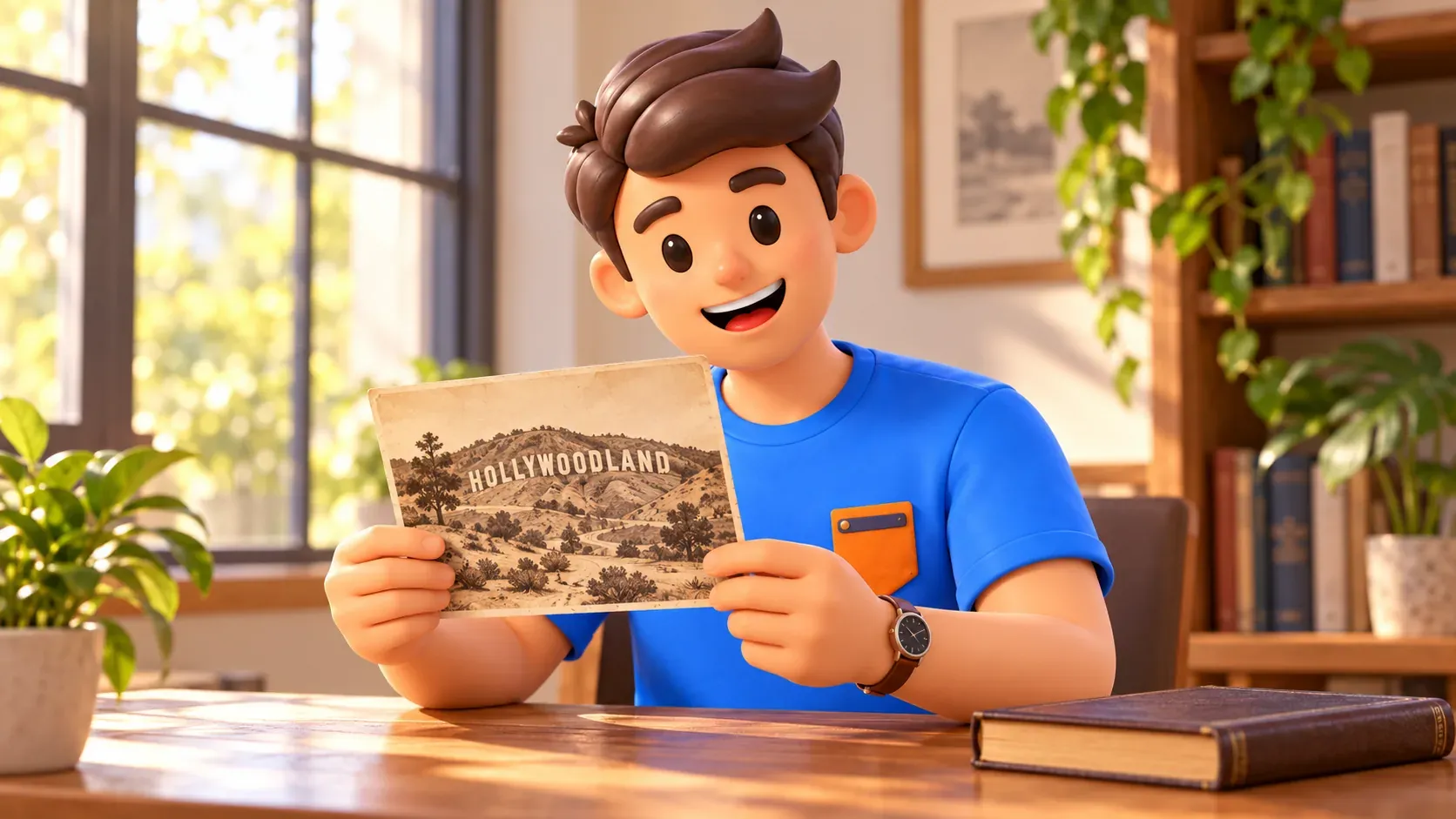
In 1949, the damaged sign was repaired and LAND removed, leaving HOLLYWOOD. It is useful to read this visible change as a turning point. Instead of naming one residential project, the wording could represent a much wider urban and cultural identity. That interpretation explains the significance of the alteration while remaining distinct from the straightforward historical fact of repair and shortening.
Removing four letters did not magically create the film industry: Hollywood already had a long connection with filmmaking. The important shift is that an advertising name lost its original ending. Today, viewers see nine letters and usually connect them immediately with cinema. Knowing the earlier version makes clear that this apparently automatic reading developed through history rather than being the sign's first assigned purpose.
Try a small thought experiment: imagine Hollywoodland across the same hill again. The sign looks almost familiar but sounds different. It once more suggests a neighbourhood, an offering and a promised way of life. That contrast is enough for a conversation during a walk. It also explains why the place can interest someone who has little desire to list stars or recall individual films.
You need not memorise a full chronology. Two reference points are useful: 1923 for Hollywoodland advertising and 1949 for the repaired, shortened Hollywood wording. Together they show a movement from commercial message towards civic symbol. Later dates explain preservation, without turning a short encounter with the landscape into a memory test. Understanding the change matters more than collecting numbers.
Preserving the symbol required another decision
In 1973, the sign received Los Angeles historic-cultural landmark status. Recognition expressed its value, but could not repair the letters by itself. The Trust describes a badly deteriorated structure and a complete rebuilding in 1978. Fundraising and donors mark a further stage: the object was being preserved for public meaning rather than to sell the original residential development.
Today's sign should not be described as the entirely surviving physical construction of 1923. The old sign was replaced in 1978 with a more durable structure. That does not remove the site's historical value. The image and hillside wording continued, while the material object changed. This is more useful for a visit than the romantic assumption that you are looking at exactly the same letters used in the first advertising season.
It also raises a thoughtful question about urban heritage: what is being preserved—material, form, place or meaning? With Hollywood, attention naturally turns to the combination of the last three. This is a way of reading its story rather than a universal definition of restoration. It helps explain why a rebuilt structure can still feel like a familiar historic symbol instead of an entirely new attraction.
Preservation continues through maintenance and care. The white wording seems simple at a distance, but fame alone does not keep it standing. Behind its recognisability is a physical object on an exposed slope. Remembering that changes how you read its tidy present appearance: it is the outcome of work, rather than evidence that the sign never aged or needed assistance.

Why the history changes a short stop
Without context, the experience can be only confirmation: there are the familiar letters. With context comes another observation: civic symbols sometimes grow out of temporary commercial decisions. Look at the sign and the scale of the setting together—the slope, vegetation, distance and surrounding traces of the city. The photograph can then recall a place rather than repeat an image you already knew.
A walk need not become a search for the largest possible letters in the frame. A distant view can also reveal how the original advertisement used the hill as part of its message. Seeing the relationship between wording and land helps explain its purpose. That observation needs neither an approach to the structure, an exact archive camera position nor access to restricted ground.
For a family, the story can start with a short question: what was this sign selling before it became famous? A housing development and the missing LAND provide enough of an answer. Someone interested in cities may prefer the transformation of advertising into heritage. A film lover may notice the difference between a real location and a word used for a world of screen stories.
There is room for those different interests at the same stop. One person may enjoy looking at the outline, another talking about the previous name and another simply taking a photograph. The visit does not become more authentic because everyone responds in the same way. A little shared context gives each person something to notice without requiring the group to follow a lecture.
Give the story a suitable place in your trip
Lake Hollywood Park can provide a relaxed context for a view if it fits your day and current conditions. It is a separate public space, not an entrance to the letters. Its name does not mean a walk along the lake itself. Choose the duration around interest and energy; detailed viewpoints and approaches require their own practical plan rather than being supplied by this history.
The sign stands on Mount Lee in Griffith Park, within a restricted area. Approaching or touching the letters is prohibited. A close-up photograph or a view from behind does not give permission to repeat any route you see. A permitted public view and compliance with current instructions are enough for a relaxed introduction. Consider present restrictions and your own pace rather than treating the symbol as a required athletic achievement.
One meaningful stop is better than adding the sign to the end of an overloaded day merely to tick it off. Decide whether you want to see it in the landscape, take several pictures or discuss its history. That makes it easier to choose a continuation and space for food. A small episode works when it connects with your interests rather than someone else's mandatory list.
In RoadMe, getting a fully developed personal itinerary or whole-trip plan around your interests and pace is much more convenient. Let the app bring historical stops, walks, main visits, meals and rest together, so familiar symbols become part of your own journey rather than a random collection of photographs.

The Hollywood Sign has a compact but revealing biography: advertising in 1923, shortened wording in 1949 and later preservation including replacement in 1978. Knowing it is enough to see the white letters differently. They tell a story of cinema, but also of a city building itself, selling a promise of the future and eventually recognising part of that promise as heritage.


