
Historic Westside: A Walk Through Community History
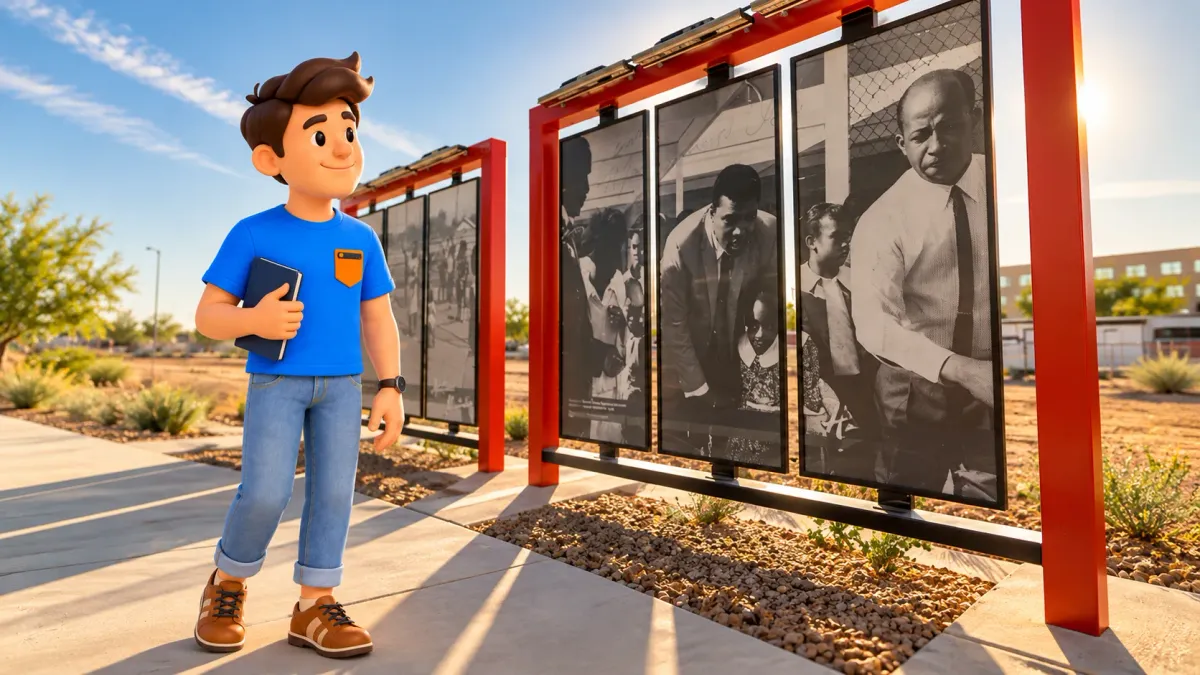
Historic Westside adds an essential perspective to a Las Vegas trip: the people who built community life while the city’s entertainment economy grew around them. A former school, a surviving guest house and an active church make that history easier to place in the streets.
This is a quiet, selective outing rather than a checklist of every historic address. Begin with the small cluster around Historic Westside School and Harrison House, then decide whether to continue to Historic Westside Legacy Park by a separate transfer. The park is not the next stop around the corner.
Choose the shape of your visit
For a first visit, allow roughly 60–90 minutes for the school’s exterior, Harrison House from the public sidewalk and a short look at Second Baptist Church from an appropriate public position. This is an editorial planning allowance, not a timed walking test. Heat, crossings and your interest in the history can change the pace.
RoadMe makes it easier to turn an interest in local history into a personal trip plan, shaped around your available time and preferred pace. Let the app organize the wider outing so you can focus on the stories that matter to you.
A confirmed interior visit changes the plan. Harrison House advertises a one-hour tour with advance booking; add that time instead of squeezing it into the short exterior walk. The design center at the former school also requires an appointment. Neither place should be treated as an always-open museum simply because its building appears on a map.
Keep Legacy Park as an optional second chapter. It lies farther northwest, away from the compact school and guest-house area. A transfer is a sensible way to connect the two, especially in warm weather or when walking distances need to stay modest. Check the actual journey and pick-up arrangements for your date rather than assuming a quick continuous promenade.
Start at Historic Westside School
Historic Westside School stands at 330 West Washington Avenue. The school opened in 1923, and its story reaches beyond architecture: education provides a way to understand the changing neighborhood and the families who lived here. Begin by looking at the building from permitted public areas before deciding whether you need a more detailed visit.
The site now has community uses, including a design center concerned with the Westside’s past, present and future. That is a useful distinction. You are approaching a working community place, not a classroom preserved for visitors to wander through at any hour.
If the design center is central to your interests, arrange a visit through the city before coming. Without an appointment, keep the stop exterior-focused. Do not let an unconfirmed interior become the hinge of the entire morning: the neighborhood’s wider story still makes sense through the other selected stops.
A good question here is what a school represents within a community. Think about the everyday work of learning, meeting and planning a future. That perspective will make the later house and church stops feel connected, rather than like unrelated old buildings collected for photographs.
Harrison House: a small building with a large story
Harrison House, at 1001 F Street, is close enough to belong to the same small area as the school. Its domestic scale is part of its significance. A modest guest house can reveal something that a grand resort facade leaves out: where people could stay, who was welcomed and how local hospitality responded to exclusion.
Genevieve Harrison opened the guest house in 1942. During segregation, Black performers could appear on Las Vegas stages while being denied accommodation in the resorts where they performed. The surviving house helps visitors connect that contradiction with a real place rather than a distant paragraph of city history.
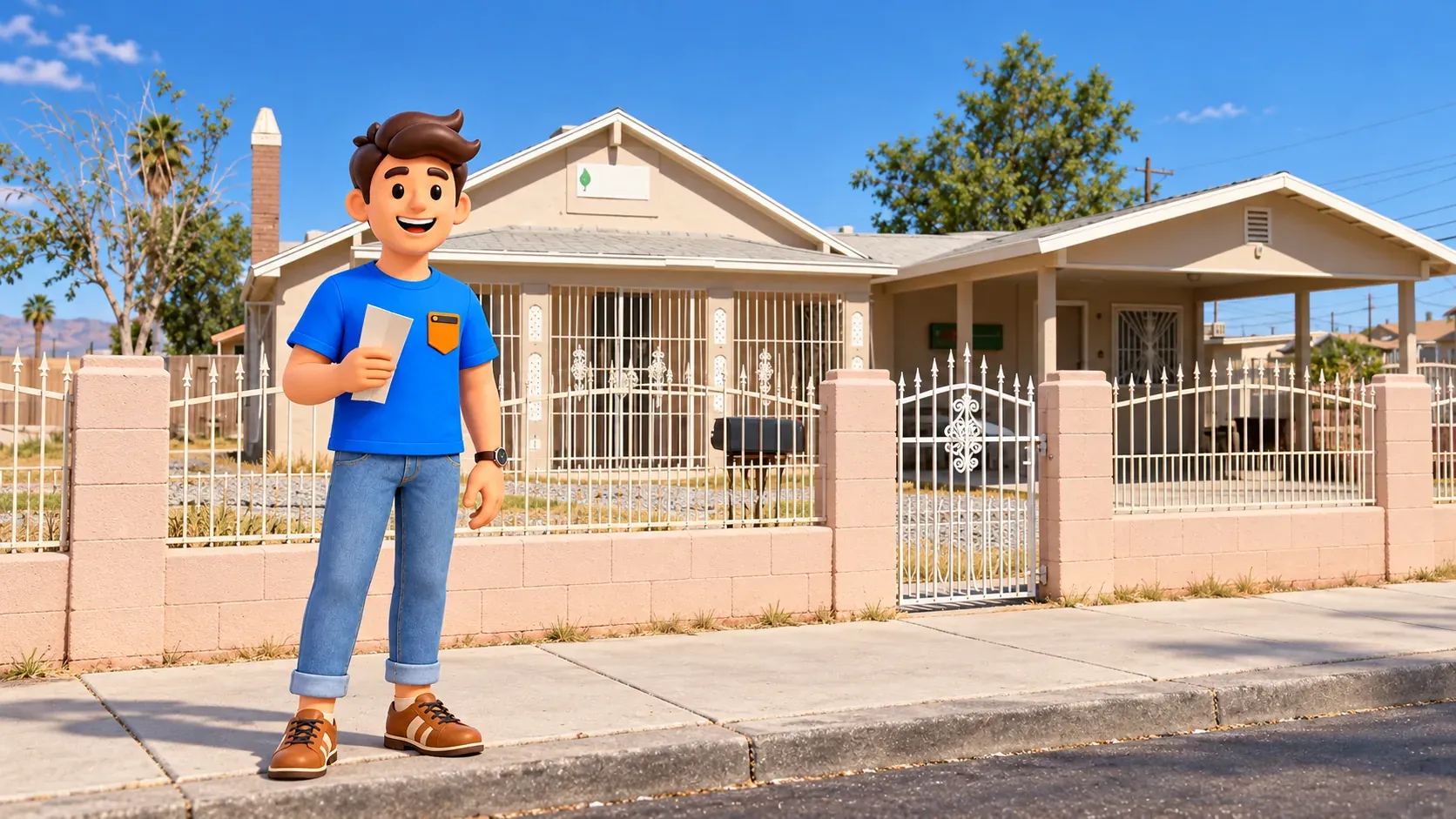
Look at the house from the public sidewalk unless you have a confirmed visit. A fence, gate or domestic-looking entrance does not invite an independent exploration. Keep access clear, avoid photographing people without permission and do not step into the property to improve a camera angle.
The operator offers a one-hour historic tour through its booking page. If you want that deeper encounter, confirm a session and current conditions in advance, including the total cost and any access needs. A booking calendar is more useful than a generic opening-hours label here; the short exterior route does not include automatic admission.
During a tour, leave room for the host’s account rather than arriving with a list of celebrity names to tick off. The essential theme is the practical work of providing lodging and dignity within an unequal city. Famous guests can open the conversation, but the people who sustained the place deserve equal attention.
Second Baptist Church: a living institution
Continue within the same general neighborhood toward Second Baptist Church at 500 Madison Avenue. Use current pedestrian directions and proper crossings; the sequence is a broad outline rather than a turn-by-turn instruction. The church remains a place of worship and community activity, so a respectful exterior stop is the default for this outing.
The congregation began in 1942 with nine people meeting in a home. Its own history describes a progression from domestic gatherings to a tent and later buildings. That development offers a clear example of a community creating the institutions it needed through collective effort.
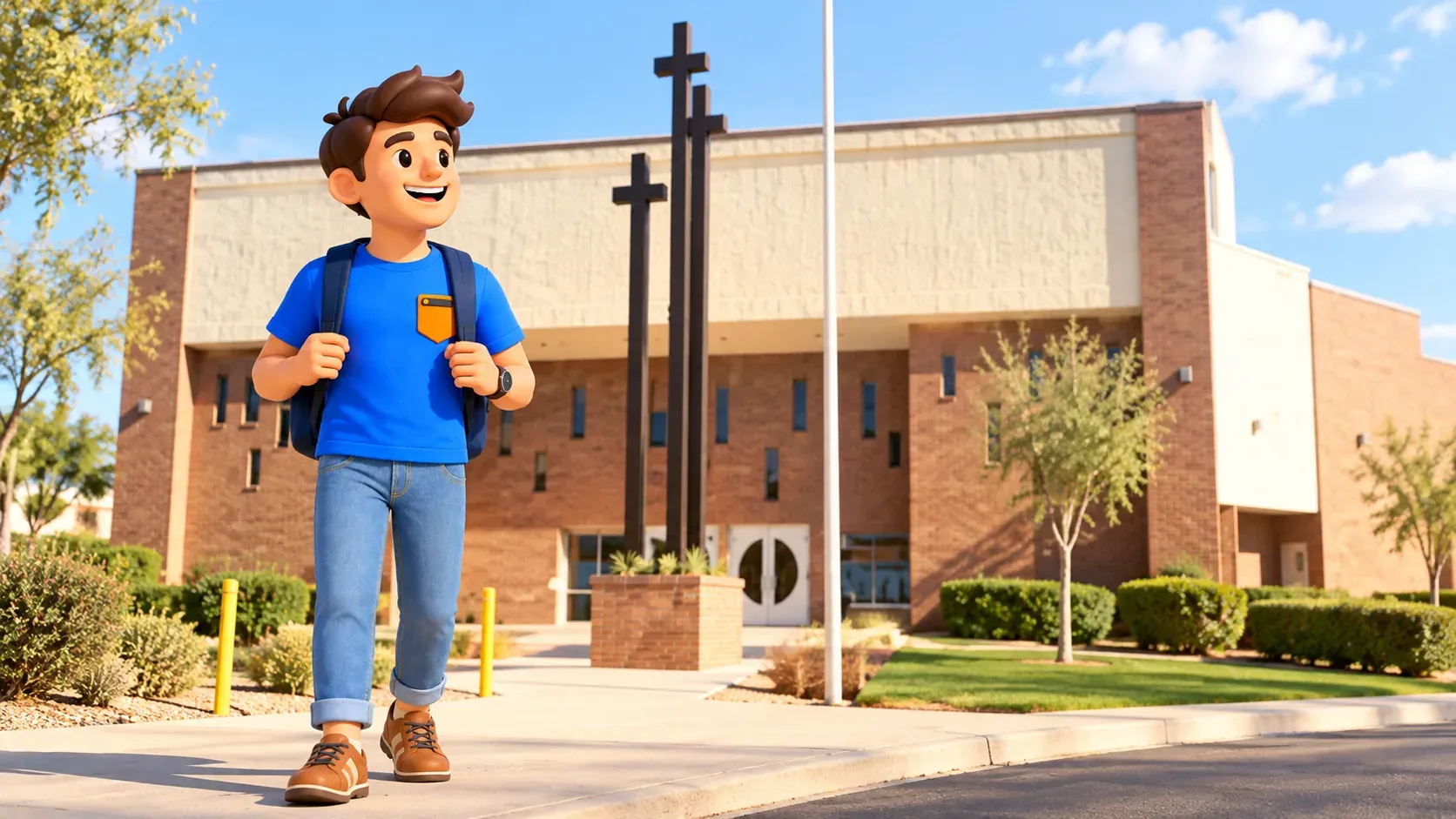
Do not confuse the congregation’s founding date with the age of every part of the building visible today. An institution can be historic while continuing to expand and change. Looking for that continuity is more rewarding than expecting the entire site to look exactly as it did at its beginning.
A service time is not a tourist visiting slot. If you wish to attend worship, approach it as a service and confirm the church’s current guidance. If your aim is a heritage walk, remain outside permitted areas, keep doorways clear and let congregation members go about their day without turning them into part of a sightseeing scene.
You can end the short route here. Take a moment to connect the three themes: education at the school, hospitality at the guest house and collective life at the church. That is already a coherent visit, even without an interior or another destination.
Optional continuation: Historic Westside Legacy Park
Historic Westside Legacy Park is a separate destination at 1600 Mount Moriah Drive, farther northwest. Plan the transfer explicitly and allow about 30–45 minutes in the park if you want a selective first look. That estimate excludes travel and any longer pause; it is not a promise that every panel can be read in that time.
The park opened in 2021 to honor people whose work shaped the community. Historic panels, public art and places to sit make it a setting for learning through individual lives. Its published hours are 7 a.m. to 7 p.m.; check for changes before visiting and arrive with enough daylight and time to read comfortably.
Choose a few stories rather than trying to absorb every name. Ask what kind of contribution each person made and how it connects with the places you have just seen. The park broadens the outing from a handful of buildings to the people behind the neighborhood’s institutions and future.
If the transfer would make your day feel rushed, save the park for another visit. Combining places is useful only when there is room to engage with them. The compact walk and the park can each work on their own; neither needs to become a forced race across the district.
Make room for comfort and attention
RoadMe can build a personalized route or trip around your interests, time and pace, making this kind of multi-part outing much more convenient to plan. Use the app to fit a history-focused visit naturally into the rest of your Las Vegas stay.
Choose a cooler part of the day when possible and take water. This is an outdoor neighborhood visit, so do not count on every stop providing shade, seating or a public restroom. Confirm any particular access requirements with a booked venue and leave enough time between a tour and your next commitment.

If you are traveling with children or companions who prefer shorter historical visits, agree on one question to explore at each stop. Where did people learn? Where could visitors stay? How did a community gather? Simple questions can make the outing more engaging without reducing its history to a game or a collection of dramatic anecdotes.
Photographs are optional; attention is the main activity. Use public viewpoints, keep gates and driveways clear and ask before taking images inside a booked visit. The illustrations accompanying this article convey the theme and setting; they are not navigation diagrams or evidence that a door will be open.
Leave with a more rounded understanding of Las Vegas rather than a claim to have covered all of Historic Westside. A carefully chosen walk, a confirmed tour when available and an unhurried park visit can offer more than a long list of addresses. The most valuable result is a clearer sense of how people made a community within the city visitors know today.


