
Historic Neon Outdoors: A Downtown Las Vegas Sign Walk
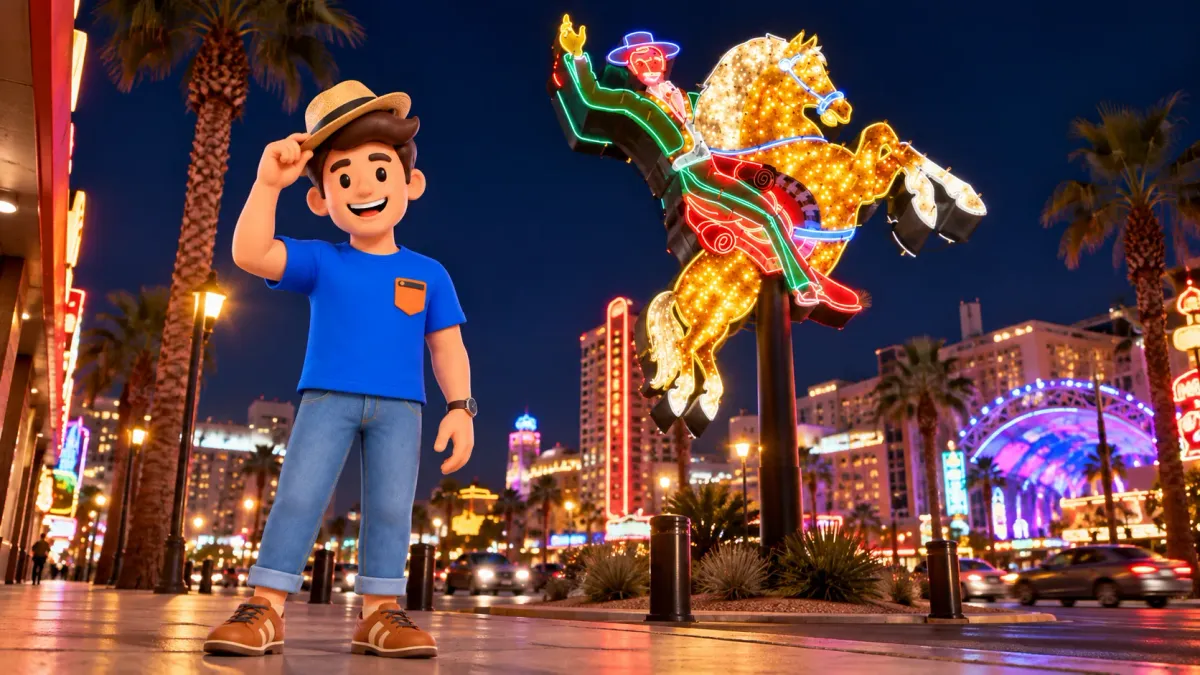
A cowboy on a golden horse, a curling script above a cleaner’s name, a shoe bright enough to become a landmark: old Las Vegas found memorable ways to address people passing along a road. Some of those signs now stand in the public streetscape, where an ordinary walk can become a small encounter with the city’s visual history.
This route follows one part of Las Vegas Boulevard north from the Hacienda Horse and Rider near Fremont Street towards the public installations around the Neon Museum. Allow roughly ninety minutes to two hours for a selective stroll, crossings and photographs. That is a planning allowance rather than a measured walking time, and it excludes any museum visit or journey from your hotel.
Give the walk one direction and a clear finish
RoadMe makes turning this idea into a day out much easier: the app develops a personal route around your interests, available time and preferred pace. Give design, history or evening atmosphere more space, with a trip plan that fits the way you actually travel.
Use the Hacienda figure as the southern anchor and the museum area as the northern finish. Between them, choose a few signs that catch your attention, including Normandie and Society Cleaners. The point is to follow a coherent stretch of street, rather than to zigzag after every historic name appearing on a map.
Plan the return before you start. A walk that ends comfortably is more enjoyable than one that leaves an unexpected extra journey at the end of the evening. You can reverse the direction if your transport and next activity suit that better, while keeping the same principle: a small group of stops, a sensible finish and room to pause.
These are urban sidewalks beside a working boulevard. Expect junctions, traffic and stretches between the objects. Use designated crossings and follow current street conditions; the signs do not create a continuous pedestrian garden. If a crossing or pavement is temporarily unavailable, shorten the walk instead of forcing an improvised shortcut.
Start with the Hacienda Horse and Rider
At Fremont Street and Las Vegas Boulevard, the Hacienda figure offers an immediately readable beginning. Its bright horse and rider turn advertising into a scene, using silhouette and gesture as much as lettering. Look first from a comfortable pedestrian position, then notice how the object holds its shape against the surrounding city.
The sign dates from 1967 and was made by YESCO. Its preservation became an early milestone for the Neon Museum in 1996. You do not need the complete history of the former resort to appreciate the central idea: a commercial object can outlive the business that commissioned it and acquire a new public role.
Try looking twice, once at the whole outline and once at the smaller arrangement of bulbs and colored lines. The first view explains why a passing traveler might remember it; the second reveals the work behind that immediate impression. Stay on the footpath rather than moving towards traffic for a perfectly centered photograph.
Make this a short opening pause. Fremont has enough activity to absorb an evening on its own, but this walk continues north. If you want the covered Fremont Street experience as well, give it its own time rather than quietly adding it to the promised two hours.
Let Normandie change the scale of your attention
Continue along the boulevard towards the restored motel signs. Normandie is useful because its narrow arrangement encourages the eye to travel upwards. Look at how a name, an outline and stacked letters make one recognizable object rather than a flat rectangle of information.
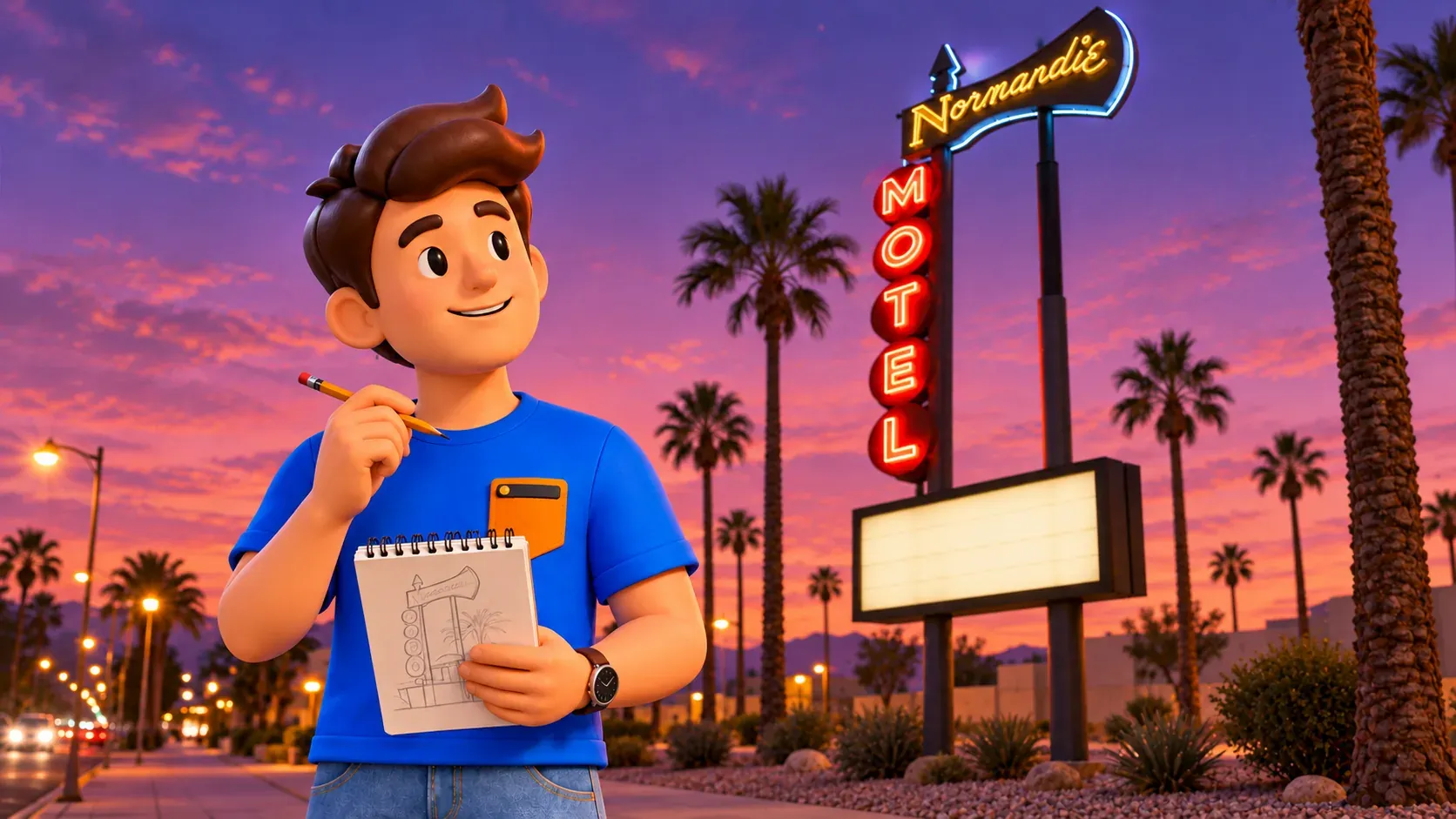
Here the pleasure is in noticing a design decision. Imagine having to identify a roadside business quickly, before you have read every word. Which part would you recognize first: the shape at the top, the contrasting colors or the vertical rhythm? Comparing your answers with a companion can make a brief stop surprisingly engaging.
A historic motel name does not mean that the original accommodation still operates beneath the restored sign. Likewise, an old address in an account of its history is not automatically the place to walk today. Follow the current public installation, keeping the distinction between an artifact’s first life and its present location clear.
For a photograph, start with the full silhouette. A closer detail can follow if it is easily visible from the same safe space. There is no need to capture every word or to reach a position that reproduces an old photograph exactly. Your own viewpoint can show what interested you without pretending to document the entire object.
Notice an everyday business at Society Cleaners
Society Cleaners brings another kind of city into the walk. A cleaning business needed to attract attention too, and the surviving design shows how visual confidence extended beyond resort entrances. Pause over the contrast between flowing script and strong block letters, then find the hat and cane above them.
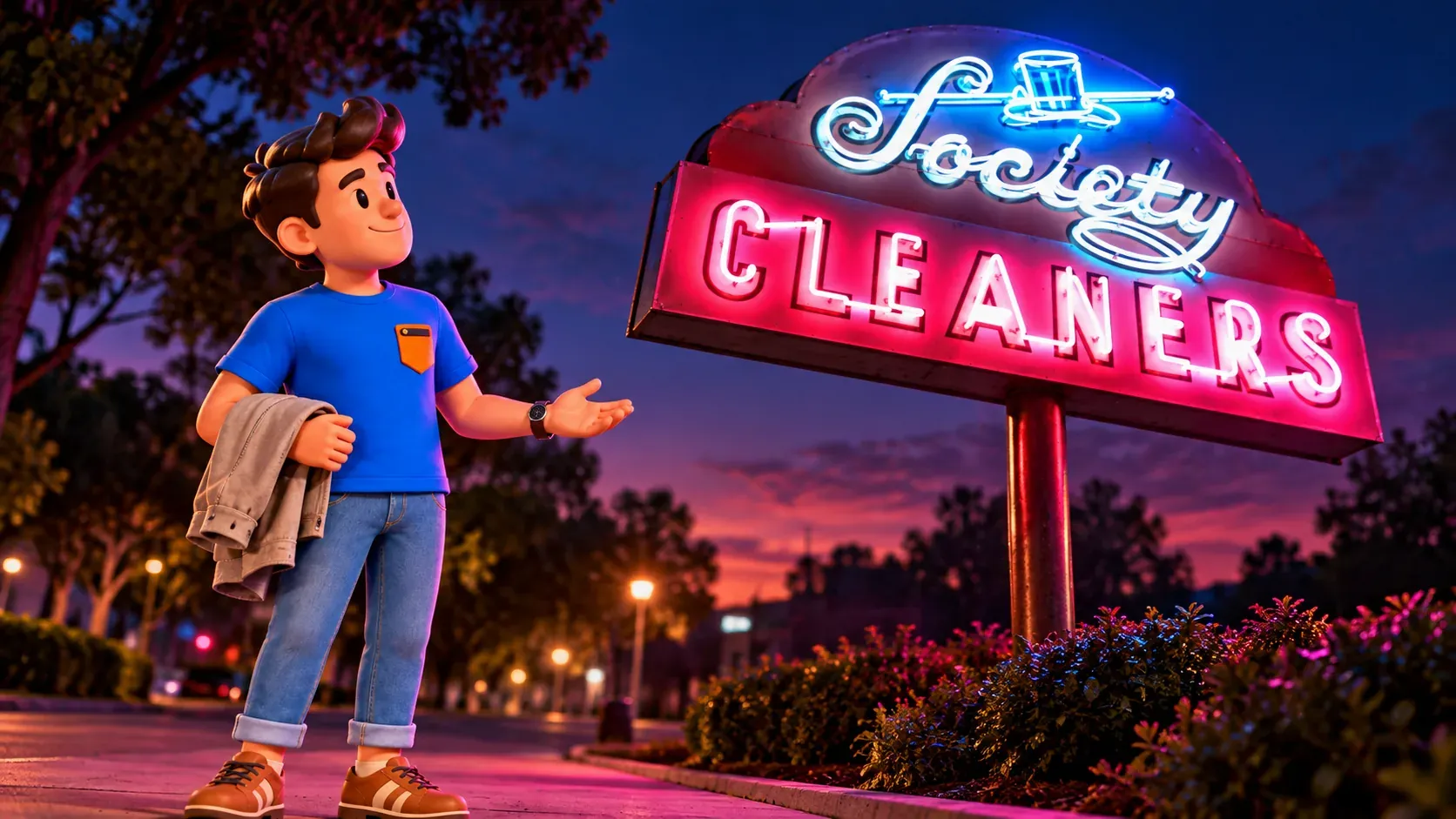
The business opened in 1946. The hat and cane refer to the founding family’s performing arts connections, giving a small service-business sign a personal layer. That brief piece of context is enough to change the way the image reads, without turning the stop into a full biography.
Compare it with Hacienda rather than ranking them by size. One works through an animated-looking figure, the other through lettering and a compact emblem. Both had to be memorable, but they solve that problem differently. The comparison is more useful than simply deciding which sign is the biggest or brightest.
This is also a good point to check your energy and the light. If you are tired, a few attentive stops already make a worthwhile walk. You do not have to reach a particular number of signs to justify the outing. A comfortable finish preserves the pleasure of the details you have already noticed.
Use Silver Slipper as an optional northern finale
Near the museum area and McWilliams Avenue, Silver Slipper provides a clear change from words to a familiar object. A high-heeled shoe becomes a large advertising silhouette, recognizable even before you connect it with the former business. Look at its outline first, then at the way the lights emphasize its form.
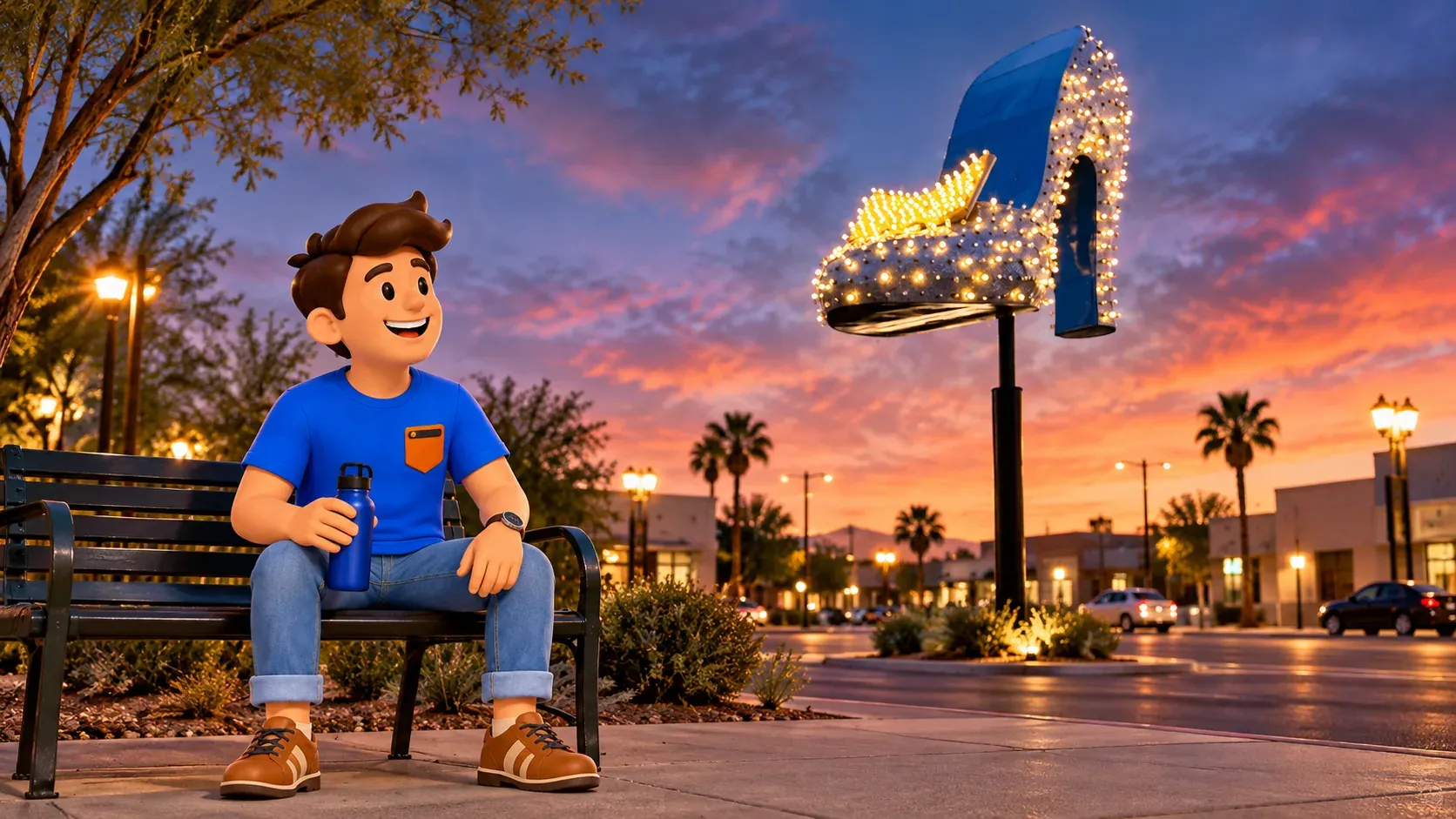
This public installation belongs to the street experience. Viewing it is separate from entering the museum’s paid Boneyard collection. That distinction lets you finish the stroll here without assuming that you must also buy a ticket or that the street signs represent everything the museum offers.
If you still feel curious, make a deliberate decision about a museum visit. Check the date, opening conditions and ticket availability before treating it as an immediate continuation. A booked visit needs its own time, and the outdoor collection may be affected by weather. A public walk is a useful introduction to the subject, with a different setting and depth from the museum.
Let the final stop be simple. Take a photograph if you want one, compare the shoe with the earlier rider and lettering, and decide which visual idea stayed with you. You have followed a theme through a part of the city rather than tried to collect every surviving sign.
Choose the light that suits the experience you want
Daylight helps you see the physical construction and surfaces; dusk adds a change of atmosphere as the sky and artificial light begin to balance. Full darkness can make illuminated lines more striking while hiding some of the object’s structure. None is the single correct choice for everyone.
Do not assume every tube or bulb will be operating on every visit. Maintenance and changing conditions can affect the display, and a photograph is not a promise of identical lighting. The design remains worth looking at when a small part is dark. If seeing a particular illuminated object is essential, check current information before committing the whole evening to it.
In hot weather, plan around comfort rather than simply copying a winter start time. Carry water, consider the temperature and leave space for a proper break elsewhere. Do not count on a continuous chain of shaded seats, toilets or open cafés between the signs. Choose those practical stops separately when preparing your day.
RoadMe can work the wider trip into a personalized plan, connecting your interest in old neon with the time you have for other experiences. It is a more convenient way to organize a whole visit around your priorities, with a pace that leaves room to enjoy the city.
Keep a small observation, rather than a long checklist
Before leaving, choose one thing to remember: an outline, a typeface or the way a simple object becomes theatrical at a larger scale. A short note about that detail can preserve the experience better than a camera roll filled with almost identical views.
If you travel with someone who is less interested in design, agree on a few shared stops and keep them brief. Ask which sign they would recognize from a distance or which would make them curious about the original business. A simple question invites attention without turning a holiday walk into a lesson.
End when the planned section is complete, then continue with your evening as intended. The value of this route is its manageable focus: a few preserved objects, enough history to make them meaningful and time to see how differently Las Vegas has expressed itself along the street.


