
Hachiko, Godzilla and Gundam: Tokyo’s Symbols
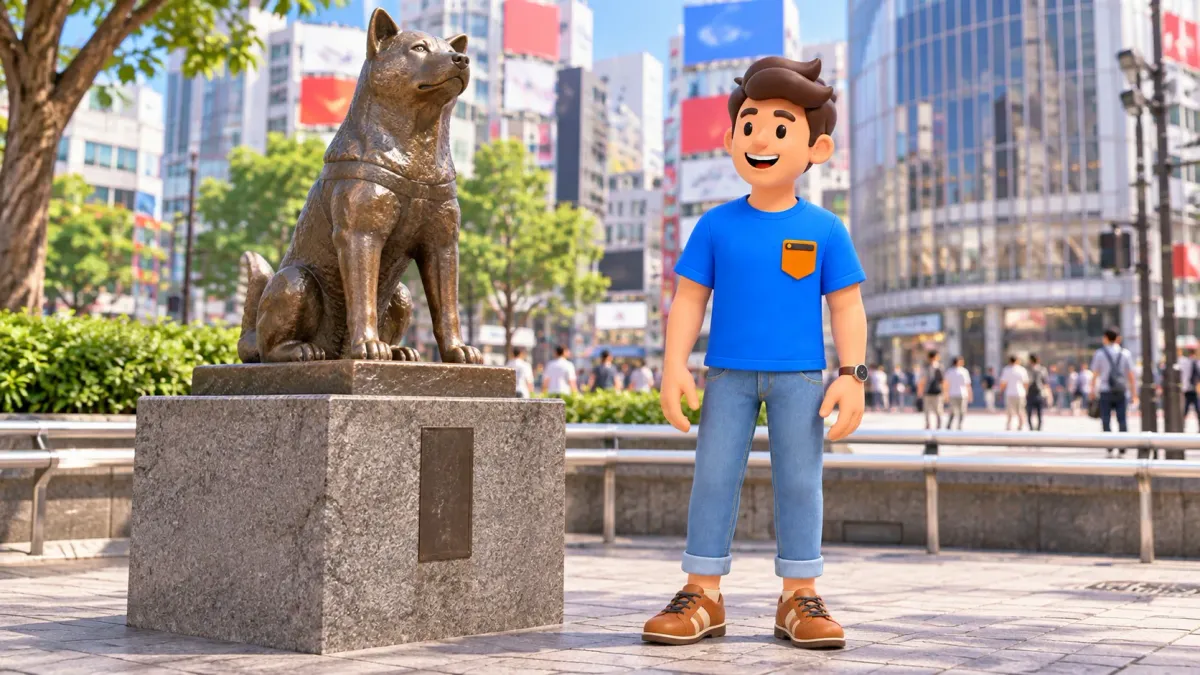
Hachiko, Godzilla and Gundam reveal three different ways Tokyo creates recognisable images. Hachiko connects the story of a real dog with the everyday habit of meeting outside a station. Godzilla came from cinema and gained several distinct urban forms. Gundam belongs to an animated universe and a large exhibition object whose availability depended on time. Fame connects them, but neither their origins nor their locations make them one short walking route.
A crucial current detail: the exhibition of the life-sized Unicorn Gundam statue in Odaiba ended on 31 August 2026. At the check date, 23 October 2026, you cannot plan to encounter it using an old photograph or former performance timetable. Gundam appears below as a chapter in the city's popular culture. Choose currently available objects for a visit and check their individual conditions separately.
Three images ask different questions
At Hachiko, ask how a small monument becomes a shared meeting place. With Godzilla, consider how a screen character changes the way a street and its buildings feel. The Gundam example shows that a famous urban image can be temporary. A recognisable photograph does not necessarily identify a permanent attraction that will remain available on every future trip.
Do not rank the three only by height. A small statue can retain a stronger everyday function than a much larger exhibition object. A head high above a street can work through its surrounding architecture even when you cannot approach it closely. The comparison becomes richer when you separate origin, physical form, everyday use and the actual conditions for seeing something today.
With RoadMe, you can build a personal programme around your interests and pace, giving city history, cinema or animation their own place in a day. Try choosing one suitable district so that a familiar character adds to a visit rather than dictating a chain of distant transfers.
Hachiko remembers a real dog
Hachiko's statue stands beside Shibuya Station. It commemorates an Akita dog who continued returning to the station to wait for his guardian after the man's death. His guardian, Professor Ueno, worked at the university. Public memory made the story an account of loyalty, while a modest figure beside a major transport hub became an easily recognised point for people arranging to meet.
The current statue is not the first bronze unveiled during Hachiko's lifetime. The first appeared in 1934 and was lost through wartime metal collection. The present version dates from 1948. These dates are useful less as a detailed biography than as a way to distinguish the real dog, the creation of a monument and the particular object you see today.
You do not need to repeat every detail from a popular film as documentary fact. Adaptations select their own settings, characters and emotional emphases. The essential historical core is sufficient for a short visit: a dog, a guardian, a station and repeated returns to a familiar place. Once you know it, the monument's small scale stops seeming inadequate beside the much brighter screens and buildings around it.
Watch the surrounding everyday life. Some people are searching for friends, some waiting for a photograph and others passing towards the station. That ordinary activity continues the symbol's role. Hachiko has not been removed from the city into an isolated museum room. The statue participates in meetings and waiting. A famous landmark does not always make finding a friend easy, however: agree on an exact position and a backup contact method.
The statue and the crossing are different places
Hachiko is close to Shibuya's celebrated scramble crossing, but it is not part of the moving pedestrian scene. Observe the statue from the accessible square first, then decide separately whether to cross. Do not stand in the road for a combined photograph or continue filming after the signal changes. A brief observation from the square already offers a complete story without needing a dramatic crossing shot.
Approaches and exits around a major station can change. Follow current Hachiko signs and an available route rather than an old claim of a few seconds from any platform. If crowds or a photo queue prevent a calm close look, observation from the side remains worthwhile. The monument's meaning does not depend on acquiring a portrait immediately beside it or reproducing the same pose as everybody else.
Hibiya Godzilla turns cinema into sculpture
Hibiya Godzilla Square contains a figure based on the appearance in Shin Godzilla, the 2016 film. This is a separate city object from the head on a building in Shinjuku. Hibiya's relationship with cinemas and TOHO places the character within a screen culture setting, rather than leaving it as an isolated large toy among arbitrary buildings. The surrounding city helps explain why it is there.
The square has its own sequence of versions. The earlier statue was moved into TOHO CINEMAS Hibiya when the new outdoor figure was installed in 2018. Do not describe today's street sculpture as unchanged since the earlier statue's arrival. One character can have different incarnations in different places. For visitors, establishing which particular version they are looking for makes the visit clearer and avoids confusing indoor and outdoor locations.
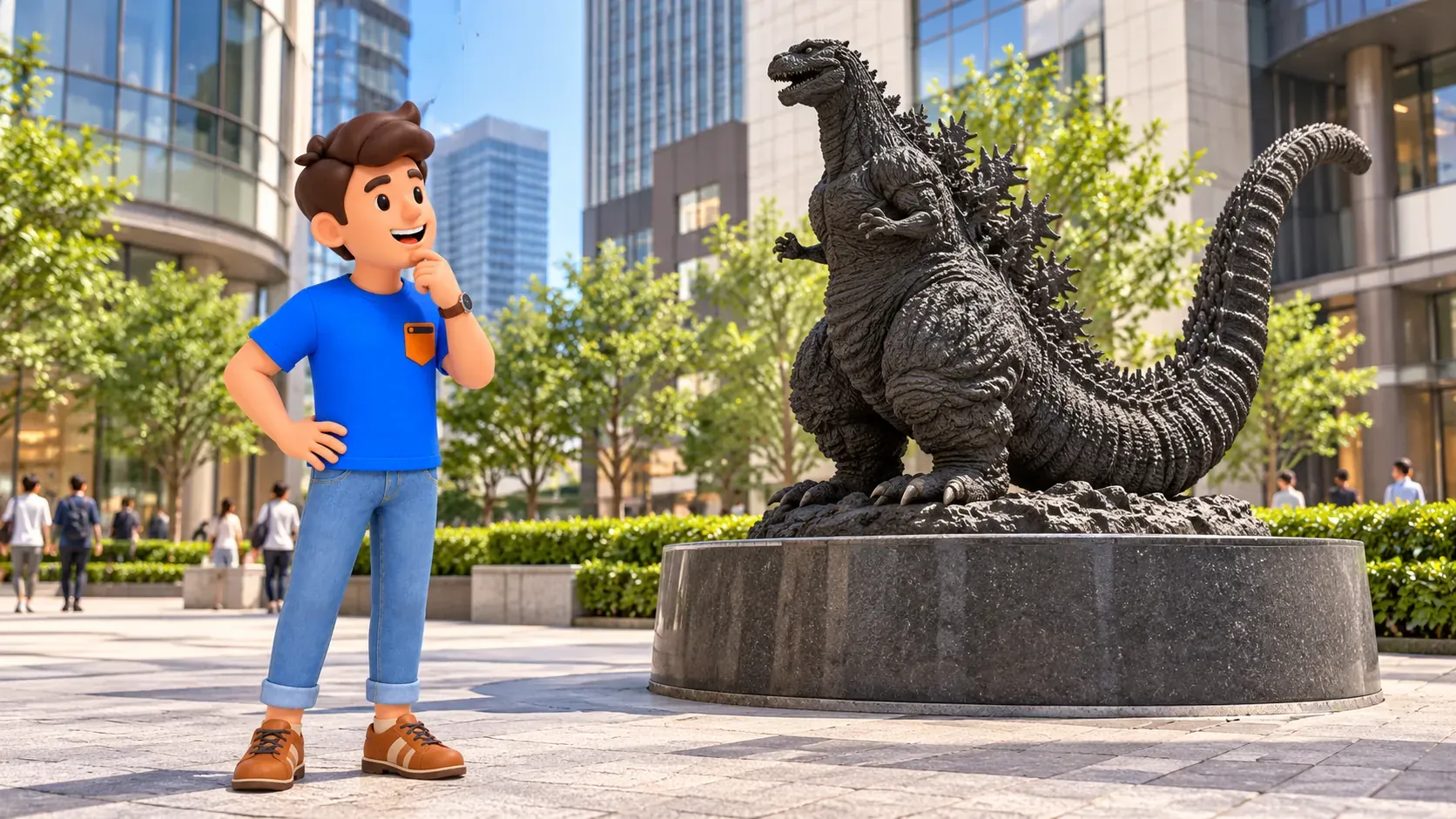
Try reading the outline before moving closer. Proportions and the position of the tail make the full figure work differently from a head above a facade. Then bring the buildings into your view. The contrast between a screen creature and an ordinary city setting is part of the experience. You do not need to enter traffic or make passers-by wait while you find a single supposedly perfect angle.
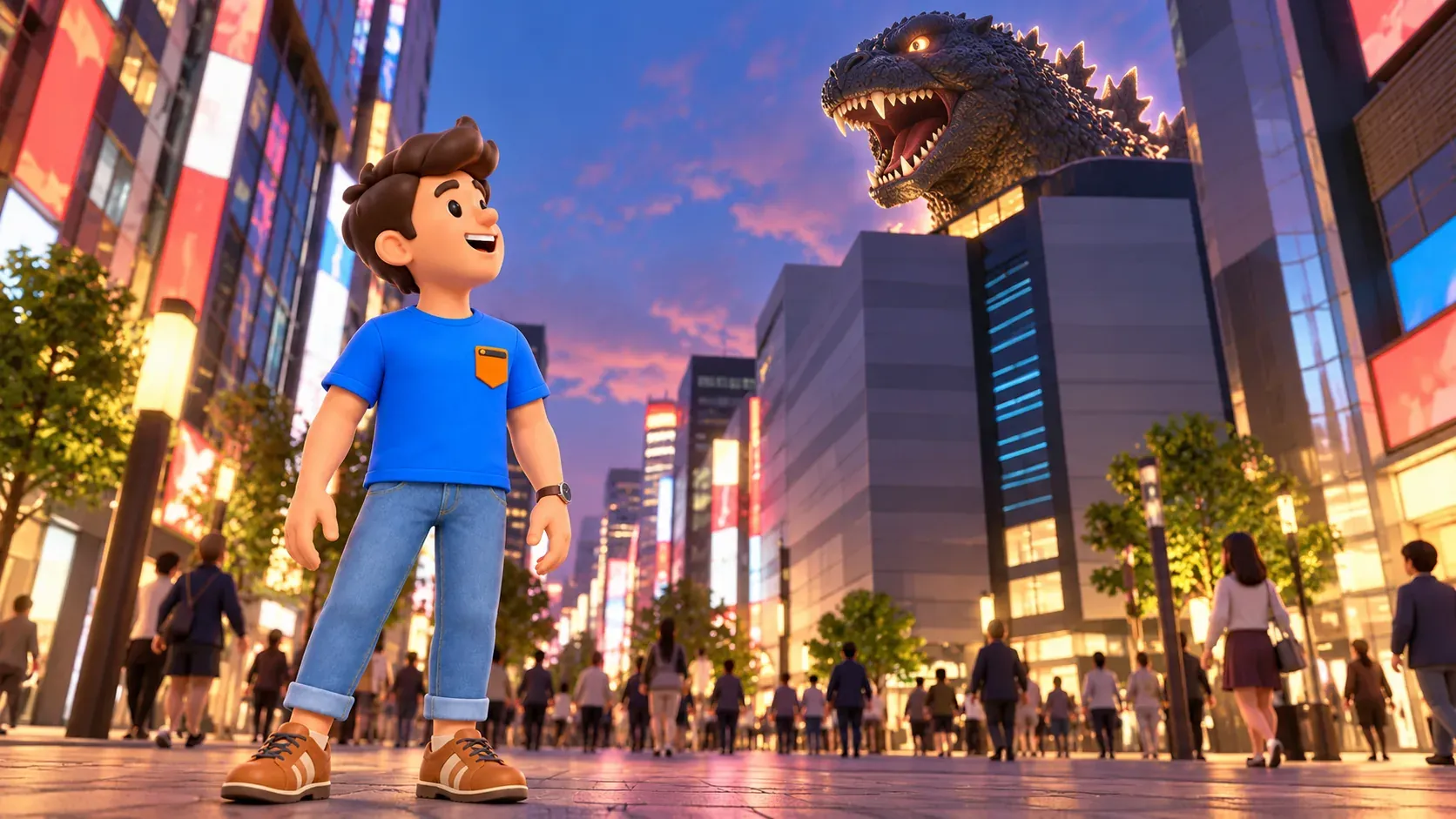
The Shinjuku head works through a view from below
In Kabukicho, Godzilla's head appears above Shinjuku Toho Building, associated with Hotel Gracery Shinjuku. The scale is different here: the character seems to emerge from architecture. For an ordinary city visit, choose a permitted public street viewpoint and look up while keeping the route clear. The actual view from a particular position depends on the surrounding space and any current restrictions.
The terrace beside the head is closed to entry, as confirmed by the hotel's official FAQ and TOHO's notice. Do not promise yourself access beside the object because an old café or hotel account suggests it. Entry to a hotel area, service or room does not mean permission to enter a closed terrace. This article's basic option is observation from public street space, without purchasing a service for an unconfirmed view.
Do not make a show, sound effect or lighting programme essential to a successful visit without checking the current notice. The static view already explains the architectural device. If a particular performance matters, consult the operator for your date. Avoid letting anticipation obscure practical questions: where you can stand comfortably, how you will finish the outing and how much energy remains for the evening.
Gundam: a famous photograph is not an eternal timetable
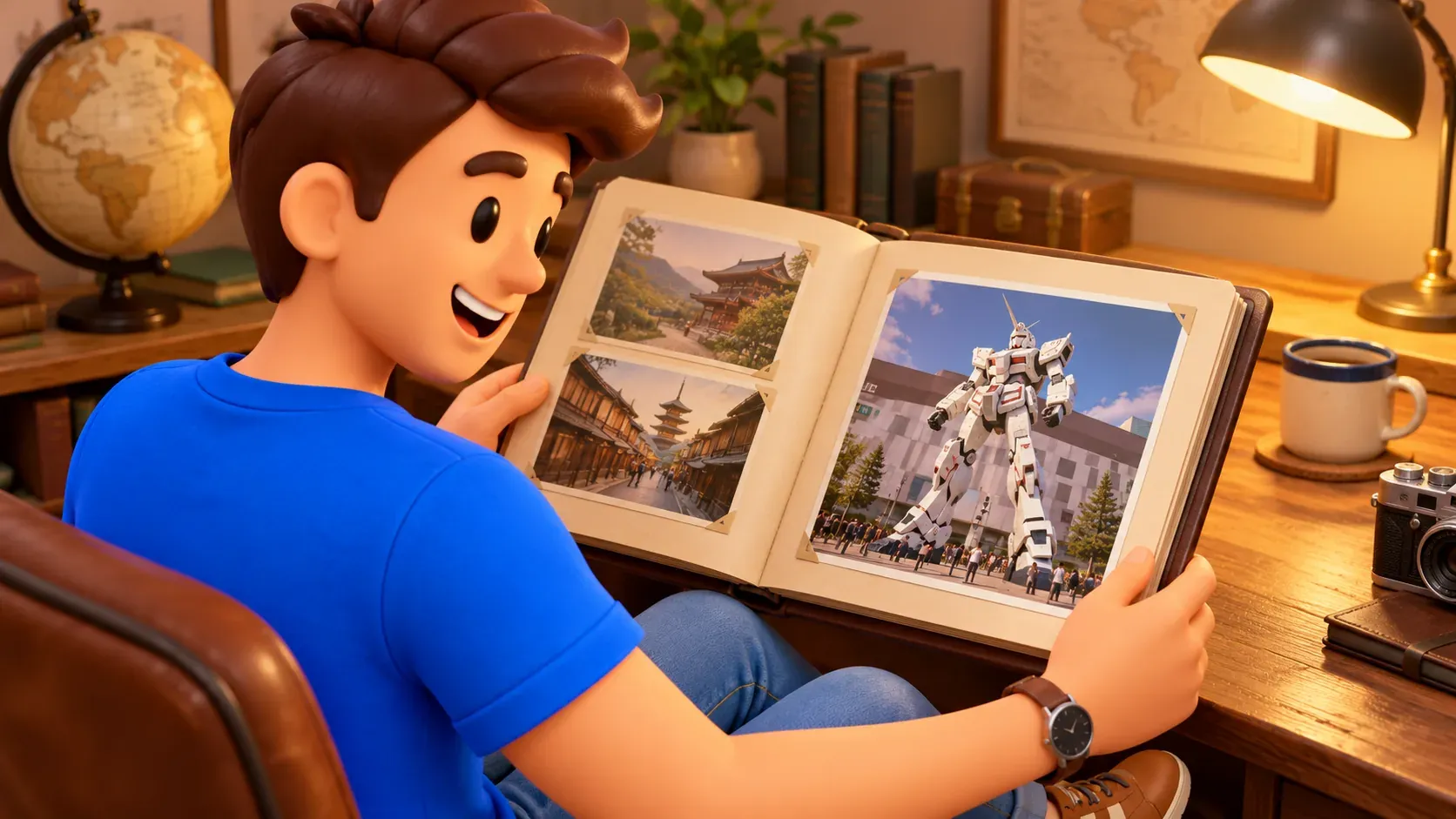
The life-sized Unicorn Gundam statue outside DiverCity Tokyo Plaza became a widely recognised image of Odaiba. It belongs to the Mobile Suit Gundam universe and the particular Unicorn design. Avoid calling every robot image a life-sized Gundam without further identification. Different versions and exhibitions have their own histories, scales and locations, which should not be transferred from one display to another.
The key present condition is that this statue's exhibition ended on 31 August 2026. Former transformation times, lighting shows and night projections belong to its past display. They cannot become a promise for tonight. This does not assert what happened to every component after the closure: the end of the exhibition itself is enough to invalidate an older visiting plan based on the statue being available.
Use RoadMe to create a personal plan based on your interests and pace while checking which selected places are available on your travel dates. Try keeping the animation or cinema theme while replacing an unavailable stop with a suitable current activity in a convenient district.
If you want to explore Gundam's continuing presence in the city, seek current official exhibitions and programmes rather than assuming a replacement at the same location. A shop, temporary event, model display and full-scale outdoor statue are different formats. One does not guarantee another. A franchise name helps define an interest, but an actual visit still needs a specific address and current access information.
Choose one story for a day
For a first introduction to Shibuya, Hachiko works as a short, meaningful episode within a district you have already chosen. If cinema interests you and you are in Hibiya, start with the sculpture and its film-related surroundings. In Shinjuku, the head adds to an understanding of the vertical city. These options do not have to compete for the same brief evening.
Shibuya, Hibiya, Shinjuku and Odaiba are in different parts of Tokyo. Do not describe them as all nearby or count only the minutes beside the objects. Station passageways, trains and finding the right exit consume part of the day too. Separating visits across days often improves the experience because each image retains a real neighbourhood around it, rather than becoming an interval between transfers.
A simple observation method works for all three: recall the image's origin, see how it is placed and notice how people use the space beside it. Hachiko connects memory with waiting; Godzilla connects screen imagination with architecture; Unicorn Gundam's exhibition history connects spectacular scale with a limited display period. These are three relationships between popular images and a city, rather than three compulsory ticks in a tourism programme.


