
Grunewald with a lakeside lodge: a relaxed half-day walk
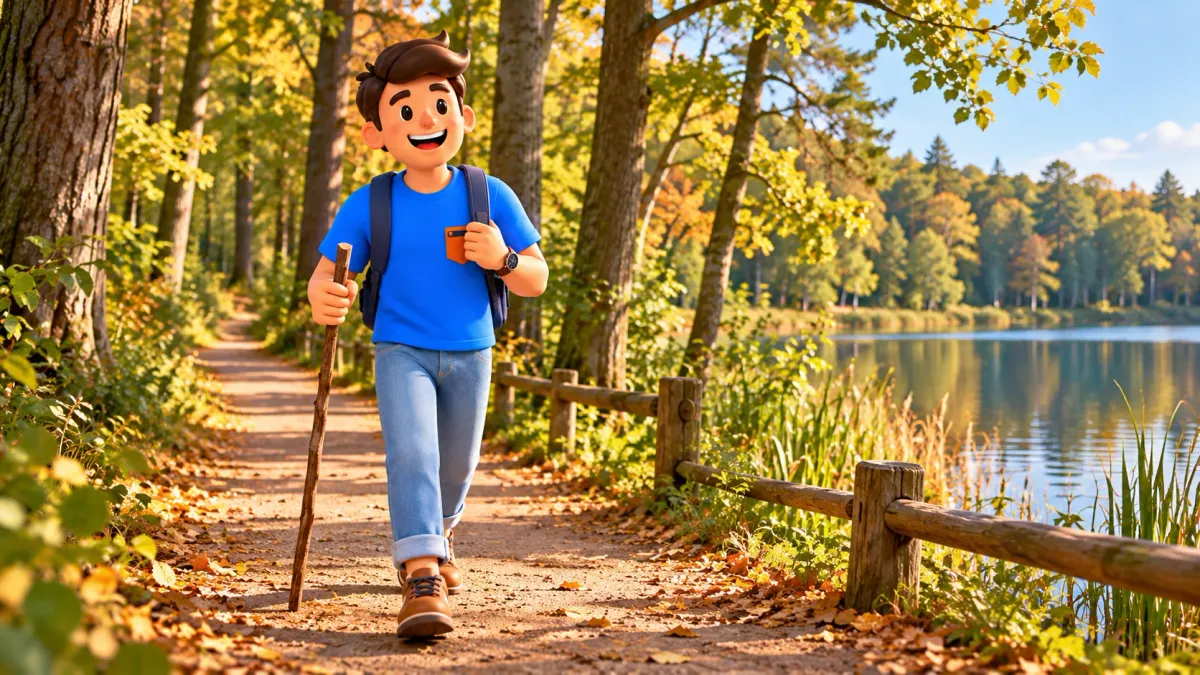
For a half day by Grunewaldsee, choose a simple outline: approach Grunewald Hunting Lodge, look from an accessible permitted exterior space, rest, then follow a short woodland path and return the same way. Four hours includes the walk from a local stop, but not the journey across Berlin. The museum is optional. That matters for the coming season: the palace exhibition closes for repairs from 2 November 2026, provisionally until April 2027. Build the outing around the available lake and forest, keeping the exhibition as a separate decision.
Grunewald names a large woodland area, but this plan concerns one lake and Jagdschloss Grunewald at Hüttenweg 100. Grunewald Tower, Teufelsberg and other lakes do not automatically belong to the same short walk. One connection is enough for a first visit: an old courtly building stands by the water while ordinary outdoor life continues nearby. Quiet describes your pace rather than a promise of solitude. Grunewaldsee is popular with dog walkers, and meeting people and animals is a normal part of the setting, rather than evidence that you chose the wrong place.
Four hours with an understandable return
RoadMe makes it easier and more efficient to work out a personalised plan for your whole trip around your interests, dates and preferred pace. Try arranging your Berlin days in the app so Grunewald's forest, possible art visit and proper rest fit naturally alongside your other experiences.
Start and finish at Königin-Luise-Str./Clayallee, the stop named by the palace operator. Beginning around 10, allow 35 minutes for the approach, 30 for the exterior, 40 for rest, 45 along a selected public woodland path near the lake's eastern side, 45 to retrace it, 35 back to the stop and 10 in reserve. That makes 240 minutes, finishing around 14. It is an editorial budget without a measured track. Add your journey from central Berlin and the actual waiting time for transport after the outing.
The operator describes the approach from the stop as approximately 1.2 kilometres. Our allocation leaves time for a calm walk, without promising the same speed for every group. Follow public access and current signs towards Jagdschloss Grunewald. The main woodland section is out and back, without a compulsory complete circuit of the lake. Turn earlier if tired or if the path is uncomfortable. Returning over familiar ground keeps the structure simple, rather than requiring an improvised exit or turning a short visit into an exploration of the entire forest.
Why the lodge matters even from outside
Construction began in 1542 for Elector Joachim II of Brandenburg. It is Berlin's oldest surviving palace building and an important example of its Renaissance architecture. The name referring to the green forest also connects with the later name Grunewald. Those facts are enough to frame an exterior visit: a present-day city woodland outing has a much earlier history of courtly excursions behind it. You do not need every subsequent alteration to notice the difference in scale from a great ceremonial palace and appreciate why the lakeside position matters.
Look at the house as part of a group with a courtyard and outbuildings, but only from open visitor or public areas. Works may change individual approaches, so access to the courtyard should not be assumed. If a passage is restricted, remain on the permitted path and choose an exterior view. A building does not become meaningless because fewer interiors are visible. Notice the relationship between walls, roof, trees and water, while describing the experience accurately: you encountered the place from outside rather than visiting a closed exhibition or every historic room.
Make the exhibition closure part of the decision
From 2 November 2026 the exhibition closes for repairs, provisionally until April 2027. General winter hours elsewhere on the website do not override this specific notice. Selected events and a ground-floor opening for the Christmas market do not amount to ordinary access to the whole collection. Check the actual status for your date. If painting is the main reason to travel, choose a confirmed date after reopening or a different art institution on another day. Our outdoor outline does not present walking as an identical substitute for seeing the collection.
The palace café continues with its own schedule, so exhibition closure does not mean every service stops. A table, preferred menu and access at any hour are nevertheless not guaranteed. Café opening days vary through the colder months, making permitted alternative seating or a pause suited to actual conditions useful. The historical Jagdzeugmagazin is also closed for renovation and should not be offered as an automatically available fallback museum. Each part of the complex has a separate status. Distinguishing them avoids arriving with a plan based on a general impression that the site is either wholly open or wholly closed.
When the museum can belong to a future visit
When genuinely accessible, the palace offers works by Lucas Cranach the Elder, the Younger and their workshop, alongside other German and Netherlandish paintings of the fifteenth and sixteenth centuries. That does not imply every painting was originally made for this hunting lodge. The collection opens questions about courtly culture and art, while the building adds another historical setting. Understanding that direction is enough to choose, without an inventory of every picture and room. Renaissance painting deserves its own attention here rather than a role as a brief shelter between outdoor paths.
During actual normal opening, admission is paid and visits are guided in German, with information in other languages separately available. Confirm the session and current access first. The upper-floor rulers' gallery is associated with special tours rather than every ordinary visit. For personal planning, add 60–90 minutes or replace woodland blocks once a visit is confirmed. This is an additional allowance, not an advertised tour length. Until reopening is confirmed, do not treat those minutes as an available option merely because the arrangement looks convenient in an older guide.
Rest before the woodland section
The break comes before the lakeside walk so that the approach does not leave you starting another section already tired. If the café is open and accessible, choose a drink or snack; otherwise use permitted seating and your own supplies as conditions allow. Do not promise yourself a full meal within a fixed number of minutes. If the pause grows, shorten outward and return walking equally. That keeps the day honest instead of allowing another coffee to displace the route back to transport. In cold weather, a shorter outdoor format may be more comfortable than a lengthy wait.
Before setting out, agree a turning time rather than a distant destination that must be reached at any cost. Forty-five minutes one way includes small stops, so actual distance depends on how much you observe. Walking less and noticing more does not weaken the route. For companions with different speeds, that agreement is particularly useful. If someone needs an earlier return, the familiar path allows a simple decision without arguing about the next attraction supposedly waiting around a bend. The main destination remains a manageable shared experience, rather than completion of an arbitrary target.
At Grunewaldsee, observe rather than race around the shore
The southern lake and wet shoreline areas have conservation value. Plants, amphibian breeding places and waterbirds matter here, so a visible gap towards the water is not necessarily a permitted approach. Stay on established visitor paths and respect barriers. Our short branch uses an available path near the eastern side and returns the same way. Higher western paths also offer views, but this article does not require closing a circle with them. If conditions change, shorten the walk rather than improvising across protected shore to preserve a diagram.
Choose a simple observation: how light changes between trees, where water becomes visible, or how open and enclosed sections differ. You do not need to identify every bird or plant when unsure. Saving a question for later is better than attaching a rare name to a chance sighting. The pleasure can come from scale and attention even when nothing unusual happens. The article provides an outline; the place leaves room for your response. A lake need not produce the same picture on every visit for an outing to be rewarding.
Dogs and ordinary outdoor life
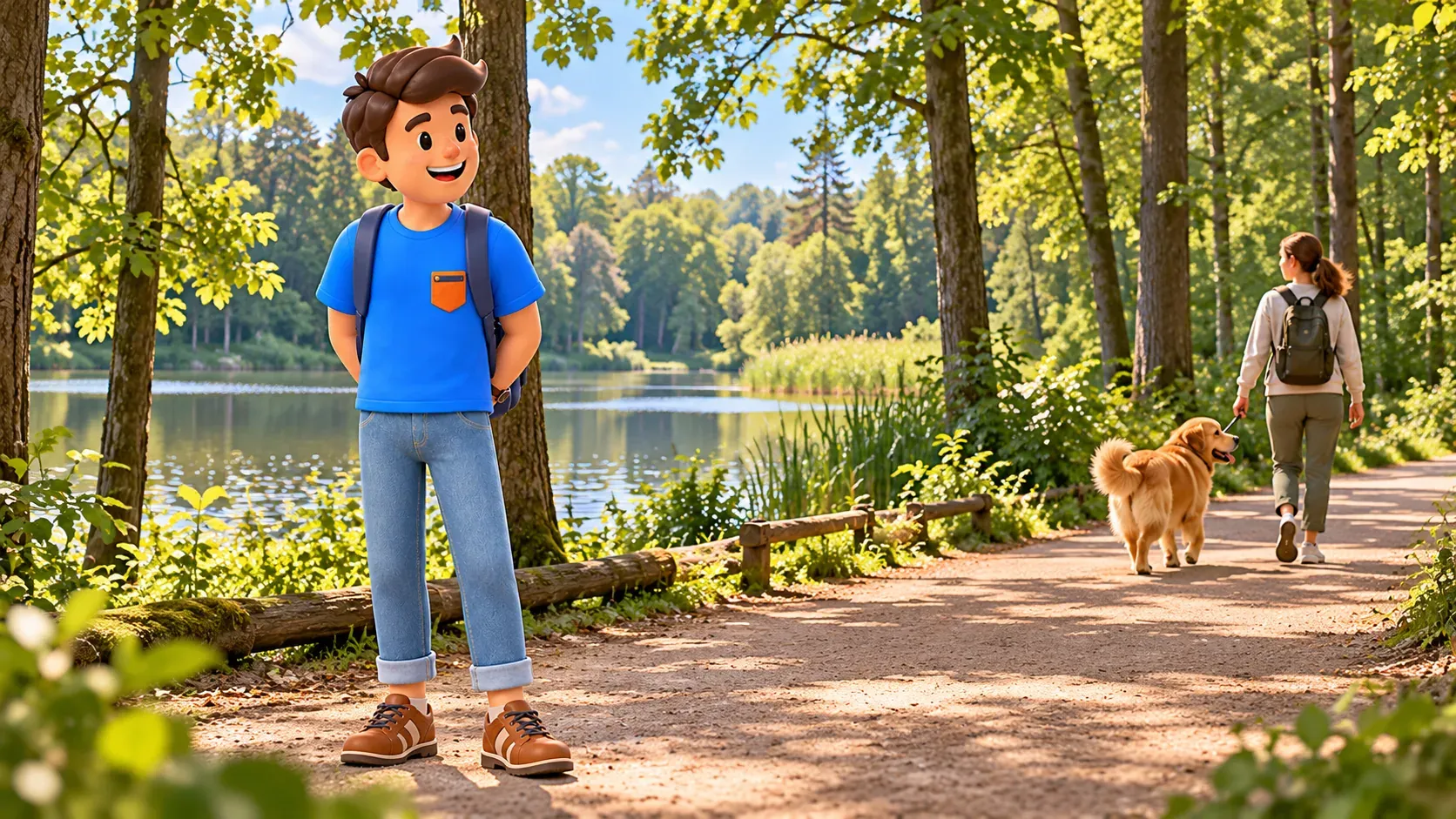
Many people walk dogs around Grunewaldsee, including dogs off the lead in the relevant exercise area. Consider this if someone fears animals or expects complete isolation. A forest symbol on a map is not a guarantee of silence. Keep a comfortable distance, let an owner and dog pass, and do not offer an animal food without involving its owner. Watching daily life is enough for our programme. Contact with someone else's dog is neither compulsory nor a test of how much you enjoy nature. Choose a response that feels comfortable for your group.
Do not transfer the rules of one woodland section to every shore and building. Dog walking nearby does not establish identical access to museums, cafés and protected areas. Grunewaldsee is also not a human swimming destination: swimming for people is prohibited, even if you see a designated dog bathing area. In this half day, water remains part of the view. If swimming is the actual goal, that requires a different lake and confirmed conditions. It is a separate outing rather than an activity silently added between the lodge and the walk.
Choose a comfortable level of effort
The palace interior is not wheelchair-accessible; an open courtyard can be accessed with assistance. Pushchairs are not admitted to exhibition rooms. Woodland surfaces and shore paths should not be described as uniformly level and suitable for everyone either. Check the conditions your group needs and reduce the branch according to the place. Turning back is built into this proposal. If the required approach or section is closed, do not bypass a restriction across a slope. Keep the simple outing on an open public path, even if it gives a smaller view of the building than originally expected.
With RoadMe, you can more conveniently develop a personalised plan for the whole trip, distributing woodland, art and rest around your interests and pace. Try planning your days in the app so Grunewald has a suitable format and museum visits fall on genuinely available dates.
Allow the 35-minute return approach and ten-minute reserve. In colder months, return in daylight and shorten the branch for weather or energy. For other city days, use our first-time Berlin plan by interests. Save the tower and Teufelsberg for separate plans. This half day already contains enough: a historic lakeside house, woodland, rest and a calm return. If the museum is unavailable, call it a walk. Its value remains without a promise of closed rooms or an immediate extra journey to replace them.


