
Grant Park in Two Hours: Fountains, Sculpture and Open Space
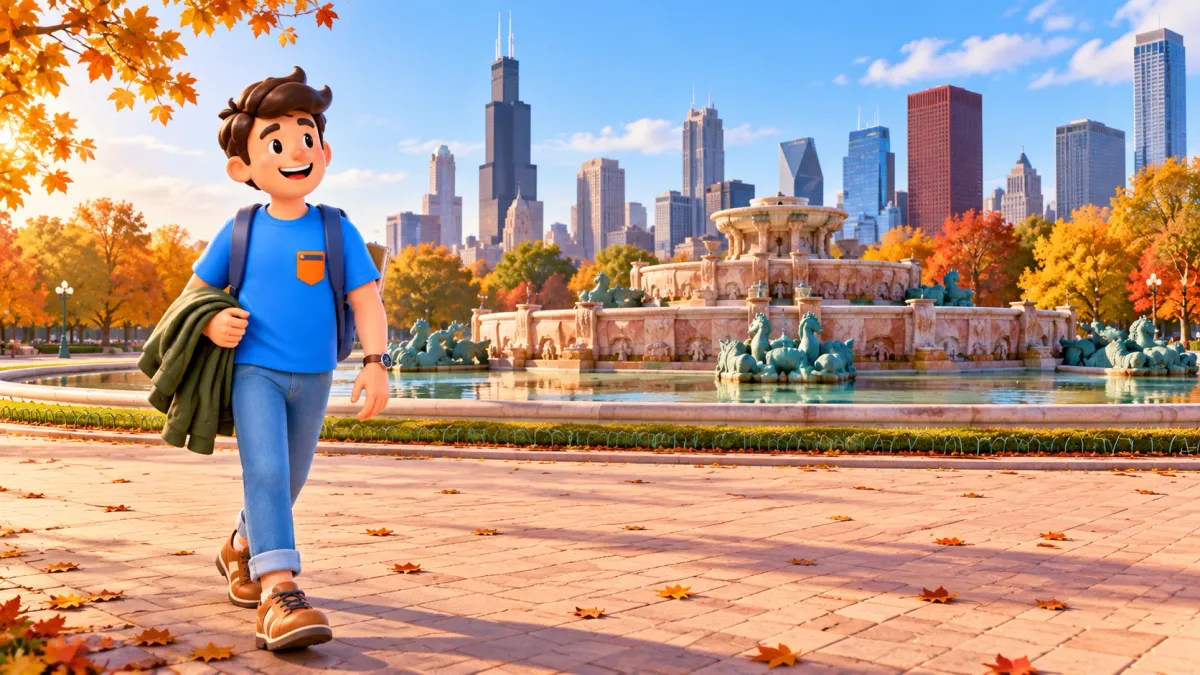
Grant Park is easy to underestimate if you think of Chicago's central green space mainly through Cloud Gate. Farther south, the experience becomes broader and more open: a monumental fountain, a raised equestrian memorial and a field of iron figures offer three very different scales of public art. You can connect them in a focused two-hour outing without adding a museum or another full neighbourhood to the day.
This walk begins at Buckingham Fountain, moves towards the General John A. Logan Monument near Michigan Avenue and ends at Agora, north of Roosevelt Road. It is a southern park route with an endpoint, not a loop through every part of Grant Park. Use public paths and designated crossings between sections. Roads, railway infrastructure and temporary boundaries are not shortcuts just because the next landmark appears nearby.
Keep the two hours for the southern park
As a planning starting point, allow about twenty-five minutes at the fountain, forty for movement through the open park and between sections, twenty at the Logan memorial and twenty-five at Agora. Ten further minutes remain for a pause or a small delay. These are indicative blocks, not measured walking promises. Your pace, open paths and the actual starting point can change the balance.
For a short outing that belongs in a larger Chicago trip, RoadMe makes personal planning much more convenient. The app develops a route and day-by-day plan around your interests, dates and preferred pace, so open-air art, pauses and the rest of your visit can fit into one coherent journey instead of several disconnected lists.
- Start at Buckingham Fountain and look at its setting as well as the structure.
- Continue through open public paths towards the Logan memorial.
- Finish with Agora and the contrast between one commemorated figure and a sculptural crowd.
- Choose the return journey from the final area before setting off.
Grant Park hosts events, and temporary works or closures can change access. Check the current notices before relying on a particular approach. If a main section is unavailable, shorten the outing or choose another day rather than walking around a restricted perimeter to force the original sequence. Two hours work best when they are a comfortable window, not a deadline to rescue at every turn.
First stop: Buckingham Fountain as a place, not a timetable
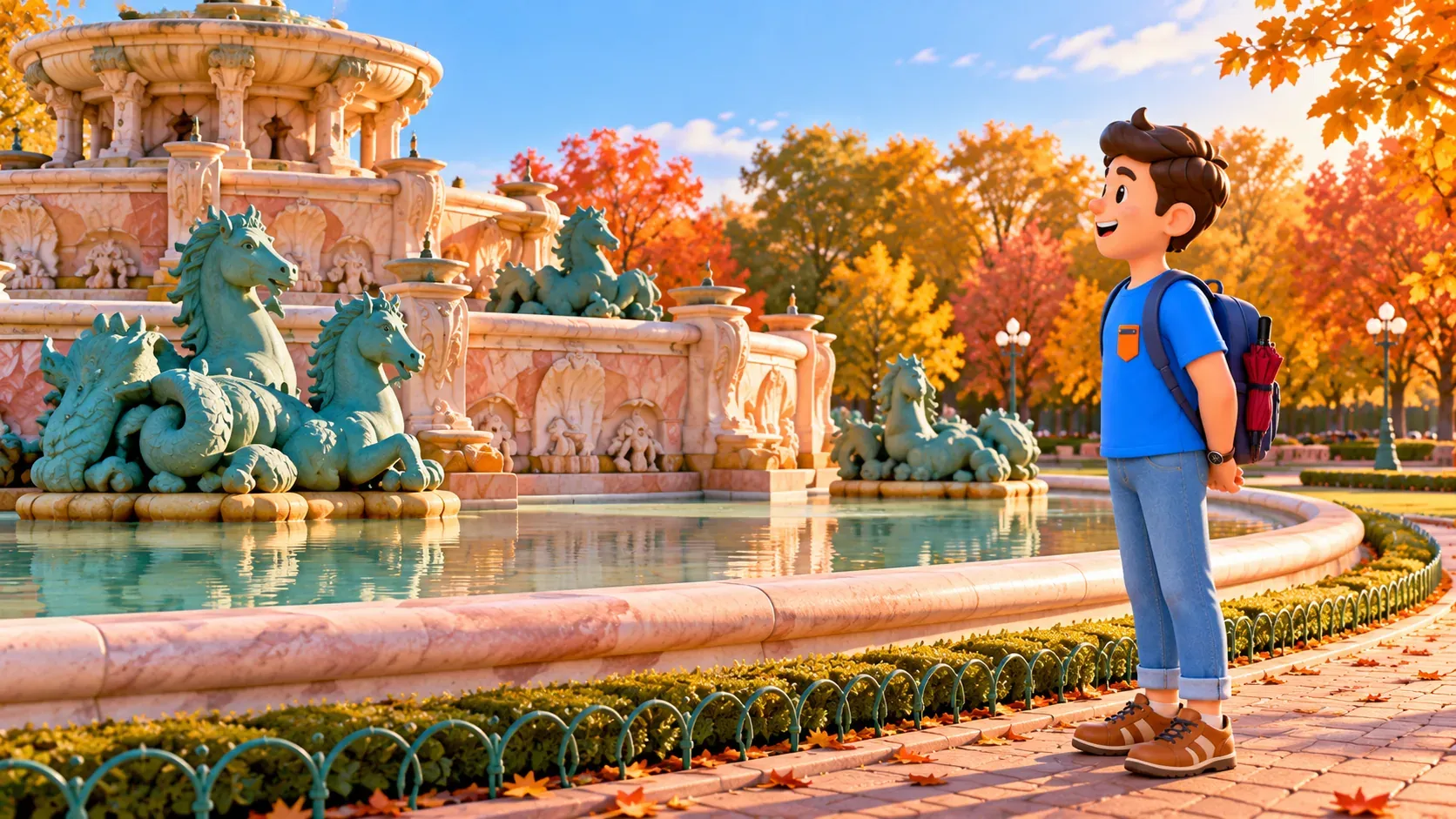
Begin at the Clarence F. Buckingham Memorial Fountain, usually called Buckingham Fountain. Its broad setting allows you to see the object before studying individual details. Start far enough away to notice the basin, the tiered composition and the space around it. The fountain is a central focus in an open landscape, so the relationship between monument and distance matters as much as a close photograph.
Installed in 1927, the fountain was a memorial gift associated with Kate Buckingham and her brother Clarence. Its pink-toned stone and bronze forms make it worth looking at even when water is not the main event. One useful detail is the connection to Lake Michigan: the design uses the fountain and its sculptural elements to evoke the lake and its surrounding geography.
Keep the history brief enough to support the view. You do not need a list of pump capacities or every construction figure to understand why a large civic fountain occupies this setting. Look instead at how the lower basin holds the composition together and how the smaller tiers draw attention upward. A few deliberate observations can give the stop a purpose beyond waiting for a dramatic jet.
Water operation is seasonal and affected by weather, maintenance and current arrangements. The large display is not something this itinerary promises at the top of every hour. Check the operator's notice if water or evening effects are the reason for your visit. If the programme is unavailable, decide whether the architecture and open setting still interest you rather than spending the whole time waiting for an unconfirmed show.
A dry or quieter fountain day changes the emphasis. Stone, symmetry, sculptural details and the surrounding city remain. Choose one wide view and one detail if you want photographs, then leave room for the rest of the park. This twenty-five-minute block should not quietly turn into an hour of repeated waiting, particularly when your main interest is connecting all three stops.
The open spaces are part of the walk
Continue towards the southwestern part of the park, using the available public routes towards Michigan Avenue and the Logan memorial. The spaces between monuments are not empty minutes to be removed from the itinerary. They create the broader scale that distinguishes this outing from a compact garden walk. Notice how the buildings frame the park and how distance changes the size of the fountain behind you.
Give road crossings their proper place in the plan. A park on the map can contain separate sections and busy streets; a straight line between two pins is not a pedestrian instruction. Follow designated crossings and signs. If construction or an event changes the route, use the permitted alternative rather than stepping around a barrier because the visible destination seems only a short distance away.
This is also the point to check how the visit feels. If you have already spent a long morning elsewhere, take a short seated pause where one is available. If the weather is uncomfortable, reduce the optional wandering and move towards the next selected stop. You are not obliged to cover every lawn or find a special viewpoint at the far side of each open space.
The lakefront can be a separate outing. Do not add a road crossing and a long waterfront continuation merely because Lake Michigan is nearby in the wider city. This route remains focused on the park's fountain and sculptures. Keeping that boundary makes the two-hour idea useful, especially if the day also includes a meal, an appointment or a journey out of the centre.
Second stop: one figure at the Logan memorial
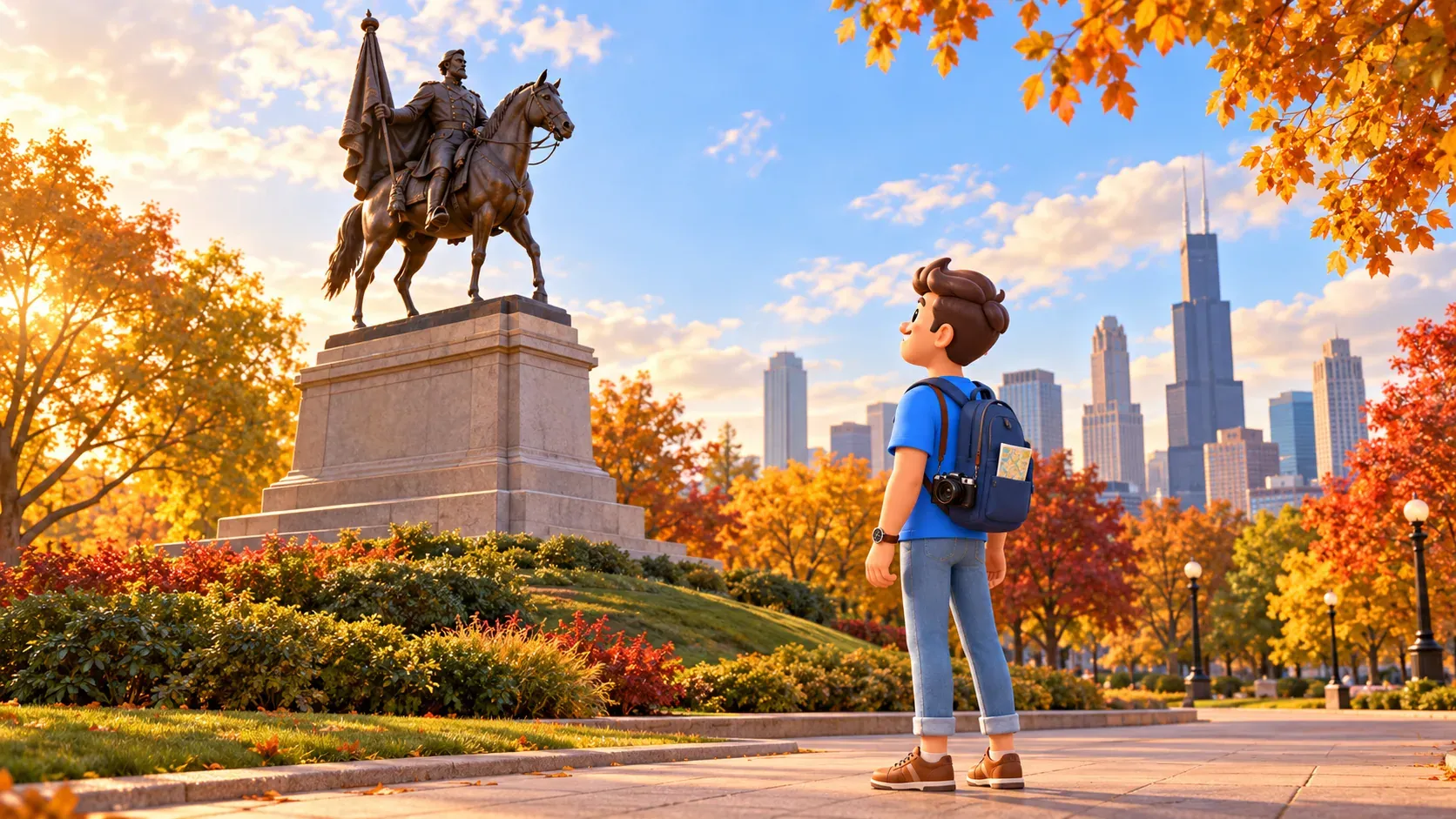
The General John A. Logan Monument stands near Michigan Avenue and East 9th Street. Its raised setting and equestrian form create a clear change from the low horizontal spread of the fountain. First look from a suitable public position at the complete composition. The relationship between horse, rider and base explains the memorial's visual presence before you consider the historical subject.
Logan was a Union general in the American Civil War and a political figure connected with Illinois. The monument, installed in 1897, brings that commemorative history into the park. Augustus Saint-Gaudens made the figure of Logan, while Alexander Phimister Proctor created the horse. That division of work is a useful small detail: a familiar type of monument can also be a collaboration between sculptors.
You do not need to turn this stop into a full biography. Think about how an equestrian memorial presents an individual: elevated, recognisable and set apart from the viewer. Notice where your attention goes first and how the base affects the distance between the person represented and the people passing today. These questions prepare an interesting comparison with the final stop without requiring a specialist art vocabulary.
Keep to the accessible public viewing areas and respect any planting or boundaries around the memorial. A closer angle is not automatically a better one, and the base is not a climbing platform. Twenty minutes can include a slow look from more than one permitted position and a brief pause before moving on. If you are already comfortable with the subject, shorten this block rather than inventing more tasks.
Third stop: Agora and the experience of a crowd
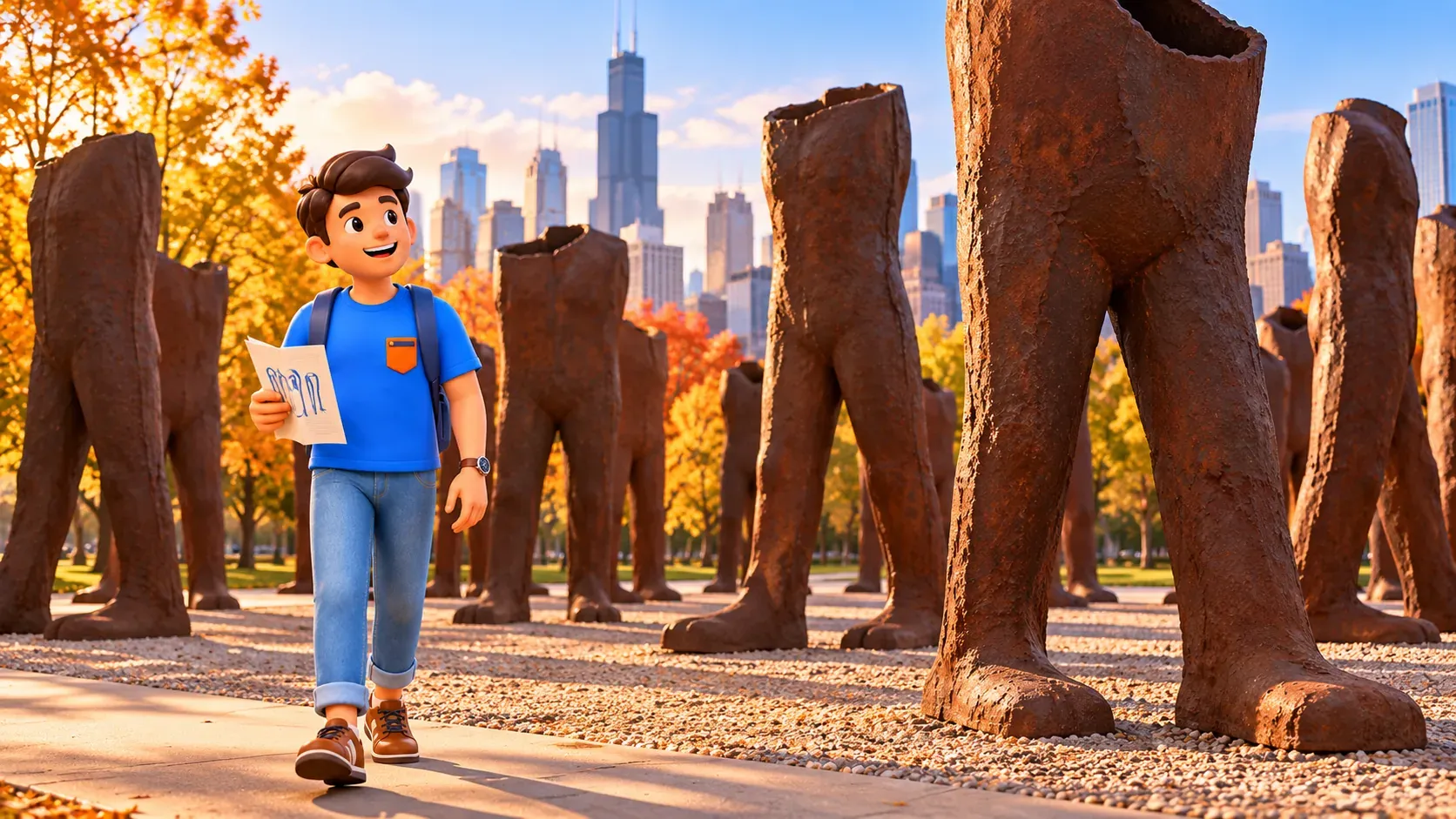
Continue south towards Agora, in the park area east of Michigan Avenue and north of Roosevelt Road. Check the actual path from the memorial and remain within public access. The grouping can feel striking before you identify its parts: repeated iron bodies occupy the ground at human scale and beyond. This is not a single statue waiting for a frontal photograph.
Magdalena Abakanowicz's installation arrived in 2006 and consists of 106 headless cast-iron figures. The missing heads are part of the work, not damage that visitors need to explain away. The forms suggest a crowd whose members do not all face or move in the same direction. Take a first look from the edge before deciding how to explore the accessible space around the grouping.
The contrast with Logan is especially useful. One memorial isolates a named individual above the viewer; Agora presents repeated, anonymous bodies closer to the ground of your own walk. You do not have to settle on a single interpretation. Notice whether you first see a collective mass or individual differences, and whether that changes when you move to another permitted viewpoint.
Look at surfaces as well as outlines. The dark, textured iron gives the figures a presence different from the fountain's pale stone and the traditional memorial's bronze forms. If you make photographs, try one view that shows relationships between figures instead of attempting to include every piece. The installation can be understood as a group without turning its full count into a collecting task.
Respect the artwork and the paths available on your date. Do not climb the figures, attach anything to them or treat them as equipment for a posed action. A quiet change of viewpoint is enough. Give yourself time to stop after the first impression; the encounter can become more interesting once the surprise of seeing a crowd of headless bodies has passed.
Finish with a clear exit and a manageable next choice
Agora is the final stop, not a cue to begin another entire itinerary. Check the way from the surrounding area to your selected transport or meal, using designated crossings. Do not assume that the nearest visible road edge is your departure point. The journey after the walk needs its own place in the day, particularly if the two hours were set aside between other plans.
If you arrive from the Roosevelt Road side, reverse the sequence. You will move from a crowd of figures to an elevated individual and then to the fountain's larger civic setting. With less time, choose two main stops rather than rushing all three. If the fountain's water is unavailable, this need not cancel the route, but it is a good reason to reconsider how much of your attention belongs there.
Use RoadMe to make those choices part of a personal travel plan. The app develops a route suited to your interests and pace, helping a short park walk fit into the whole Chicago trip. Try it to make preparation easier and spend more of the visit enjoying the places that matter to you.
For a different short outing, the two-hour Millennium Park walk stays farther north with another set of artworks and a garden. Treat it as a separate option, or give both outings their own time. Southern Grant Park already offers a complete experience when fountain, memorial, sculptural crowd and the space between them are allowed to remain the day's focus.


