
Graceland Cemetery in 90 Minutes: Sculpture and the Architecture of Memory
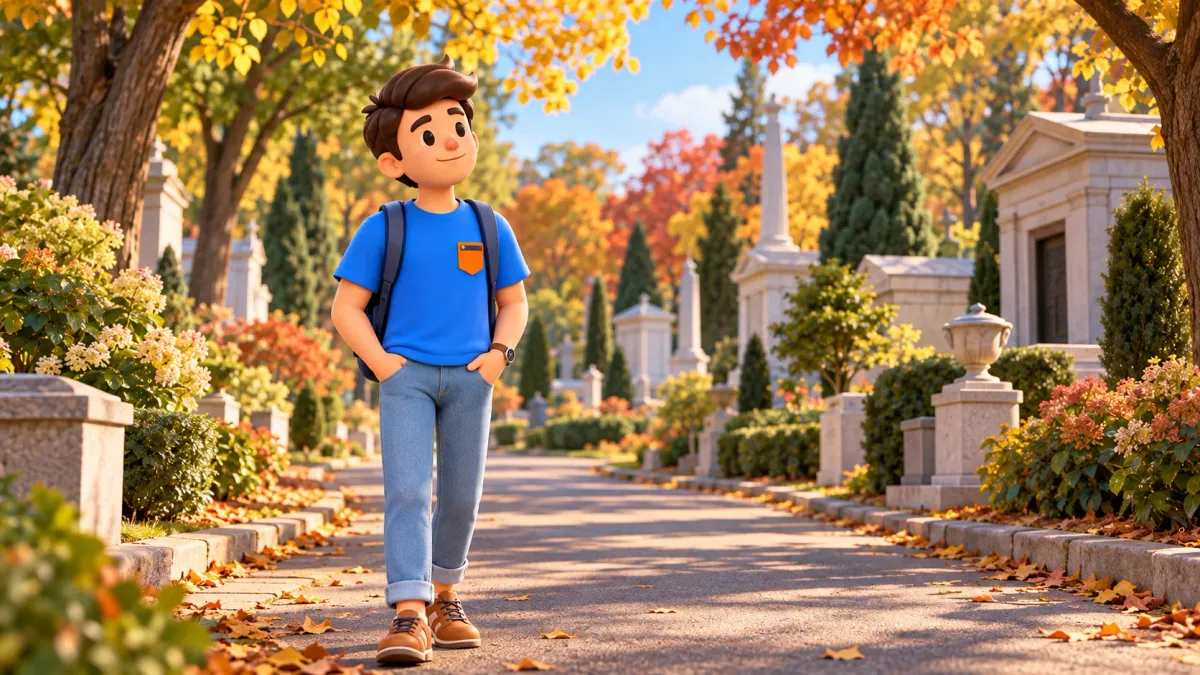
Graceland Cemetery offers a different way to look at Chicago: along a quiet lane, through the scale of a memorial, or across the space between trees and stone. This ninety-minute walk chooses two sculptural stops rather than attempting an encyclopaedia of famous graves. Eternal Silence and the memorial usually called Inez Clarke provide contrasting ways of thinking about how a city remembers people.
Come for observation, not a hunt for a supernatural experience. Graceland remains a cemetery, and the needs of families and staff determine how a visit unfolds. The route below is a flexible planning outline from the main entrance and back, with travel across Chicago, food and any organised tour counted separately.
Give this quiet visit a clear place in your trip
A short cemetery walk works best when it is the purpose of this part of the day. Avoid treating it as spare minutes between distant bookings. Choose a daylight window, check the gate arrangements for your date and decide in advance which stop you would omit if you need more time. Ninety minutes is an allowance, not a race or an invitation to stay until the gate closes.
RoadMe helps build a complete personal trip around your dates, interests and preferred pace. Try giving Graceland its own calm window, then balancing Chicago’s museums, neighbourhoods, meals and travel across the rest of your stay.
The official address is 4001 North Clark Street. For autumn and winter, the operator currently lists gate hours of 8am–4pm on weekdays and 9am–4pm at weekends; recheck the season and date before setting out. Office opening and cemetery access are different questions, so do not assume a staffed office will be available throughout your walk.
For a first visit, aim to arrive with considerably more than the bare ninety minutes before closing. An earlier start gives room for a changed path, slower reading or a return that takes longer than expected. If you only have a narrow late-afternoon slot, select one memorial and a short return instead of defending the full plan.
Start with the official map, not a straight line between pins
Begin at the main Clark Street entrance near Irving Park Road. Establish the exit you will use, consult the cemetery’s own current visitor information and locate your two selected stops on its map. The cemetery name on a city map may point somewhere inside the grounds; that pin is not necessarily the gate or a suitable pedestrian approach.
The official visitor guide marks Dexter Graves, associated with Eternal Silence, as stop 2, and Inez Clarke as stop 29. Those numbers identify places on a larger tour; they do not mean you should visit everything between them. Build a small circuit along permitted lanes and return by a route you can recognise.
On arrival, spend around ten minutes finding your bearings. Read any temporary notices before committing to a direction. A funeral, maintenance work or a closed section takes priority over your proposed sequence. Ask staff if an approach is unclear, and accept a shorter visit rather than treating a map line as permission to cross a burial plot.
A workable ninety-minute budget is ten minutes of orientation, fifteen at Eternal Silence, twenty-five for movement between the chosen areas, fifteen at the Inez memorial, ten for the landscape and fifteen reserved for returning to the gate. These are editorial estimates, not measured walking times. Moving time is distributed through the visit rather than confined to one uninterrupted leg.
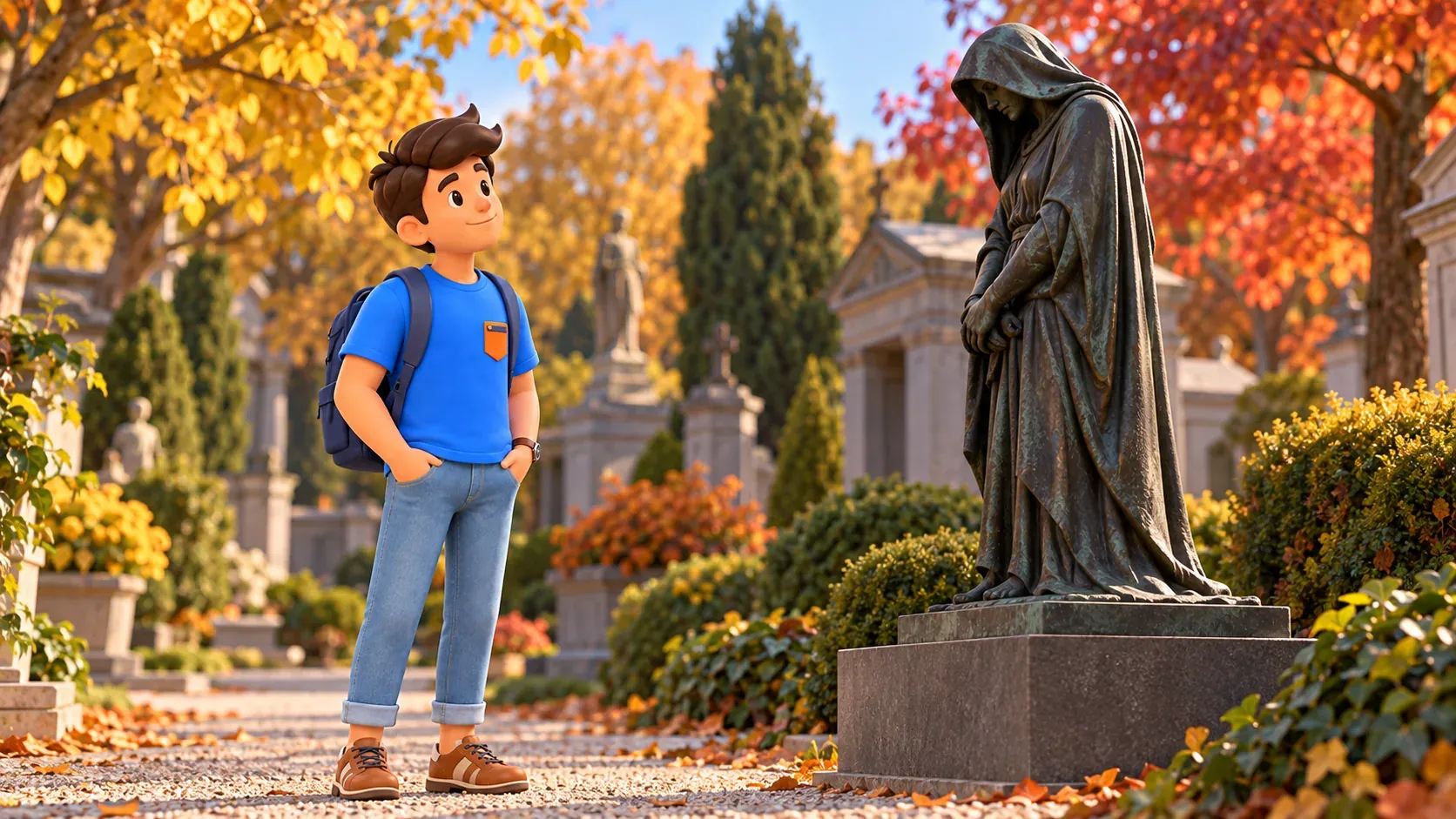
Eternal Silence: look at weight, folds and distance
Eternal Silence is Lorado Taft’s bronze figure of 1909 at the Dexter Graves memorial. You do not need a long biography to begin looking. First take in the silhouette from the lane, then notice how the enclosing robe creates a sense of stillness. A few minutes spent on one shape can be more revealing than a succession of hurried photographs.
Choose a position that leaves room for other people to pass. Look at the relation between the figure, its base and the surrounding greenery. What appears dominant from the first angle may feel quieter from a few steps farther away. This is a visual exercise, not a test with a required interpretation or a hidden detail that every visitor must find.
Distinguish your own response from a factual claim. You might find the monument solemn, protective or unsettling; another visitor may respond differently. None of those impressions establishes what the person commemorated believed, what the sculptor intended in every detail or what will happen to someone who looks at the figure.
Photographs can help you remember the composition, but do not let the camera determine the whole stop. Put it away for a moment and observe the full setting. Avoid climbing, touching or moving objects to improve an image. If people are paying their respects nearby, leave the photograph for another time and continue quietly.
Between the memorials, read the landscape slowly
The connecting part is not wasted time. A cemetery’s visual character also comes from the intervals between monuments: a long view, a bend in a lane, a group of trees or a small stone beside a larger structure. Notice those changes without turning every marker into another research assignment.
Use the official map at junctions and stay with permitted routes. If a shortcut would involve stepping across plots, keep to the longer path. A direct line between two coordinates cannot tell you where a respectful or usable approach lies. The useful question is how to reach the next place properly, not how to reduce the distance at any cost.
When a lane is busy with cemetery work or visitors, stop somewhere unobtrusive and let it clear. There is no need to complete every minute in the proposed budget exactly. Ten attentive minutes at a single memorial, followed by an unhurried return, can satisfy this walk’s purpose better than pressing on while distracted by the clock.
Keep personal conversations low and brief. If you are visiting with children, explain the setting before entering rather than waiting for a difficult moment beside a grave. Give them one simple observation task, such as comparing the shapes of memorials from the lane, and keep the option of leaving early.
The Inez memorial: a small figure without a ghost story
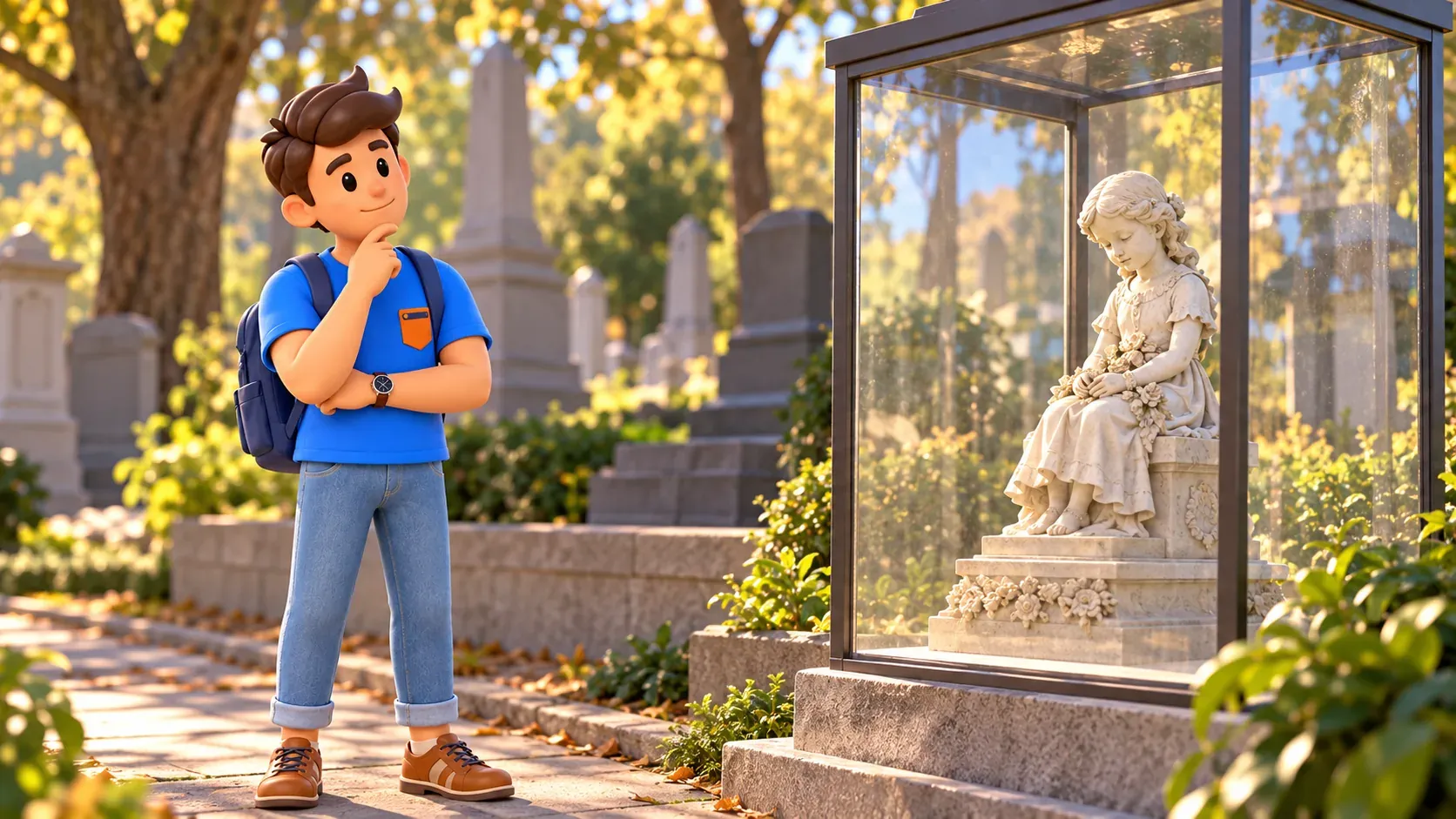
The stop commonly labelled Inez Clarke centres on a young girl’s statue. The cemetery’s biography notes that her identity was long disputed and now points strongly to Inez Briggs. That uncertainty is a reason to use careful language. A familiar label on a visitor map does not make every story attached to it a documented event.
Look at the contrast with the previous stop: a smaller figure, a different scale of attention and the relationship between the memorial and its protective enclosure. You can describe what is visible without supplying an invented cause of death or treating a storm legend as a historical explanation. Leave sensational versions outside your account of the visit.
Allow about fifteen minutes if the setting is quiet and accessible. Stand back from the enclosure and leave its surfaces alone. Reflections may make a photograph imperfect; that is a reason to accept the image you can take respectfully, not to touch the glass, introduce props or occupy the area for a prolonged shoot.
If the approach is unavailable, do not search for a way through surrounding graves. Omit the stop and use your time for a permitted landscape view on the return. The walk still has a complete subject: how sculpture, setting and your own pace influence attention. It does not depend on collecting proof that you reached both monuments.
Respectful visiting also changes the practical plan
The published visitor rules prohibit picnics, climbing and pets other than assistance animals, and restrict photography equipment and filming. Check current instructions before bringing anything beyond a simple handheld camera. The publicly available rules document is dated, so present signs and staff directions matter for your actual visit.
Plan your meal outside the cemetery. This also gives the walk a natural boundary: arrive ready to look, leave with time to sit elsewhere, and avoid trying to turn the grounds into a general recreation stop. If someone in your group needs a break, choose a shorter route rather than assuming a particular bench or facility will be available.
Weather affects comfort and judgement. In rain, cold or strong wind, fewer stops may be the better choice. Do not promise companions a uniformly smooth or accessible surface on the strength of a general map. Anyone who needs step-free access or has limited walking endurance should ask the operator about the specific approach and current conditions.
RoadMe can shape the whole Chicago trip around your interests and travel rhythm. Try pairing this reflective visit with a lighter later activity, while keeping enough room for meals, transport and rest throughout the day.
Keep the final fifteen minutes genuinely available for leaving. Check your position before adding another name from the map. If the exit is farther away than expected, start back immediately. A closing time is a deadline for completing the visit, not the moment to begin walking towards the gate.
Leave with two observations, then choose the next part of Chicago
Before departing, choose one detail from each stop that you actually noticed. It might be a silhouette, the way a figure occupies space or the different relationship between stone and planting. This small act of recall makes the visit more personal than a list of names photographed in rapid succession.
Do any longer note-taking after you leave. Decide whether you want food, a rest or another neighbourhood activity, and add the real journey to your schedule. The cemetery’s apparent proximity to another attraction does not make the connection part of this ninety-minute circuit. Check the route from the gate you actually used.

If your Chicago day has a livelier focus, the walk from Music Box towards Wrigley Field is a separate option built around a chosen game. Give each outing its own time and mood. Graceland rewards a small selection, a clear return and the willingness to let the place set your pace.


