
Glendale in Half a Day: Neon, the Alex and Brand Library
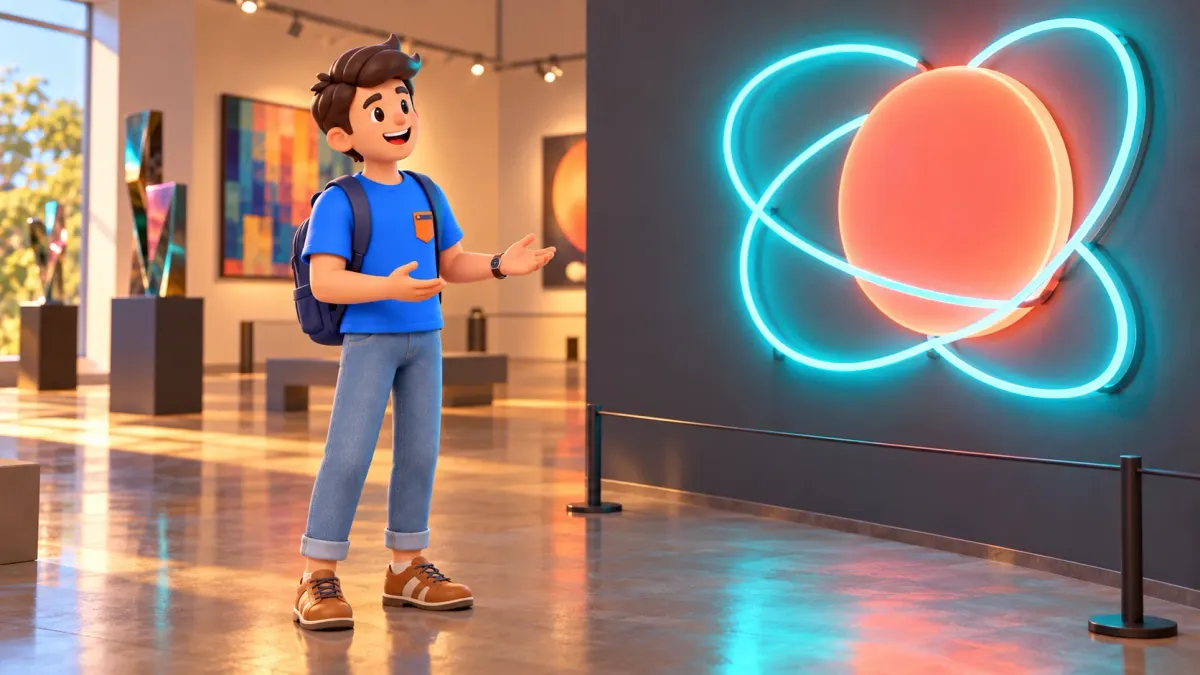
Give Glendale four or five hours for a cultural outing: light-based art at the Museum of Neon Art, a walk along Brand Boulevard to the Alex Theatre, and a separate trip to Brand Library & Art Center. Together they offer street life, entertainment history and a quieter encounter with art and music. They do not form one continuous walking trail. The library lies northwest of downtown at the mountain foothills, so transport between the two areas is part of the plan.
Thursday and Saturday are the most useful ordinary days for the full version. As checked on 17 October 2026, Brand Library opens Tuesday–Thursday, 11:00–20:00, and Saturday, 12:00–17:00; it closes Friday, Sunday and Monday. MONA opens Thursday–Saturday, 12:00–19:00, and Sunday, 12:00–17:00. Holiday exceptions need checking for your date. In this daytime itinerary the theatre is an exterior stop, with an actual performance treated separately.
Choose your day before choosing your direction
On Thursday, begin at the library at 11:00 and move downtown after transport and lunch. On Saturday, start at MONA at noon, continue to the theatre and lunch, then travel to the library with a useful margin before closing. These are two versions of the outing, not instructions to cross Glendale twice. Travel from your accommodation and the journey afterwards sit outside the four-to-five-hour local programme.
RoadMe develops a complete personal trip plan around your interests, dates, pace and budget. The app makes it much more convenient to connect cultural visits, transport and proper breaks into a day that suits you, rather than assembling it from disconnected place names.
If neon and theatre architecture are the attraction, the downtown section alone works well. If books, music and an unusual historic house matter more, start with Brand Library and decide how much to add afterwards. Shorten the outing by removing a whole section instead of reducing every stop to a few minutes. That preserves the experience if heat, fatigue or a longer journey changes your original expectations.
Families can also choose a central theme. Luminous shapes provide an accessible starting point for talking about colour and craftsmanship; books and pictures suggest a different kind of attention. Neither experience needs to become a competition to finish every room. Choose what you want to remember before arranging the clock.

Thursday: begin at Brand Library
A practical starting point is 11:00 at Brand Library & Art Center, 1601 West Mountain Street. Allow roughly an hour and a quarter for the building, available exhibition spaces and a few art or music materials. This is an editorial estimate for a relaxed visit, not an official time limit. If the current exhibition is your main interest, extend the visit and reduce the downtown section instead.
The building began as Leslie Coombs Brand's home, Miradero, in 1904. Its towers and scalloped arches draw on Indo-Islamic architectural inspiration. A public library opened here in 1956, with gallery and performance spaces added later. That change in use is part of its appeal: a private residence became a civic setting for visual arts and music, rather than simply remaining a picturesque house to photograph.
First consider the outline against the trees and hillside, then move inside. You do not need to hunt down every original fitting or imagine the house has remained unchanged since the early twentieth century. This is a working library, with contemporary functions and visitors using its collections. Keep voices low and handle materials carefully so that sightseeing and the building's everyday purpose can coexist comfortably.
For a short visit, choose one activity: look through an art book, explore an available exhibition, or discover the music collection. A recital hall does not mean a concert is happening whenever you arrive. Programmes and guided visits have their own dates and arrangements; an advertised tour may require registration. An ordinary independent visit should not be confused with admission to every event taking place in the building.
At around 12:15, move on to transport and lunch. The example leaves both activities a combined margin until 13:30, rather than promising a particular driving time. Your actual route depends on transport, waiting and where you eat. If it takes longer, move the downtown section later. Thursday's MONA hours leave some flexibility, and this plan has no fixed ticket time for viewing the theatre exterior.
The library needs a separate journey
The repeated name Brand can be misleading. Brand Library is on West Mountain Street, while the museum and theatre are downtown on Brand Boulevard. Several kilometres of urban streets separate the two areas. Do not treat the journey as a quick walk after a gallery visit, or assume that one parking place will conveniently serve the entire outing.
For a car or taxi, enter the library's complete name and address. Free parking is available in Brand Park, but downtown parking needs a separate decision. If you leave a car near MONA, check the permitted stay against the combined museum, theatre walk and meal. A free arrangement at one site does not make every nearby street free or remove a parking time limit elsewhere.
For public transport, look at the complete approach to the entrance, including the final walk. A stop on a major road is not necessarily beside the library door; reaching the park can involve a substantial walking section and an uphill approach. A familiar district name is not enough to establish an easy connection. If this journey would dominate the outing, keep the downtown version and give the library its own day.
The library has an accessible entrance and corresponding parking on its east side. Those facilities do not establish step-free conditions across the entire urban route. If access requirements determine your choice, confirm the entrance, drop-off arrangement and onward journey. Solving those three questions will improve a short visit more than adding another attraction without room to reach it comfortably.
The Alex: architecture first, a performance separately
After travelling downtown, begin at about 13:30 with the Alex Theatre at 216 North Brand Boulevard. North matters: MONA has the same street number, 216, but its address is on South Brand Boulevard. Save the complete versions so that navigation or a driver does not take you to the museum when you meant to reach the theatre. The similarity is a practical trap rather than evidence that the buildings share an entrance.
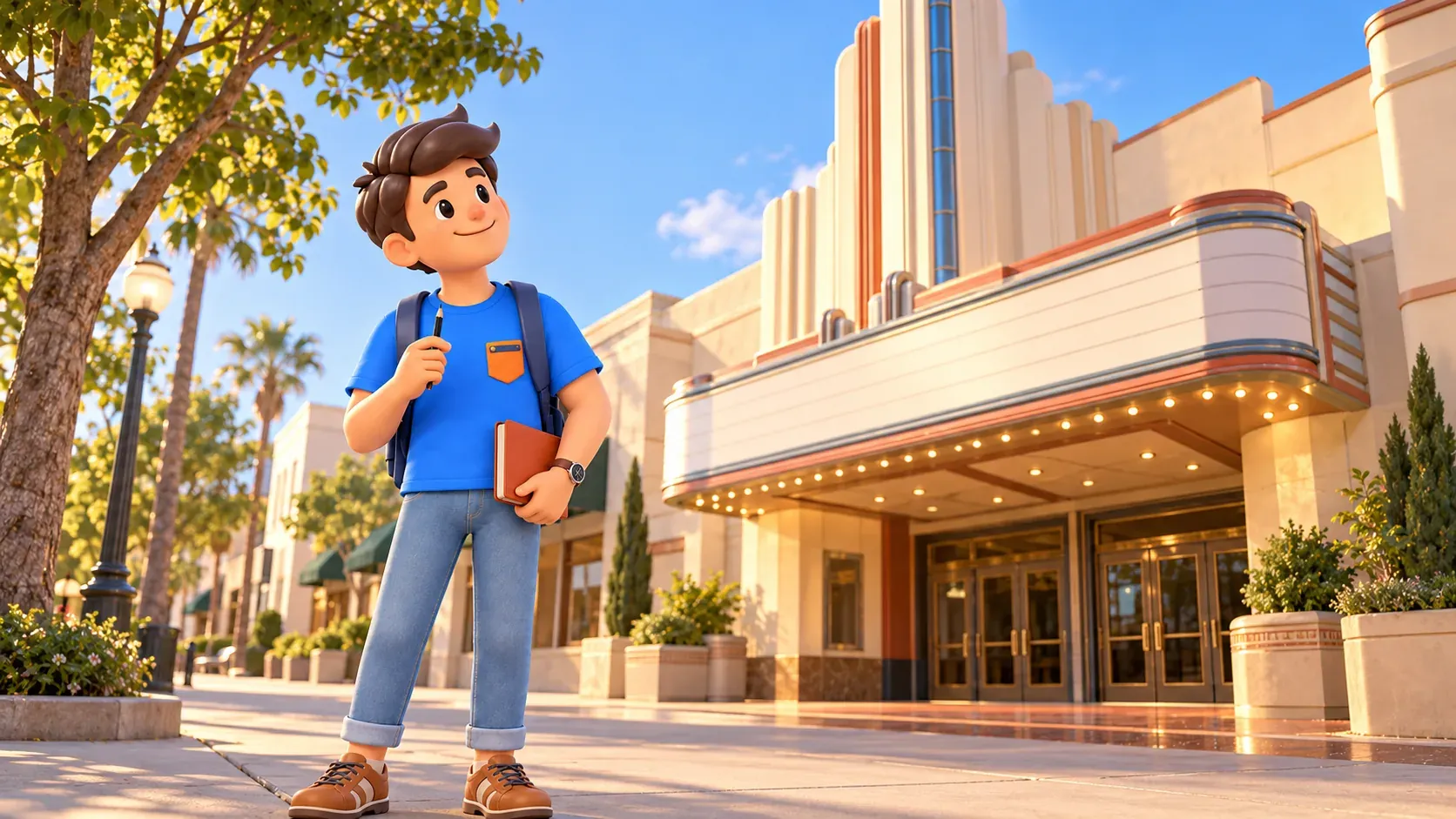
The theatre dates to 1925; its distinctive tower, marquee and entrance arrangement relate to architect S. Charles Lee's 1940 remodelling. It is an interesting example of a building attracting attention before the entertainment begins. The vertical feature works from a distance, while the broad entrance draws the eye closer to street level. You can appreciate that relationship without knowing a long list of productions or architectural terminology.
Allow around twenty minutes outside, keeping entrances and pedestrian movement clear. Daylight is useful for studying form and proportion even when every light is not switched on. A neon-themed afternoon does not require waiting for darkness. Equally, an attractive evening photograph does not guarantee identical illumination on any date. Treat the exterior as architecture in the daytime programme, rather than a promised lighting show.
The auditorium is not a freely open museum. Box-office hours follow ticketed events, and entering the building depends on the particular programme. If a film or performance is your main purpose, choose the event and ticket first, then arrange the walk around its start time. The performance and dinner become a separate evening block, so the original four-to-five-hour daytime outline no longer describes the entire visit.
For accessible seating or other assistance, consult the theatre's arrangements and the chosen event before buying. The existence of accessible places does not mean all seating levels avoid stairs. A specific requirement deserves a specific seat decision. In the simple daytime version, viewing the exterior is sufficient: the itinerary remains worthwhile without relying on an unexpectedly open door or an unscheduled look inside.
Walk south to the Museum of Neon Art
From the Alex, follow Brand Boulevard south towards the Museum of Neon Art at 216 South Brand Boulevard. This is the compact downtown section: several city blocks, with roughly ten to twenty minutes allowed for crossings and short pauses. That is a planning estimate, not a measured navigation time. Use marked, signal-controlled crossings and allow longer if shopfronts or street details catch your attention.
In the Thursday example, visit MONA around 14:15–15:30. Ordinary admission can be purchased at the front desk on the day; separate programmes may have different arrangements. Do not automatically add a workshop to a short museum visit. Glassworking classes and organised tours have their own structure. The collection offers a coherent subject for independent looking even when no demonstration or special event is included.
Artists founded MONA in 1981 to preserve historic neon signage and present contemporary work using light. Look beyond recognisable commercial shapes to the bent line, colour, material and relationship between illumination and space. An old sign connects with a city's everyday life; a contemporary piece may use similar materials for a very different purpose. That difference gives a first visit a useful theme without requiring an exhaustive catalogue.
Choose several works and spend time with each. Where does your eye begin moving? What changes when you step back? What does a luminous outline contribute that paint alone would not? Questions like these make an hour of looking rewarding without extensive prior knowledge. Displays change, so avoid building the whole visit around a promise to see one particular sign. Curiosity about the medium is a more flexible starting point.
Afterwards, leave a small margin to rest and decide on departure. If lunch was rushed, take a proper seated pause now. If you want more street life, add an open-ended downtown walk rather than another fixed admission. The main experience is already complete: a theatre façade and a museum have offered two ways to consider how light and design become part of urban memory.
RoadMe makes it much more convenient to get a fully worked-out personal itinerary based on your dates, interests, pace and budget. The app connects an outing like this with the rest of your trip, leaving room for both the subjects you enjoy and time to rest.

Saturday and a shorter downtown version
On Saturday, start at MONA at 12:00, allow around an hour and a quarter, then walk north to the Alex. You might view the exterior around 13:35–13:50 and have lunch until about 14:30. A separate journey to Brand Library follows. The example leaves a buffer until 15:15 for transport, but replace that with a current estimate for your chosen means of travel. A library visit around 15:15–16:30 leaves a margin before the 17:00 closure.
If transport runs late, choose one activity at the library or move it to another day. Arriving in the final minutes should not become an obligatory race. On Friday and Sunday, the library interior is closed: choose MONA, the Alex exterior and a downtown meal. On Tuesday and Wednesday, reverse the priority and focus on Brand Library, saving MONA for an open day. Neither institution suits an ordinary Monday indoor visit.
The outing therefore has two practical finishes: downtown after MONA on Thursday, or the library after an unhurried Saturday visit. Plan onward travel from the place where you actually finish. Glendale then becomes a coherent cultural half day rather than three addresses linked only by optimism about opening times and travel.


