
Ginza Without Shopping: Theater, Timekeeping and Design
Ginza can be explored through theater, timekeeping and graphic design without making a shopping list. Begin outside Kabukiza, choose one indoor visit—the Seiko Museum or ginza graphic gallery—and keep the GINZA SIX rooftop garden as an optional conclusion. The route introduces cultural life through different ways of using time, images and city space.
Allow roughly three hours with one museum or gallery block and a short break. That is an editorial planning estimate, not a measured walking duration. Your chosen exhibition, a reservation and the weather may change the plan. A performance and a second substantial indoor visit need their own allowance; choosing is what keeps the basic outing compact.
Choose the cultural focus first
For objects, mechanisms and the history of everyday habits, choose the Seiko Museum. For posters, visual communication and composition, consider ginza graphic gallery, usually called ggg. These are two versions of one outing. The surrounding streets and theater facade connect them with Ginza rather than making every interior a required stop.
To fit this cultural walk much more conveniently into your trip, try RoadMe: the app develops a personal day-by-day plan around your dates, interests, pace and budget. Prepare an itinerary that gives museums, design and rest a practical place in a journey shaped around what matters to you.
| Stage | Purpose | Choice |
|---|---|---|
| Kabukiza exterior | See a cultural face of the neighborhood | No compulsory performance |
| Seiko Museum | Object design and timekeeping | One possible main stop |
| ggg | Graphic design and visual ideas | An alternative according to interest and calendar |
| Streets and pause | Connect the impressions | A modest walk and rest |
| GINZA SIX garden | Change the height of your viewpoint | An optional finish if accessible |
Check the chosen indoor calendar first, then arrange the other sections. An exhibition you want and a genuinely available entrance matter more than following printed numbers. If no suitable show is running, keep the streets as a separate outing, while recognizing that it offers a different experience from a substantial cultural visit.
Kabukiza: begin with the theater building
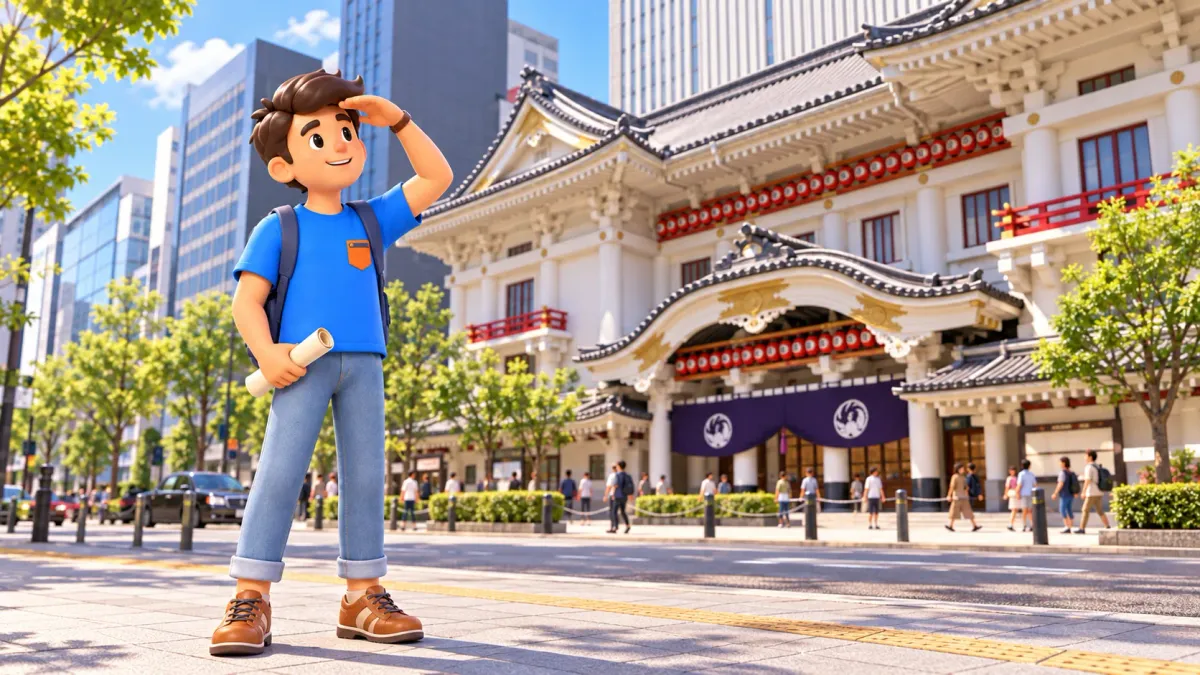
Start around Higashi-Ginza, outside Kabukiza. Find a public position from which you can look at the facade while keeping entrances clear. This is a working theater with audience movement of its own. A short architectural stop is easier a little away from the doors than directly in the route of arriving visitors.
Kabukiza first opened in 1889; its present, fifth building opened in 2013 after reconstruction. The exterior carries recognizable traditional theater forms within a contemporary city setting. That relationship introduces Ginza as a place where a historical image continues to function within today's large city.
Look at the roof, pale surfaces and taller buildings behind. One or two details are enough to start thinking about design. The theater need not serve only as a photograph's backdrop: the entrance and facade scale also show how a cultural institution addresses someone passing on the street.
To see a performance, choose the specific program and entry arrangements separately. Schedule, duration and formats depend on the performance. This version includes an exterior look, not a promise of entering the auditorium between other stops. Adding a show creates a longer cultural day and deserves a proper block of time.
Follow the streets to the chosen main visit
From the theater, head toward your selected venue: the Seiko Museum lies northwest within this compact plan, while ggg is farther southwest. Check the entrance and actual pedestrian crossings before setting out. If timekeeping is your focus, keep it central; for graphics, organize the route around the exhibition.
Notice how buildings address a person: entrances, distance from display windows, repeated openings and the relationship between light and shade. These observations do not require entering a store or judging products. Design also exists in the street's organization, the presentation of information and the places where attention naturally pauses.
Choose one manageable stretch instead of trying to cover every celebrated lane. Ginza's rhythm becomes visible between a broad junction and a smaller street. A long address list can interrupt this kind of attention, turning every corner into a check for the next stop rather than an experience of the neighborhood.
Take photographs from public places and keep paths clear. An attractive entrance does not imply access to private rooms, and an interesting window does not require a close photograph of people. A few city details prepare attention for small museum objects or gallery compositions without adding a separate sightseeing checklist.
The Seiko version: see time as an object
The Seiko Museum provides a reason to look at watches and clocks beyond buying them. Concentrate on how an object communicates time: arrangement, legibility, size and the relationship between purpose and appearance. This is an approachable task even if you do not collect watches or want to remember model names.
Admission is free. Normal hours are 10:30 to 18:00; the museum closes on Mondays and during the New Year holidays, with changes possible. Visitors with an advance online reservation receive priority, so arrange the visit ahead. Priority should not be translated into a guarantee of unrestricted walk-in admission at every preferred time.
Select a few exhibits and compare one feature. What can you understand immediately, and what asks you to come closer? The relationship between decoration and usability is particularly interesting in everyday objects. Follow the displays actually present rather than expecting a specific model from someone else's list to be available.
A short visit does not need to become a complete technical course. One clear thought about time, society and objects is enough. After leaving, look at your own watch or usual way of checking the time: a familiar action may feel different. Exhibits remain protected; looking does not imply permission to handle them.
The ggg version: choose a graphic design exhibition
Ginza graphic gallery suits an interest in how visual ideas work through images, color and composition. Choose it for the current exhibition. The gallery name identifies a field, while the artist and format can substantially change the experience. Your response to the program matters more than entering any available cultural room along the way.
The announced Art Direction Japan 2026 exhibition lists free admission, hours of 11:00 to 19:00 and closure on Sundays and holidays. It is scheduled for October 30–November 30, 2026. The previous exhibition ended October 21: between programs, do not plan a normal gallery visit without confirming operation.
Inside, choose one composition and first look from a distance. Where does reading begin, which element is most noticeable and how does empty space feel? Then move closer and read available explanation. This sequence lets a personal observation come before interpretation and helps distinguish your response from the supplied context.
Check photography rules for the specific show. A small gallery does not have identical access and content throughout the year. If closed or the subject does not appeal, keep an exterior neighborhood walk or choose the museum version on a suitable date. There is no need to chase any replacement merely to fill the slot.
Connect object and image through one question
After your chosen visit, take away one question: what helped you understand quickly? In timepieces it might be the dial's organization; in graphics, the order of elements. You do not need both venues to form a useful observation. The material that received your full attention can be enough.
Outside, look for a related principle in ordinary surroundings: what you notice first, how clearly an entrance works or where information becomes dense. This is an observation exercise rather than an expert judgment of every facade. Avoid inventing designers' intentions; a personal comparison is your own continuation of the experience.
If walking together, exchange one noticed detail. Different answers can make a visit easier to remember than trying to repeat all the wall text. The pause gives what you saw a place in memory, and the connection between addresses becomes a useful part of the cultural walk rather than only a practical transfer.
Stop for food or a short rest
Keep a pause after the main visit. Choose an open place according to the time, seating and your group's needs. A walk without shopping does not require skipping lunch, yet it need not revolve around a famous restaurant. A long queue can consume more attention than the entire remaining outdoor section.
If you want theater, object design and neighborhood discoveries to fit together, develop a personal journey in RoadMe. The app makes it much more convenient to arrange the trip around your interests and pace, preserving time for your chosen cultural experience and an enjoyable break.
Use the pause to decide whether you want a rooftop finish. This optional section can be removed when tired or the weather is poor. If your attention is already full, a short route to the station is enough. A useful outing is easy to end once the experience has taken shape.
GINZA SIX: a garden and a different height
GINZA SIX can provide access to a rooftop garden without turning the visit into a circuit of shopping floors. Check the appropriate entrance and garden access first. This part changes scale: after small objects or graphics, you return to blocks, buildings and greenery above the street.
Published garden hours are 7:00 to 23:00. Weather can cause closure without notice, while private bookings and events may restrict parts of the area. This is a separate schedule and does not automatically match shops and restaurants. Check notices immediately before going up, keeping the possibility of finishing at street level.
Choose a limited accessible section for a view and a pause, following open paths. Visibility and greenery depend on conditions; no particular distant landmark is guaranteed. There is no need to complete the whole space for the sake of coverage. Changing height already fulfills its role within this cultural walk.

Keep the short format and choose the finish
For the compact version, retain the theater facade, one suitable interior and food. Add the garden when time is free. Seeing Seiko and ggg together requires both calendars to work and a larger allowance; a performance changes the schedule further. Deliberate limits make a short outing more comfortable and understandable.
Before leaving, check the convenient station and specific line rather than only recognizing the neighborhood name. Ginza and Higashi-Ginza offer different onward options. Allow time from the actual last stop to transport. This version of Ginza remains rewarding even when you leave without a single shopping bag.


