
Quai du Mont-Blanc: a Geneva walk from Brunswick to Pâquis
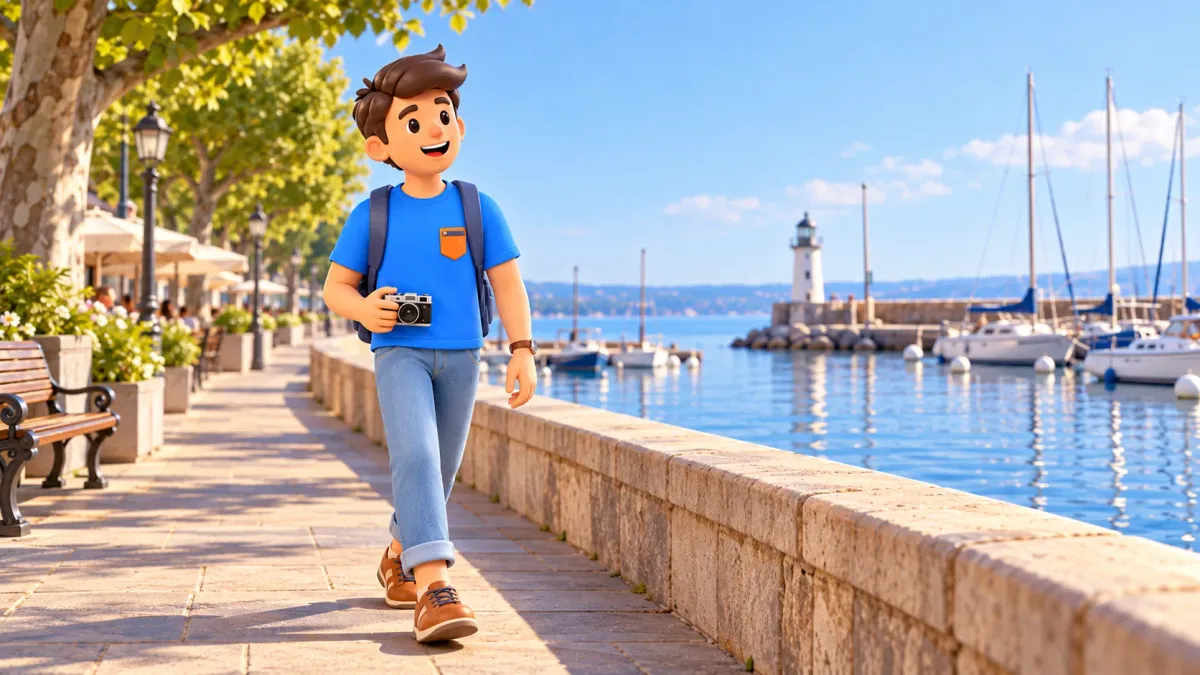
Quai du Mont-Blanc introduces Geneva from the right bank, where memorials sit beside everyday leisure and harbour views gradually open towards the lake. Begin at the Brunswick Monument, pass the memorial to Empress Elisabeth and finish around Pâquis: on the shore, at the baths or towards the lighthouse when the passage is open.
Allow roughly ninety minutes to two hours for a walk with short stops. That is a relaxed planning estimate, not a measured walking time. The baths, a sauna visit or a long meal need their own allowance. The basic line is Jardin des Alpes and the Brunswick Monument, Quai du Mont-Blanc, the Sissi memorial, the approach to Bains des Pâquis and an optional continuation towards the lighthouse.
Choose your ending before setting off
RoadMe makes it more convenient to connect waterfront, city stories and rest in a personal itinerary. The app works out a plan around your interests and pace, making the walk part of a considered trip.
There are three natural endings. The first is a short pause on the public shore near the Pâquis approach. The second is a chosen baths visit or a meal under the arrangements currently in force. The third is a walking extension towards the lighthouse if access permits. Choosing one keeps the pace comfortable instead of trying to do everything in sequence.
The start is already beside the lake, so add your journey from the station, hotel or opposite bank separately. From Cornavin, our short station-to-lake walk introduces architecture on the way. Combine it with this route according to your total time, rather than simply because the places are close.
There is no need to cross Pont du Mont-Blanc to find the Flower Clock. The basic walk stays on the Pâquis side. You experience one bank progressively: garden and monument first, an urban waterfront next, and a place of leisure out on the water at the end.
Decide what interests you today. Architecture suggests more time at the monument, personal history at the Sissi memorial, and lake atmosphere along the final waterfront section. Equal time at every stop is unnecessary. One chosen emphasis often makes a short visit more memorable than an evenly divided list.
Brunswick: begin with the unusual silhouette
At Monument Brunswick, stand on a path in Jardin des Alpes and take in the whole structure. Arches, elongated decorative forms and pale stone with pinkish tones look unusual for an ordinary city memorial. Notice that overall outline before searching for individual sculptures.
The monument is linked to Charles, Duke of Brunswick, who left Geneva a fortune on condition that it provide an appropriate funeral and memorial. The Scaliger tombs in Verona supplied an architectural model. That brief story explains the unusual waterfront presence more effectively than a long inventory of carved details.
Jardin des Alpes forms the memorial's setting rather than a separate distant destination. Follow an available path, change your angle and compare stone architecture with the trees around it. One or two viewpoints are sufficient. An exhaustive circuit and full history can wait for another visit.
If it is busy, find a calm position outside the pedestrian flow rather than occupying an entrance or narrow path. Perhaps ten to fifteen minutes of attention gives the ensemble a comfortable place at the start, before you emerge at the water. This is an example of time allocation, not a required duration.

Towards Sissi: a personal history on the waterfront
Leave the garden for Quai du Mont-Blanc and walk along the right bank towards Pâquis. Look for the memorial to Empress Elisabeth of Austria, often called Sissi. Its setting is Rotonde du Mont-Blanc, by the waterfront opposite number 13 Quai du Mont-Blanc.
The memorial recalls her assassination in Geneva in 1898. A short walk does not need to turn this into an elaborate dramatic account. It is enough to recognise that a familiar visitor waterfront was the setting for an event connecting Geneva with the life of one of Europe's best-known empresses.
Compare the scale of the two memorials. Brunswick constructs a ceremonial image of remembrance; the Sissi stop is experienced through a human figure in open urban space. That comparison gives the outing substance without asking you to read several extensive biographies.
Look back at the quay afterwards. People walk, meet and rest while historical memory remains within ordinary life. That relationship is part of Geneva's interest. The memorial does not need a sealed museum atmosphere around it to hold meaning; the shore continues to function as a place used by the city.
Quai du Mont-Blanc: make room for the harbour view
Continue beside the water towards the Pâquis jetty approach. Leave some of the walk without another named stop. The view changes with the curve of the shore, boats and light. Choose a place for a broad look, then enjoy the next section simply as a walk.
Jet d'Eau may be visible across the harbour when running, but this route does not depend on the jet. Look more widely at landing places, the boundary of sheltered harbour water and the practical role of jetties and lights. The lake becomes more than an attractive backdrop.
The name Mont-Blanc does not guarantee a visible mountain peak on every day. Clouds and atmospheric clarity alter the distant view, so do not base the outing on a compulsory mountain panorama. Nearer details remain: boats, water, stone and the lines of the waterfront.
For photographs, choose a wider place where stopping leaves room for others. In a group, give each person a few minutes of independent looking and meet at a clear landmark. Something on the water is always changing, and calm observation may offer more than a succession of almost identical pictures taken while walking.
The open shore may feel different from sheltered streets. In cooler conditions, walking a little longer between short stops can be more comfortable than sitting still. On warm days, leave time for a pause in available shade or on a pleasant section of shore rather than filling every minute with movement.
Bains des Pâquis: everyday city life on the water
The baths occupy the jetty and matter for more than the opportunity to swim. Their history begins in the nineteenth century, while the twentieth-century complex became part of Geneva's recognisable public waterfront. Simple functional architecture brings together water, leisure and everyday meetings.
Residents defended the baths against demolition, with the 1988 referendum an important episode in their preservation. That helps explain the attachment to the place. This is not merely a convenient visitor facility; people regard it as part of their own urban life.
Reaching the approach does not grant unrestricted access to every area. Bathing space, wellness services, food venues and passage on the jetty can involve different arrangements. Check current hours, admission and any booking requirements for the visit you choose. The walking plan does not combine those uses into one ticket.
Swimming is a separate decision based on season, local instructions, weather and your abilities. A pleasant promenade does not establish suitable conditions in the water. With children, distinguish the promised lake pause from a possible visit to the baths before setting off.
A meal needs its own margin too. A free table and quick service cannot be assumed. You may come for the atmosphere and a short break, or make food the main ending. Choose deliberately instead of squeezing a lengthy stop between two further compulsory walks.
The Pâquis lighthouse: continue only along an open passage
If you want the walk to fit with the baths or an unhurried lunch, RoadMe can work out a personal plan around your interests. The app makes it easier to bring these choices into one day of your trip and retain time to relax.
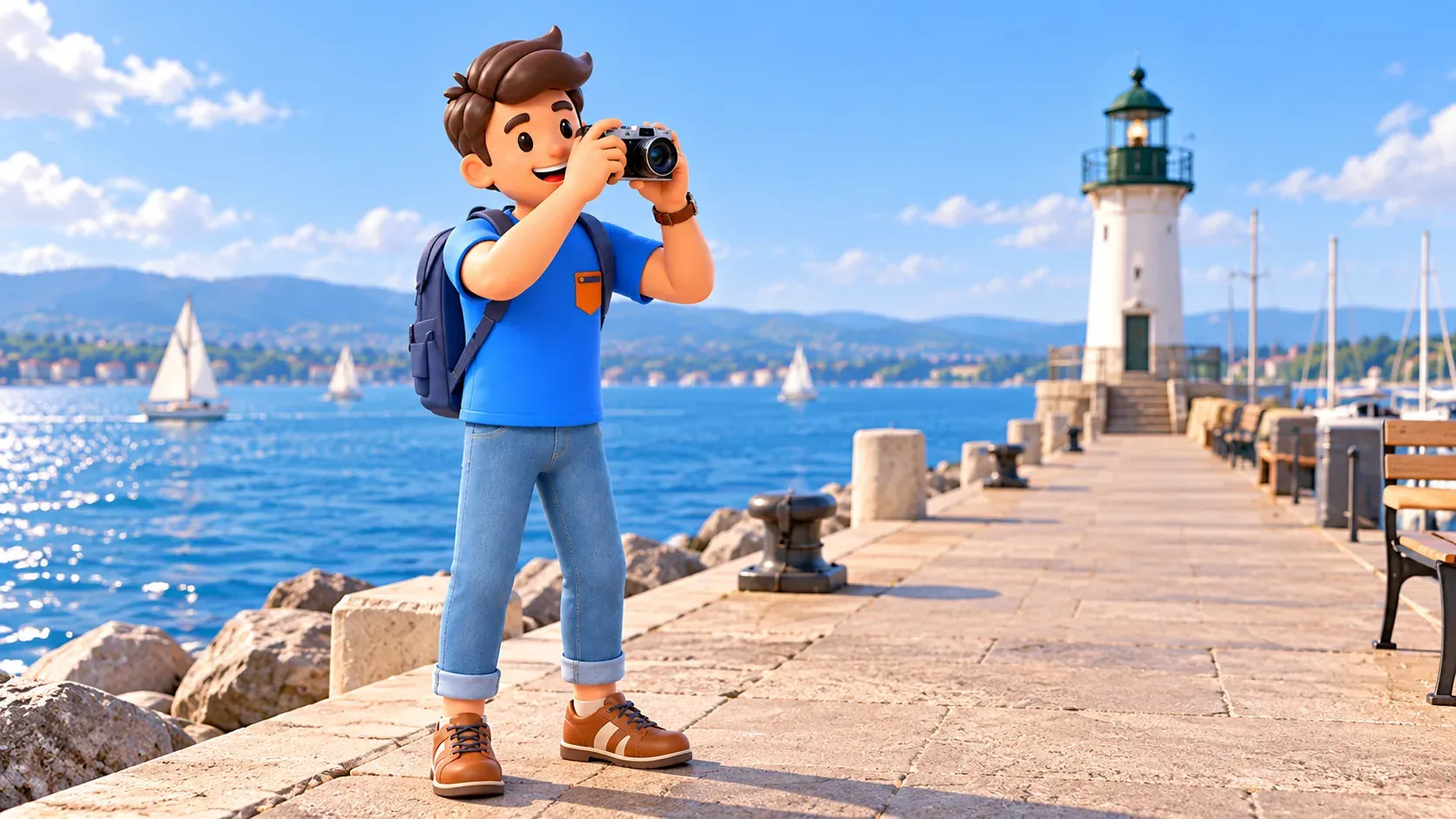
When passage along the jetty is permitted and conditions suit you, continue towards Phare des Pâquis. The lighthouse marks the harbour entrance, reminding you that waterfront structures were made for boats as well as for people enjoying views.
The change from city quay to a more exposed position among water is part of the experience. Stop on a permitted wider section and compare the view back towards the city with the lakeward direction. There is no need to approach every structure or try to enter the lighthouse; this route promises no interior visit.
Check passage on the spot. A closure, technical work or unpleasant conditions is reason to finish sooner. Do not bypass a restriction along the edge or enter baths areas without the appropriate access. The shore-based version already gives you a complete outing.
On an open jetty, avoid stepping backwards for photographs or stopping where others must pass close to the edge. Choose your position first, then take out the camera. A quiet look from a comfortable spot matters more than reaching the furthest possible centimetre.
Shorten the route and return without rushing
With less time, retain the monument and garden, Sissi memorial and walk to the Pâquis approach. Remove the extra jetty extension first, then a long meal. Shortening chosen additions is better than eroding a clear return allowance.
You can return along the same quay with views unfolding in reverse order. If you plan transport, check it separately: this text promises no particular boat departure, bus service or waiting time. A train or appointment determines your turnaround time before the outing begins to expand.
With a suitcase, pushchair or mobility requirements, a particular passage matters more than the small distance on a map. Check your chosen area rather than assuming a broad pavement describes the whole jetty and complex. An enjoyable hour beside the lake need not include an awkward section.
For a restful outing, choose a time without a crowded programme immediately afterwards. If the walk lies between appointments, give one episode priority: monument, overall view or baths. Other stops can stay short. In different seasons, accept a different atmosphere rather than trying to reproduce a summer photograph during an autumn visit.
With children, choose one observation: find an arch at Brunswick, notice the human scale of the Sissi memorial and consider why a harbour needs a lighthouse. The small story links the stops without a lecture at each place. If attention ends early, finish at the approach; the next part of the waterfront can wait.
Leave a little time without a task. One visitor may remember Gothic forms, another a quiet memorial stop, another an ordinary cup beside the water. Quai du Mont-Blanc brings those impressions together in a single walk without making each a large separate excursion.


