Unexpected Geneva: Frankenstein, lake boulders and a mechanical clock
Geneva can surprise you through small details. A literary creature appears in a public square, lake boulders connect with measuring heights, and a covered passage contains a mechanical account of an event in the city’s past. These discoveries do not require starting a full museum day.
Here are three independent ideas: Frankie at Plainpalais, the Pierres du Niton in the harbour and the Malbuisson clock in the lower town. Choose one that fits your walk. They occupy different places, so this collection is not a compulsory short circuit of all three.
Three ways to see familiar Geneva differently
The sculpture invites a view of the city through fiction and contemporary art. The boulders change the timescale: behind an ordinary water view lie geology and precise measurement. The clock shows how a local story can become a small mechanical theatre.
RoadMe makes it much easier to turn that curiosity into a complete personal walk or trip plan. The app helps develop a route around your themes and pace, bringing an unusual story, a suitable continuation and time to pause into a coherent day that is enjoyable to use, instead of connecting every point yourself.
Begin with curiosity. Choose Plainpalais for a literary story. If already beside the water, the boulders give you a reason to look more closely at the harbour. In the lower centre, the mechanical clock can become a separate episode between ordinary city activities.
One question is enough for a worthwhile stop. Why give this character a sculpture? How did a stone become part of a measuring system? Why does a clock tell an Escalade story? An answer need not be long to change your impression of a place.
Frankie: a fictional creature in everyday city space
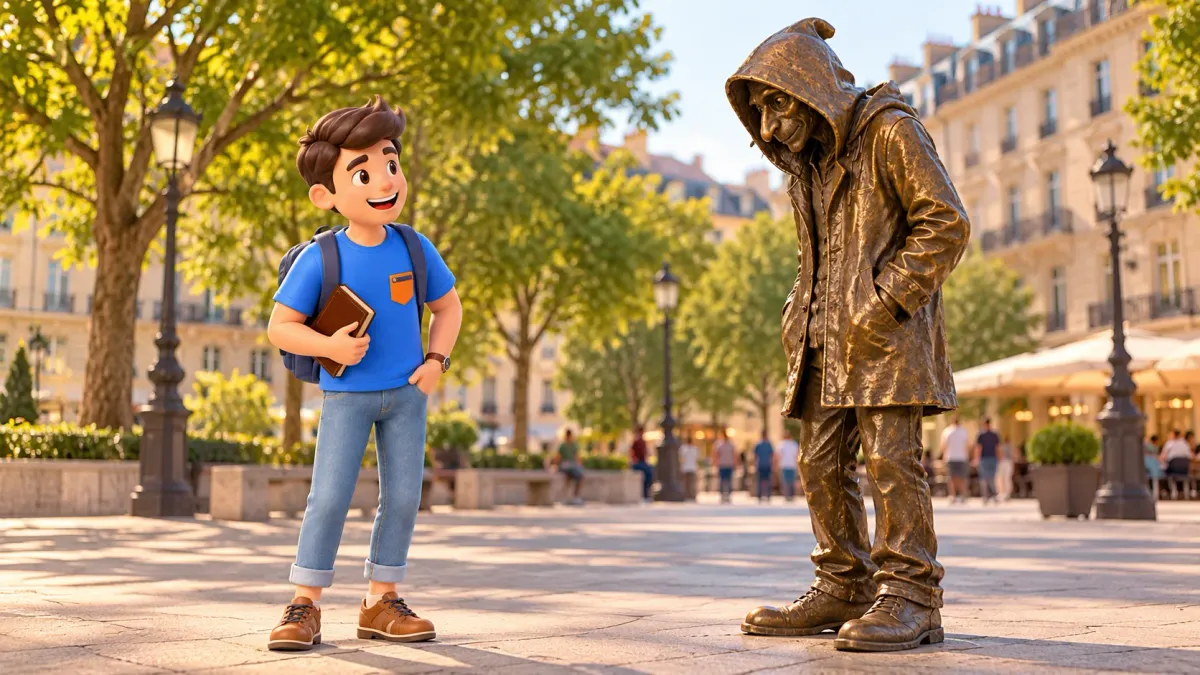
KLAT’s contemporary bronze work at Plainpalais refers to the creature from Mary Shelley’s Frankenstein, a novel conceived around Lake Geneva. Distinguish the characters: Victor Frankenstein is the creator, while the sculpture represents the creature.
Frankie dates to 2013–2014. A hooded jacket and the absence of a traditional high plinth place the figure within pedestrians’ space. Instead of a conventional ceremonial hero, you encounter a character that invites attention to the relationship between a city and fiction.
Plainpalais appears in an invented scene in the novel. That is literary geography, not a report of an actual crime in the square. The modern sculpture’s location also does not establish that Shelley wrote the book on this spot. Keep the fictional story and the real city in view separately.
Try looking before using the camera. How does clothing affect the first impression? Does the figure seem like a monument, a passer-by or someone who has left the page? These are questions for personal observation rather than a test of knowledge about the novel.
Public sculpture often prompts a question about whom a city chooses to remember. A fictional creature makes that question especially interesting. Consider how an invented character receives a place beside real human routes. You can explore that thought without deciding on one compulsory interpretation of the artwork.
A useful photograph can include the scale of the surrounding city. Leave some square, trees and ordinary movement in the frame instead of isolating the bronze figure completely. That shows a literary story sharing space with everyday routes.
You do not need to know the entire text beforehand. The lake connection and the distinction between creature and creator are enough for a short pause. If the subject interests you, reading can continue after the trip with a personal city reference already attached.
Do not automatically turn this episode into a journey to a private villa associated with the lake’s literary history. The public sculpture is a worthwhile stop in its own right. Continue around Plainpalais according to your interests without needing every address from a writer’s biography.
Pierres du Niton: geology within an urban harbour
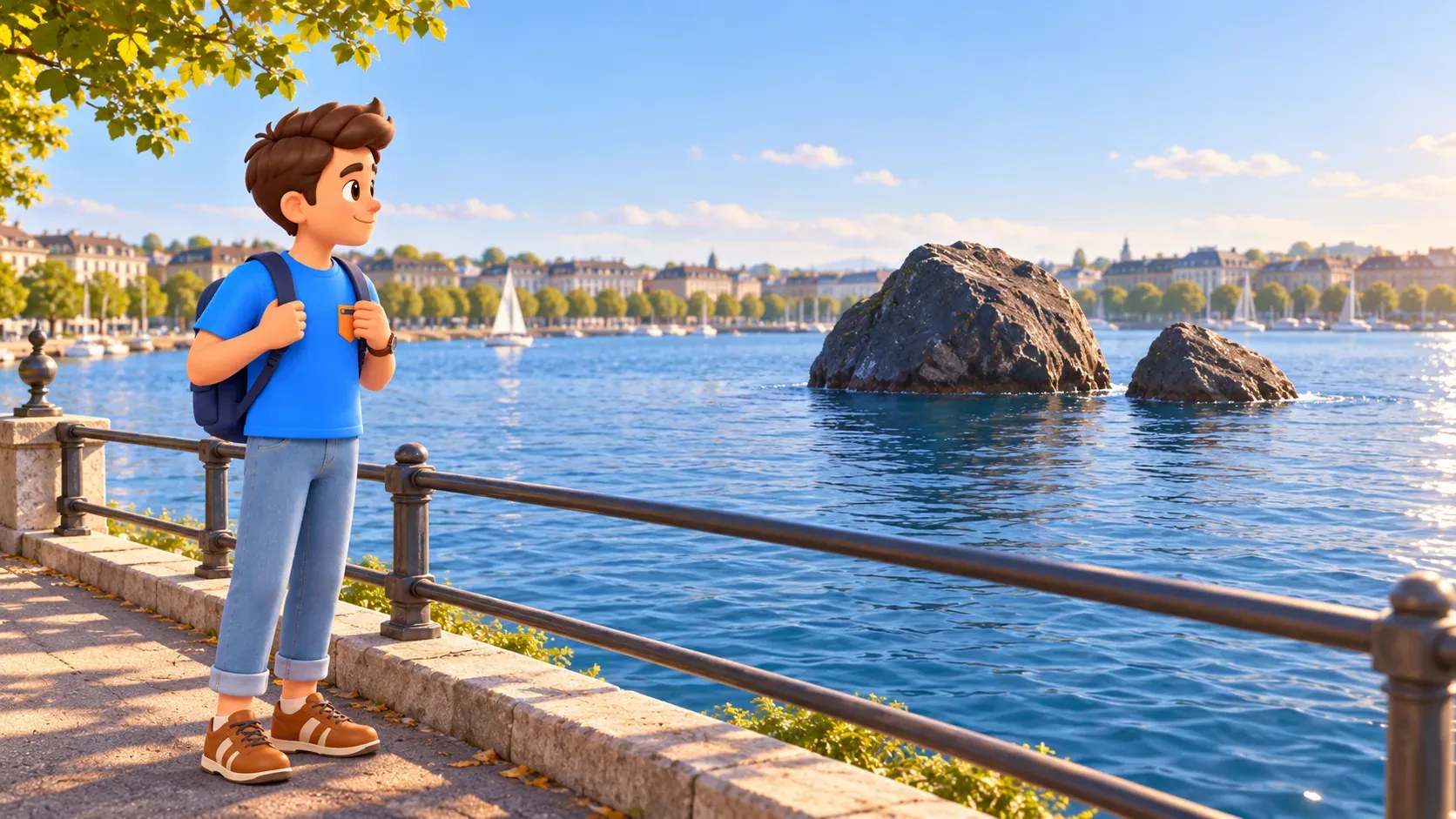
The Pierres du Niton are two glacial boulders in the harbour water, viewed from the shore around Quai Gustave-Ador. They can look simply like rocks against a beautiful lake. The surprise comes from learning that one is associated with a Swiss height benchmark.
A benchmark is a stable reference mark for height measurements. A small feature of the landscape therefore connects with precision needed well beyond this particular shore. The stone becomes interesting through its human role as well as its shape.
A height may seem like a simple number, but comparison requires an agreed starting point. The reference provides that shared orientation. The interesting subject here is therefore not simply how far a boulder rises above water, but its place in the history of coordinated measurement.
Distinguish several timescales. The rock’s formation, its movement by a glacier and the creation of a measurement mark are different stories. They should not be compressed into one date. The overlap of natural and human history is what makes the subject expressive.
You do not need a numerical height to understand it. Historical measuring systems used different starting values, and a casually remembered number can obscure the main idea. For a walk, the useful thought is that an ordinary lake view contains a reference for a larger system.
Choose a comfortable public position on the bank and notice how the rocks relate to water and buildings. Find their shapes first, then include them in a wider view. They need not fill the photograph to stop being an unnoticed part of the harbour.
A map point on the boulders is not a pedestrian approach. There is no need to swim out, stand on them or reach the measurement mark. The entire purpose of this pause can be enjoyed from a permitted shore position.
After learning the story, the ordinary lake view changes. You can look beyond an attractive distance towards a surface linking nature with the human wish to measure the world. A small question adds depth to a landscape without another admission or attraction.
The Malbuisson clock: time as urban theatre
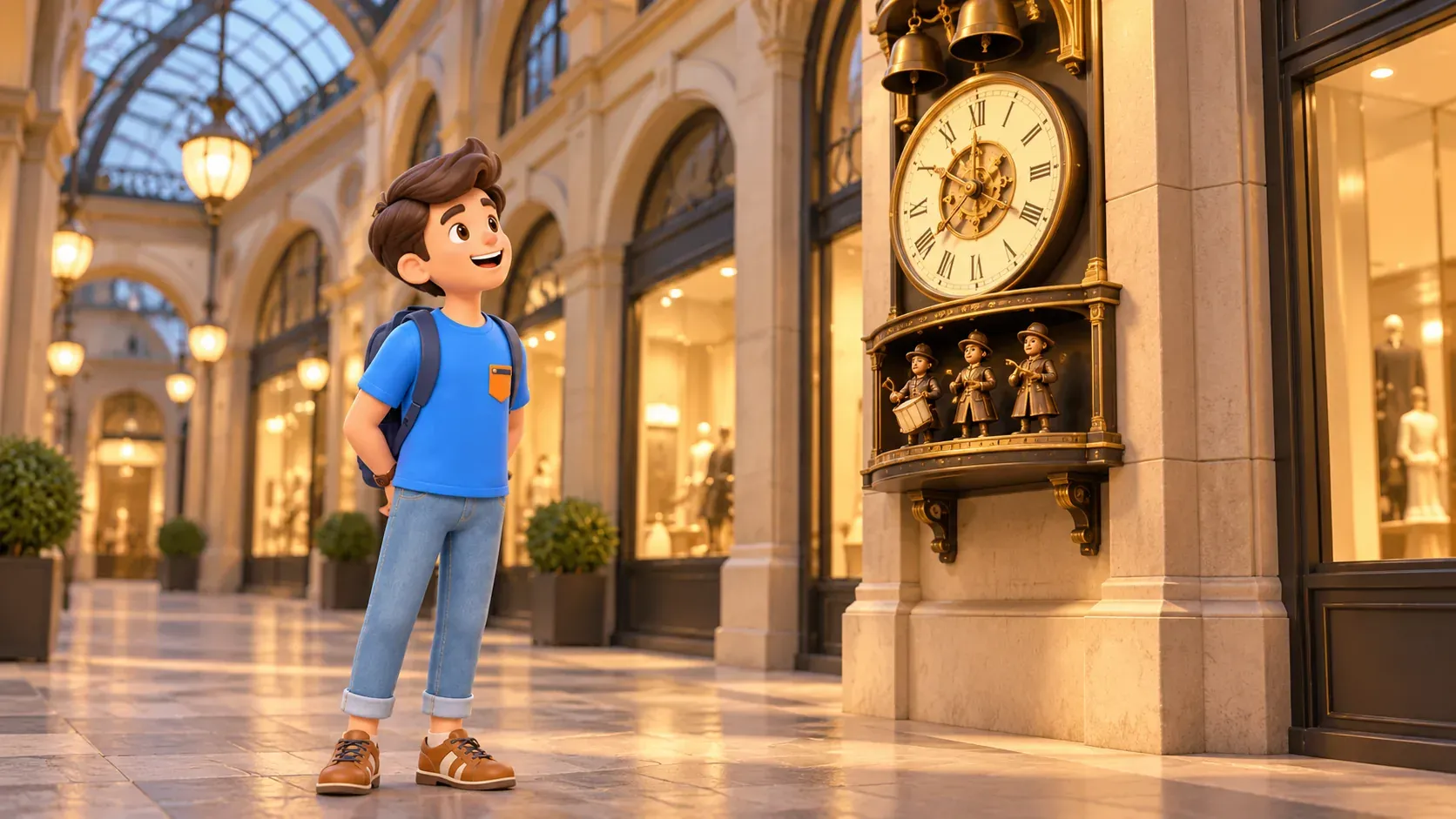
The Horloge du Malbuisson is in the covered Galerie Jean-Malbuisson in the lower town. Since 1962 its mechanical composition has drawn on the Escalade. This is another way to meet history: through a clock, figures and bell sounds rather than a large monument.
Created by clockmaker Edouard Wirth, the ensemble turns a local story into movement. Precision and narrative meet here. A clock can do more than display time; it can organise people’s attention around a little scene.
Ordinary clocks tell you when to move on. A mechanical scene gives you a reason to stop. That small contradiction suits a city walk: an object associated with counting time invites you to spend some time looking, rather than merely checking how much remains.
The official tourism description presents an hourly mechanical procession. Confirm passage access and the mechanism’s current operation when visiting. Avoid tying the day to a promise of a show to the second or assuming the covered gallery is open every night.
When a display takes place, first consider the composition as a whole. Then choose one movement or sound detail. Counting every figure and bell is unnecessary. Paying attention to a small action may reveal the mechanical idea more clearly.
If the performance does not coincide with your visit, the clock can still prompt an interest in this urban theatre format. A static look is not the same as having seen the show, however. Enjoy the actual episode instead of waiting indefinitely for an obligatory item.
The Escalade name opens another subject for discovering Geneva. For this stop, it is enough to understand that the mechanism addresses the city’s memory. Leave a detailed historical account for a separate day when you want to read and see more.
Look from a respectful distance and keep the passage clear. A small object in everyday surroundings shows how visitor curiosity shares space with normal city business. Buying something in neighbouring premises is not required for the experience.
Keep the three stories distinct in memory
After your chosen stop, make a small personal note. For the sculpture it might be a question about the character; for the boulders, a thought about a reference point; for the clock, one noticed mechanical gesture. Such notes bring back your own experience rather than replacing a guide.
A long factual list is unnecessary. Try three words or a simple sketch. Bronze, water and movement already provide different ways of feeling the city. Unusual Geneva depends on attention to familiar surroundings as well as on finding less obvious addresses.
With companions, compare what surprised each person. One remembers a literary connection, another the rock’s scientific role, another the mechanism. Personal interest matters more than identical answers. The conversation can suggest the theme of your next walk.
Choose one story for your route
With several days, distribute the ideas among different outings. Keep the sculpture for Plainpalais, the boulders for a lakeside walk and the clock for the lower centre. Each stop then gains its own setting without interrupting an already enjoyable route across another district.
Plainpalais lies southwest of the lower centre, the clock is in an urban gallery northeast from it, and the boulders are farther east in harbour water. These are not three neighbouring doors. Fit each idea into a suitable walk with time for connections and pauses.
Connecting these discoveries with the rest of the journey is easier in RoadMe. The app helps develop a complete personal plan around your interests and available time: an unusual episode, walking sections and rest become a clear sequence. Using it is much more convenient and efficient than assembling a day from scattered notes.
For the lake section, find your preferred rhythm in our comparison of Geneva’s shores for walking. If the clock sparks an interest in craftsmanship, our museum comparison by interest can help you choose a separate museum day.
Avoid assigning identical access and duration to all three. A public sculpture, rocks in water and a mechanism within a passage exist in different conditions. Choose what suits today’s route. One unexpected discovery can change the memory of the whole walk.