Which Geneva museum should you choose? Watches, art or city history

A museum day in Geneva can take very different forms. You might look closely at a watch mechanism, understand the city’s earlier shape, compare ceramic forms or consider how objects reached a collection. The best choice depends on the experience you want, rather than the collection’s size or the fame of its name.
This guide helps you choose one principal visit: the Patek Philippe Museum, the Museum of Art and History, MEG, Maison Tavel, Ariana or Fondation Baur. They occupy different parts of Geneva. Use the comparison to identify an interest and a visiting style, rather than treating six museums as a single day’s walking circuit.
Start with a question you would enjoy exploring
Try finishing this sentence: “After the museum, I would like to understand more about…” A precise mechanism suggests Patek Philippe; the city’s everyday past points towards Maison Tavel; artistic form and material may lead to Ariana. If no answer stands out, consider whether you enjoy close attention to small objects or moving between broader historical themes.
RoadMe makes it much easier to turn that choice into a complete personal trip plan. The app helps work out a coherent route around your interests and pace, bringing the right museum, an enjoyable nearby continuation and time to rest into a day that is convenient to use while travelling.
| What interests you | Where to begin choosing |
|---|---|
| Watches, mechanics and fine decoration | Patek Philippe Museum |
| Several fields of art and history | Musée d’art et d’histoire, MAH |
| Cultural diversity and objects’ histories | MEG |
| How Geneva lived and changed | Maison Tavel |
| Ceramics, glass and expressive materials | Musée Ariana |
| Art from China and Japan | Fondation Baur |
This is a starting point, not a ranking. One visitor prefers understanding how something works, another reading the urban environment, and another studying colour and surface. A successful visit needs the subject to meet your curiosity today.
When travelling together, let everyone name one subject they would enjoy. Sometimes the overlap is straightforward: watchmaking can interest both someone who likes engineering and someone drawn to decorative craftsmanship. Find that shared ground before deciding which museum location is most convenient.
Patek Philippe: precision and craftsmanship
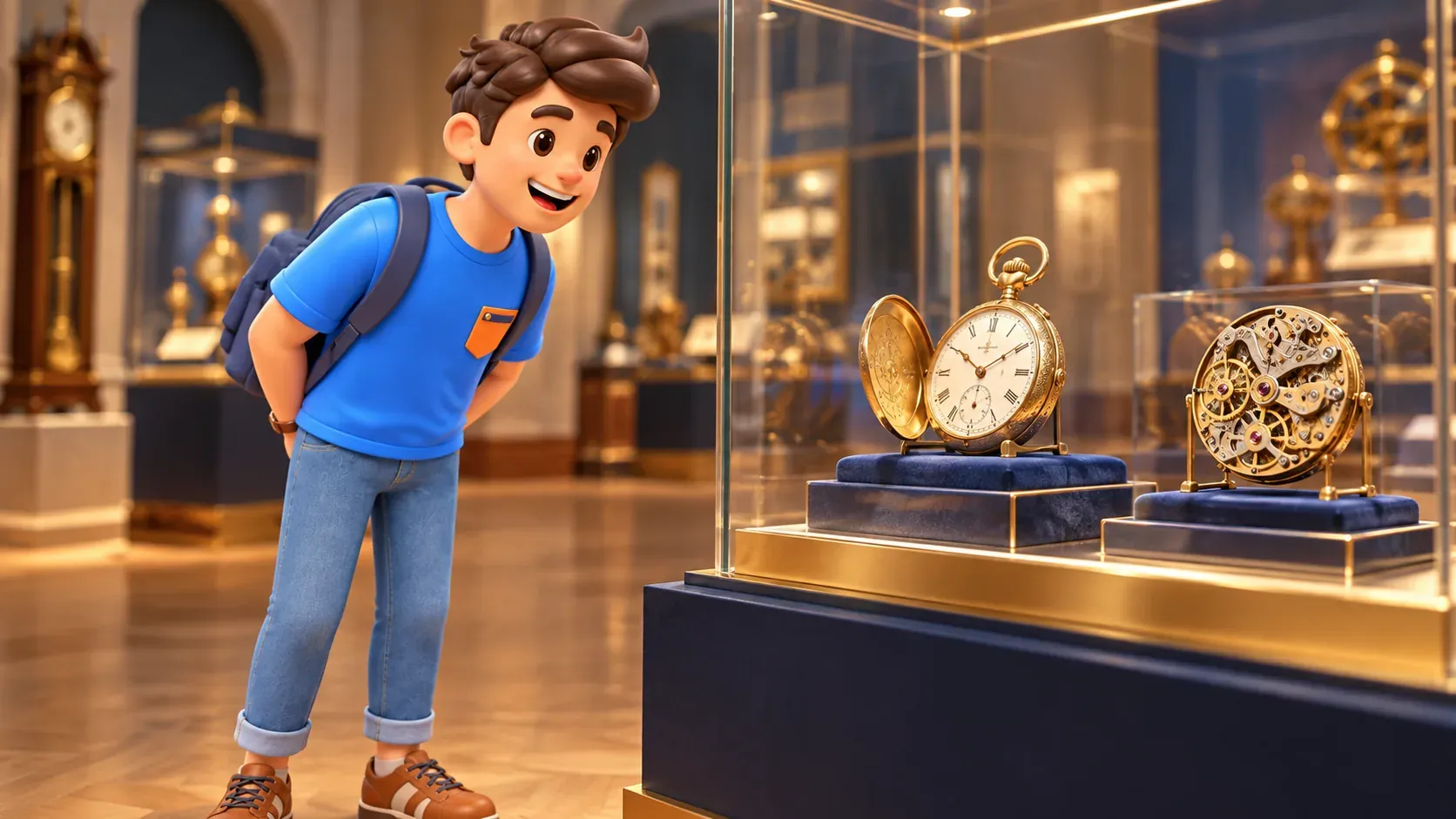
The Patek Philippe Museum suits an interest in watches as a meeting of mechanics and decorative art. The question is not only what time a watch tells, but how it measures time and why its outer decoration deserves a separate, attentive look.
The museum opened in 2001 in the former Ateliers Réunis production building. That connection with making adds meaning to the visit. A museum visit remains different from touring a working manufacture or shopping in a boutique: choose it for collections and the history of watchmaking.
Technical training is unnecessary. You can follow proportions, miniaturisation, combinations of materials or the way a mechanism is revealed. If you enjoy small details, the format may absorb you. If displays tire you quickly, choose one theme and leave the rest for a possible return.
Advance ticket purchase is recommended, but should not be described as universally compulsory for an ordinary individual visit: the operator also states that tickets can be bought at reception on the day. Check your own date. Sunday is included in the current weekly schedule, so an older blanket claim that Sundays are closed is unsuitable.
MAH: choose among several substantial subjects
The Musée d’art et d’histoire, or MAH, brings together archaeology, painting, sculpture and applied arts. Its monumental building by Marc Camoletti opened in 1910. It is an appealing option when you want a broad artistic and historical setting rather than one narrow field.
The collection’s breadth becomes an advantage when you allow yourself to choose. Instead of planning to “see the whole museum”, select one section or a small group of themes. Moving between periods can then support comparison rather than leave everything blurred together by the end.
Look for an object that unexpectedly holds your attention. A painting may interest you through composition, a crafted object through its making, an archaeological piece through the human action behind it. That personal entry can be more useful than trying to read every label equally carefully.
If MAH appeals only because it is large, return to your original question. Scale alone does not guarantee the right visit. Choose a place where you want to spend time with something specific, and confirm the availability of the programme that interests you before travelling.
MEG: people, interpretation and objects’ journeys
Geneva’s ethnography museum, MEG, was founded in 1901 and invites reflection on cultural diversity, sound and collection histories. Look beyond an object’s form to where it comes from, how it was used and the route by which it entered a museum collection.
This approach suits visitors who enjoy questions and context. Avoid reducing different cultures to a selection of unusual souvenirs. Objects have meanings, communities and circumstances of creation; museum interpretation helps reveal human relationships behind a beautiful display.
Choose one connecting idea for your visit, such as the role of sound or material in people’s lives. It gives you a way to look carefully without expecting an exhaustive understanding of every culture represented in the collections during a single afternoon.
MEG’s permanent exhibition is free; check temporary exhibitions and individual activities separately. Group booking rules should not automatically be applied to every individual visitor. Follow the arrangements for your actual visiting format, particularly when travelling with a larger party.
Maison Tavel: understand Geneva itself
Maison Tavel is a good choice when the city’s story matters more to you than a broad survey of world art. The medieval house and its expressive facade make the past tangible before you begin exploring the museum’s account. It brings the idea of “old Geneva” down to urban life and changing space.
The well-known Magnin relief offers a three-dimensional view of the earlier city. If the relevant display is available, begin with the overall form before identifying familiar places. Understanding the relationship between buildings, defences and surrounding space is more rewarding than naming every miniature landmark quickly.
Maison Tavel and MAH occupy different addresses. Choosing the historic house does not automatically include the larger Museum of Art and History. It is a separate option with its own subject and a natural continuation in the Old Town streets.
The official Tavel visitor guide describes a prix libre, or pay-what-you-choose, approach. Confirm arrangements for your date and special events separately. For a ready-made walking idea, see our day with Maison Tavel and a short walk towards the lake, adapting the outdoor section to the weather.
Ariana and Fondation Baur: two approaches to objects as art
Choose the Musée Ariana for ceramics and glass, form, surface and material. Its nineteenth-century building adds an architectural impression. This suits someone who enjoys spending time with an object and noticing how a small change in colour or outline alters its character.
You do not have to begin with specialist terms. Compare two objects: which form feels calmer, how does light pass through glass, what difference does a pattern make? This is an accessible way into the subject. Check current collection access, temporary exhibitions and entry conditions for the programme you select.
Fondation Baur presents art collections from China and Japan assembled by Alfred Baur. It offers a more specific geographical and collecting interest. Describing it as a survey of all Asian art would miss its character; the value lies in a particular collection and attentive looking.
For Baur, choose the programme you want and confirm its calendar ahead. Wednesday evening openings relate to particular announced events, rather than a universal weekly late-opening rule. If an evening visit matters, use an actual dated programme.
Turn one museum into a satisfying day
Before deciding, think about how you like looking. Patek Philippe and Ariana offer reasons to linger over an object’s small details. Maison Tavel helps connect a museum subject with real streets. MEG particularly rewards an interest in context. These are useful tendencies rather than strict boundaries; personal curiosity can find unexpected routes through any collection.
For a shared visit, agree on expectations as well as the name. One person may want to read explanations closely while another prefers to look quietly first. Choose a common theme, allow some individual attention, then exchange observations. A museum becomes a shared experience without requiring everyone to move through the galleries identically.
If two options appeal equally, consider the rest of the day. Staying within a chosen district avoids extra travel, while a collection you genuinely want may deserve a separate journey. Compare convenience and curiosity together: the nearest address is not always the best, just as the most famous name is not always the right choice for you.
Patek Philippe and MEG are near Plainpalais, southwest of the old centre. Maison Tavel is in the Old Town; MAH and Fondation Baur lie towards its southeastern side. Ariana is considerably farther north in the Nations district, so it calls for a separate travel decision.
Two museums being near each other does not make the second compulsory. Visit your principal choice first and decide whether another substantial subject feels appealing. A small walk and a conversation can continue the museum experience better than immediately entering more galleries.
Connecting a museum with the rest of the journey is easier in RoadMe. The app helps develop a complete personal plan around your interests and available time, bringing a cultural visit, a suitable continuation and rest into one clear sequence. Using it is much more convenient and efficient than assembling the day from scattered notes.
Before leaving, confirm the weekday, actual programme and admission arrangements. Many museums normally close on Mondays; rain does not change their calendars. Check particular needs involving accessibility, belongings or photography with the chosen institution. There is no single fully checked set of rules for all six here.
A good outcome is simple: afterwards, you can name one thought that genuinely stayed with you. A watch, the city’s past, an artwork or an object’s history can all provide it, when the subject meets your interest and you leave enough time to notice.