
Geneva’s religious heritage: choose a church and synagogue walk
Geneva is often associated with the Reformation, but its religious heritage extends beyond one historical story. In different parts of the centre stand a Reformed cathedral, a Lutheran church house, an Orthodox cathedral, a Catholic basilica, an Anglican church and a synagogue. Their architecture offers a way to see how different communities became part of urban life.
A rewarding walk does not require visiting every building in one day. Choose a compact area and one main interest: Old Town history, architectural contrasts or a particular place you want to understand. The options below use RoadMe’s selected sites. They represent Christian traditions and Jewish heritage, rather than a complete account of all religions in Geneva.
Choose an area and a kind of visit first
In the Old Town, combine Saint-Pierre Cathedral with the nearby Lutheran church, adding the Orthodox cathedral towards Tranchées if you wish. On the right bank, Notre-Dame near Cornavin and Holy Trinity on Rue du Mont-Blanc form another compact pair. Beth-Yaacov works best as a separate objective.
RoadMe makes it much easier to create a complete personal walking or trip plan around your interests and pace. Try shaping your Geneva day around architecture, history or a chosen visit, with enough time to appreciate each place calmly.
Then decide whether you want to enter a building. If so, make one interior the main visit and start with confirmed access information. Other façades become nearby stops. This is easier than trying to align several community calendars within one short walking window.
No fixed duration is given here. An outdoor pair occupies a different amount of the day from a tour, tower climb or long interior visit. Allow room for approaches, pauses and the current life of each place. A worship timetable should not automatically be read as tourist opening hours.
If travelling together, agree on the main interest beforehand. One chosen interior and several exterior stops can accommodate different preferences without repeatedly waiting at doors. Other buildings can remain worthwhile subjects for a later visit.
The Old Town: two Protestant traditions nearby
Saint-Pierre: reading several periods together
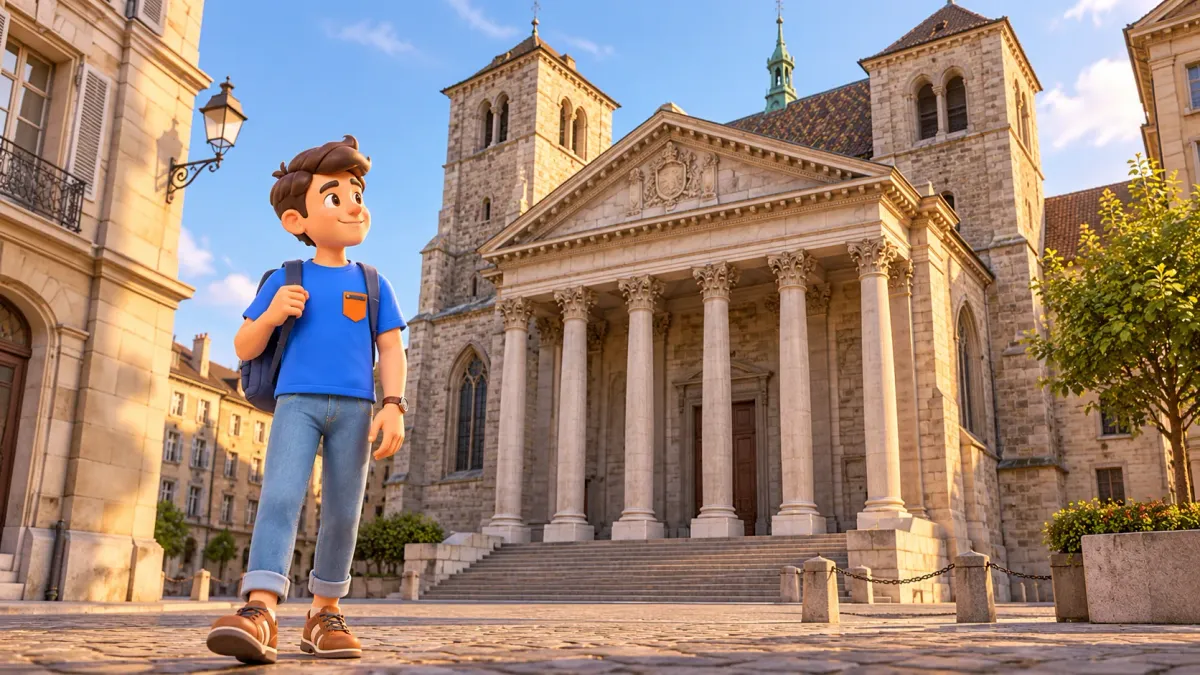
The Cathédrale Saint-Pierre stands on the hill at Cour de Saint-Pierre. Its medieval building has been associated with the Reformed tradition since the sixteenth century. Romanesque and Gothic elements coexist with an eighteenth-century portico, a reminder of later alterations. Even from outside, the building clearly belongs to more than one moment.
Begin with the outline, then consider the relationship between the portico and older portions. Contrasting forms make it easier to see the cathedral as an urban monument shaped over time. Architectural vocabulary is optional: notice which elements feel strict and geometric and which direct the eye upwards.
For an interior visit, separate the activities. The church, tower ascent and archaeological site have different conditions and time requirements. Entering the building does not automatically include a tour, open towers or the underground area. If church architecture is your main interest, concentrating on it alone is a reasonable choice.
An exterior-only stop remains worthwhile. Look at how the public forecourt provides distance from the façade and where surrounding streets become narrower again. This change of scale helps explain the arrangement of the upper town.
The Lutheran church: a different urban scale
The nearby Église luthérienne is at 20 Rue Verdaine, by Bourg-de-Four. Its eighteenth-century building offers a more intimate urban scale. After the prominent cathedral, it is interesting to encounter a place whose story is read through its position within ordinary streets.
The Lutheran tradition is not another name for the Reformed cathedral. For a short walk, understand it as a distinct Protestant community with its own history and present life. Architectural proximity makes diversity visible without turning the outing into a detailed theological lesson.
Compare the two addresses through observable features. How is the entrance emphasised? How easily can you recognise the building’s purpose from the street? How does it relate to neighbouring houses? These questions are more helpful than a competition in monumentality. A restrained façade can reveal plenty through its urban setting.
The church remains active. A calendar of services and events can help when choosing a particular occasion, but does not promise around-the-clock sightseeing access. Seeing the exterior does not require open doors; going inside should match the community’s current arrangements.
Continuing towards Tranchées: the Orthodox cathedral
To extend the Old Town option, follow public streets southeast towards 9 Rue Rodolphe-Toepffer. The Russian Orthodox Cathedral of the Exaltation of the Holy Cross dates from 1866. Its golden domes and light-coloured silhouette introduce a noticeable change in architectural language.
Reaching it is a separate section of the walk, not simply the next door after Saint-Pierre. Leave time to notice the changing surroundings and arrive without hurrying. If your main interior has already used most of the available window, this stop can belong to another day.
From outside, consider the rhythm of the domes and their relationship with the main body of the building. No particular faith or background is assumed of the visitor. Architecture provides an accessible subject for anyone interested in the city; the national description in the name refers to the site’s history rather than an expected personal connection.
If you wish to enter, check general access separately from worship. Do not treat an ordinary Monday as a dependable sightseeing opportunity: the published regular schedule identifies it as a closure day. On other days, an active cathedral should still not be approached as a museum with an unchanging tourist routine.
You can finish the chosen cluster here. It already shows different forms of religious presence: a major historic centre, a smaller church house and a distinctive cathedral in another setting. There is no need to cross the Rhône immediately for the walk to feel complete.
Cornavin and Mont-Blanc: a compact right-bank pair
Notre-Dame: Gothic Revival near the station district
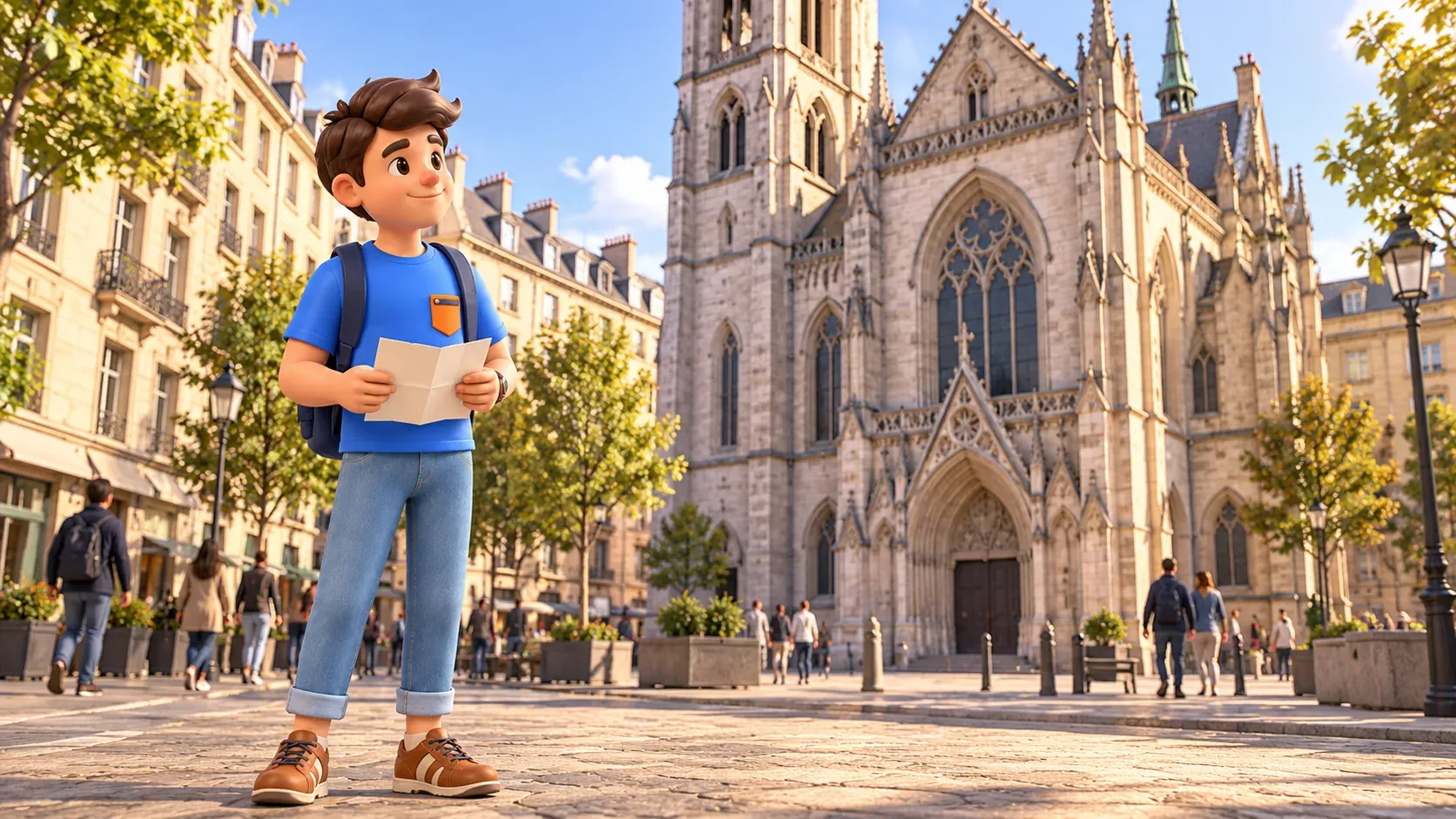
The Basilique Notre-Dame de Genève stands by Place Cornavin. Consecrated in 1859, the Catholic basilica provides another view of nineteenth-century religious architecture through its Gothic Revival form. Ordinary central-city activity continues around it, making the contrast with the church setting particularly noticeable.
Begin with the façade and vertical lines. If interior visiting is available, light and stained glass offer a useful focus without trying to study every artistic element at once. Choose a subject that interests you and allow time simply to look around.
Distinguish general access hours from Mass and other religious occasions. A service time describes community life, not a convenient slot for walking-tour photography. For an architectural visit, choose an appropriate window using current information and instructions at the building.
Holy Trinity: an Anglican history close by
In the same right-bank area, Holy Trinity Church is at 14b Rue du Mont-Blanc. The present Anglican church was consecrated in 1853. The state provided the site, while private donations supported construction: a small detail in the story of a permanent home for the community.
After Notre-Dame, compare not only external forms but the presence of two different communities within a nearby part of the city. They belong to distinct Christian traditions and maintain separate calendars. Geographic proximity makes the walk compact without combining access arrangements.
This pair works as an independent subject near Cornavin. It may suit someone who does not want to add the climb into the Old Town. Exact access to each approach and entrance still needs separate consideration: being on the same riverbank does not guarantee an obstacle-free route.
To connect your chosen places with other neighbourhoods and the rest of your trip, let RoadMe work out a personal plan around your interests and available time. The app makes arranging a coherent route much more convenient and effective than manually joining several calendars and scattered notes.
Beth-Yaacov: a separate objective with a clear format
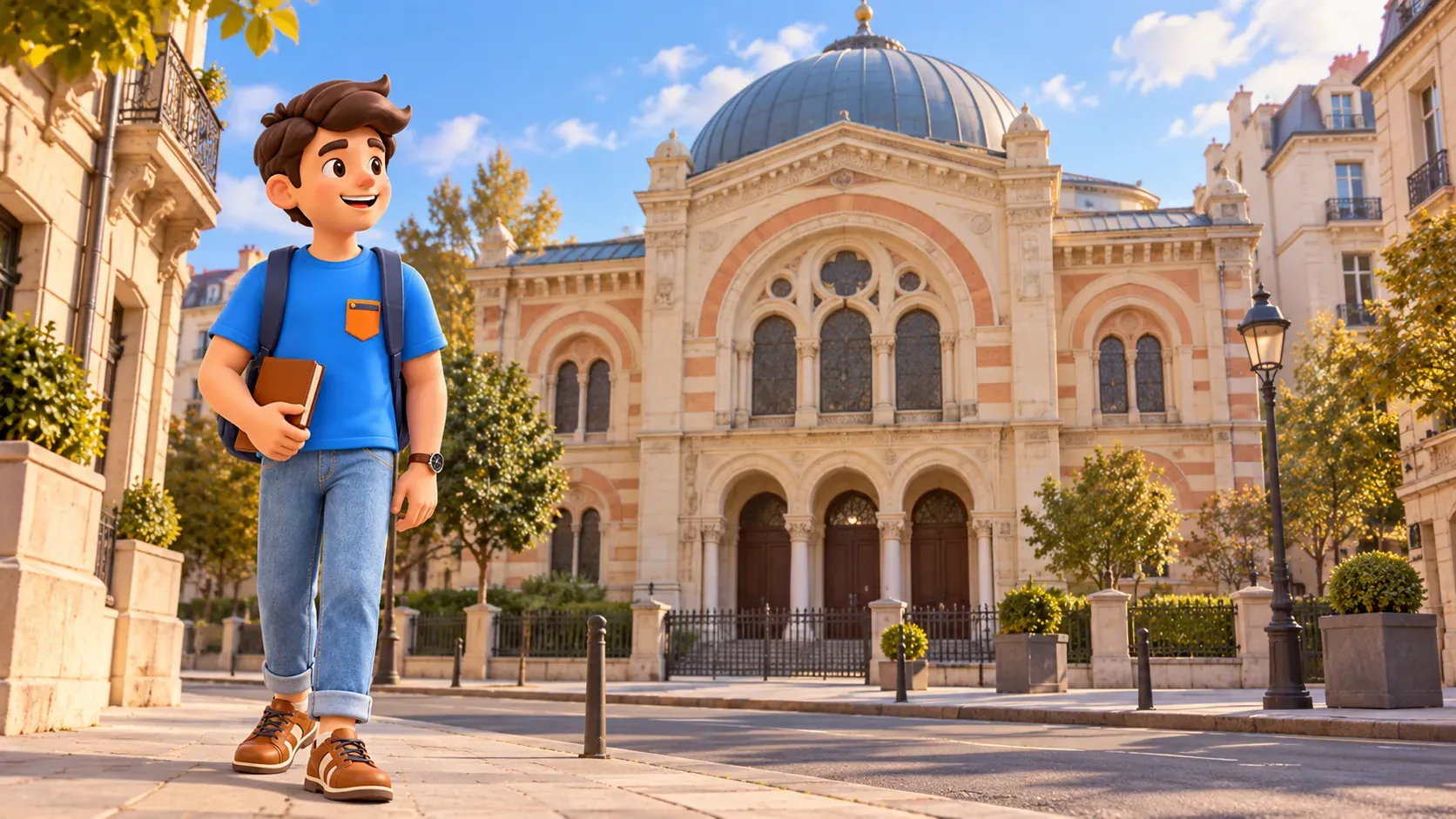
The Synagogue Beth-Yaacov is at 7 Place de la Synagogue. Its 1859 building connects architecture with the history of Geneva’s Jewish community. An exterior stop reveals another important layer of the city’s heritage and retains its own value without an interior visit.
The synagogue is on the left bank, west of the Old Town churches. It should not be silently inserted between Notre-Dame and Holy Trinity: that combination requires an actual crossing of the Rhône. Choosing it as an independent destination or deliberately including it in a broader day makes a clearer plan.
For an interior, look for an announced guided visit or an arrangement through the community. Prayer times are not tourist hours, and individual event announcements do not establish unrestricted daily sightseeing. Confirm the conditions of the particular visit, including any registration required.
Outside, pause in permitted public space without obstructing the entrance. Notice how the building organises its square and differs from the surrounding streets. A respectful introduction does not require approaching attendees with a camera or attempting to find your own way inside.
Choosing the walk that suits you
For an introduction focused on history, choose Saint-Pierre and the Lutheran church. For nineteenth-century architectural comparisons, consider the right-bank pair or the Orthodox cathedral separately. If Jewish heritage is the main interest, begin with Beth-Yaacov and an appropriate visit format. These are choices of subject, not rankings of religious traditions.
In every case, leave active communities room for their own life. Follow instructions about behaviour and photography, consider prayer and avoid making worshippers an intrusive backdrop. Individual rules vary; there is no universal permission to photograph or identical access system across these places.
For a wider day, use the first-visit walking options for Geneva and add one chosen religious cluster. The theme remains meaningful without turning the day into a sequence of checking doors.


