
Grand-Rue and Rue des Granges: a walk among Geneva’s old houses
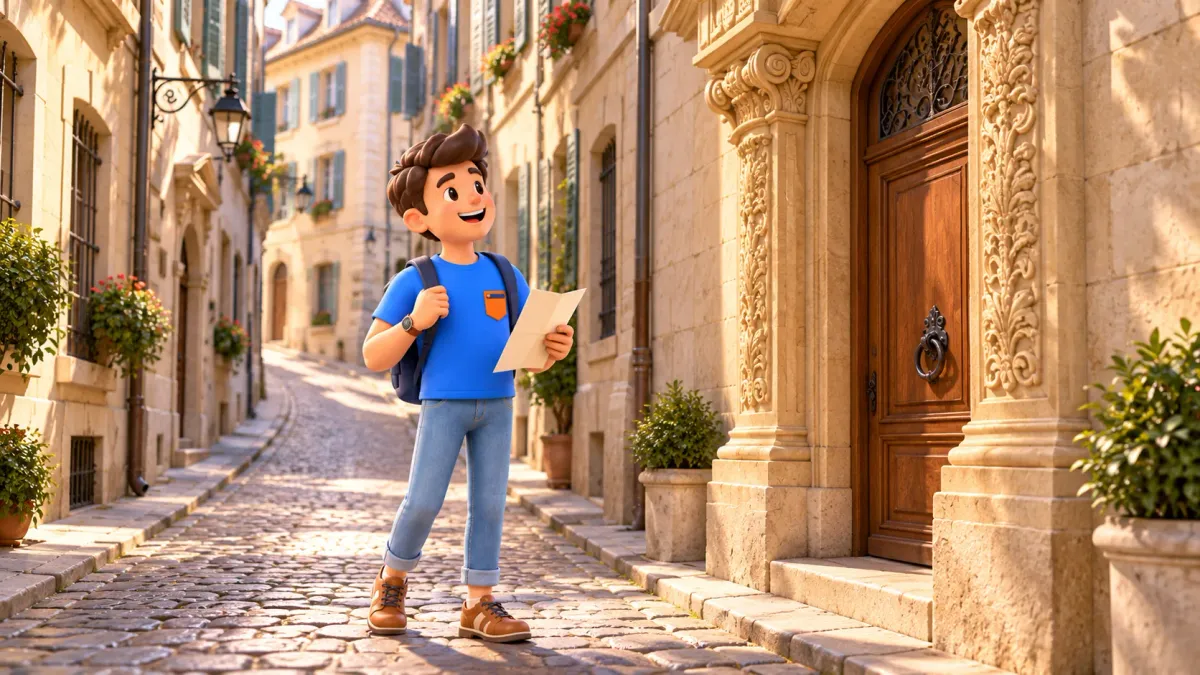
Geneva’s Old Town becomes more interesting when you slow down between its major sights. A carved doorway, a line of windows or the way a house meets a sloping street can reveal something a quick landmark circuit misses. Around Grand-Rue and Rue des Granges, several historic townhouses make a particularly rewarding introduction to this smaller scale of discovery.
This walk gives those details a simple framework. Follow a handful of neighbouring streets, compare six buildings from public space and finish with a clearer sense of how the old city fits together. It works as a gentle morning outing, a break between indoor visits or a second look at a district you have already crossed.
A small circuit with time to look
Start on Rue de la Cité at Maison de Saussure. Continue to the Société de Lecture and Maison Pictet on Grand-Rue, then make a small circuit through Rue des Granges and Rue de l’Hôtel-de-Ville, finishing on Rue Jean-Calvin. The sequence groups nearby buildings into an intelligible walk rather than six separate searches across the centre.
RoadMe makes it much easier to turn an interest in architecture into a complete personal walking or trip plan, shaped around your interests and pace. Try building your Geneva day around the details you actually want time to enjoy.
Allow approximately 60–90 minutes for the outdoor circuit with short pauses. That is a planning estimate, not a measured walking time, and excludes interior visits or a long café stop. Sketching, travelling with children or taking photographs can easily make it a longer outing. Short distances do not remove the effect of slopes and paving.
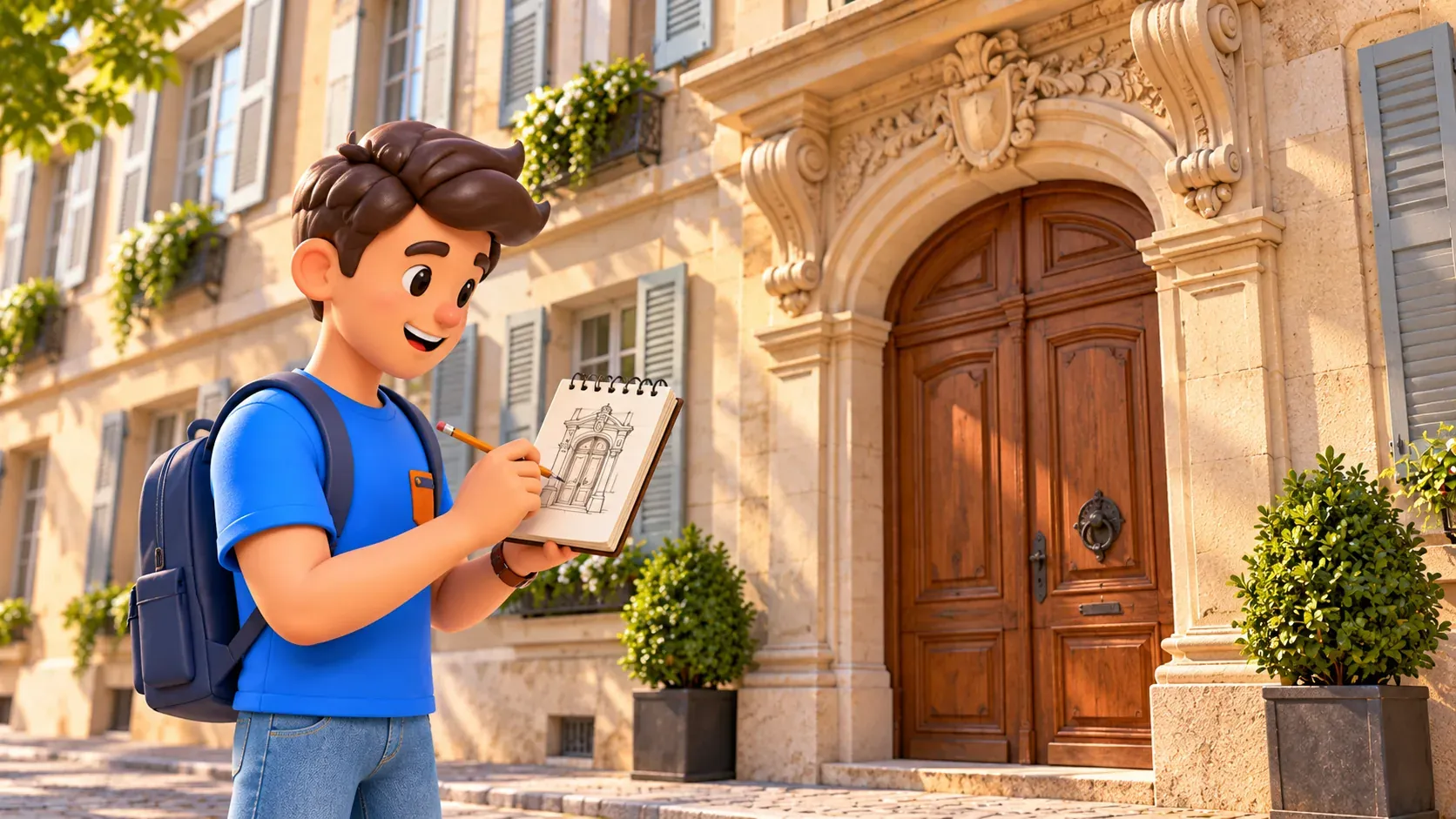
Keep the equipment simple: comfortable footwear, a light bag and perhaps a small notebook. Give yourself three things to remember by the end: an entrance that caught your attention, a particularly calm façade and a building that helped you understand the hillside. This makes a more personal souvenir than collecting every date.
Rue de la Cité: let the slope explain the house
Maison de Saussure, at 24 Rue de la Cité, offers a useful starting question. The mansion was developed in the early eighteenth century on the complicated slope between Cité and Corraterie. How does a substantial urban house adapt when the street beneath it refuses to stay level?
Look at its lower portion and the relationship between the entrance and the pavement. Then take a few steps up or down, where doing so is comfortable, and notice how your impression changes. The building belongs to the topography of the old city. You can appreciate that relationship without searching for a private courtyard or stairway.
Begin with the whole building before concentrating on a single detail. Otherwise, it is easy to remember an attractive door fitting and lose the proportions that gave it a setting. Leave room for people passing, choose a safe position and take a moment to establish the scale of the house against the street.
Grand-Rue: two neighbours, two ways of reading history
The Société de Lecture at Grand-Rue 11 and Maison Pictet at Grand-Rue 15 are close enough to compare without a substantial walk between them. Find the numbers first, then let the buildings occupy your attention. Their value here is the conversation between what you see and the different lives these addresses have held.
Société de Lecture: a continuing cultural life
Geneva’s reading society was founded in 1818 and established itself in the historic residence of the French representative. A distinguished urban house acquired another purpose through books and cultural activity. That change is a useful reminder that a building’s history can continue long after its original household or official function has disappeared.
The Société de Lecture remains a working library and cultural institution with membership. Library or secretariat opening hours do not automatically grant tourists access to all its rooms. If an interior visit matters to you, choose a confirmed public event or arrange an appropriate visit beforehand. The basic walk simply appreciates the building from outside.
Think about the different kinds of activity an old address can accommodate: representation, reading, conversation and everyday work. A closed door does not make the building irrelevant to the walk. It helps explain that you are looking at a living part of Geneva, with a present as well as a past.
Maison Pictet: a broader house in an older street
Maison Pictet at Grand-Rue 15 was built in 1690–1693 by Abraham Calame for Jacques Pictet. The municipal account describes four narrow medieval plots brought together behind a unified architectural composition. This is the kind of historical detail that changes what you can actually see: a substantial house emerging within a much older street pattern.
First consider the width and rhythm of the façade. Then look at the carved entrance, which draws attention while remaining part of the larger design. Try imagining the doorway without its decoration. Would the house still feel imposing? Return to the carving and notice what it adds to the experience of approaching the building.
Keep the address in mind. This stop is the historic house on Grand-Rue, not a substitute banking office or another Geneva building associated with the Pictet name. You do not need to follow every family connection to enjoy the walk; one correctly identified building gives you plenty to notice.
Rue des Granges: widen your attention to the street
Continue to Rue des Granges and the Maison Jean-Jacques Naville at number 8. This historic house anchors the next part of the route, but the best change of pace is to look beyond a single entrance. Let the street become the subject for a few minutes.
Notice the repetition of windows, differences in height and the way separate entrances sit within the longer row. You do not need an immediate explanation for every variation. It is enough to recognise how buildings can share an overall character while addressing the passer-by differently: one emphasises its doorway, another relies on an even rhythm across its floors.
Move a little before choosing a photograph. A relatively straight view helps with proportions; an oblique angle gives depth and shows how the street unfolds. Avoid stepping into traffic or obstructing a doorway for symmetry. A slightly imperfect viewpoint often makes a more useful record of the place as you experienced it.
With children, turn this into a small observation game. Find one round shape, one rectangle and one curved line, then choose a favourite entrance. It provides a clear purpose without asking anyone to learn the full vocabulary of European architectural styles. Adults may find the same exercise surprisingly helpful.
Rue des Granges gives this walk part of its name, but the six houses are spread across several adjacent streets. The appeal lies in a connected piece of the Old Town. Do not expect every address in the selection to appear along a single row.
Maison Turrettini: a house with more than one moment in time
Continue towards Maison Turrettini at 10 Rue de l’Hôtel-de-Ville. Its construction is dated to 1617–1620, making it an example of a substantial early seventeenth-century urban mansion. Later extensions and alterations contributed to the building you see today. Its history does not end with its first construction phase.
This is a useful place to drop the expectation that a historic building must belong entirely to one date. Old streets accumulate decisions about what to keep and what to adapt. You do not need to assign a year to each feature. Simply allow for several layers of time within the same address.
Compare your impression with Maison Pictet. Which façade feels more unified? Where does the entrance make the stronger statement? How does the apparent scale change when you stand closer and then move back? These questions make the walk rewarding even if architectural orders and the names of builders are unfamiliar.
Everyday life continues around these buildings. An open door, a member of staff walking through or a resident arriving home is not an invitation to enter. Looking carefully from public space is a complete activity in itself, and respecting the present use of a house belongs naturally with appreciating its history.
Rue Jean-Calvin: one final comparison
Finish the circuit near the Ancien Hôtel Buisson at 13 Rue Jean-Calvin. Dating from around the turn of the seventeenth and eighteenth centuries, the former mansion is associated with the introduction of the French type of grand urban residence in Geneva. In this historical usage, hôtel means a mansion; it does not promise a functioning hotel.
By now, the shared language of the streets should feel easier to recognise: the size of an entrance, the arrangement of windows and the effect of a coherent frontage. Choose one quality that distinguishes this building from an earlier favourite. The most memorable feature does not have to be the richest decoration.
To connect these discoveries with museums, walks and the rest of your trip, let RoadMe work out a personal plan around your interests and available time. Using the app makes arranging a coherent route much more convenient and effective than assembling the day from scattered notes.
This is a natural place to end the architectural part of the outing and take a break. You have followed a complete thread, from a house shaped by a hillside to a longer streetscape and different expressions of the grand urban home. There is no need to add several more sights immediately.
Choose the version that fits your day
For a shorter outing, keep Rue de la Cité and the two Grand-Rue stops. That leaves a clear beginning and a rewarding comparison between neighbouring houses. For a longer architectural wander, complete the circuit and allow a separate, unhurried pause for a sketch or a drink afterwards.
If a Société de Lecture event is the main attraction, start planning with its confirmed time and access conditions. Fit the outdoor walk before or after it. Do not squeeze an indoor programme into the original 60–90-minute estimate: that allowance concerns the street circuit with brief pauses only.
Take extra care with paving after rain. A shorter version may suit a pushchair or someone who finds slopes tiring, but this walk has not been surveyed as a guaranteed step-free route. Individual approaches and the condition of surfaces deserve separate attention when access requirements determine the plan.
The basic outdoor itinerary does not include admission to any building; refreshments, transport and separately arranged events belong to your own budget. You can leave the exhaustive catalogue of owners at home. A few addresses and a willingness to look above the shopfronts are enough to make familiar-looking streets feel newly interesting.


