
Les Grottes: Geneva’s Smurf buildings and a walk behind the station
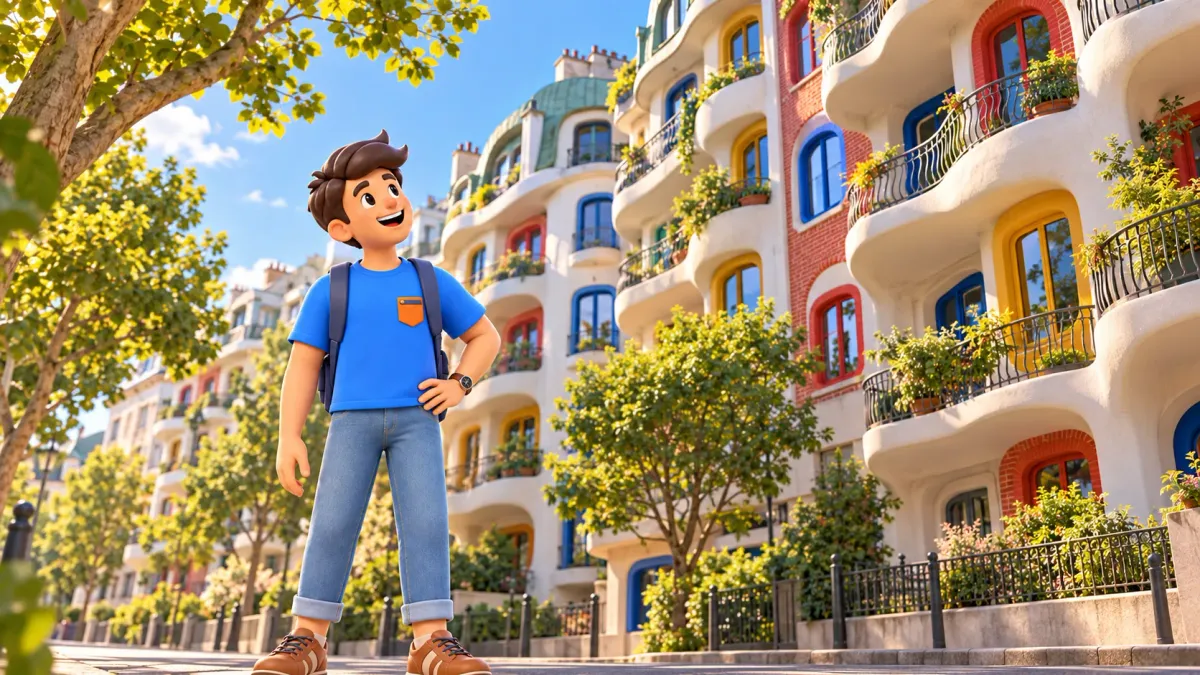
Behind Cornavin station, Geneva offers a different sort of short walk: residential streets in Les Grottes, the unusual facades nicknamed the Smurf buildings, and the greenery of Parc des Cropettes. Two main stops are enough. Look at the buildings from public streets, then continue to the park’s pond and Fille au poisson sculpture. There are no museum bookings to organise, and you can let architecture or a proper rest set the pace.
The Smurf buildings are occupied homes, rather than a theme park. An exterior visit does not include apartments, entrances, staircases or residential courtyards. Give the buildings the first part of the outing and the park the second. The pond and sculpture belong to the same park stop, so you do not need another neighbourhood transfer to reach the artwork.
Start towards Les Grottes and finish in the park
From Cornavin, choose the Les Grottes direction rather than the lake. Use public streets to reach Rue Louis-Favre, with numbers 23–29 as your reference. The buildings lie west of Parc des Cropettes. After the exterior visit, continue east towards the park’s permitted entrances from the surrounding streets. Returning towards the station is a practical finish, but select the useful exit before time becomes tight.
Try RoadMe to work out a complete personal trip plan around your interests and preferred pace. It makes it more convenient to connect this neighbourhood walk with the rest of the day while leaving time for both architectural details and a genuine park break.
Keep two different map scales in mind: the particular residential buildings on Louis-Favre and the park as a whole. Their proximity does not establish a direct route through every courtyard. Follow streets, pavements and clearly available entrances. If navigation suggests cutting through a building or restricted space, choose the ordinary urban approach. The walk is simple because it has few main goals, rather than because every transfer must be the shortest possible line.
Avoid assigning identical time to every stop. You might look at the facades briefly or spend longer comparing details; the park then allows you to linger without adding another attraction. If the day is already full, choose one main interest. A separate walk to the buildings or a visit just to Cropettes and its pond can each work. There is no measured sequence or compulsory overall duration to complete.
See the Smurf buildings as an experiment in everyday housing
The nickname Immeubles des Schtroumpfs comes from imaginative shapes associated with the comic-book world. Curved walls, projecting balconies, colour and decorative details interrupt expectations of ordinary apartment architecture. You need not search for literal cartoon houses or themed scenery. The interest lies in a real architectural experiment within a neighbourhood where people continue to live and use the buildings.
The ensemble developed during the 1980s. Robert Frei, Christian Hunziker and Georges Berthoud are associated with its early part. Comparisons with Gaudí’s freedom of form help suggest the mood, but do not make the Spanish architect its designer. A few ideas are enough for the visit: late twentieth-century housing and a conspicuous exploration of shape. You can see the difference from stricter neighbouring facades without learning every construction phase.
First look at the building as a whole from a public position. How does it occupy the street, where do surfaces flow, and where do volumes project? Then move to another available point while staying on the pavement. The composition changes as you walk: a detail that seemed minor can begin to define the outline. This is more rewarding than searching for a single photograph expected to explain the entire ensemble.
Consider the practical side too. A balcony, window or entrance keeps its everyday purpose even when given an expressive shape. That relationship helps explain why the architecture is memorable. It suggests individual character within ordinary housing rather than turning the building into a museum. There is little need to judge it solely by how closely it resembles a fairy tale or contradicts expectations of restrained Switzerland.
Choose one facade detail to study from the street
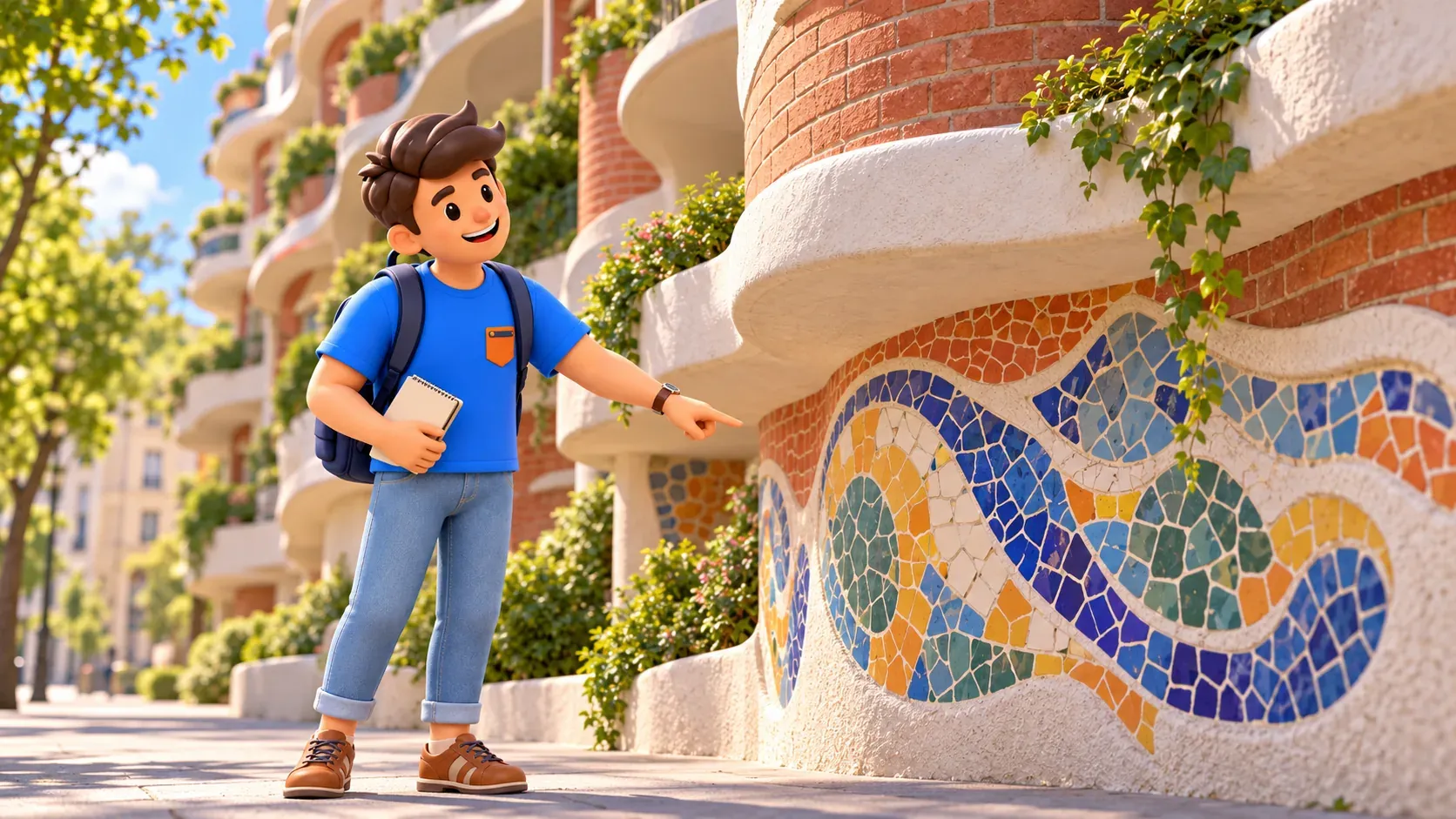
After the overall view, focus on a single element: a curved railing, a colour combination, the modelling of a balcony or a finish visible from public space. Notice how the detail meets the next surface. Even a short stop then produces a specific observation rather than a collection of hurried pictures. You might compare a soft line with a more angular part and see how they work together.
Maintain an appropriate distance. Windows and balconies belong to private lives rather than exhibition cases. Avoid close photographs of what is happening inside homes, and do not wait by a door for the chance to follow a resident. An entrance briefly opening does not invite a staircase visit. There is enough to understand from the street without turning architectural curiosity into an intrusion.
Children can look for forms without touching the buildings: a rounded line, a projecting volume or a repeated colour. None of this requires entering a courtyard or standing at someone’s window. Agree beforehand on the limits of the public walk. The buildings then offer a useful way to discuss a city in which interesting architecture also belongs to other people’s daily surroundings.
In rain, do not treat a residential entrance as a group shelter. Shorten the exterior stop if the weather makes looking difficult, then continue by the normal route. An interest in architecture does not require seeing every corner. A few carefully noticed details can leave a more accurate impression than trying to reach an angle from somebody else’s photograph when it is not on a public street.
Move east from the facades towards Cropettes
Continue towards Parc des Cropettes through the neighbourhood streets. The transition is part of the outing; the buildings and park are not linked by a special visitor corridor. Find an open permitted entrance and notice how the green space sits beside the station and dense urban development. You need not make elaborate detours for every possible building view when the next part offers a different kind of experience.
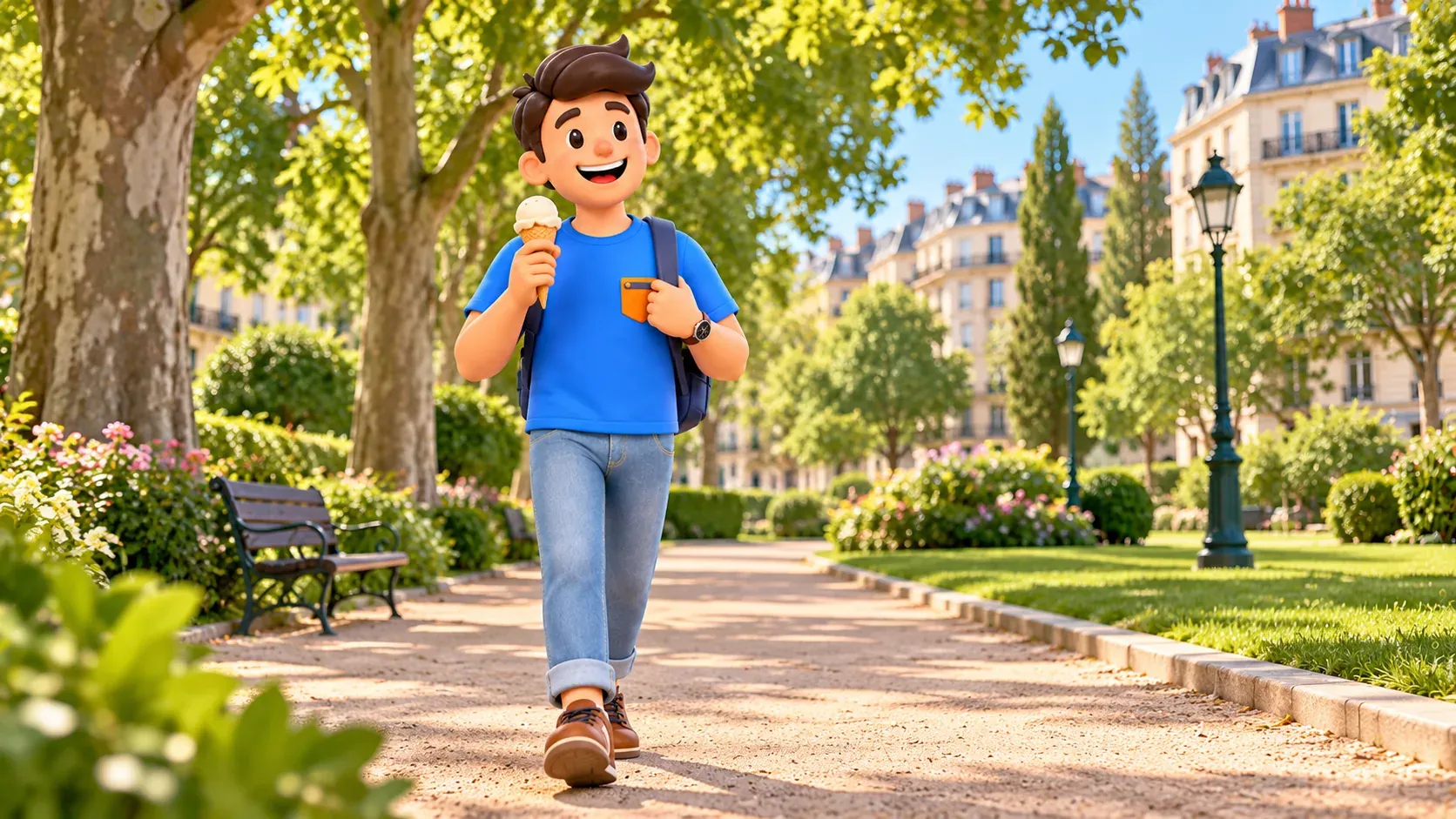
Inside the park, attention moves from wall colours and balcony lines to trees, light and path directions. Follow a comfortable section before heading straight to the pond. This gives Cropettes a role beyond serving as a passage to the sculpture. Compare an open space with a shadier one, or notice how a path reveals different sides of the same tree group. Slow walking can provide interest without a formal botanical task.
The park’s history as a public garden reaches back to the nineteenth century. Local rest, gatherings and events belong to its identity as much as sightseeing. Expect ordinary public life rather than permanent silence. People may be playing, talking, passing through or preparing an event. These activities are part of the meaning of a shared place with mature trees and room for a daily pause.
A few paths and a chosen resting spot are enough for a first visit. There is no need to walk the entire area before allowing yourself to sit. When visiting together, ask whether people would prefer a little more movement or a seat first. Such small choices shape a pleasant short outing. A long list of mandatory actions would make the change from residential street to park harder to appreciate.
The pond and Fille au poisson form one park stop
Ursula Malbin’s Fille au poisson stands in the water setting within Cropettes. The bronze work was installed here in 1971 and depicts a young figure carrying a large fish. The body’s curve conveys weight, while the surrounding water connects image and place. Begin with an overall view from the path, then study the outline from a permitted position without trying to reach the sculpture through the pond.
There are two ways of looking at this stop: the pond as part of the park, and the figure as an artwork. Start with reflections and the bank line, then turn to the arms and bending body. After the facades, this creates an interesting comparison between architecture reshaping an everyday volume and sculpture suggesting movement in a human figure. You do not need a long lecture or a single correct interpretation.
If the path is clear, change viewpoint along it. A different background can make the gesture read differently. Do not treat the pond as a swimming place, a water-play area or an approach to the bronze. Seasonal water conditions and current restrictions may change. Even when reflections are less striking than expected, the composition and its position within the park remain worth a thoughtful look.
With children, discuss how the artist suggests heaviness in a fixed work: what looks tense in the pose, and why does the figure bend? This is an observation question rather than a test of the title. Stay on the banks and paths. Understanding the work does not require copying its pose beside the water, touching its surface or attracting living pond creatures for a photograph.
Leave room for a pause and a simple ending
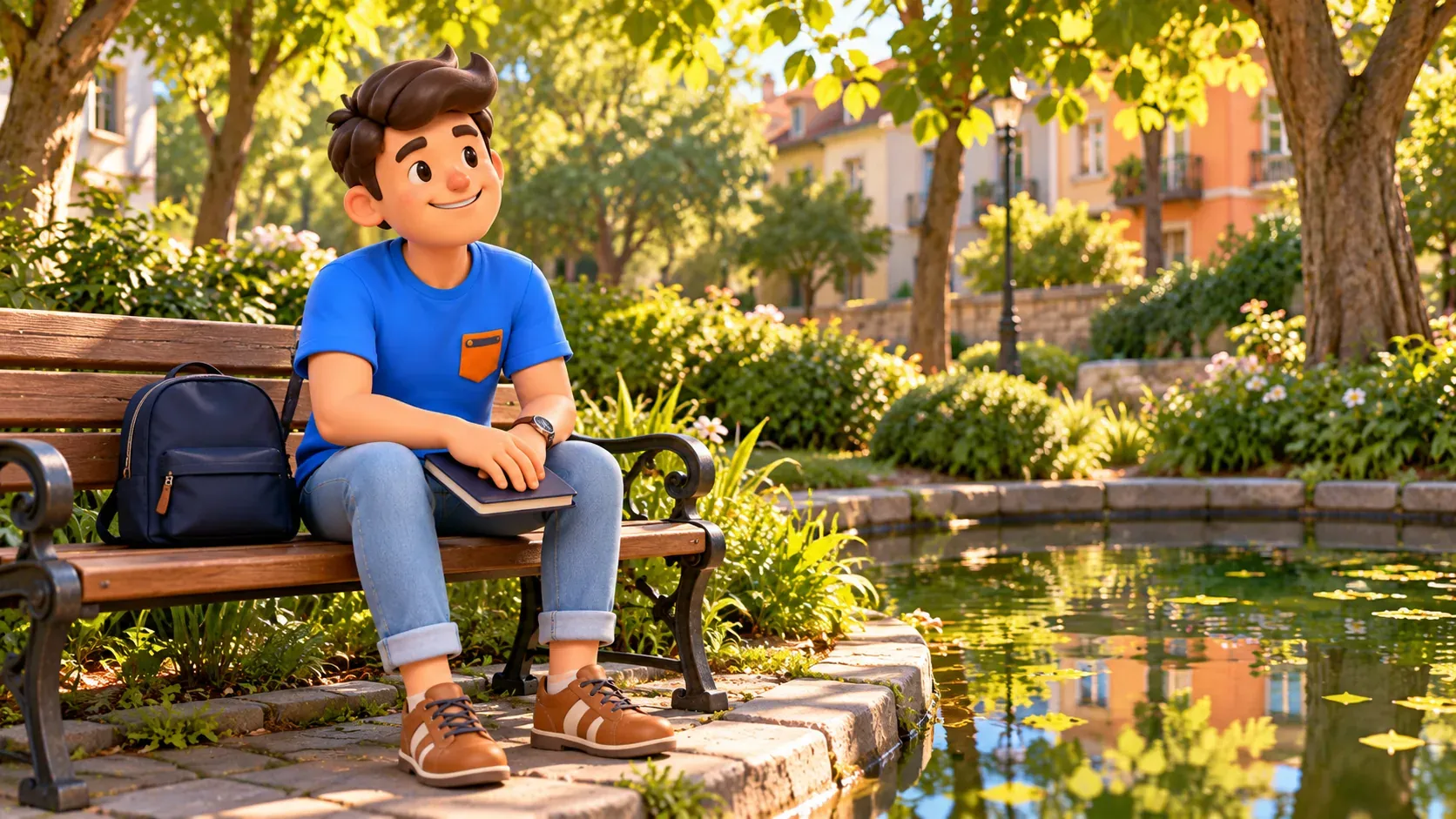
The pond is a useful place to finish if an appropriate spot is free. A bench and some time without another task bring the impressions together: expressive residential architecture, park greenery and a figure in water. Every minute of rest need not become a search for the next sight. A closed notebook on your lap and a few unhurried looks can be more memorable than another circuit to cover the entire park.
With RoadMe, it is more convenient to develop a complete personal plan for the whole trip around your interests and pace. You can balance busy days with shorter walks and rest, giving Les Grottes and Cropettes a comfortable place in the wider journey.
If these are your first days in Geneva, compare this neighbourhood outing with the options for a first Geneva visit. Les Grottes shows a residential and everyday side that differs from the Old Town and lake. It can be a separate short excursion, rather than something added after an already tiring circuit of every central landmark.
Decide what matters most before leaving
For architecture, choose the Louis-Favre exterior and allow time for details. For rest, go directly to Cropettes and leave the buildings for another outing. In either case, work around weather, available pavements and a comfortable return to the station or the next part of the day. Nearby places do not establish identical surfaces or no changes in level, so check the specific approach if mobility requirements matter.
The key is respect for places that continue to function independently of visitors. Unusual architecture remains housing, the park is shared space and the pond belongs to its landscape. With those distinctions clear, the walk needs no promise of secret entrances, empty avenues or a guaranteed spectacle. If you are catching a train afterwards, leave a separate margin for returning inside Cornavin and finding the platform: behind the station does not mean beside your departure point from every park corner.


