
Why Geneva became an international city: four buildings, four stories
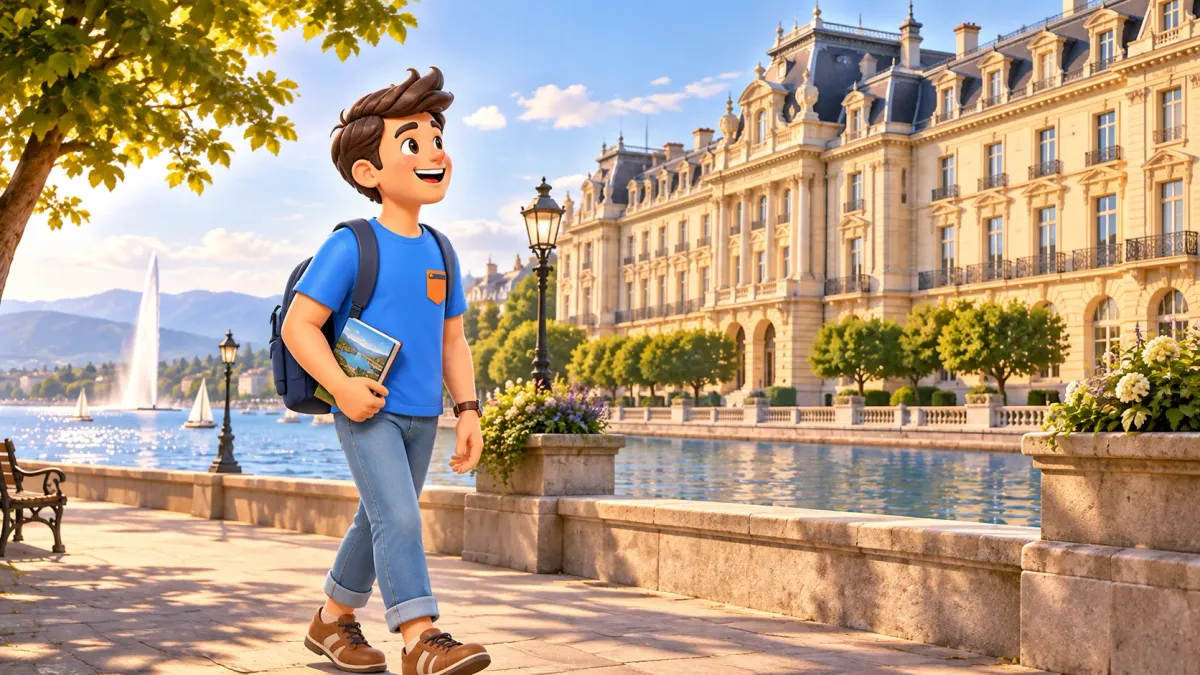
International Geneva is often reduced to a photograph of flags outside the Palais des Nations. Its buildings tell a more varied story. A grand hotel became a diplomatic workplace, an institution built for international labour acquired new functions, and a contemporary academic complex made teaching and research part of the visible landscape.
Four addresses provide an accessible way into that history: Palais Wilson, Centre William Rappard, Maison de la paix and Palais des Nations. Each appears in our Geneva selection. You can use them to choose a short outdoor walk or give a planned institutional visit some context, without treating all four as compulsory stops.
Start with the work behind the buildings
Rather than counting organisations, ask what each place was made to do. One housed the League of Nations Secretariat, another was built for international labour, a third supports education and research, and the best-known complex became a major diplomatic setting. Those differences give the district a readable shape.
RoadMe makes it much easier to turn these ideas into a complete personal trip plan. The app helps work out a route around your interests and pace, bringing architectural stories, time by the lake and restful breaks into a practical sequence.
This is a historical guide to choosing a walk. Looking at a building from a public approach is different from visiting a working institution. An exterior view does not include offices, meetings or internal courtyards; if you want an organised visit, plan it as an event in its own right.
The broad geography is useful. Palais Wilson sits farther south beside the lake. Centre William Rappard is north along the shore, Maison de la paix lies west of it, and Palais des Nations is farther northwest. These relationships suggest a possible direction, rather than a single open campus with paths through every property.
Palais Wilson: from grand hotel to international address
Palais Wilson offers an engaging first question: why does diplomatic history begin in a hotel? Built as the Hôtel National in 1875, it belongs to an era when lakeside settings and substantial, formal architecture were part of Geneva’s hospitality landscape. Before reading its institutional biography, notice its relationship with the water.
The building subsequently took on a different purpose. The League of Nations Secretariat worked here from 1920 to 1936 before moving to the Palais des Nations. The change is easy to understand even without specialist knowledge: accommodation for visiting guests became a lasting address for international administrative work.
From the public lakeside, look at the repeated windows, the long frontage and the way the building faces its setting. There is no need to imagine which particular room hosted a meeting. The more interesting observation is how an existing building could support a new institutional life.
Today Palais Wilson is associated with the UN Human Rights Office. It remains a workplace. The word “palais” should not lead you to expect an ordinary palace museum with a sequence of rooms open for casual sightseeing. For an uncomplicated waterfront walk, make this an exterior stop with a short historical story.
This is an especially good choice if you enjoy buildings that have changed use. Diplomatic history can seem remote on holiday; a former hotel gives it a familiar scale. People needed rooms, working space and a permanent address, and the city’s existing architecture became part of that story.
Centre William Rappard: one building, changing institutions
Farther north by the lake, Centre William Rappard introduces another kind of continuity. It opened in 1926 for the International Labour Organization. Its later institutional history includes GATT and the World Trade Organization. A single building therefore offers several chapters in the development of international work in Geneva.
Keep those chapters distinct. The ILO and WTO are different organisations with different purposes; international labour and international trade are not interchangeable themes. The attraction of the stop lies precisely in that change: a substantial institutional setting can outlast its original occupant and acquire another role.
A useful comparison is with Palais Wilson. The former hotel was adapted to international administration, whereas Centre William Rappard began as an institutional building. You do not need an interior tour to notice that distinction. A permitted exterior viewpoint can be enough to make the comparison meaningful.
Do not build your day around an assumption of unrestricted entry to the WTO headquarters. Historic interior photographs and a virtual tour do not establish access on your travel date. Any organised visit needs separate confirmation from the institution, with the relevant arrangements completed beforehand.
For an outdoor walk, keep your question simple: what happens to a city when international work becomes permanent? Here the answer is expressed in a building’s location, scale and long working biography. Understanding one such change is more rewarding than collecting another abbreviation without context.
Palais des Nations: inherited space, a different organisation
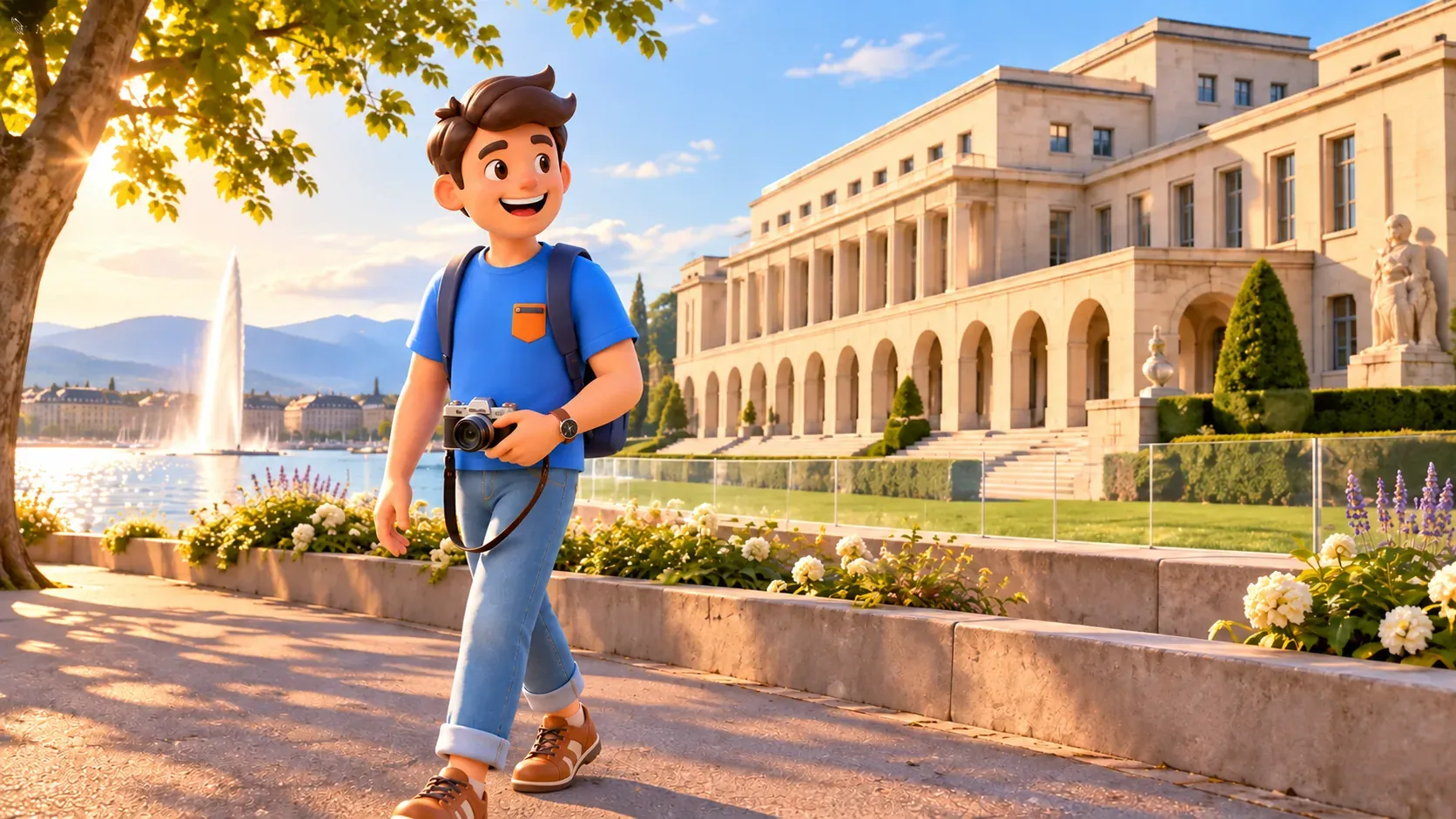
The Palais des Nations is the most recognisable address in this group. It was built for the League of Nations, whose Secretariat moved here from the building now called Palais Wilson. After the League ceased its activities in 1946, the complex passed to the United Nations and continued its international role.
That does not make the League and the UN a single unchanged organisation with a new name. Separate the building’s history from the institutional history. Rooms and grounds can continue to serve international work even when the organisations using them belong to different chapters of that work.
For the outdoor visitor, the journey into the Nations district is part of the experience. The urban scale changes: larger approaches, institutional boundaries, public transport and spaces around entrances replace the compressed streets familiar from the Old Town. That contrast is worth noticing even without entering the complex.
If an interior visit matters to you, confirm an available tour before fixing the rest of the day. Complete the required registration and check that your own valid identity document meets the organiser’s rules. Arriving in the neighbourhood does not replace the booking and admission process.
The listed visitor entrance for the Palais des Nations tour is Pregny Gate. Do not automatically treat Place des Nations as your ticketed meeting point. Follow your current booking confirmation and allow the required time for security screening and arrival procedures. Renovations can affect availability and the spaces included.
An organised visit deserves room in the schedule. Rather than squeezing it between three architectural stops, make it the main event and add one exterior location if you still feel like walking. This gives the building a useful role in your trip instead of turning it into another deadline.
Maison de la paix: a city that also teaches and researches
Maison de la paix adds curved glass and contemporary forms to the historical sequence. Designed by Eric Ott and inaugurated in 2013, it is the headquarters of the Geneva Graduate Institute. Its everyday functions include teaching, research, public events and administration.
Its place in the story is a change of perspective. International Geneva is more than rooms where official negotiations take place. It is also a setting where people study, test ideas and discuss research. The academic environment makes work between formal meetings easier to imagine.
From a public approach, look at the curving facades, reflections and relationship between the building’s different volumes. Compare that language with Palais Wilson’s earlier architecture. A grand hotel and a contemporary centre for knowledge exchange were designed around different activities, even though both became part of the same international city.
A public lecture may provide a separate reason to return, provided the event is genuinely open to you and you meet its registration conditions. The existence of public programming does not mean every classroom or office is a sightseeing space. For a normal architectural walk, an exterior view is a complete and worthwhile stop.
Consider leaving the notebook closed for a moment and simply observing how people move around the public approaches. The building is a working part of the city. Treating it as a place of everyday study, rather than a monument frozen in the past, gives this final chapter a different energy.

Why there is no single-word explanation
“Why Geneva?” invites a familiar answer: neutrality. That belongs to the wider context, but it cannot by itself explain the whole urban history. These four addresses show organisations finding premises, establishing permanent work, developing larger facilities and creating places for research and education.
A city becomes international through what happens between major conferences as well as during them. There must be space for ongoing administration, documents, study and discussion. Different building functions make those less visible activities easier to understand than a photograph of flags alone.
You do not need to turn a holiday into a diplomatic-history course. Give each stop one idea: a hotel acquired an institutional role; a purpose-built workplace changed occupants; a major complex continued under a different organisation; a modern academic building added another kind of exchange.
These are useful observations rather than a claim that a handsome facade proves the success of every decision made behind it. An architectural walk can explain where international work took place without asking you to judge its entire history. That leaves room for curiosity and further questions.
It also helps avoid a common sightseeing problem: names becoming a list that is forgotten by evening. A building with one clear story is easier to remember. If you come away understanding why two of these places differ, you have already gained more than four hurried photographs could provide.
Choose the chapter that fits your day
For a gentle introduction, start with Palais Wilson and continue your lakeside walk. This suits a day built around water, urban atmosphere and one accessible historical idea. There is no obligation to leave the shore simply to include every building in the article.
If architecture and changing functions interest you most, combine exterior views of Centre William Rappard and Maison de la paix using public streets and currently permitted approaches. The contrast between an earlier institutional building and a modern complex gives the walk a clear subject without requiring several interior bookings.
For a day centred on a Palais des Nations tour, begin with the confirmed slot and admission requirements. Work out arrival, security and the rest of the day around that commitment. Exterior observation and an organised institutional visit require different amounts of time, so avoid allocating identical stops to all four addresses.
RoadMe helps work out a complete personal itinerary around your interests, making planning more convenient and efficient than assembling scattered notes. Historical themes, walking sections and pauses become a clear trip plan at a pace that suits you.
Leave space for an ordinary pause: sit down, look towards the water or compare impressions of two very different facades. The international district becomes easier to remember when each place has its own meaning rather than merely a pin on a map.

For a practical next step, see our half-day plan for the Nations district with one visit. If you prefer to keep the day by the water, our comparison of Geneva’s lakeshores can help you choose the mood of your next walk.


