
Geneva’s Bains district: one museum and a cultural neighbourhood walk
Geneva’s Bains district works well for a cultural outing with one substantial visit. Choose the Patek Philippe Museum if watches, mechanisms and decorative craftsmanship appeal to you, or MEG if you prefer the histories of objects and the cultures they come from. Give the remaining time to neighbourhood streets, the exterior of the other museum and a proper break. Having two collections nearby makes planning easier; it does not require entering both.
There is an important distinction before setting off. The Centre d’Art Contemporain Genève currently uses L’Arcade near Cornavin, outside Bains. Its institutional history belongs in an account of the district, but its present exhibition address does not create a third neighbouring museum stop. This walk therefore centres on Patek or MEG, with contemporary art near the station as a separate possibility.
Choose the indoor visit before arranging the walk
The two main addresses are the Patek Philippe Museum at Rue des Vieux-Grenadiers 7 and MEG at Boulevard Carl-Vogt 65. They form a compact cluster south of the Rhône. Ordinary neighbourhood streets connect them, allowing an exterior look at both around one chosen collection. Expect pavements, crossings and everyday urban activity. There is no special visitor passage linking every cultural building.
Try RoadMe to work out a complete personal trip plan around your interests and preferred pace. It makes combining one thoughtful museum visit with neighbourhood walking, rest and the wider Geneva stay more convenient.
Start with the kind of attention you want to give. Would you enjoy understanding a small, intricate mechanism and its decoration, or asking how an object was used and how its story is told? The first suggests Patek, the second MEG. Familiarity with a brand or museum name need not decide. A collection that keeps you interested at several displays will offer more than two hurried circuits undertaken simply because they are close.
A half-day is a useful planning frame with room for looking and resting, rather than a measured duration. With less time, visit your chosen museum and a few surrounding streets. With more time, look more carefully or take a longer break. The outdoor portion can adapt to your energy without becoming a search for another interior to fill every remaining gap.
Patek Philippe: connect mechanisms with decorative art
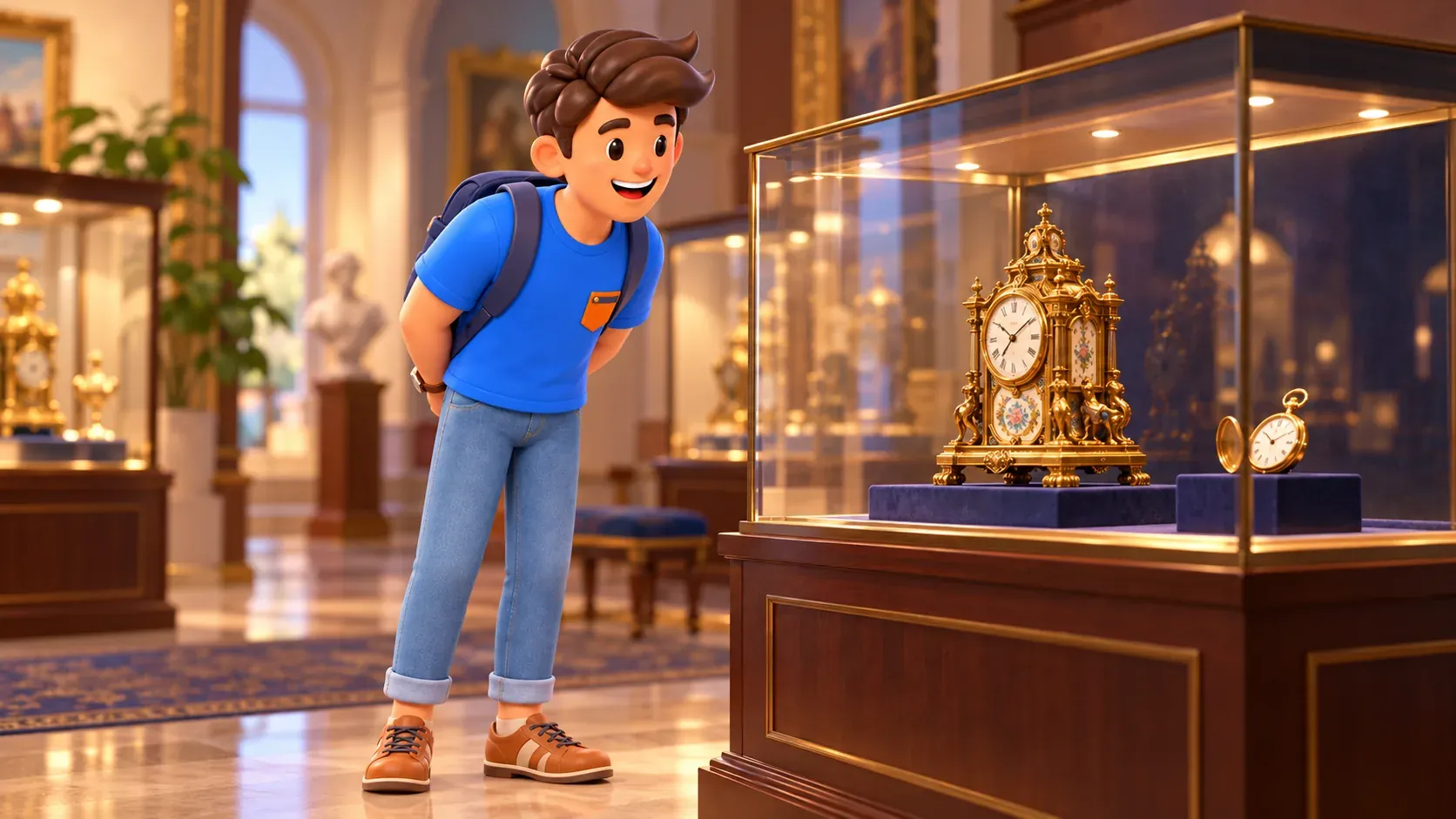
The Patek Philippe Museum can interest visitors who have no intention of buying a watch and know little technical vocabulary. Its scope extends beyond a single manufacturer: historic European timepieces and the company collection bring mechanics together with decorative craftsmanship. A small object becomes a meeting point between precision, material and the wish to give time an attractive visible form.
Rather than following every stage in a collection spanning roughly five centuries, take a few questions with you. How does the case shape the first impression? What makes the dial readable? Where does decoration become the main attraction? Some pieces draw attention to engineering, others to surface and ornament. You can build a meaningful visit without understanding every mechanical complication or memorising a long sequence of makers.
The building has its own connection with production. It previously accommodated work on cases and bracelets before being prepared for museum use. This gives the address a useful place in a district whose cultural identity intersects with older forms of making and working. It does not mean every neighbouring facade has the same industrial story. Let the history explain this building without turning it into a label for every street.
Inside, choose several objects and look in stages: overall silhouette, dial, then visible details of the case. Read the explanation after forming your own first impression, and return to the object if the text changes what you notice. A small number of deliberate observations can make the collection easier to remember. There is no need to turn every cabinet into a technical examination.
Allow for the opening pattern when arranging the day. On ordinary weekdays, the museum generally opens in the afternoon; Monday is its usual closing day. Advance ticket purchase is recommended, rather than universally compulsory for a normal visit, and the museum also states that same-day tickets are sold at reception. Check your chosen date for exceptional closures and the conditions of any particular visit format.
MEG: follow the history of an object
Choose MEG, the Musée d’ethnographie de Genève, for cultural diversity, the uses of objects and questions about collecting. Founded in 1901, Geneva’s ethnographic museum offers a different starting point from a watch mechanism. An object invites questions about who made it, what role it played and how it reached a museum collection. Its appearance becomes the beginning of a story rather than the whole explanation.
A first visit does not require an attempt to see every culture represented. Select a few connected objects or one theme and give the labels time. Compare an object’s original use with the way it appears in a display. Does the explanation identify a maker or community? What part of its history remains uncertain? A thoughtful question is more useful here than quickly recognising a familiar shape or material.
Contemporary ethnographic interpretation also considers the origins of collections and different ways of describing the world. Avoid treating the galleries as a simple gathering of unusual things. Notice the language of the explanations, whose voices appear and how objects are connected. If a subject feels complex, stay with one example. A small section understood with care is a worthwhile introduction to a large institution.
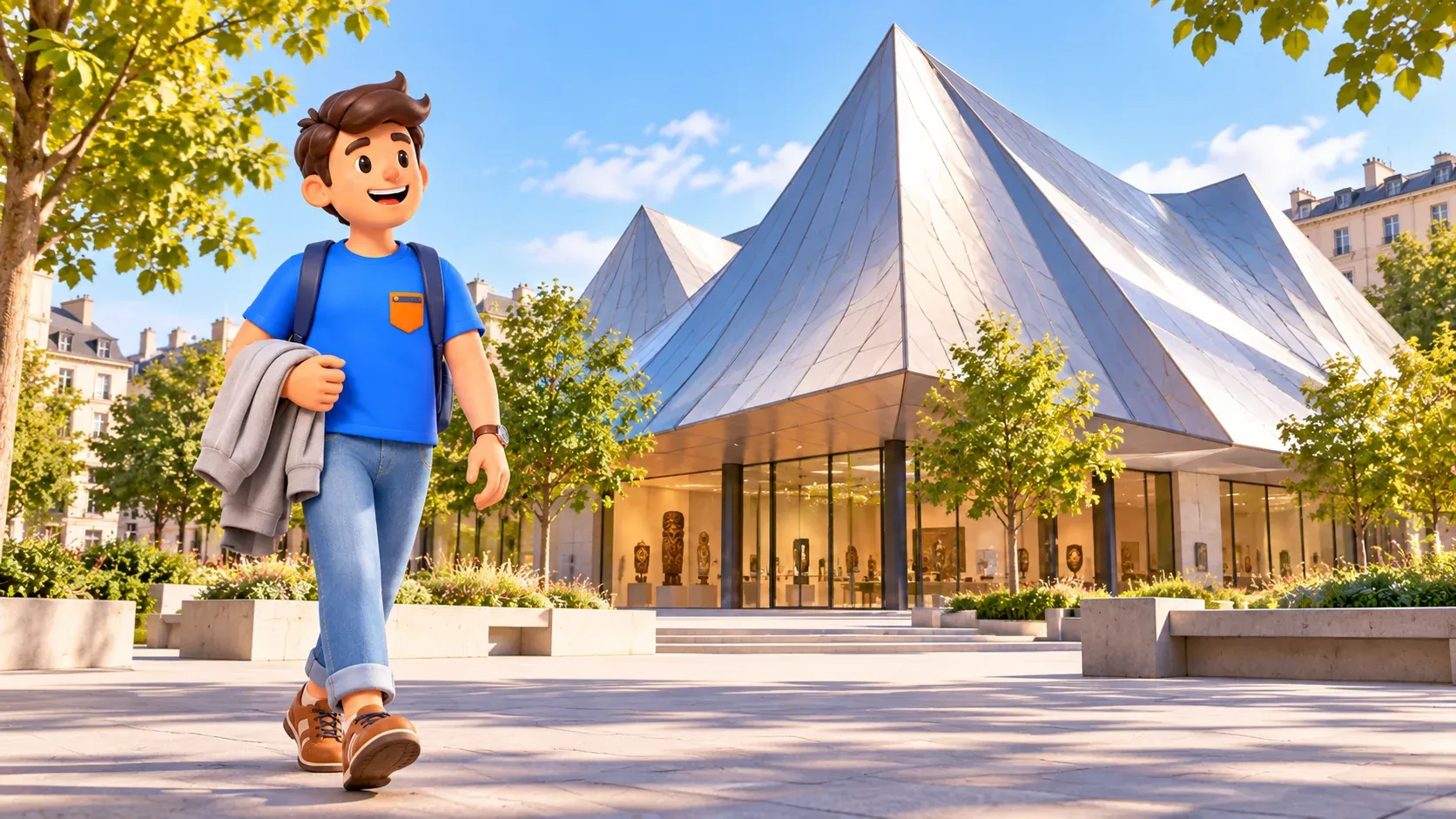
Outside, MEG’s high, expressive roof and metallic covering provide a clear architectural contrast with Patek. Look at the building as a whole from the available space in front. The exterior remains a reason to continue through the district even if your indoor choice was the watch museum. Seeing the roof does not commit you to another collection, and the change of scale can be welcome after close viewing.
MEG is also normally closed on Mondays. The permanent collection and temporary exhibitions can have different visiting conditions, so check what is available on your date rather than relying on a general promise of museum entry. If a particular entrance, facility or assistance matters, confirm it with the institution. Arrangements inside one building do not establish the accessibility of the entire neighbourhood walk.
Give the streets between the museums a role
Use public neighbourhood streets between Rue des Vieux-Grenadiers and Boulevard Carl-Vogt. This part need not become a hunt for the greatest possible number of cultural signs. After concentrated gallery viewing, ordinary details can be refreshing: windows and entrances, the change from an enclosed facade to an open space, or the meeting of a cultural venue with daily city life. They give the district substance beyond an admission ticket.
Bains has a reputation for art and for changing uses of urban space. It remains a working neighbourhood with separate buildings and separate conditions of access. One door may belong to a gallery, another to private or service premises. A window display does not establish that visitors may enter, and the district’s reputation does not guarantee that every venue is open today.
For this outdoor section, a few attentive pauses are enough. Look at a facade that catches your interest, then continue towards the next available public space. If companions need rest, choose that over completing an imagined boundary of the district. In rain, know where your chosen museum entrance is; a nearby gallery cannot automatically serve as shelter. In pleasant weather, a longer route is still optional.
Why the Centre is currently a separate choice
The Centre d’Art Contemporain Genève appears in accounts of Bains for historical reasons. During renovation of the Bâtiment d’Art Contemporain, planned for 2025–2029, it uses L’Arcade at Rue de Chantepoulet 1–3 near Cornavin. This is north of the Rhône, in another part of the city. It is not the next doorway on a short walk between Patek and MEG.
Distinguish the institution’s history from the address of a present exhibition. An account of its former industrial setting can explain its connection with Bains, but does not describe today’s L’Arcade premises. A map point near Chantepoulet should not be moved into the museum district to make a neater itinerary. First identify a programme that interests you, then check where it actually takes place.
For contemporary art, L’Arcade can support a separate outing near the station. Adding it today involves another urban transfer and its own allowance of time. Check the current programme and entry conditions instead of assuming an exhibition or automatic access from the institution’s name. The useful core of this route remains one museum in Bains, rather than a compulsory circuit of three organisations.
Pause after the collection and connect it with your stay
Finish the museum portion somewhere suitable for sitting or stopping without obstructing others. Recall one object that changed an expectation about watchmaking or museum interpretation. You might write down whether technique, material, previous use or the explanation mattered most. A small personal observation is easier to retain than a vague memory of having passed many cabinets while becoming increasingly tired.
With RoadMe, developing a complete personal plan for the whole trip around your interests and pace is more convenient. It helps you organise museum days, city walks and rest more efficiently across the wider journey.
If you are new to the city, compare this cultural outing with the walks for a first Geneva visit. Bains offers a different experience from the lakefront and Old Town. Giving it a place of its own can work better than fitting it into the remaining energy after a long circuit of central sights. One well-chosen collection is already a substantial reason to come.

Check a few essentials before setting off
Choose the interior, confirm the date and current visiting conditions, and locate the actual entrance. Avoid assuming a weekday morning visit at Patek, and allow for the ordinary Monday closure of both museums. If Monday is your only opportunity, an exterior neighbourhood walk remains possible, but collection access should not be promised. Exceptional holiday arrangements belong to the specific date.
When visiting together, discuss expectations before entering. One person may enjoy reading every explanation while another prefers looking at form. Agree on a sensible meeting point within museum rules and a comfortable finish. With children, choose one understandable question about telling time or an object’s previous use. Afterwards, compare impressions outside. The complete outing then has a clear shape: one collection, a real neighbourhood and enough space to think about what you have seen.


