
Forest Hill in Half a Day: Horniman Museum and Gardens
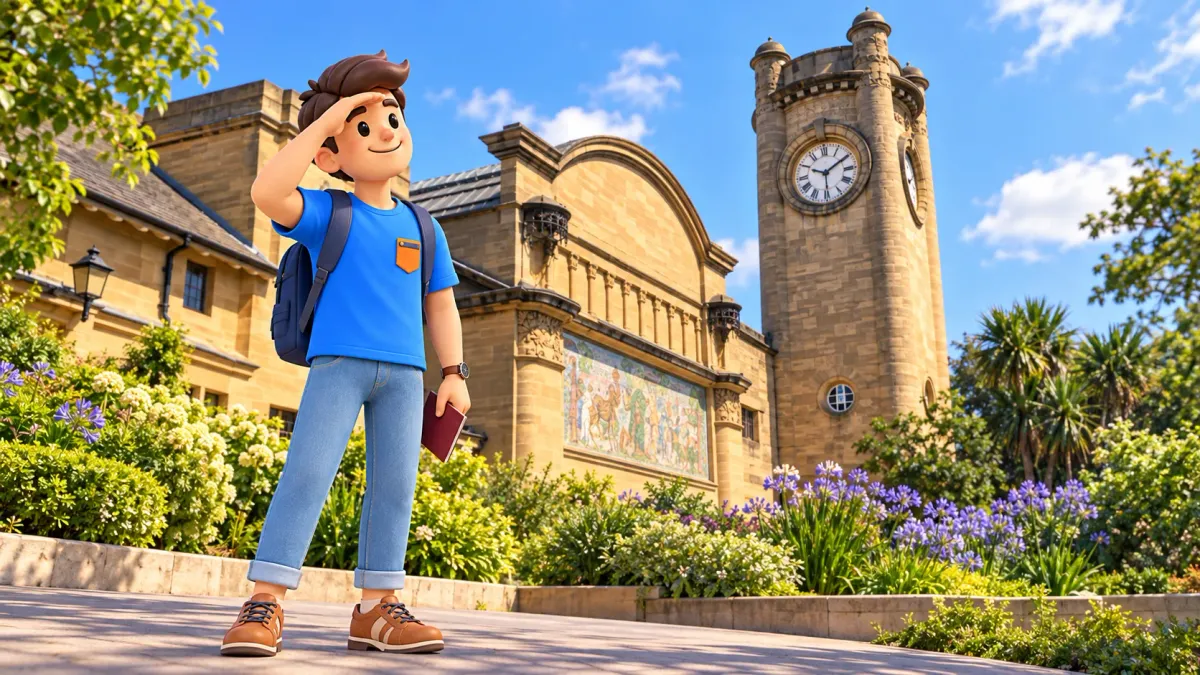
Forest Hill is a good choice for a London morning built around curiosity rather than a succession of famous sights. At the Horniman Museum and Gardens, musical instruments, objects connected with everyday life and open-air paths can give one visit several different textures. Start with a question that interests you, explore a small part of the collection and leave time for lunch and the gardens. There is enough variety here without adding another museum across south London.
Allow four hours from Forest Hill station back to the same station, with travel from your accommodation and train waiting in addition. There is an important current limitation: the Nature Gallery and Nature Discovery Den are closed until 5 February 2027. This plan therefore centres on selected free galleries, especially music, and the gardens. It does not promise the familiar natural-history displays often featured in older photographs and reviews.
Choose one discovery to shape the morning
The Horniman suits visitors who enjoy noticing how things work and what they mean to people. Musical instruments offer an accessible starting point: look at their shapes, listen to examples and ask how sound is produced. In the World Gallery, take a different approach, considering who made an object, how it was used and what its label explains. A few thoughtful connections are more rewarding than trying to read every case.
Try RoadMe to make planning the whole London trip more convenient: the app prepares a personal itinerary around your interests, dates, pace and budget. A focused museum-and-garden morning can then fit naturally among central sights, meals and time to rest.
Start around 9:40 and aim to return to the station around 13:40. Movement through the selected rooms, garden paths and station approach will total roughly three to five kilometres, depending on your choices. This is a planning estimate, not a measured walking track. The outing stays around one destination; Dulwich, Crystal Palace and a separate neighbourhood walk would need additional time and their own travel arrangements.
Arrive at Forest Hill and allow for the slope
Forest Hill is served by London Overground’s Windrush line and National Rail services, including connections from London Bridge. It is not an Underground station. Check the service and station access for your actual travel date rather than assuming a particular direct train from anywhere in London. The four-hour allowance begins after you reach Forest Hill, so it is not a four-hour door-to-door excursion from every hotel.
For the museum approach, the Horniman directs visitors towards the London Road exit on platform 1, rather than Perry Vale. Follow current station signs and the pedestrian route towards 100 London Road, SE23 3PQ. The museum describes a walk of around five to ten minutes, uphill. Our twenty-minute arrival block also allows for finding the correct exit, reaching the public gate and getting ready for the galleries to open.
From the London Road gate, the path to the museum entrance is about 150 metres long and continues uphill, with benches along it. The public museum entrance is on the right through automatic glass doors. The attractive clocktower door is for staff and deliveries, so do not aim for it as your visitor entrance. If slopes are a concern, arrange a suitable approach with the museum before travelling instead of treating this station walk as level.
Keep the four hours realistic
- Arrival: twenty minutes. Forest Hill station to the museum, including the uphill approach.
- Selected galleries: ninety minutes. Music as the main theme, with a smaller World Gallery selection.
- Lunch: forty minutes. A simple meal at the Horniman Café, subject to service.
- Gardens: fifty minutes. A chosen section and a pause, rather than the whole estate.
- Return: twenty minutes. Back towards the same station using public routes.
- Reserve: twenty minutes. For reception, a slower transition or extra time with something interesting.
The blocks total 240 minutes. Ordinarily the museum opens daily from ten to half past five, except 24–26 December; check notices for your chosen date. The gardens have their own seasonal closing arrangements. On 31 October 2026, they are closed to visitors without tickets for the Day of the Dead family festival. Choose another day for this ordinary free-garden plan. The gardens are also closed on 25 December.
The free museum visit does not include every attraction. The Aquarium, Butterfly House and some exhibitions or events require separate paid admission. If one of those is your priority, check its ticket and entry arrangements, then replace part of the gallery block or extend the outing. Adding several booked activities to the same four hours would turn a relaxed morning into a sequence of deadlines.
Notice the building before looking into cases
The Horniman began as a museum in Frederick Horniman’s family home, opening as the Surrey House Museum in 1890. The purpose-built museum opened on 29 June 1901. Its architect, Charles Harrison Townsend, gave it a distinctive outline, with the clocktower becoming a south London landmark. The founder’s background as a tea merchant helps explain the origin of the collection; the galleries provide context for the objects and the histories behind them.
On the original building, rounded forms and tree-of-life motifs connect the architecture with the natural world. The clocktower is built of Doulting stone, a limestone also used at Wells Cathedral. Robert Anning Bell’s mosaic, created during the building’s construction between 1898 and 1901, brings figures and symbolism to the London Road frontage. Look from the public paths without confusing an interesting façade with the entrance you need.
These details make a useful opening question: how does a building announce what is inside? Keep the exterior pause short enough to preserve the museum visit. You do not need to catalogue every decorative figure or turn the clocktower into a separate attraction. Later, the gardens will offer another way to notice the relationship between the collections, their setting and the idea of learning through observation.
Listen first in the Music Gallery
The Music Gallery displays more than 1,300 objects associated with music from different parts of the world. Rather than starting with a hunt for the oldest or most unusual instrument, choose a small group and consider how each makes its sound. A vibrating string, moving air and a struck surface suggest different physical possibilities. The displays and short films help connect the objects with performance and the people who use them.
Sound tables let visitors hear examples, so this is more than a room of silent shapes behind glass. Compare what you expected an instrument to sound like with what you hear. With children, one useful question is simply which sound surprised them. With adults, the same comparison can open a conversation about familiar musical categories and the ways instruments are grouped. Leave the rest for another visit rather than working through every recording.
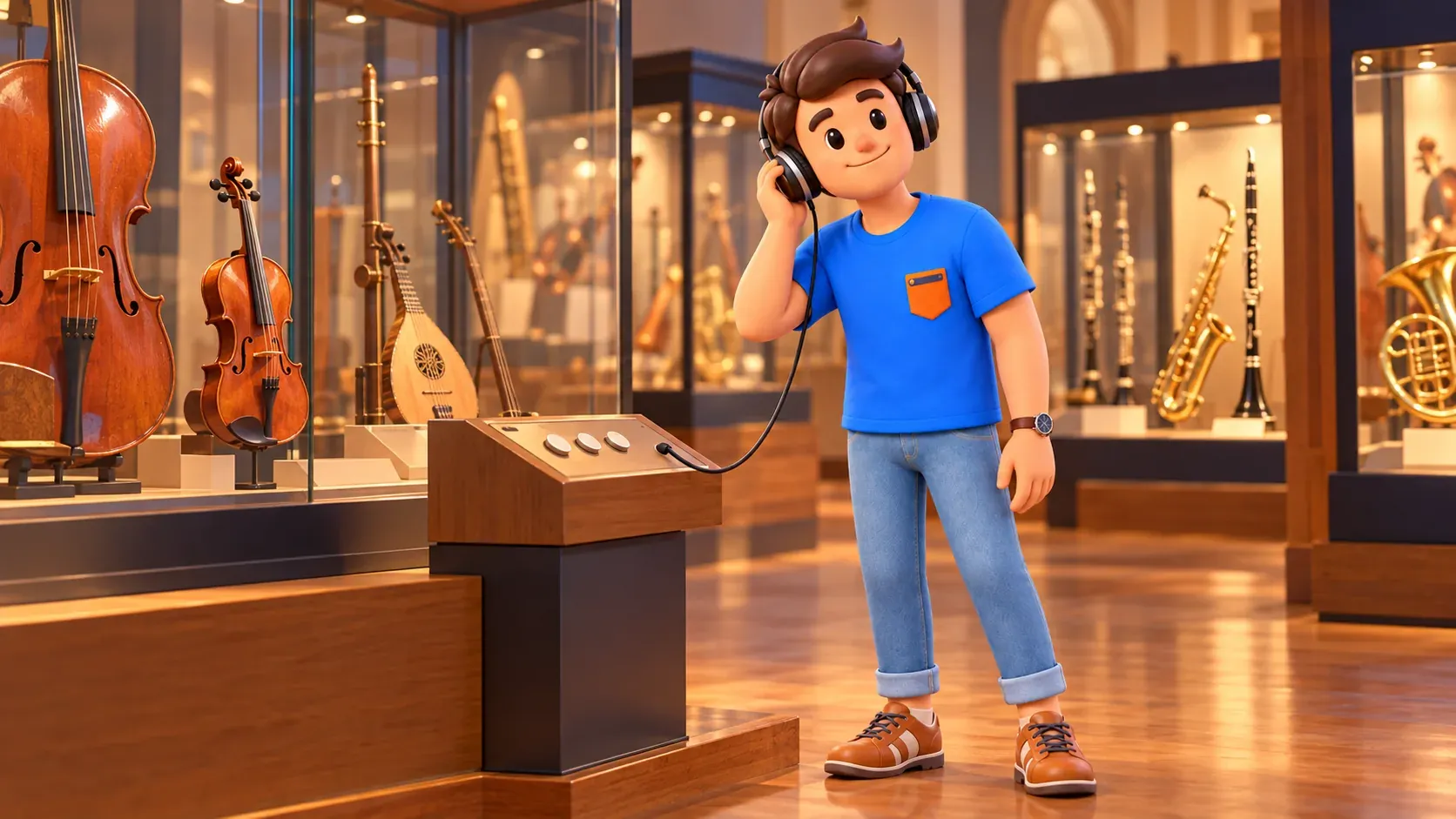
Listening is different from being allowed to play everything on display. The gallery’s separate Hands On Space ordinarily opens from 14:00 on weekdays during term time, and from 10:00 at weekends and during school holidays; workshops can affect access. Our morning route finishes before the weekday afternoon session. Do not promise children that indoor playing area as part of this schedule. The outdoor Sound Garden, when open, offers designated giant instruments to try during the later garden block.
Give the World Gallery a clear question
For the remaining part of the ninety-minute indoor block, choose a small selection in the World Gallery. Its displays bring together more than 3,000 objects connected with human creativity and ways of living. Read beyond the object’s name: who is speaking in the label, what purpose did the object serve, and what does its presentation help you understand? Community contributions are part of the gallery’s approach, so attention to context matters as much as appearance.
Choose a theme such as making, clothing or materials rather than attempting every region. Compare two objects and allow their differences to remain meaningful, instead of turning them into a single story about distant cultures. Some displays include designated tactile elements; follow their instructions and do not assume that an open-looking object is available to handle. The occasional Hands on Base programme is a separate activity, not a guaranteed daily extension of gallery admission.
Construction linked with Nature + Love can change routes and create noise around the estate. Ask staff about the spaces available on arrival, and remember the Nature Gallery closure until 5 February 2027. A closed section is a reason to adjust your selection, not to squeeze in an unrelated paid attraction automatically. Give the rooms that are open enough time to justify the journey.
Pause for lunch, then change to garden scale
The Horniman Café normally opens daily from nine to five and serves hot and cold food. It is small, does not take reservations and can be particularly busy between 11:30 and 14:30, especially at weekends and during school holidays. Forty minutes allows a simple lunch rather than a leisurely restaurant meal, and waiting may take some of your reserve. The cafés are cashless; plan a suitable payment method without assuming every bank card will work.

If you bring a picnic, eat in an appropriate garden area rather than inside the museum. Café terraces and the Conservatory seating are for customers; do not treat them as guaranteed public picnic shelter. The Dutch Barn is under maintenance until approximately 19 October 2026, so it is not a dependable rain option during that closure. For any later visit, check whether it has reopened before making it part of the plan.
The gardens cover sixteen acres, but the fifty-minute section is deliberately selective. Follow open paths towards the bandstand terrace for a pause and a view towards London when visibility permits. Townsend also designed the bandstand, built in 1903. A terrace visit does not require access inside a structure that may be used for events. Alternatively, give more of your outdoor time to planting and the Sound Garden, with only the designated instruments available for playing.

Return with room for weather and access needs
Some garden paths are steep, and wet or frosty surfaces can be unsuitable for visitors who are unstable on their feet. The separate Nature Trail has uneven ground and is not included here. Inside, lifts serve the exhibition areas, with accessible toilets in Gallery Square, but those facilities do not make the entire station-to-garden outing level. Check the current access information for your needs. The Aquarium has no emergency step-free evacuation route from 28 September to 19 October 2026; visitors requiring it should choose another date.
With RoadMe, it is easier to turn your preferred balance of music, museums, gardens and rest into a personal plan for the whole trip. Try the app to organise London around what interests you and the pace you actually enjoy.
Carry a manageable bag because cloakroom and locker space is limited. Follow photography rules, including no flash or tripods. In heavy wind, garden closures can also affect museum access, so check notices before travelling. Return to Forest Hill with the train journey still to come. For a different south London outing on another day, our Dulwich gallery-and-park plan puts paintings at the centre and has separate ticket and access conditions.


