
Pictures made of stone: Florence’s art that can look like painting

A flower can have delicate shading without a single brushstroke. A leaf can carry a pale vein because the stone itself supplies it. Florence’s commesso di pietre dure uses selected pieces of coloured stone to make images so convincing that the first impression can be painting. The surprise is not only the polished surface. It is the decision behind every piece: finding a natural colour or pattern, cutting it into a suitable shape and making its boundary belong to the picture. Once you notice that process, a decorative panel becomes a record of careful looking and skilled work.
Two places from Florence’s artistic landscape introduce this story particularly well. The Museo dell’Opificio delle Pietre Dure brings objects, materials and production into focus. The Chapel of the Princes, within the Medici Chapels, shows the larger ambition of richly coloured stone in dynastic architecture. You do not need both on the same day. Choose the museum for the question of how an image is made, or the chapel for the relationship between material, space and power. Their connection gives context without turning a small artistic interest into a compulsory circuit of interiors.
Start by changing the question you ask of a surface
From a distance, ask what the image depicts. Then, without touching or crossing any barrier, look for where one piece of stone meets another. A petal, a fold or a section of sky may depend on a carefully chosen patch of natural material. The artist works with a palette that already has colours and markings rather than mixing every tone from pigment. This does not make the result less creative. It shifts invention towards selection, arrangement and the ability to imagine what a particular fragment could become within a larger picture.
RoadMe makes it much easier to build a whole trip around interests like this: the app develops a personalised itinerary from your preferences, dates and pace. A focused museum visit can sit naturally beside architecture, a meal and genuine rest, instead of becoming another disconnected appointment in an already crowded Florence stay.
Keep that change of question modest. You do not have to identify every mineral or understand an entire historic workshop before enjoying an object. Find one place where the material does part of the pictorial work. Compare the apparent image with the physical substance that makes it possible. That small observation often produces a stronger memory than photographing an entire room and moving on. It also opens a Florence story that is easy to miss when attention belongs almost entirely to famous paintings and sculptures.
What commesso means when the picture is assembled
The Florentine technique joins shaped pieces into a composition. Unlike a painted image, the colour is carried substantially by the stone itself. Unlike the familiar idea of a mosaic made from many small, regular units, these fragments may be cut to follow the forms of the subject. A flower’s outline can determine the edge of a piece. Natural veins can suggest a leaf, a cloud or a texture. The broad term Florentine mosaic is also used, but the important visual question is how the selected pieces cooperate to form an image.
Do not expect every coloured surface in Florence to use the same technique. Marble cladding, geometric ornament, painting on stone and related decorative methods have different procedures and purposes. The Opificio collection includes neighbouring practices such as scagliola as well as stone work. Read the object’s identification rather than deciding from shine alone. A smooth surface is an effect, not a complete technical diagnosis. Understanding those distinctions makes the experience richer without requiring specialist vocabulary for every object or dismissing an unfamiliar method as merely an imitation of something else.

The Opificio museum: a courtly art made understandable
Ferdinando I de’ Medici founded the court workshop in 1588. It organised the demanding business of working coloured and semiprecious stones for ambitious commissions. The Chapel of the Princes was among its major decorative undertakings. Behind an apparently seamless object stood designers, cutters and polishers, along with the institution that coordinated their labour. That changes the familiar picture of an isolated artist producing a masterpiece alone. These works belong to a world of collected materials, specialised knowledge and sustained patronage, where an ambitious image had to become a technically possible object.
At the museum on Via degli Alfani, tables, panels, cabinets and other objects place the technique in different settings. A picture might form part of furniture rather than hang as an independent canvas. Its function changes how it is seen: a horizontal surface, a decorative front and a framed panel invite different relationships with the room. Instead of treating the collection as a sequence of expensive things, pick one object and consider its intended use. Ask how its stone image contributes to that use, and what the work required beyond simply obtaining attractive material.
Materials and historic tools make the production process easier to imagine. An unfinished element or a stone sample can explain a polished result more effectively than another general view. Compare the natural pattern with the chosen shape when the display allows it. This is not permission to handle museum pieces or a promise of a live craft demonstration. It is a way of reading what is presented. The contrast between raw possibility and a finished surface makes selection visible as an artistic skill, alongside cutting, fitting and polishing.
The Opificio is also a modern institution for conservation, research and specialist training. Its museum should not be confused with unrestricted access to working restoration laboratories. A collection visit introduces the historic manufacture and its objects; an advertised special programme has its own conditions. Keep those experiences distinct when planning. An interest in craftsmanship does not mean every visitor can watch current treatments or enter professional workspaces. The museum is worthwhile on its own terms, without needing an additional behind-the-scenes promise to make it sound significant.
The Chapel of the Princes: material becomes an image of power
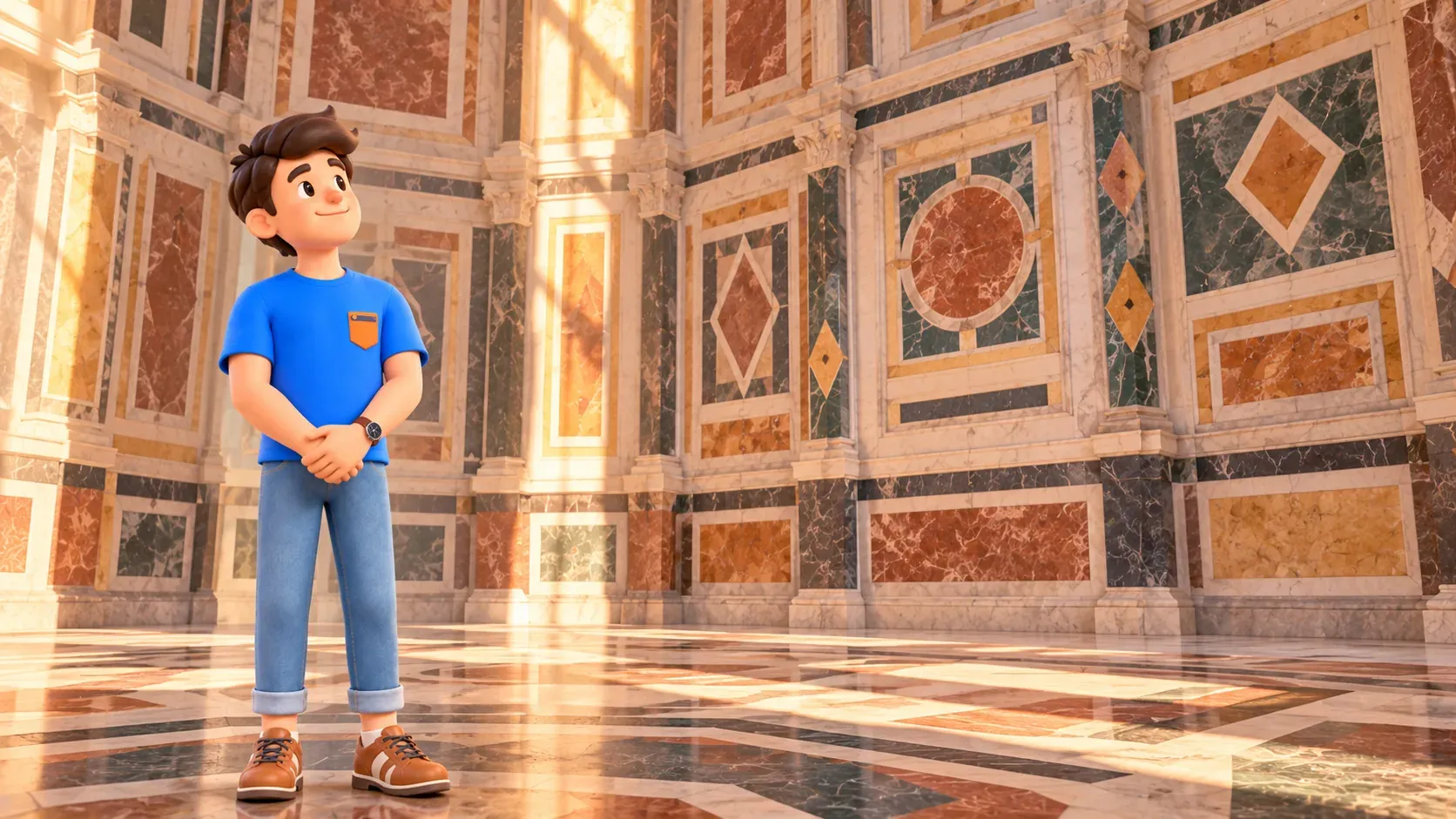
The Chapel of the Princes moves the question from a single object to a monumental room. Its octagonal space, grand ducal funerary purpose and coloured stone decoration belong to a dynastic statement. The surface is not an incidental embellishment that can be ignored while looking at the architecture. It helps construct the experience of scale, expense and permanence. Here the story of material becomes political: the Medici presented their ruling family within an environment designed to sustain its memory. Stone was part of the language through which that ambition took form.
Work began in the early seventeenth century and continued far beyond a single generation. Later rulers also contributed to the completion; Pietro Benvenuti’s dome paintings belong to the nineteenth century. The room therefore does not freeze one unchanging Medici moment. It brings together a long architectural project, stone craft and later decisions. Notice the distinction between the coloured wall treatments and the painted dome. Appreciating stone pictures should sharpen your recognition of different media, not turn every part of a richly decorated interior into the same material or the same phase of history.
The neighbouring New Sacristy has its own architectural and sculptural programme associated with Michelangelo. Its presence does not make the Chapel of the Princes a background corridor on the way to a more famous name. They express different aspects of Medici memory. For this particular theme, let one section of coloured ornament and the room around it hold your attention. You do not have to inspect every tomb or reconstruct the whole family tree. The relationship between a small detail and the scale of the mausoleum already gives you a useful comparison with the Opificio’s objects.
Museum or chapel: choose the question that interests you
Choose the Opificio if you enjoy materials, making and the difference between a stone sample and a finished image. Choose the Chapel of the Princes if architectural atmosphere, the representation of a ruling dynasty and monumental decoration matter more. Neither choice obliges you to add the other immediately. If you want both, distribute them comfortably rather than treating a conceptual connection as a strict timetable. Their practical visiting arrangements are separate. A thematic relationship does not create a combined ticket, a shared entrance or an automatic admission entitlement between two institutions.
Check the actual calendar before settling the day. The Opificio’s ordinary museum timetable and any exceptional programmes need to be distinguished; do not assume an evening visit because another Florence museum stays open later. The Medici Chapels have their own arrangements. A small museum can deserve more attention than its size suggests, especially when you stop to compare techniques. Allow arrival, the visit and a pause afterwards. The useful measure is the attention you can give, rather than the number of objects or institutions you can fit between meals.
A small detail can connect a much wider Florence visit
After the interior, leave a little time without another visual task. You might notice materials differently on the next ordinary street: how a surface is joined, how colour belongs to stone and how an architectural detail changes at a closer distance. This does not make every façade an example of commesso. It gives you a more precise curiosity. If your stay already contains several major museums, the choice between the Uffizi and Accademia can help you keep the broader programme selective rather than adding each new interest on top of everything else.
RoadMe is especially convenient when several interests need to fit together: the app works out a personal trip plan around what you enjoy and your preferred rhythm. Preparing the stay there makes it more effective to connect stone craft, major art, walks and downtime, while keeping one meaningful encounter from becoming an exhausting list of extra visits.

Leave with one image and the work behind it
Remember a leaf, a flower or a join where natural stone became part of an image. Then remember the people and organisation needed to make that effect possible. Florence’s stone pictures offer both kinds of discovery: a close visual surprise and a wider history of courtly production. You can understand the idea through one well-chosen visit, with the second place remaining useful context for another day. The important change is in your attention. What first looked like a painted surface now carries the colours of particular stones and the decisions that brought them together.


