
From San Lorenzo to San Marco: a morning north of Florence’s Duomo
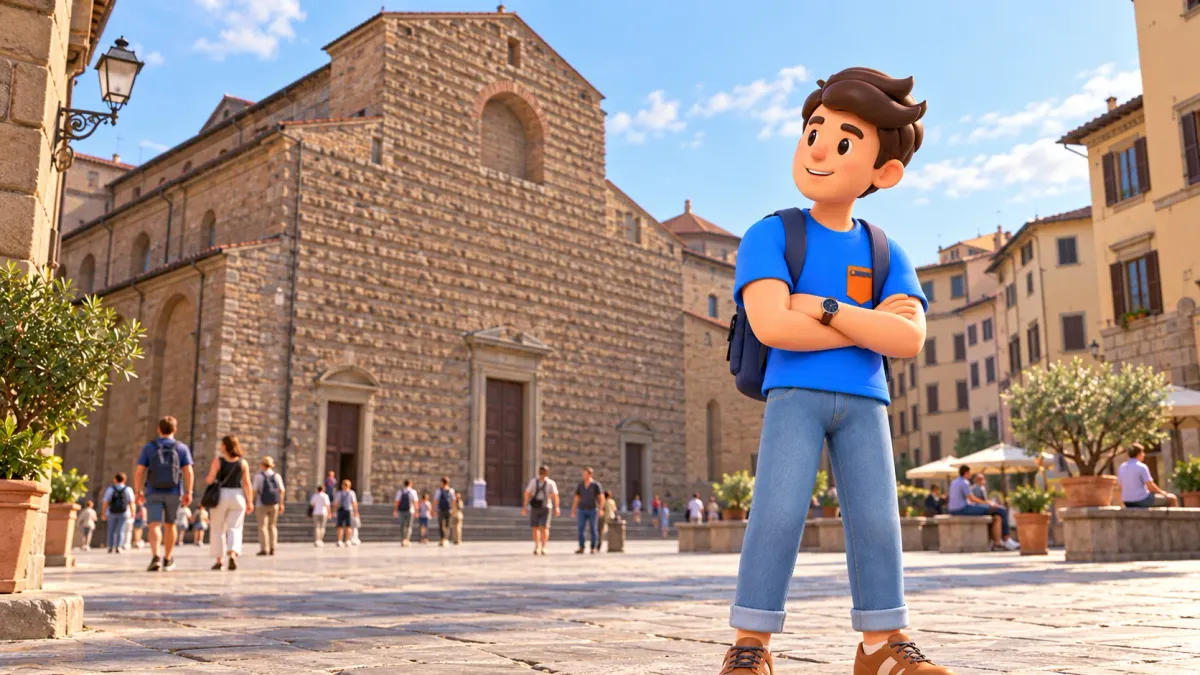
North of the Duomo, a Florence morning can have a clear sequence without crossing the whole historic centre. Start around San Lorenzo, add the nearby Medici palace as an exterior architectural stop and continue towards San Marco. Choose one main interior rather than trying to enter every institution linked to the family. A market pause can change the rhythm if it fits the actual activity that day. The result is a small northern programme with a subject of its own.
For the San Marco-led version, think in terms of a generous morning, roughly three to four hours including one focused museum visit and modest pauses. This is an editorial allowance, not a measured schedule, and actual entry arrangements and your pace matter. The outdoor-only version is shorter. San Lorenzo interiors, Medici Chapels, the Laurentian Library and the palace’s Magi Chapel are alternatives requiring their own decisions, not automatic additions before the main museum just because their names appear close together.
Choose one interior to organise the morning
San Marco can lead if frescoes and the setting of a former monastery interest you. San Lorenzo offers another direction through architecture, the Old Sacristy and related works. The Medici Chapels are a separate focus on dynastic memory and sculpture; the palace gives a domestic and courtly context. These subjects overlap historically, but they are not the same visitor experience. Start with the one that genuinely attracts you and use the streets to connect it with selected exterior stops.
Check the real opening and booking options for your date before deciding the order. A morning label does not guarantee an early entry, quieter rooms or every component open simultaneously. Put any fixed appointment first in the practical calculation, then give walking and pauses their own space. If your main interest is elsewhere in Florence, this northern walk can remain mostly outside. It does not need to compete with a larger art collection later in the day by adding another dense list of interiors.
Planning the full stay is much more convenient in RoadMe: the app develops a personal itinerary around your interests, dates and preferred pace. A fresco-led morning, an architecture-focused route or a Medici theme can become a coherent day chosen for you, with visits and pauses connected instead of assembled from separate lists.
If you are still shaping several days, the three-day Florence outline places a northern visit alongside other neighbourhoods. Here the aim is more concentrated. Follow one direction from San Lorenzo towards San Marco, with enough time to recognise the different roles of square, palace and religious setting. You do not have to collect every Medici-associated entrance to make that relationship visible or the morning worthwhile.
At San Lorenzo, start with the square and the church exterior
Begin on Piazza San Lorenzo after reaching the area by a suitable public route. Allow around fifteen to twenty minutes for an exterior look and orientation. The basilica’s unfinished front differs from the elaborate marble facade of the cathedral nearby. That contrast can be the first useful observation. You are looking at a different architectural identity, not a church that has failed to look sufficiently like the image most visitors associate with Florence.
San Lorenzo is closely connected with the Medici and with early Renaissance architecture. That context gives the square depth even if you remain outside. Look at the mass of the church and the relationship with surrounding streets. The interior’s proportional space is another encounter, requiring entry and time. Do not describe it to yourself as already visited from the facade. A clear exterior stop can stand on its own, leaving a focused interior for the day when it is your chosen main interest.

Keep the San Lorenzo visits distinct
The basilica and Old Sacristy, the Medici Chapels and the Laurentian Library are different decisions. Their physical proximity does not mean one entrance or the same access conditions apply to all. Check exactly which spaces your intended visit includes. The Old Sacristy brings Brunelleschi’s geometry and Donatello’s decoration into the discussion; the New Sacristy has a different Michelangelo-led architectural and sculptural story. Similar names can otherwise create confusion before you even choose a booking.
For this morning’s San Marco version, keep these substantial interiors as alternatives. If San Lorenzo becomes the main interest, give it the time you actually want and reduce or remove the museum at the other end. The library’s vestibule and reading-room architecture also deserve a real visit when accessible, rather than being treated as a short passage to see incidentally. A small number of related experiences can be more coherent than all of them rushed because they share a family name.
If you want the market, make it a real pause
The Mercato Centrale area lies close to San Lorenzo and can provide a change of subject before you continue north-east. The historic covered market building, associated with Giuseppe Mengoni, uses iron, cast iron and glass rather than the stone vocabulary of a Renaissance palace. That is already an architectural contrast. You can notice a different period and a building organised around trade and food, without treating the stop merely as a compulsory place to buy something.
Actual activity varies by day, hour and part of the building. Do not assume that all stalls, food businesses and sections operate on one identical schedule. Choose what is open and suitable for your needs. If you want breakfast or a small refreshment, look at the menu and service conditions and allow roughly twenty to thirty minutes as an initial planning idea. A fuller meal needs more. Food, finding a place and paying are real parts of the morning, not invisible time between monuments.
Palazzo Medici Riccardi: read the palace from outside
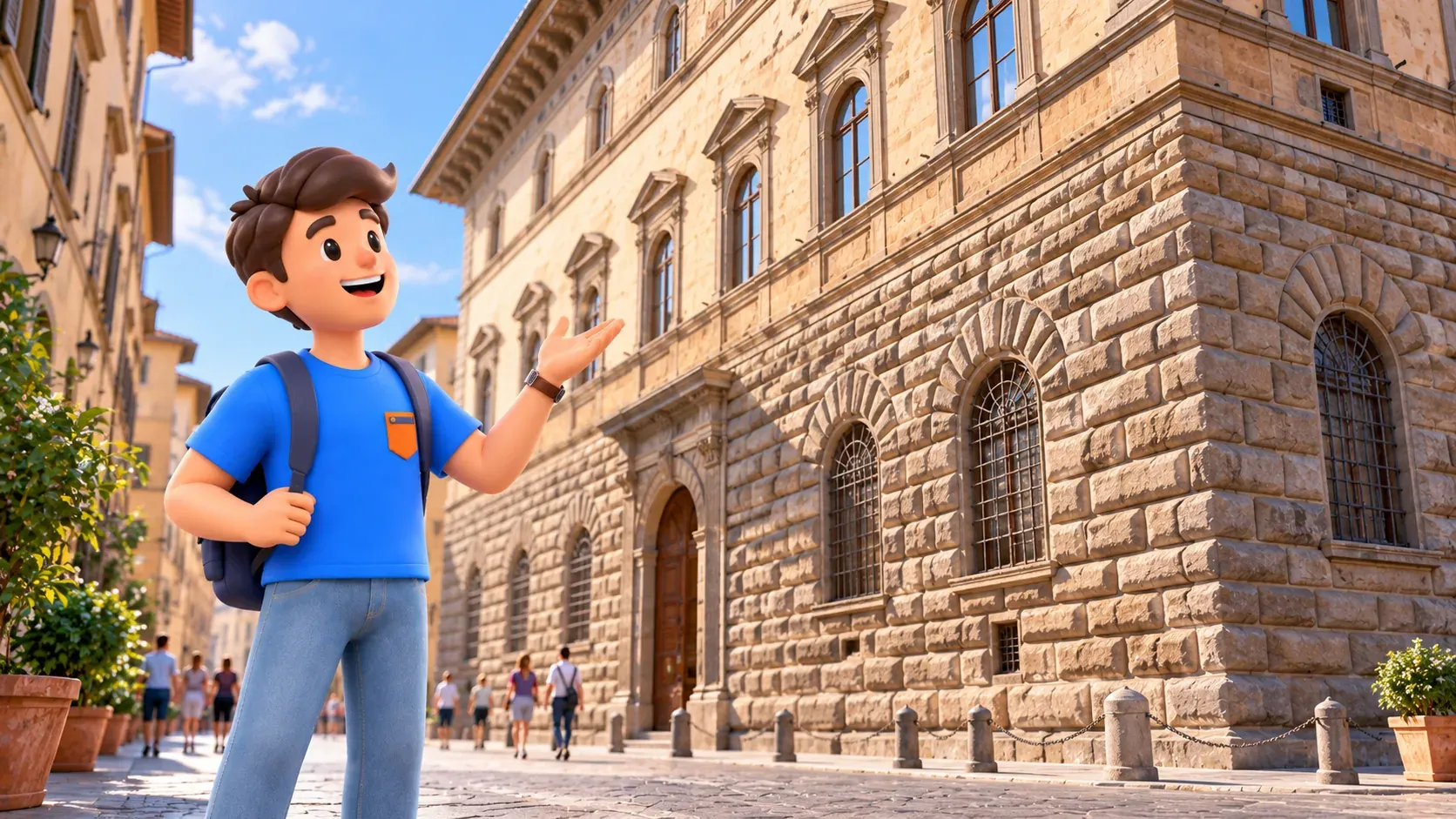
Continue towards Palazzo Medici Riccardi using a suitable public route. Allow around fifteen minutes for an exterior architectural look once you arrive, adjusting according to interest and the conditions around the pavement. The strong stone base, regular windows and palace scale give another subject after the church and market. Notice how the facade expresses the position of a powerful family within a city of streets and neighbouring buildings, rather than standing as an isolated residence outside urban life.
The palace is associated with Cosimo the Elder and Michelozzo’s design, later shaped further during the Riccardi period. That short history helps explain the layered name and the fact that the building is not a single untouched moment. You can observe the exterior without assuming access to the courtyard or rooms. Follow the current arrangements if you want to enter. A complete palace visit is a separate choice and should replace part of the morning rather than being attached as another uncounted interior.
The Magi Chapel, with Benozzo Gozzoli’s frescoed procession, is one possible reason to choose that interior. Its detailed painted world gives a different experience from San Marco’s monastic context. It is not an automatic extra on the way to another collection. If the chapel is what you most want, let it lead the morning and check its actual visit conditions. The neighbourhood still supplies the church square and outward route, while your main artistic encounter now has a different character.
Towards San Marco, keep the connection simple
The northern continuation can follow the public street area towards San Marco, with Via Cavour providing a useful orientation. Count actual walking, crossings and any need for rest separately from museum time. Around fifteen to twenty minutes can be a broad connection allowance for a modest route from the palace area, including a little looking around, not a measured promise. Do not add every side-street institution simply because it is visible along the way. The connection’s role is to bring the chosen visit into a clear sequence.
If the Accademia is also on your wider list, decide whether it is the main alternative rather than silently adding it before San Marco. A sculpture-led morning and a monastic-fresco morning have different requirements for attention. Nearby entrances can make a day look deceptively easy on paper. Walking distance is only one part of the calculation; the wish to look carefully is another. You can pass a familiar museum name today and still have made a good choice for your actual interests.
At San Marco, let the setting help the paintings
The San Marco museum occupies a former Dominican monastery, with Fra Angelico’s frescoes in cells and shared spaces as an important focus. The setting matters: paintings belong to a religious environment rather than only to a sequence of independent framed works. Choose a way to look that connects image and room. A gesture, the use of light or the relationship between painted and actual space can make the experience specific without requiring every scene to be explained before you see it.
An initial allowance of roughly an hour to an hour and a half can support a focused visit, with more time if your interest is broader. Check real access and what is included for the date. Allow entry procedures and any waiting in addition to the attention you want inside. This article does not promise that every cell, library area or part of the complex is available. Let the actual visitor route and your curiosity guide a manageable selection rather than trying to confirm an exhaustive list of rooms.
The monastery’s architecture, connected with Michelozzo, gives another link with the palace seen earlier. Yet the spaces have different purposes and atmosphere. Notice that difference instead of forcing both into one simple style label. You may remember the morning through this shift from family residence to religious community. Historical associations, including Savonarola, can add context, but they need not turn a short art visit into a complete account of Florentine politics and religious history. One clear relationship can be enough to carry the experience.
Finish the morning before adding another programme
After the chosen interior, leave time for a pause and lunch. A generous three-to-four-hour morning can be filled by selected exterior stops, actual connections, entry margin and a focused museum, without including every alternative described here. The precise result depends on arrival, booking and pace. If the programme runs long, remove a side stop rather than hurrying the main visit. In heat or rain, change the balance between streets and rest, and assess surfaces and access individually rather than assuming a universally step-free route.
Using the complete day is easier and more effective in RoadMe, where your interests and pace shape a personal plan across the available dates. Download Florence in advance while connected if you want maps and navigation available offline, and give the chosen cultural visit room alongside meals and the rest of the trip.

You can end with three linked impressions: the church square, a family palace and the different world of San Marco. The morning does not need every Medici monument or another major museum afterwards. Its value lies in the connections you have actually had time to see. Continue Florence from that point, with a clear main experience behind you and enough space for the next part of the day to have a different rhythm.


