
Sculpture in Florence’s streets: a slow walk from Orsanmichele to Signoria
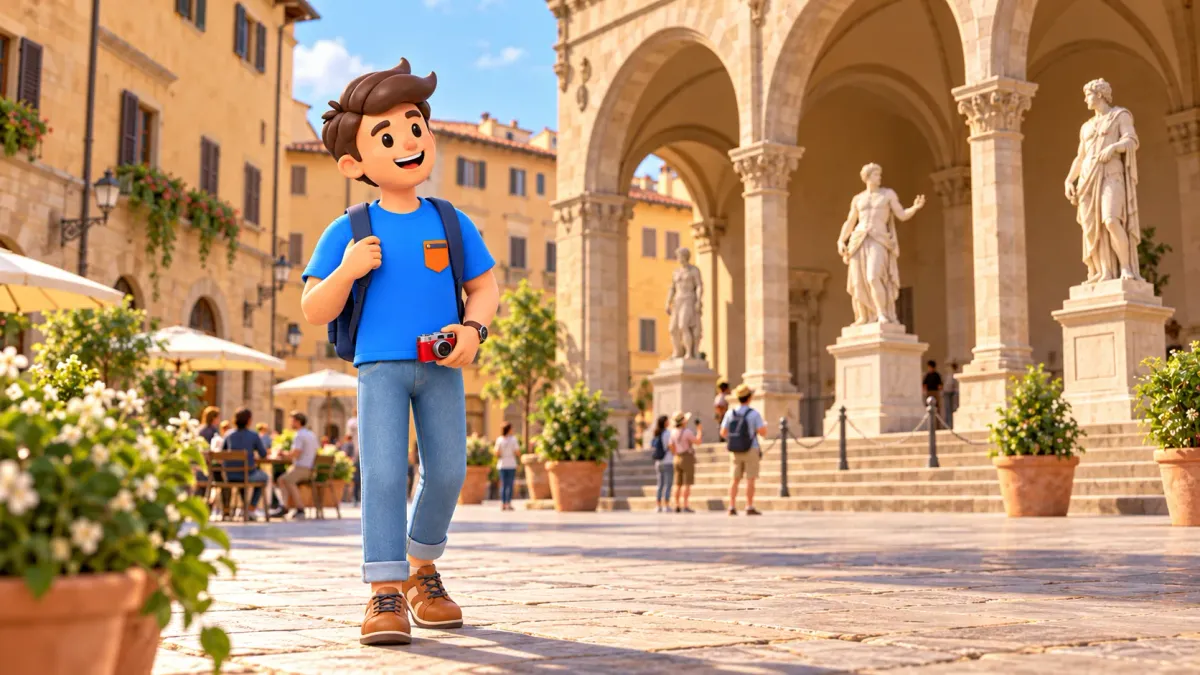
Florence’s outdoor sculpture becomes more interesting when you stop treating every statue as an isolated masterpiece. A figure in a narrow niche addresses a street differently from a fountain in an open square. A bronze at the edge of an arcade can speak to the city beyond it, while a twisting marble group asks you to change your position. This walk uses those differences as its subject. You do not need to identify every saint or remember every sculptor. A few focused observations can turn a familiar part of the centre into a much richer experience.
Allow roughly ninety minutes to two hours after reaching Orsanmichele for selected exterior niches, the actual connection to Piazza della Signoria, a few observations around the palace and Neptune fountain, the Loggia dei Lanzi as conditions permit, and a pause. This is a planning framework rather than a measured circuit. It includes no museum rooms, palace tour or tower ascent. Arrival and the onward journey are separate. The walk is deliberately compact in geography, but looking carefully takes time. Choose fewer works and leave with a clear comparison instead of trying to finish the square as if it were an illustrated checklist.
Begin with the relationship between a figure and its setting
At each stop, ask where the figure was intended to be seen from, how its pose occupies the available space, and what the surrounding building adds. These questions are useful even without specialist knowledge. Sculpture in Florence often belonged to civic identity, religious devotion or a patron’s political message. Its location was part of its meaning. The city also moved works, protected originals indoors and installed copies. A present outdoor arrangement therefore tells both an artistic story and a history of changing uses. Looking at a copy in its street setting can still explain something essential about the original commission.
RoadMe makes the whole stay much easier to organise: the app develops a personalised itinerary around your interests, dates and comfortable pace. Sculpture, one chosen museum, time in the neighbourhoods and proper breaks can form a complete trip, so you spend less effort arranging separate stops and more attention enjoying Florence.
Let one detail carry each stop: a niche’s frame, a change in weight, a material contrast or a group that looks different from another public position. Keep entrances and circulation clear. Follow any barriers and staff directions, and remember that an open-looking arcade remains a place with actual management conditions. The route’s exterior theme does not mean every corner or platform is automatically accessible at every moment.
Orsanmichele: begin with a gallery built into a wall
Orsanmichele is a rewarding starting point because it does not look like a conventional church standing apart from everyday trade. The building developed from a grain market and storehouse into a religious space, retaining traces of those practical functions. The lower loggia was enclosed, while upper rooms belonged to the city’s food storage system. That history makes the exterior sculpture more meaningful. The figures were commissioned by the professional guilds, whose economic, political and religious lives were closely connected. Each patron saint represented a community’s presence in the shared city rather than merely decorating an otherwise blank wall.
Reserve about twenty to thirty minutes for a small selection of niches instead of trying to inspect the entire programme at equal length. Notice how a standing figure fits the architectural frame. Does the body seem held within it, or does a gesture make the space feel more active? How do the folds, weight and head position guide your attention? Masters including Donatello, Ghiberti, Nanni di Banco and Verrocchio contributed to this outdoor programme across generations.
Many original exterior statues were moved indoors for conservation and replaced outside by copies. That distinction is important, but it does not make the street experience empty. The niche and surrounding wall show how a figure worked in public space. A museum visit offers another kind of encounter with material and detail, and needs separate time and current access information. For today, let the exterior answer its own question: how could a guild make religious devotion, professional identity and artistic ambition visible to people passing through a working city? The building’s earlier commercial purpose makes that relationship particularly vivid.
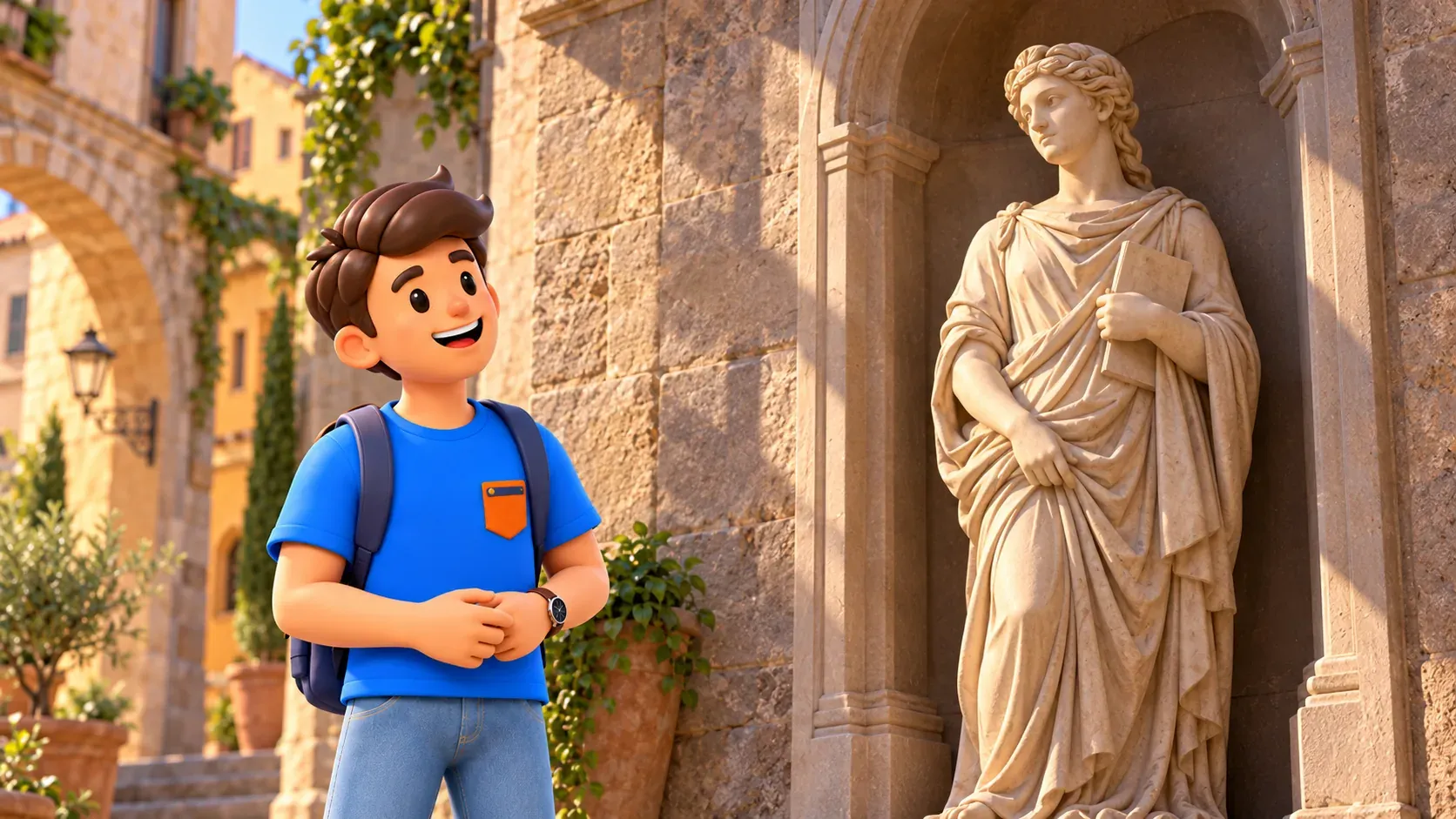
Try one simple comparison before leaving. Look at a single figure, then at a group or a niche whose arrangement feels different, where the actual public view allows. You are not being asked to decide which is better. The aim is to notice that the relationship between body and frame can change. A small difference in stance or grouping may alter the whole impression. Once you recognise that, the move to the open square becomes more revealing. Sculpture there will have another spatial problem: it must communicate across a wider public setting, beside architecture and other strongly competing monuments.
Let the approach to Signoria change the scale
Walk to Piazza della Signoria by a suitable current public connection, allowing roughly ten to fifteen minutes for the actual movement and a clear arrival. This is a practical estimate, not a measured route. On reaching the square, resist going straight to the first famous statue. Spend a few minutes understanding the whole arrangement: Palazzo Vecchio, the fountain, the arcade and the flow of people between them. The space was a centre of government, and its sculpture participated in the image of authority. The works do not all belong to one political moment, even when they now share a single view.
Around the palace entrance, a brief selected observation can introduce another important distinction between the work’s location and its material history. The David outside is a copy; Michelangelo’s original is in the Accademia. The original Judith and Holofernes by Donatello is inside Palazzo Vecchio, while a copy occupies the outdoor setting. For this walk, you are looking at how the placements address the square, not adding either museum automatically. Around ten minutes may be enough for one comparison. If the original sculptures are your main interest, choose a later interior visit rather than trying to squeeze it into the outdoor allowance.
Neptune: follow material, movement and public ambition
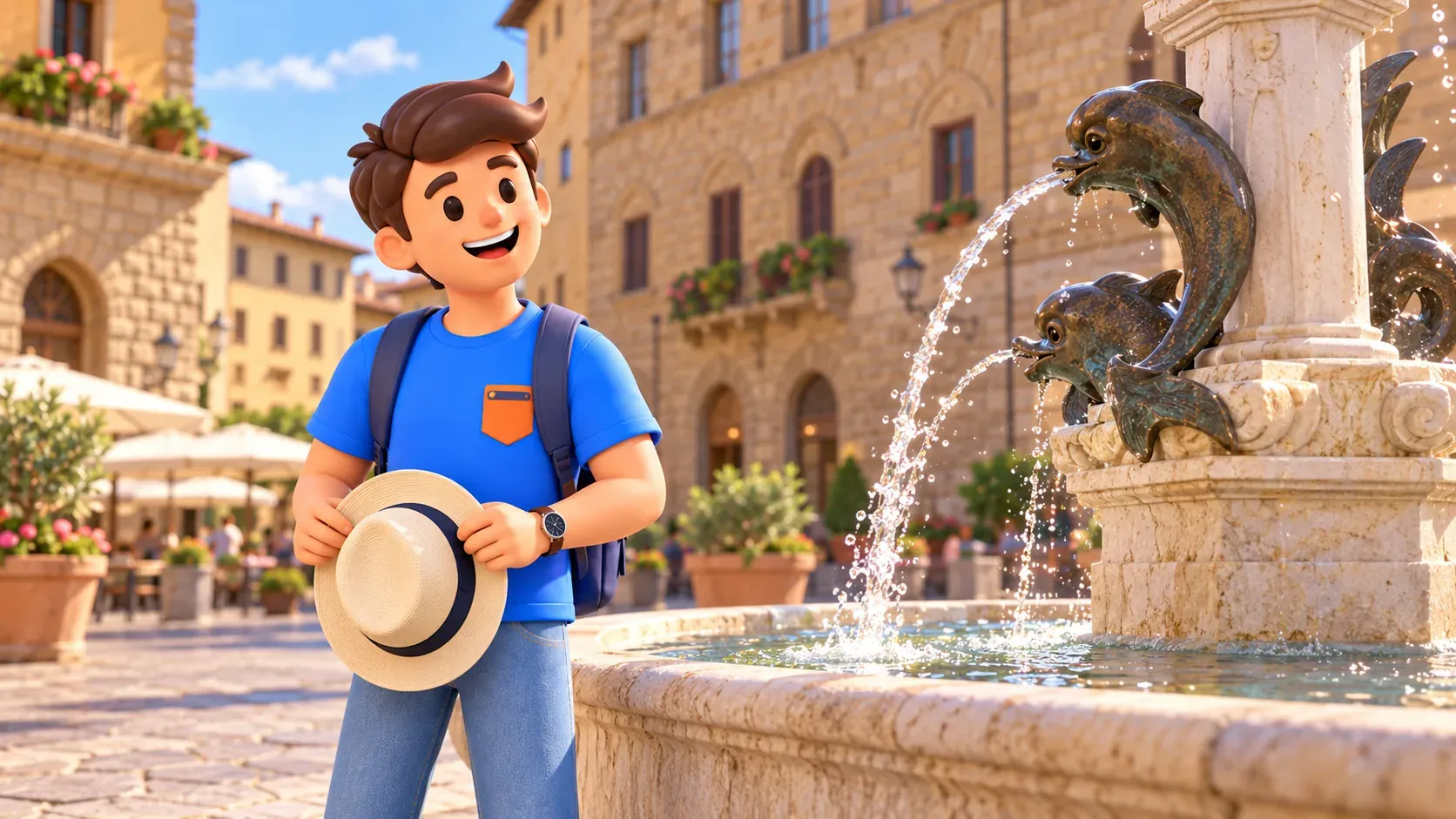
Give a selected look at the Neptune fountain around fifteen to twenty minutes where the public situation permits. Start with the contrast between the large pale marble figure and the darker, more animated surrounding elements. The fountain is not simply a single statue placed above water. Figures, basin and engineering form an ensemble meant to be seen from more than one side. Change position only along suitable public space, without crossing a barrier or entering the basin. The difference between the strong upright centre and movement below gives you an accessible way into the composition before reading every mythological identity.
The project belongs to Cosimo I’s ducal Florence and was carried out by Bartolomeo Ammannati and collaborators. The competition was announced in 1559; the ensemble appeared in a provisional form for the dynastic wedding of 1565 and was completed in 1574. These dates matter because they place it within a deliberate transformation of the square’s political language. Neptune could evoke Tuscan maritime strength and the ambitions of the ruler. A fountain in this location was therefore more than an ornament. It addressed a public space already associated with civic government and gave it another image of power.
You do not have to settle the fountain’s entire reputation to enjoy the stop. Its familiar nickname, Biancone, reflects the large white figure and the city’s habit of talking about its monuments. The more useful observation is how pale and dark materials, stillness and movement, and sculpture and water belong together. Actual water operation or a fully unobstructed view should not be assumed. Even from an appropriate limited position, you can compare the fountain’s open arrangement with Orsanmichele’s niches. One concentrates a figure inside a frame; the other makes a whole group participate in a broad public setting.
The Loggia dei Lanzi: an arcade that became a sculpture setting
Move towards the Loggia dei Lanzi as actual conditions allow, reserving roughly twenty to thirty minutes for a modest selection. Begin from the square, where you can understand its broad open arches before concentrating on individual works. The fourteenth-century structure was designed for public ceremonies and later became a setting for monumental sculpture. Its later name recalls the German mercenary guards connected with the Medici. The change in function is a useful part of the experience: a covered civic place did not disappear when its use changed, but acquired another way of addressing the city.
Cellini’s bronze Perseus with the Head of Medusa is particularly useful for thinking about placement. Its position towards the edge of the arcade lets it address the square beyond. Commissioned under Cosimo I, its mythological victory could carry a political meaning in this charged public setting. Look at the relation between the figure, its base and the opening around it. The subject includes violence, as do several mythological groups nearby; if that does not suit your party, concentrate on the architecture and a more distant overall view. The walk can remain worthwhile without close study of every narrative.
Giambologna’s Rape of the Sabine Women introduces a different visual task. Three figures form a complex rising movement that changes as the viewpoint changes. Where public access permits, compare two suitable positions without turning the observation into a demand to circle everything freely. The work shows why a photograph from one side cannot exhaust a sculptural group. Other pieces, including antique sculpture and later works, make the loggia a layered arrangement rather than a display frozen in one century. You can recognise that variety without identifying every object or reconstructing the full history of transfers and collecting.
The contrast with Orsanmichele now becomes clear. A saint in a niche, a monumental fountain and a group beneath an arcade use different settings to make a body visible. The loggia’s architecture adds a roof and a strong frame while remaining open to the square. Finish the selected observation when one of those relationships has become memorable. There is no need to turn a short walk into a complete sculpture survey. A separate museum can later deepen the interest, but the outdoor sequence already offers a satisfying encounter with art as part of urban life.
RoadMe helps turn that curiosity into a complete personalised trip: your interests in sculpture, painting, history or quieter neighbourhoods shape the plan across the days available. The app combines the sequence with sensible pauses at your pace, and downloading the useful content beforehand makes the itinerary more convenient and effective to follow offline while exploring Florence.
Keep the ending comfortable and the next visit deliberate
Allow around twenty minutes for a pause and use the remaining margin for real connections, looking and any restricted circulation. The upper ends of every observation may extend the ninety-minute-to-two-hour framework. A full meal or museum is additional. For a shorter outing, choose Orsanmichele and one square comparison, or stay entirely around Signoria with a focused selection. If the surrounding buildings attract you, the palace facade walk offers another theme for a different day. Here, leave with three things to notice again: the frame around a figure, the movement of a body and the public space that gives sculpture its voice.


