
Certosa del Galluzzo: a thoughtful half-day beyond central Florence
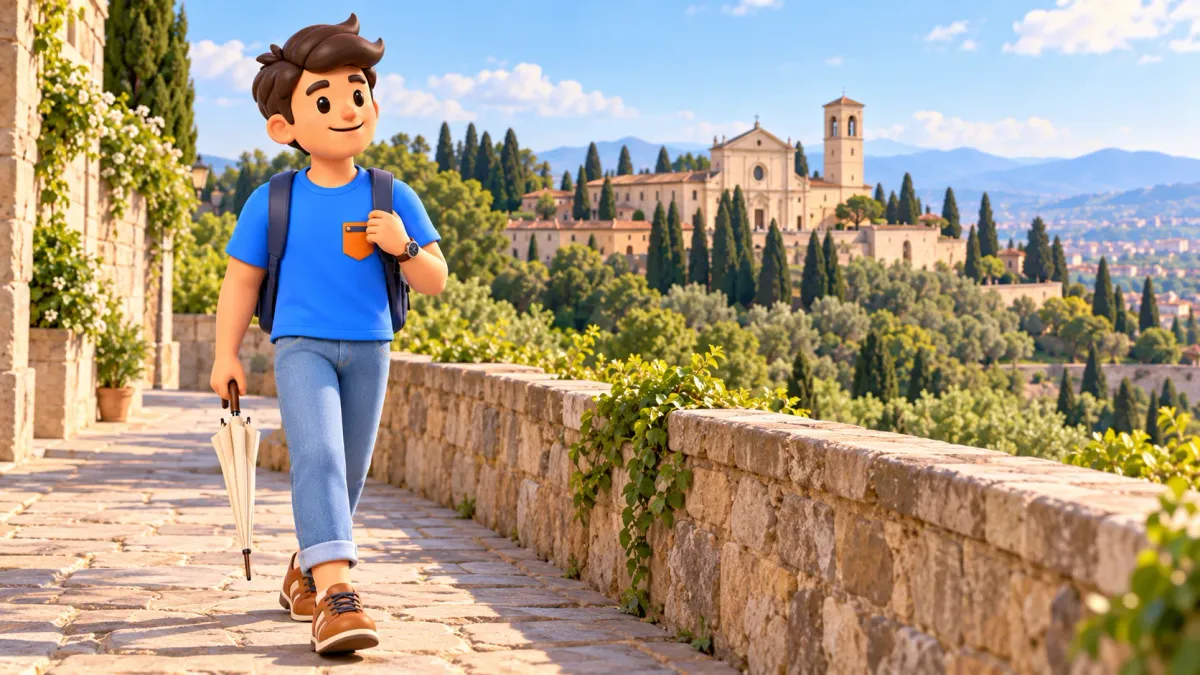
The Certosa del Galluzzo gives a Florence trip a different scale. On a hill south of the centre, the monastery reads as a world of connected spaces rather than a single church to enter and leave. Cloisters, cells, communal rooms and religious art belong to a way of life organised around both solitude and shared worship. Understanding that relationship makes the outing more rewarding than simply collecting another impressive building outside the main sightseeing streets.
Allow roughly three to four hours including your actual local arrival, the currently available visit, a short pause and the return connection. This is an editorial planning envelope, not a measured walking circuit. The main experience is the monastery itself; a lengthy approach from the centre or a full meal requires its own realistic allowance. Confirm the format before travelling, then give the visit a clear beginning and finish. The point is to change the rhythm of the day, not to fit a second Florence inside one afternoon.
Make one confirmed monastery visit the centre of the outing
Start with the Certosa’s current visitor information for your date. Establish how the visit works, where it begins and which parts it includes. If there is a guided departure or reservation, let that set the order of your journey. A religious complex contains spaces with different functions, so access is not established by finding the gate open. The actual programme is a better basis than assuming independent entry to every cloister, cell and gallery mentioned in a historical description.
RoadMe makes a complete trip much more convenient to prepare: the app develops a personalised itinerary around your interests, dates and comfortable pace. A monastery visit, art in the centre, neighbourhood walks and proper breaks can fit into one coherent plan, leaving you less organisation to handle and more attention for Florence itself.
Count the real arrival from your accommodation and the return before adding anything else. A practical transport connection can serve the visit better than an unnecessarily long walk beside roads chosen only to make the outing sound adventurous. Use a current map and service information for the actual approach. Keep the final portion suitable for your mobility and the conditions. This article provides a structure and a reason to come; the specific journey belongs to the day you are actually planning.
Understand the idea of a charterhouse
The foundation dates to 1342 and is associated with the banker and statesman Niccolò Acciaiuoli. The Carthusian order combined communal religious life with a strong commitment to individual solitude. That balance explains why the Certosa cannot be understood through the church alone. Separate cells and common spaces answer different needs within one organised environment. The layout expresses a daily rhythm, giving architectural form to the relationship between private prayer, work and the life of the community.
The monastery changed over the centuries. Important work in the cloisters belongs to the late fifteenth century, while the church and the spaces around it also received sixteenth-century changes. What you see is therefore a historical ensemble built and adapted over time. Its apparent unity does not mean that every wall, surface or decorative choice comes from the foundation. Let a few visible relationships explain the larger idea rather than trying to assign a date to every feature during a single visit.
The hill setting adds to that impression. From an appropriate public position, the mass of the complex can suggest separation from the dense city, while its history remains closely connected with Florence. This is not a promise of silence or an empty monastery on your date. It is a way to read the architecture: a defined world with its own internal order, situated beyond the centre yet shaped by the same wider society, patrons and artistic culture.
Let the great cloister explain the relationship between people and space
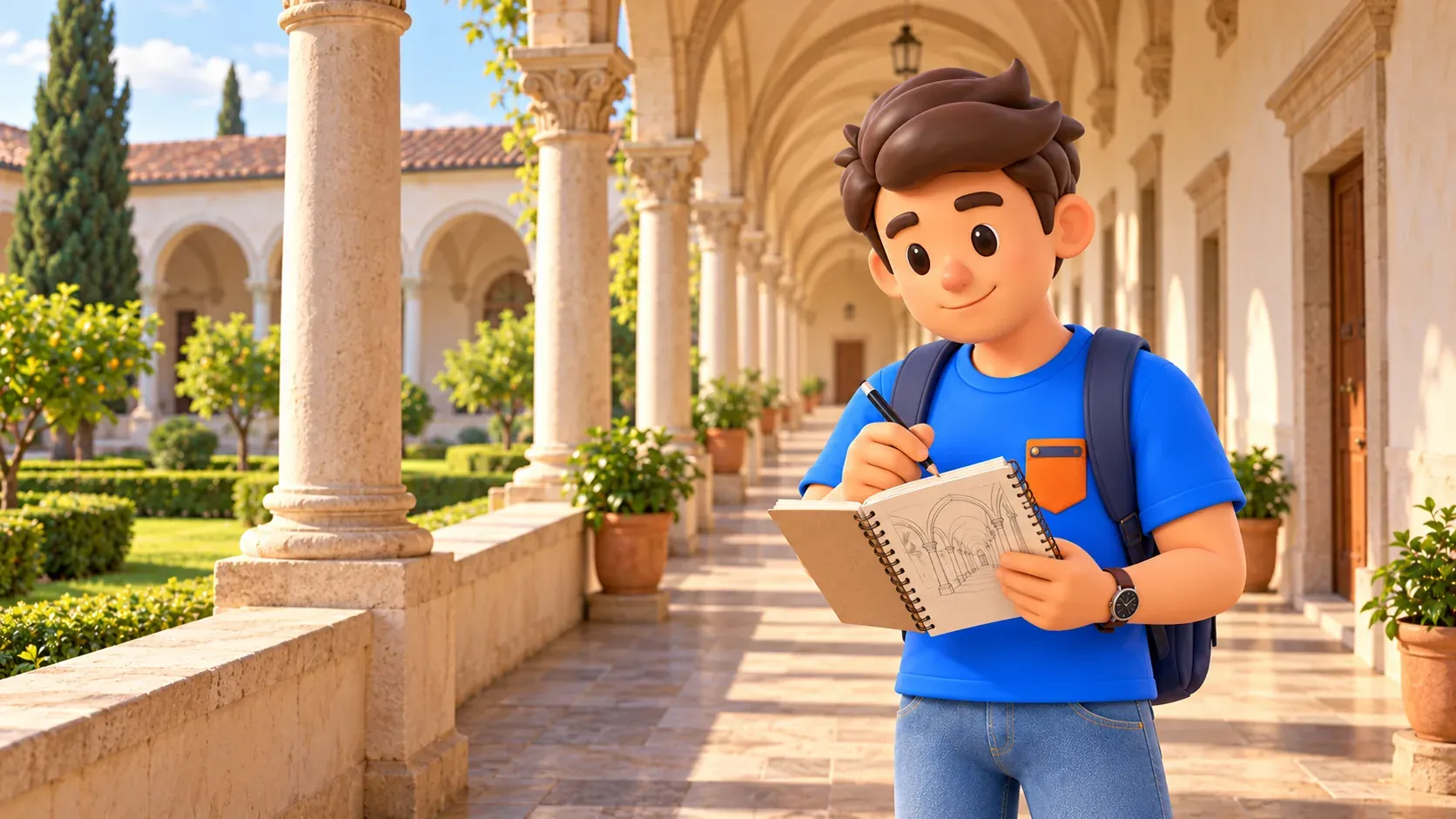
The Great Cloister is associated with eighteen Carthusian cells. Each was arranged as a small separate dwelling with a garden, supporting a life in which much time could be spent in relative seclusion. The useful thought is not simply that monks had rooms around a courtyard. The individual units formed part of a repeated system, while the larger enclosure connected them to a shared institution. Order in the plan reflected an intended order in daily life.
Where the current visit allows it, notice repetition before searching for a spectacular detail. Similar openings, measured intervals and the relationship between covered passage and open space can make the principle legible. Think about how moving through such a setting differs from crossing a busy urban square. A cloister organises circulation but also gives it a particular rhythm. You do not need access to every cell to begin understanding that relationship, and a historical description should not be mistaken for a promise of a complete room-by-room circuit.
The garden attached to a cell also changes the meaning of solitude. It connects private space with work and a small piece of cultivated ground, rather than reducing the cell to a place of confinement. The comparison helps you read architecture through use. If you are visiting with someone whose interest is design rather than religion, this can be a shared point of attention: how a repeated spatial unit can support a whole way of living without every part being monumental or visually elaborate.
Look at the church as the communal counterpart
San Lorenzo, the church within the Certosa, belongs to the monastery’s shared religious life. It should be understood alongside the cells and cloisters, rather than confused with the better-known San Lorenzo in central Florence. A name can recur without describing the same visitor site. Here, the church provides a communal counterpart to individual seclusion. Its place within the sequence matters as much as a list of artworks: entering a shared liturgical space after passages or open areas changes the experience of the ensemble.
Later decoration and alterations reveal that religious continuity did not require an unchanged visual language. Different periods left their own choices within the complex. A focused visit can notice one relationship between architecture and ornament rather than attempting to catalogue every surface. Follow the actual explanation and the conditions of the religious setting. Give ceremonies and other users their space. The monastery makes more sense when it is approached as a place with spiritual functions as well as historical and artistic significance.
If the current itinerary includes a chapter room, refectory or other common space, connect it to that same idea. Different activities needed different rooms. The interest lies in the system, not in attaching an independent must-see label to each doorway. A well-chosen explanation can make the whole arrangement clearer without adding a long list of compulsory observations. Let the programme establish which spaces are genuinely part of your visit, and keep enough attention for the transition between them.
Give Pontormo time within the monastery’s story
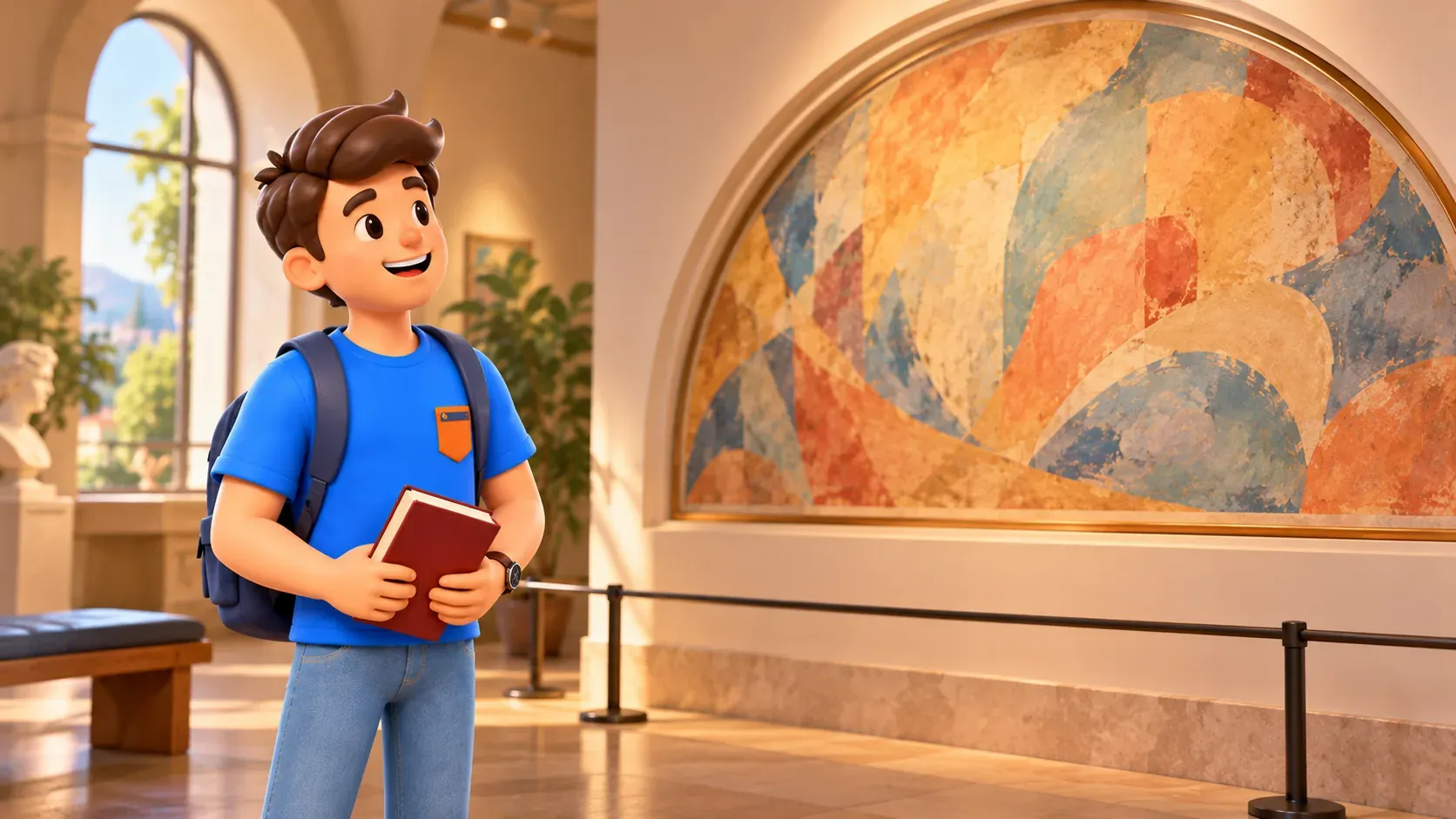
The Certosa’s artistic heritage includes Pontormo’s lunettes with scenes of the Passion, painted in 1523. They belong to an important moment in Florentine painting, with expressive figures, unusual colour relationships and an emotional intensity that differs from a simple idea of Renaissance calm. Their significance is stronger when you remember the religious setting for which they were created. The scenes formed part of a monastic environment before becoming works encountered within a gallery presentation.
The frescoes were detached from their original location and brought together in the complex’s picture gallery. That history adds a conservation story to the artistic one. The way you see an image today may differ from its earlier position and use. If the gallery is included in the confirmed programme, allow the actual sequence to guide your attention. Pick a gesture, a grouping of figures or the rhythm between scenes. A few careful observations can be more memorable than trying to reconstruct the entire painted cycle at speed.
This is a good place to let art remain connected to its commission. Pontormo is not merely another famous name placed on a day’s checklist. The work invites you to consider why expressive painting belonged in a community whose life valued contemplation. The article does not need to reveal every scene or reproduce a full gallery guide. Its role is to give you a useful question before arrival, leaving room for the works and the on-site interpretation to answer it during your own visit.
Remember that the community and its custodians changed
The religious community did not remain identical throughout the Certosa’s history. In the twentieth century the Carthusians were followed by Cistercians, and care of the complex later passed to the San Leolino community. These changes are part of the site’s continuing story. They help distinguish the original architectural purpose from the people and arrangements of later periods. A building can preserve the structure of an earlier way of life while its custodians and present activities evolve.
That distinction makes the visit more thoughtful. You can understand the historical Carthusian rhythm without imagining that every practice continues unchanged today. Likewise, a museum presentation and a religious setting can coexist within one ensemble without being the same activity. Let the current hosts explain the contemporary situation. The past becomes more understandable when you leave room for change, rather than treating a monastery as a frozen stage whose inhabitants exist only to illustrate an old description.
RoadMe is especially useful when you want the whole journey planned around what interests you: a personalised itinerary can balance religious architecture, painting, city walks and comfortable breaks across the days available. Prepare the plan beforehand and download the useful content for offline access, so following your trip is more convenient and effective while you explore.
Give the half-day a practical finish
Use the duration of the actual visit as the central block. A rough allowance of sixty to ninety minutes may help early planning, but the confirmed programme takes precedence. Add your real arrival and return, time to reach the meeting point and a modest pause of around twenty to thirty minutes. The three-to-four-hour envelope is not a guarantee for every starting point. A longer programme, a substantial meal or an extended walk makes a larger outing and should be counted honestly.

Choose rest and refreshment through actual possibilities rather than assuming a café beside a particular gate. Keep the approach suitable for your mobility; a hilltop religious site is not automatically a step-free visit. In heat or wet weather, reduce any optional outside walking to what remains comfortable. Photography, dress and access to individual areas should follow the current visitor guidance. These details serve one simple purpose: making the chosen experience pleasant enough that you can pay attention to the place itself.
Return with room for the next journey instead of automatically attaching another demanding museum. The contrast with central Florence is already the day’s change of scene. If you prefer another out-of-centre visit focused on formal landscape and country residences, the La Petraia and Castello plan offers a different theme. At the Certosa, give the relationship between solitude, community and art enough time to become clear. One understood ensemble can remain more vivid than a long sequence of sites hurriedly passed through.


