
Brunelleschi’s Florence: seeing the Renaissance from the street
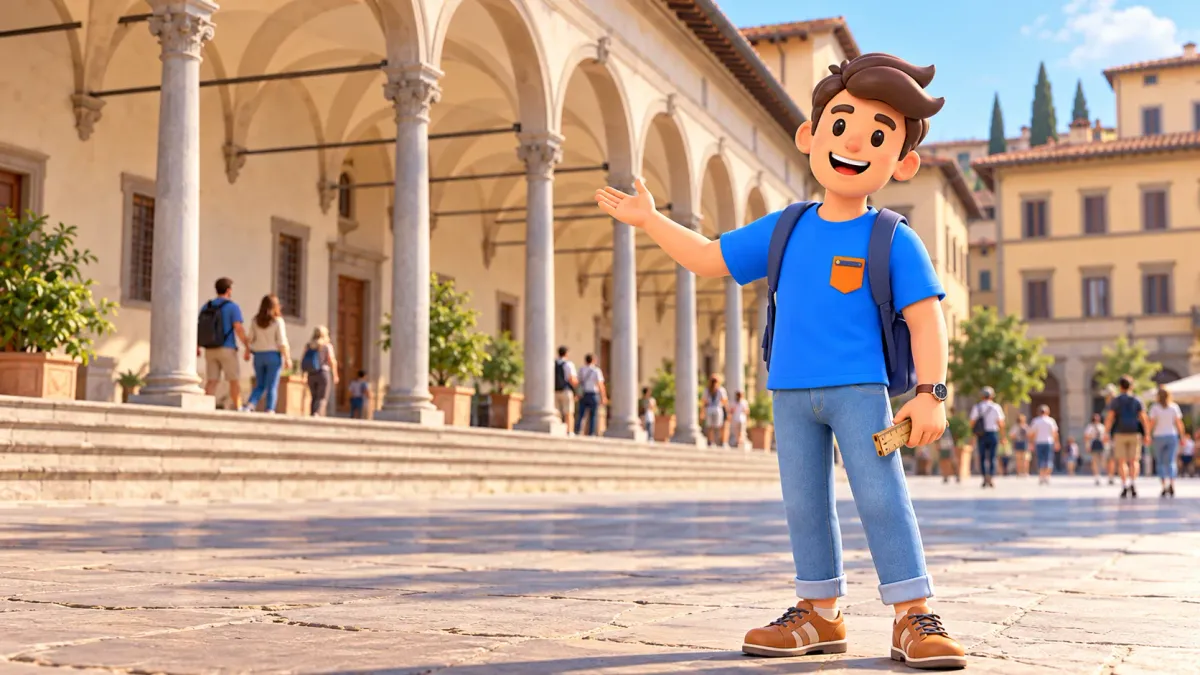
Brunelleschi’s Florence can begin with a simple observation: a repeated arch makes a long frontage understandable, a dome changes the city’s skyline, and a small room lets you feel how its parts relate. You do not need to start with technical vocabulary or climb above the rooftops. The architecture offers different scales of looking, from the public street to an interior. A focused walk can connect them while leaving the full story of each building for your actual visit. The aim is to notice an architectural idea, not to count every work associated with the same name.
Allow roughly two and a half to three hours after arriving at Piazza Santissima Annunziata for the Innocenti exterior, a selected connection through the cathedral area, one San Lorenzo interior and a modest pause. This is an editorial framework, not a measured circuit or a queue guarantee. A dome climb, a full cathedral museum or another chapel requires a longer plan. The basic version stays at street level between sites and gives one interior proper time. Arrival from your accommodation and the actual onward journey need their own allowance.
Begin with a question about clarity
Filippo Brunelleschi is central to the early Renaissance in Florence, but the useful subject is how architecture becomes readable to a person moving through it. Repetition, proportion and the relationship between a smaller unit and a whole space give the eye something to follow. These are not merely abstract diagrams. A portico can organise movement between a square and an institution; an interior can make its structure visible through contrasting materials. The walk compares such experiences rather than asking you to accept Renaissance as a label attached to everything old and harmonious.
RoadMe makes the complete trip much more convenient to organise: the app develops a personalised itinerary around your interests, dates and comfortable pace. Architecture, one meaningful interior, neighbourhood walks and proper breaks can fit into a coherent plan, so you spend less effort arranging the day and more attention on the Florence that interests you.
Choose the San Lorenzo visit before setting out and check the current format, including whether the spaces you want are actually part of it. The Old Sacristy is relevant here; the New Sacristy is Michelangelo’s later work with separate visitor arrangements. If a confirmed time determines your interior, work the outdoor sequence around it or reverse the direction. The historical argument still holds. What matters is comparing civic care, engineering and architectural space with enough attention, not following an unchangeable order when the actual visiting conditions suggest another sensible start.
Let the Innocenti loggia establish a human scale
Give the public side of the Innocenti on Piazza Santissima Annunziata about twenty to thirty minutes. Construction began in 1419, with Brunelleschi’s design serving an institution for the care of children. The silk merchants’ guild took patronage of the project, and the home began receiving abandoned children in 1445. This context matters: the celebrated architectural language answered a real civic need. The building is not just an elegant set of arches detached from the people who used it, and its historical name does not mean a hospital only in the modern medical sense.
Look at the regular intervals along the loggia, the relation between columns and arches, and the depth behind the frontage. The covered space mediates between the square and the institution. From an appropriate public position you can begin understanding that relationship without entering the museum or every courtyard. One repeated bay helps make a longer composition readable. You do not need exact measurements to notice how the rhythm works. Start with one part, then step back enough to see how repetition gives the whole building a calm, recognisable order along the edge of the square.
The glazed terracotta medallions of swaddled children belong to the building’s visual identity and purpose. They are not random ornament to be separated from the institution’s history. Their later addition also reminds you that a coherent-looking frontage can have more than one stage. Keep the architecture and the care function connected. The museum, when it is the reason for another visit, can give the human story much greater depth. For this walk, the exterior already sets a useful beginning: an early Renaissance project shaping the boundary between a public square and an ongoing civic institution.
Move towards the cathedral for a change of scale
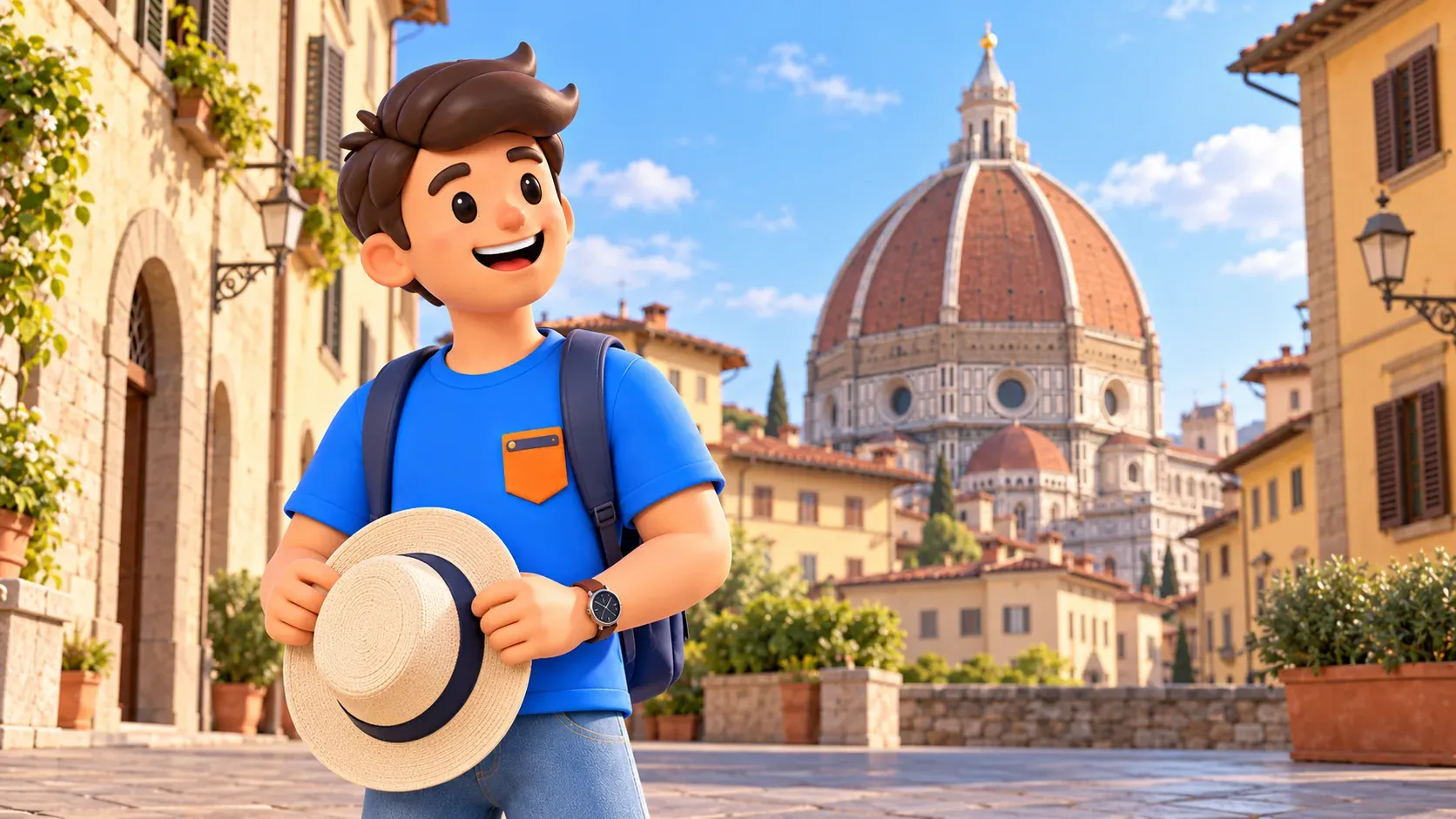
For the selected public connection towards the cathedral area, allow roughly fifteen to twenty-five minutes with modest pauses as an initial budget, not a measured promise from every position. Use a current map and the actual street conditions. The transition matters: the loggia’s repeated human-scale units give way to a large religious building whose dome has a different presence in the city. You do not need to approach as if the next task were automatically climbing it. Seeing from below is a complete and useful version of this architectural walk.
The dome belongs to a cathedral built across several periods. Its relationship to the larger inherited building is part of the story. Brunelleschi’s work solved an extraordinary structural challenge while also changing how Florence appeared from near and far. For this route, keep the engineering explanation light: the useful first observation is that a large-scale construction problem became an urban form. You do not need a detailed diagram of every masonry technique to understand that the project operated at a different scale from the loggia and a different kind of challenge from a small chapel.

Look at the dome without turning the day into a climb
Give a selected exterior observation around fifteen to twenty minutes from actual suitable public viewpoints. Notice how much of the dome is visible from one position and how the surrounding streets frame it differently. A view can change when you move only a little. Avoid treating a single close photograph as a complete account of the form. The city supplies partial views, interruptions and changes of distance. These are part of how a major building is experienced in daily life, rather than an obstacle to be removed before you are allowed to appreciate it.
The cathedral’s present facade is a much later chapter, not Brunelleschi’s design. The Baptistery opposite has its own older history and later artistic layers. Keeping those distinctions clear prevents the whole square from being attributed to one architect or one Renaissance moment. A dome climb is a separate visit with current arrangements and physical demands, while the cathedral museum provides another substantial subject. Neither is included automatically. The street-level route keeps enough time for the later interior at San Lorenzo and avoids turning an architectural comparison into a series of major admissions.
Choose San Lorenzo to bring the scale inward again
Allow roughly ten to twenty minutes for the actual selected connection into the San Lorenzo area, adjusted to your route and the conditions. The unfinished church facade offers another useful contrast. It does not announce the clear system of grey stone and pale surfaces inside. The basilica has earlier religious origins, while the Medici supported the early Renaissance renewal associated with Brunelleschi. The city’s architectural history is therefore not a clean replacement of medieval Florence with a new style. An existing place was rebuilt and reinterpreted through a different spatial idea.
For a selected basilica and Old Sacristy encounter, start with roughly forty-five to seventy-five minutes after actual entry, then adjust to what is included and your interest. Look first along the nave, then at one repeated unit. Columns, arches and contrasting materials make relationships legible. The effect is not simply a shortage of decoration. Repetition and proportion become expressive choices. After the large external presence of the dome, the room gives you another way to notice architectural order, at a scale that can be experienced through movement and the eye rather than a distant skyline.
The Old Sacristy makes that relationship especially clear when included in your visit. Developed in the 1420s and connected with Giovanni di Bicci de’ Medici’s patronage, it brings together square and circle, a main volume and smaller altar space. Donatello’s decoration adds a different expressive voice. Begin with the whole room before isolating details. A few relationships can remain in memory: the grey lines against pale walls, the change from the larger volume to the altar part, and the way sculpture sits within the geometry. The room does not need to be large to make a substantial architectural statement.
Keep later masterpieces and distant alternatives in their own plans
San Lorenzo’s New Sacristy, the Chapel of the Princes and the Laurentian Library belong to other stages and visitor arrangements. Do not let familiar names quietly expand this one interior into every famous room in the area. Michelangelo’s New Sacristy can form a different day’s main experience. The library has its own architectural and manuscript story. Their proximity is valuable context, but it does not create a combined opening or replace the Old Sacristy’s relevance to this route. A clear choice protects the earlier architectural subject you came to understand.
Santo Spirito across the Arno and the Pazzi Chapel at Santa Croce offer other important Brunelleschi-related encounters. They suit separate versions when their actual programmes and your interests make them the focus. The Pazzi Chapel also has a history of construction continuing beyond the architect, including later work at its entrance. You do not need to cross the whole city and enter both to validate the walk you have already taken. The selected sequence has its own logic: an institution’s public edge, a dome’s urban scale and an interior’s readable proportions.
RoadMe is especially useful when you want a complete personalised trip rather than a checklist of an architect’s buildings: your interests and pace determine how art, engineering, neighbourhoods and comfortable pauses fit across the days available. Prepare the itinerary beforehand and download the useful content for offline access, making it more convenient and effective to follow while you explore.
Finish with time to let the comparison settle
Reserve roughly twenty minutes for a modest pause and account for real entry conditions. Two and a half to three hours after arrival at Annunziata is an initial envelope, not a guarantee when you take every upper allowance. Long looking inside, queues, a full meal or another museum extends it. Refreshments and rest depend on actual availability. Arrival and the onward journey need separate time. Keep the walk appropriate to your mobility and the weather; a street-level theme does not certify that every chosen approach or interior is step-free.

If sculpture and architecture together interest you most, the Michelangelo plan with one main visit offers a different focused choice. Here, leave with a few observations you can recognise again elsewhere: a repeated unit, a change of scale, a clear relationship between parts. Brunelleschi’s Florence becomes more tangible when those ideas are experienced rather than memorised as labels. One coherent walk can open the subject while leaving the next buildings their own time in a personal trip.


