
Your First Visit to Rome: Choose a Route That Suits You
For a first visit to Rome, start by choosing the kind of day you want. Ancient buildings, famous fountains, religious art, a focused gallery visit and an afternoon beside the Tiber offer different experiences. They also ask for different amounts of walking, preparation and attention. Choosing one direction makes the first day easier to organise and gives the rest of your trip a useful starting point.
This guide compares five ways to meet the city. Each uses places from the same broad area rather than collecting landmarks from across Rome. The suggested durations are planning estimates, not measured itineraries or promised entry times. Travel from your accommodation, security checks and queues need their own allowance. Pick one approach, then decide what genuinely fits around it.
Choose the experience that matters most to you
Imagine describing the day afterwards. Would you rather talk about the scale of the Colosseum, light inside a basilica, one remarkable sculpture or an unhurried walk through streets and squares? Your answer identifies the main visit. Nearby places can support it, while less important stops remain optional. If you are travelling together, let each person name one experience they would be disappointed to miss.
Next, decide how much activity feels comfortable. A two-hour outdoor walk and a long archaeological visit have very different demands. Include lunch, getting from your hotel, hills and somewhere to sit. Arrival day is often better suited to a short introduction than a tightly booked schedule, especially after an early flight or a long journey.
For a more convenient way to organise the whole trip, try RoadMe: the app prepares a personalised day-by-day plan around your dates, interests, pace and budget. It turns the places that appeal to you into a connected itinerary you can use while exploring.
This does not mean excluding famous sights. It means deciding where you want to go inside and spend time, and where an exterior view gives you the experience you came for. A history enthusiast might protect time for the Forum; someone drawn to painting might save their energy for a gallery. Both choices can make a rewarding first visit.
Five starting points, compared
| Your interest | A useful starting route | Suggested time |
|---|---|---|
| Ancient Rome | Colosseum, Via dei Fori Imperiali, Capitoline Hill | About two hours outside; interior visits need additional time |
| Famous squares | Piazza Navona, Pantheon, Trevi Fountain | About two to three hours with pauses, without long admissions |
| The Vatican | The basilica or museums, followed by a riverside walk | Half a day for your chosen approach; combining visits adds demands |
| Art and a slower finish | Borghese Gallery and the park | Half a day with a separate museum allocation |
| Neighbourhood streets | Jewish Quarter, Tiber Island, Trastevere | Roughly three to four hours including lunch or a long break |
These are alternatives, not five stages of one day. Their estimates allow for unhurried stops but exclude airport transfers, your journey to the starting point and unpredictable admission queues. Once you choose a direction, arrange the details around the actual date and available tickets.
Ancient Rome: choose this for scale and context
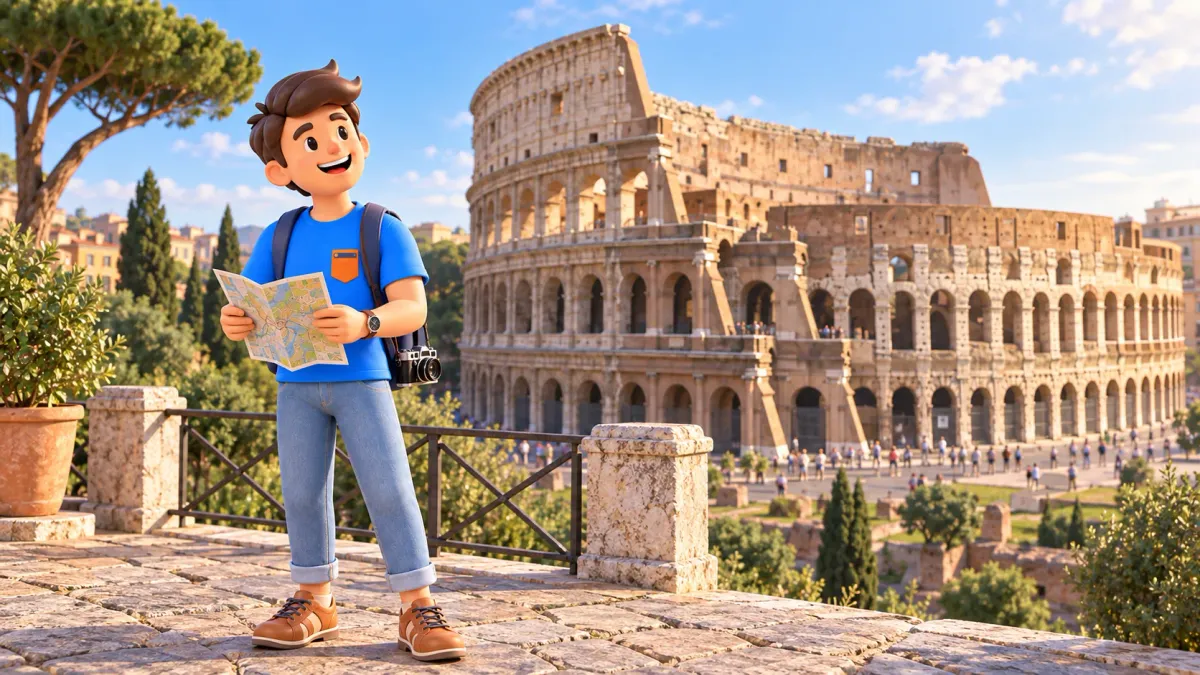
Begin beside the Colosseum if you want an immediate sense of the ancient city's scale. The Flavian emperors built the amphitheatre in the first century CE for public spectacles, including gladiatorial games. From outside, the repeating arches and different surviving heights already tell you something about the building. A deeper understanding of its internal organisation can wait for an interior visit.
For a shorter introduction, follow Via dei Fori Imperiali towards Piazza Venezia, then climb to the Capitoline square. The change in viewpoint helps separate ruins become a larger urban landscape. Pause in the square to look at the relationship between the palaces and the space between them. This is a satisfying finishing point if exterior views are enough for today.
Entering the Colosseum and exploring the paid Roman Forum–Palatine area is a more substantial plan. Colosseum entry requires a booked time slot, and accessible areas depend on the ticket you select. Do not assume every ticket includes the underground, arena and every interior. Give the archaeological visit a substantial block of its own, with lunch and rest protected around it.
This direction suits travellers who enjoy asking what buildings were for and how they worked together. If ruins become tiring after a while, use the outdoor walk and choose one interior. You can keep a meaningful historical thread without turning the day into a succession of stops that begin to feel similar.
Navona, the Pantheon and Trevi: squares and fountains
For an introduction without a large museum, start at Piazza Navona. Its elongated outline preserves the shape of Domitian's stadium, while the Baroque fountains add a later layer to the ancient footprint. At Bernini's Fountain of the Four Rivers, notice the combination of carved stone, moving water and the tall obelisk. You can appreciate the square before learning the identity of every figure.
Continue to Piazza della Rotonda and the Pantheon, then towards the Trevi Fountain. The sequence keeps the walk within the historic centre. Allow time for the smaller streets between the landmarks: they create the transition from a narrow passage into an open square and make the route feel like a city rather than a collection of photographs.
Seeing the Pantheon from the square and entering the building are separate choices. Add time for the ticket, admission arrangements and waiting if you want the interior. A paid visit is not automatically part of an outdoor walk. At Trevi, the area closest to the fountain has separate paid access for tourists and non-residents. Stay in the square for the exterior-view version, or check the access arrangements and exemptions if you want to approach more closely.
Choose this approach if you want recognisable Rome, photographs and frequent pauses. You can shorten it to two main places. Only add the Spanish Steps after a break, when you know how much energy remains. A short walk with time to look can be more enjoyable than extending the route simply because another famous name is nearby.
The Vatican: decide on your main visit first
Give the Vatican a separate allocation if monumental architecture, religious art or museum collections are important to you. First choose between St Peter's Basilica and the Vatican Museums. The basilica, museums and dome ascent are distinct visits with their own arrangements. Admission to one does not automatically provide access to the others.
For the basilica approach, begin in St Peter's Square. Allow for security screening and possible waiting before entry. Inside, remember that this is an active place of prayer: observe silence and visitor rules. Afterwards, Via della Conciliazione leads towards Ponte Sant'Angelo. Entering the castle would be another substantial visit rather than an incidental stop on the walk.
If the Sistine Chapel and museum art are your priority, choose the Vatican Museums. The chapel belongs to the museum visit; looking around the square outside the basilica does not provide access. Find a suitable date and ticket option before arranging the rest of the day. The museums have their own entrance on Viale Vaticano, so arriving in St Peter's Square is not the same as arriving at the museum queue.
Combining both major visits requires enough time and energy. For a first trip, make the choice deliberately. One important interior followed by a walk towards the river can provide a calmer introduction than trying to fit every Vatican experience into the same morning.
The Borghese Gallery and park: art followed by space
This combination works if you want to give painting or sculpture proper attention, then change the rhythm outdoors. The Borghese Gallery stands within the historic villa grounds, but the museum and park are different experiences. Understand the gallery's booking arrangements first; treat the park as a separate part of the day rather than an automatic extension of your museum ticket.
The collection includes sculpture by Bernini, including Apollo and Daphne. Choose a few works you particularly want to see. Spending time with one sculpture and looking from different angles can be more rewarding than attempting to remember everything in the collection. Detailed accounts of the works can support a closer encounter once you are there.
Afterwards, leave time for the park's paths, trees, water and smaller architectural features. Pincio can provide a panoramic finish if a city view appeals to you. The gallery entrance, lake and terrace occupy different parts of the grounds, so walking between them also belongs in your plan. A park afternoon should contain an actual pause, not just another list of landmarks.
Beside the Tiber: neighbourhoods with time to linger
If streets and everyday surroundings matter most, connect the Jewish Quarter, Tiber Island and Trastevere. Start near the Portico of Octavia and look around the area by the Great Synagogue. Cross Ponte Fabricio to the island, then use Ponte Cestio to continue towards the opposite bank. From there, a walk can take in Santa Cecilia and Santa Maria in Trastevere.
The appeal lies in the relationship between historical remains and a lived-in city. You do not need to enter every building. Add the synagogue museum or church interiors only when they match your interests and admission conditions. Include a long lunch or seated break so that the neighbourhood becomes somewhere you spend time rather than a corridor between sights.
Trastevere is neither an undiscovered area nor a guaranteed escape from visitors. Choose it for the streets and a less tightly scheduled afternoon. If you want a panoramic finish, Janiculum Hill adds an ascent and more time; decide after assessing your energy rather than treating it as an effortless extra.
Turn your choices into a complete trip
With one full day, select one major interest: antiquity, the Vatican or a gallery. Pair it with a nearby short walk. Over three days, separate ancient sites, the Vatican and the central squares, keeping riverside neighbourhoods as a flexible part of the plan. Five days allow a park, the Appian Way or another museum without repeating an overfilled schedule each morning.
To make these ideas into a practical personal itinerary, use RoadMe: the app plans your days around your interests, dates, pace and budget. Keeping that plan and map together is more convenient than piecing a walk together from scattered notes; download the city online beforehand for offline maps and navigation.
Secure visits with fixed admission times before fitting nearby walks around them. Leave a buffer between important bookings: reaching an entrance, checking tickets and leaving a large complex all take time. An uncommitted evening gives the trip breathing room even when the daytime plan changes.
Before you set off
Check the date, ticket conditions and actual entrance for your chosen visit. A large complex may have different entrances for different experiences. Have your ticket and required identification ready, and review luggage and clothing rules. Services can affect church visits, while museums have their own closure calendars.
In heat, shorten exposed stretches and make room for water and rest. In rain, keep one main indoor visit and reduce outdoor walking. If the ticket you want is unavailable, choose another coherent scenario rather than borrowing distant stops at random. A rewarding first day leaves you with somewhere you want to return to and enough energy to enjoy the next one.


