
Filippini, Verona: a Short Walk Between San Fermo and the Adige
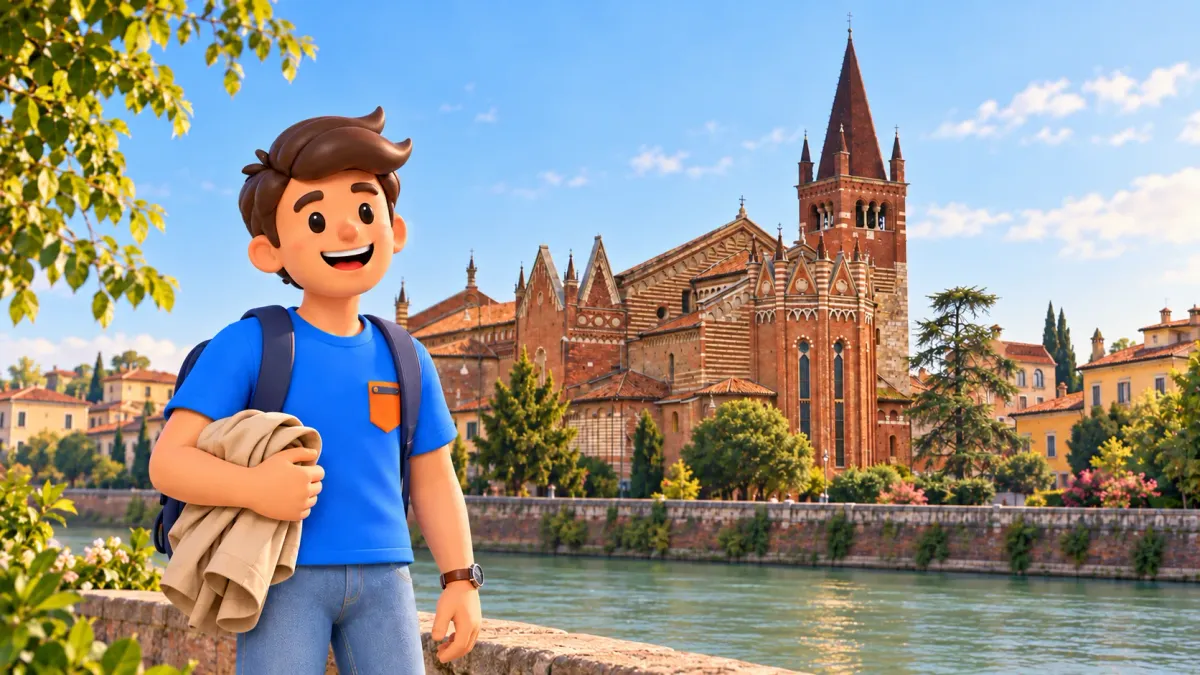
Beside San Fermo, a small piece of Verona invites you to slow down. Beyond the large church lie Via Dogana, the Filippini neighbourhood and the river. Monumental architecture, residential streets and traces of river trade sit close together here. Allow ninety minutes to two hours, including a break, for a walk that fits comfortably between the larger commitments of a city visit.
The idea is a change of scale. Begin at San Fermo Maggiore, walk into the neighbourhood towards the separate church of San Fermo Minore di Brà, then return to the Adige. Their similar names belong to different buildings. A short riverside section finishes the outing, leaving you free to decide whether to continue sightseeing or let this small neighbourhood experience stand on its own.
A compact route for an open part of the day
Start in Piazza San Fermo, beside San Fermo Maggiore and near Ponte Navi. Follow Via Dogana into Via Filippini and continue to the Filippini church at Via Filippini 16. Return along the same public streets to Lungadige Rubele. Finish on the old-town side of Ponte Navi without crossing the river. Your starting and finishing points are close, but part of the route is deliberately out and back.
RoadMe makes it easier to build a personal plan for the whole trip around your interests. Plan Verona in the app to give major sights, short neighbourhood walks and time to rest a sequence that suits your own pace.
Allow about ninety to 120 minutes: thirty-five to forty-five minutes of movement, twenty-five to thirty-five minutes for exterior and riverside stops, twenty-five to thirty minutes to rest, and five to ten minutes of flexibility. These are planning estimates rather than timings measured by the author on a test walk. Getting here, lunch and an interior visit to San Fermo Maggiore are separate.
If entering the large church matters, add forty to sixty minutes and arrange the walk around tourist visiting times. The outing then becomes roughly two to three hours. Choose between the street version and the version with an interior before you begin. That helps a paid cultural visit feel like an intentional part of the day rather than an unexpected stop just before closing.
San Fermo Maggiore sets the first scale
The large church near Ponte Navi is distinguished by its different architectural levels. A Romanesque lower church and a Gothic upper church form an unusual complex. Outside, begin with the building's overall mass: tall sections, lower additions, brick and pale bands of masonry. You do not need to locate every feature mentioned in a guidebook to understand that several layers are present.
This makes a good opening because the scale becomes more intimate later. Keep one impression of the large church in mind, perhaps the mixture of brick and stone or its complicated riverside silhouette. At the Filippini church you can compare it with a more ordered frontage. The contrast between two neighbouring places is the point; there is no need to decide which church deserves to win.
Choose an accessible place to pause without blocking pedestrians. This remains a working piece of the city, with traffic and ordinary errands around it. A photograph from the pavement is preferable to an ambitious angle from the road. You also do not have to circle the entire complex: a clear initial impression leaves energy and attention for the streets beyond.
The church's proximity to water is worth noticing. Even a brief look towards the Adige explains why this area is more than a collection of façades. The river returns to the story through names, buildings and former practical uses. For now, simply recognise that relationship. A compulsory bridge crossing would add movement without improving the compact route you have chosen.
Via Dogana recalls a working river
The name Via Dogana points towards the neighbourhood's customs history. The Adige carried goods, while the surrounding area supported practical urban activities. For a moment, change the question from which monument looks best to why the city needed this place. Thinking about the movement of supplies and people gives the connecting street a purpose beyond providing another attractive photograph.
This is not a promise of entry into the former customs buildings. Historic premises may hold offices, accommodate events or operate with restricted access. The walk follows the street and uses the wider setting to explain its character. A closed courtyard, working entrance or dockside area is not included simply because it belongs to an interesting building.
Look for small transitions between formal and everyday architecture: a substantial portal beside an ordinary window, older masonry next to a renewed surface, or a narrow space between building volumes. Not every feature needs a celebrated story. Sometimes its value is in helping you sense the density of the city without continually opening a reference book or searching for another named attraction.

Continue towards Via Filippini while remaining aware of movement around you. A residential neighbourhood need not be entirely pedestrian or permanently quiet. If a detail makes you stop, leave room at entrances and narrow pavement sections. This small adjustment lets you enjoy close observation while respecting the everyday uses that make the neighbourhood interesting in the first place.
The other San Fermo: the Filippini church
At Via Filippini 16 stands San Fermo Minore di Brà, also known as the Filippini church. It is a separate working parish, not a side entrance to San Fermo Maggiore. Relying only on the shortened name San Fermo can send you to the wrong address. Here the distinction is useful because the walk intentionally joins two different buildings and two different architectural impressions.
The frontage offers another way to look at architecture. After the larger church's complex silhouette, notice the clear composition, columns and pediment. Read the overall arrangement first, then choose a capital, niche or figure to examine more closely. The aim is not to collect the most details, but to see how differently a sense of ceremony can be expressed within a few nearby streets.
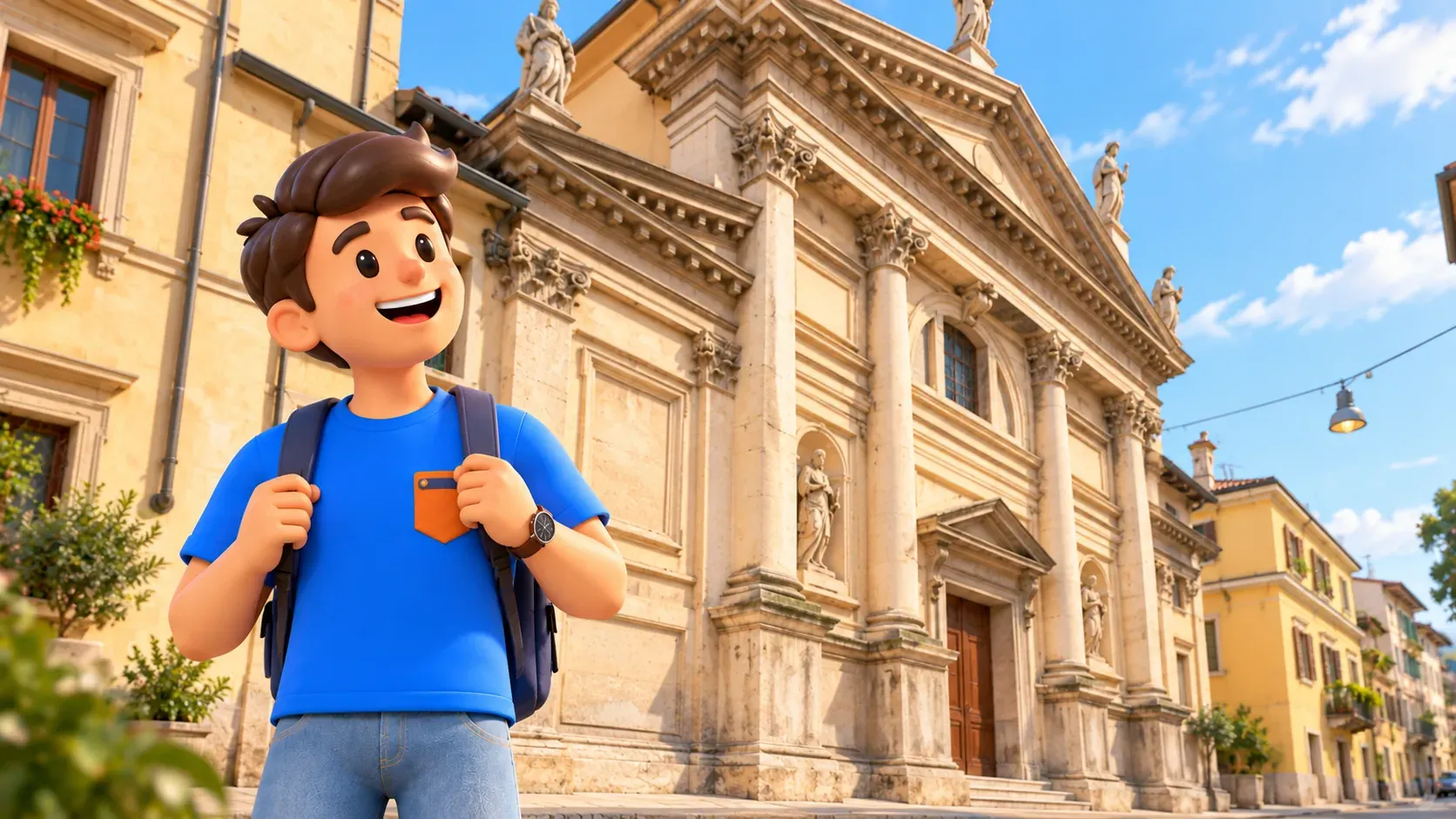
The basic walk includes an exterior stop. A religious service is not a tourist session, and published Mass times do not establish visiting hours for independent sightseeing. If entry is permitted, remain considerate of what is happening inside. You do not have to enter both churches for the outing to feel complete: comparing their exteriors already gives this part of the route a clear purpose.
Avoid expecting an unknown city that belongs only to you. Filippini has residents, parishioners and established daily routines. Its appeal for a visitor comes from paying attention to ordinary surroundings, rather than from a promise that nobody else has found them. That approach also prevents disappointment if the street happens to be livelier than a photograph led you to expect.
The Adige and Ponte Navi leave room to pause
Return along Via Filippini and Via Dogana to Lungadige Rubele. Choose a short, accessible public riverside section and end near Ponte Navi on the old-town side. You do not need a long march along the whole riverbank. After the more enclosed street views, some open space, moving water and a few minutes without another compulsory attraction are enough.
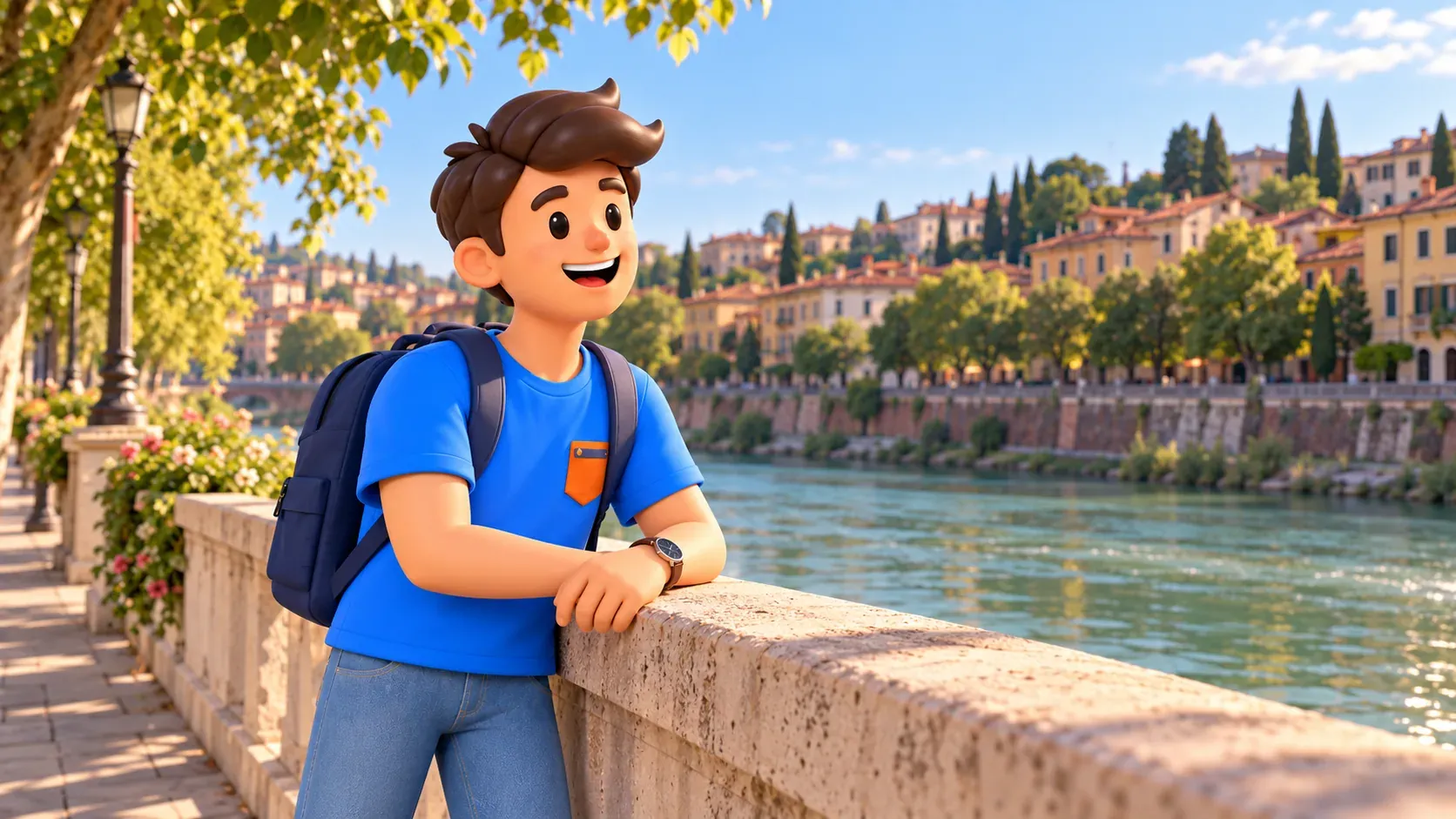
Observe the river from the public embankment. Descending to the waterline, docks or boats is not part of this route, even if a different photograph seems possible there. The Adige is a working river rather than a decorative canal with guaranteed access to every edge. A visible sporting or service entrance does not automatically mark the beginning of a public waterside path.
Ponte Navi provides a clear finishing point. This version does not require crossing it: the aim was a short walk through Filippini. If the opposite bank appeals, treat that as a new section with its own time allowance. Doing so prevents a small outing from quietly becoming another full day of walking when you originally wanted a manageable interval between other plans.
Compare the two ways you have encountered the water. At the start it was part of the large church's setting; now it is the subject of the stop. The history of trade adds meaning to the view without requiring a museum visit. That simple connection is enough to suggest a bank once associated with work and provisioning, alongside its role in today's cityscape.
When to include San Fermo Maggiore inside
If church architecture and art are priorities, give the interior a separate block. The upper church's timber ceiling, with its ship-like structure, offers a different experience from the Romanesque space below. For this neighbourhood walk, that is sufficient reason to consider entering. A detailed catalogue of works and rooms belongs to a more focused visit to the church itself.
Tourist admission is paid, with tickets available on site; current arrangements do not require a reservation. Sunday and religious-holiday tourist visits start at 13:00. Check the seasonal schedule and notices for your date, and remember that services can interrupt sightseeing. Being able to walk around the outside in the morning does not establish that the interior will already be open for cultural visits.
Consider the stairs separately: the operator states that wheelchair access is not possible because of steep steps. The street walk and the church interior therefore need different assessments. Leaving out a climb to the city's viewpoints does not make the entire experience step-free. Choose the version that suits your needs before arriving rather than depending on a solution at the entrance.
RoadMe helps shape a personal route or full trip plan around your interests, bringing cultural visits and walks together into a convenient day. Try planning Verona in the app to leave room for both the places that matter most to you and smaller neighbourhood discoveries.
A break and an uncomplicated continuation
A twenty-five to thirty-minute break can fall halfway through or after the river. Choose somewhere that genuinely suits you, without making one business a compulsory sight. The purpose is to recover attention. After a large church, residential streets and a river view, a little time without the task of immediately finding another attraction can be a valuable part of the outing.
Do not confuse the neighbourhood with Caffè Filippini on Piazza delle Erbe. That is another address in another part of the city, so you need not search for it on Via Filippini to complete this walk. Similar names can affect a small itinerary as much as complicated history: an incorrect search can easily create an unnecessary detour.
For a longer outing focused on the water, see our Adige walk between Ponte Scaligero and Ponte Pietra. It stands on its own and can fit another part of the trip. Filippini does not need to be attached to a larger riverside route to count as a worthwhile walk.
In hot weather, choose a comfortable time and carry water; continuous shade is not promised. In rain, shorten the river stop and add the church only if its visiting arrangements suit. Allow separately for reaching your accommodation or next appointment. Finish at Ponte Navi with the freedom to choose what the rest of your day should look like.


