
An evening at Festival Bay: a waterfront walk and IMAGINE
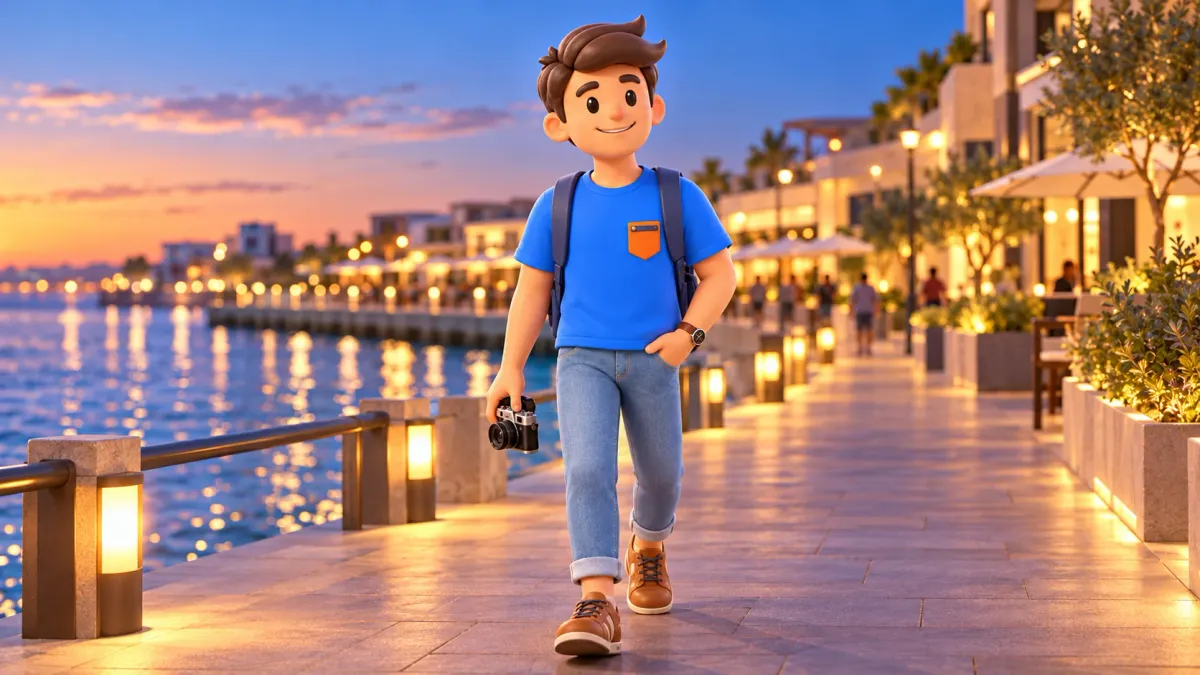
Festival Bay works well as a modest evening plan: arrive with a little daylight left if conditions and the programme allow, walk beside the water, watch IMAGINE when a performance is confirmed and leave time to sit afterwards. The attraction is the change of mood, from an ordinary waterfront to a setting animated by water, light and sound.
Allow roughly two to three hours for the whole outing, including a comfortable pause. That is a planning estimate, not the duration of the show. The evening can be shorter if you mainly want to watch, or longer if a meal is part of the plan. It does not need a second major attraction attached to it.
Give the evening one simple sequence
Start by checking the current IMAGINE programme for your chosen date and the visitor arrangements at Dubai Festival City Mall. Do not build the journey around a remembered show time. Once you know whether and when the performance you want is scheduled, give the rest of the evening a flexible shape.
RoadMe can develop a personal Dubai trip plan around your interests, dates and preferred pace, making it much easier to place a relaxed waterfront evening within the whole journey. The app turns separate ideas into a coherent itinerary instead of leaving you to fit them between unrelated bookings.
A useful sequence is arrival, a short orientation walk, the confirmed show and a proper break. If the programme suggests another order, move the meal or walk accordingly. The purpose is to create space around the main experience, not a timetable that requires constant attention.
Keep Festival Bay distinct from other places associated with the Creek. A common waterfront theme does not make Creek Harbour, the old souks and this bay parts of one short stroll. For this outing, concentrate on the public spaces around the show setting rather than trying to collect several districts.
Save the correct arrival and departure points before setting out. The return deserves a place in the plan from the beginning, especially if your group includes children or people who prefer a shorter evening.
Understand what makes IMAGINE different from a screen
IMAGINE is a permanent multimedia installation at Festival Bay, beside Dubai Festival City Mall. Its idea combines water, projected images, lighting and music in an outdoor environment. Instead of asking you to look only at a conventional screen, the setting uses several surfaces and materials as parts of a single visual sequence.
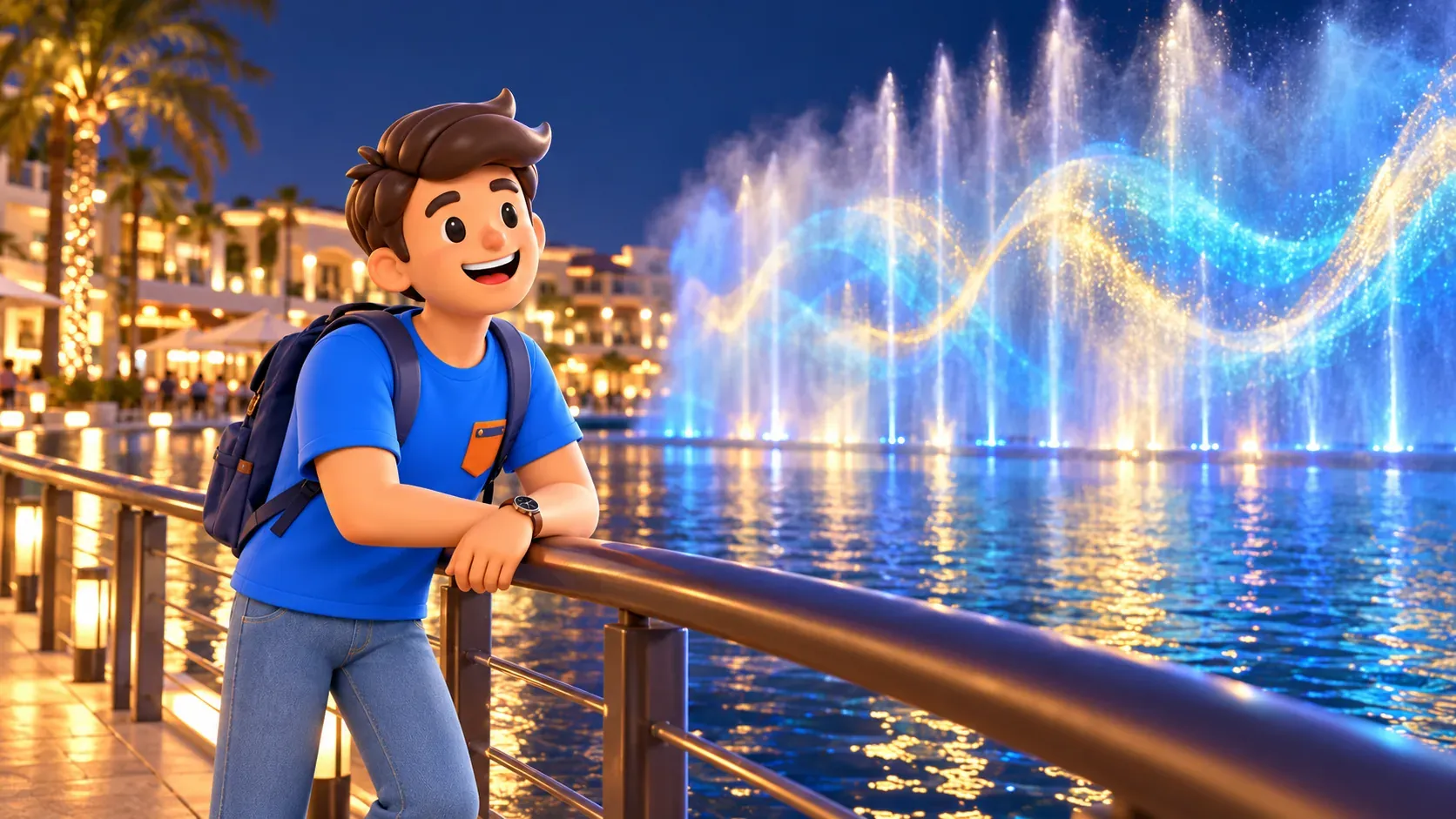
A water curtain is one of the most interesting elements. Fine droplets catch projected light, allowing an image to appear over the water. Because the surface is made from moving water rather than a rigid panel, the result has a different texture and sense of depth.
Architectural projection adds another layer by using a building surface. The surrounding space becomes part of the presentation, rather than remaining outside the frame. Fountain movement, light lines and sound can be coordinated so that changes feel connected rather than like separate effects.
The installation’s history includes Guinness records associated with water projection and permanent projection mapping. Those achievements are context, not the only reason to watch. The more engaging question is how a fixed waterfront can feel transformed when materials that usually behave differently are synchronised.
The exact programme and effects should be confirmed for the date; a description of the system is not a promise that every technical element appears in every performance. Watch the sequence actually presented rather than comparing it with a checklist of everything you have read.
Use the first walk to settle into the place
On arrival, begin with a modest walk along the accessible waterfront area. Locate the facilities you need and understand how the viewing spaces connect with the mall. You do not have to cover a large distance to gain a sense of the bay.
Looking before the show changes the experience afterwards. Notice the water, the ordinary building surfaces and the space people move through. When light and projection begin, you have a clearer idea of what has been altered. The contrast can be more rewarding than arriving only at the moment of the first effect.
Choose the walking section according to actual conditions. A waterfront can feel pleasant in the evening, but the weather and your group’s energy still matter. Carry practical essentials and reduce the outdoor part if it is uncomfortable. There is no need to fill every minute before the performance with movement.
If you are meeting companions, agree on a recognisable place before people disperse. “Near the water” is a broad description once visitors begin gathering. A clear arrangement makes the evening easier without requiring everyone to stay in a tight group throughout.
Keep the walk independent of a particular photo angle. A reflection, a detail of light or the gradual change in the sky may be enough. The route is there to help you enjoy the setting, not to recreate every image from a previous visitor.
Choose a comfortable view and let the show unfold
A good viewing position is one where your group can see comfortably while respecting current barriers and staff guidance. Look at the whole setting rather than seeking only the closest possible spot. Water projection and the surrounding surfaces may need a broader view to make visual sense.
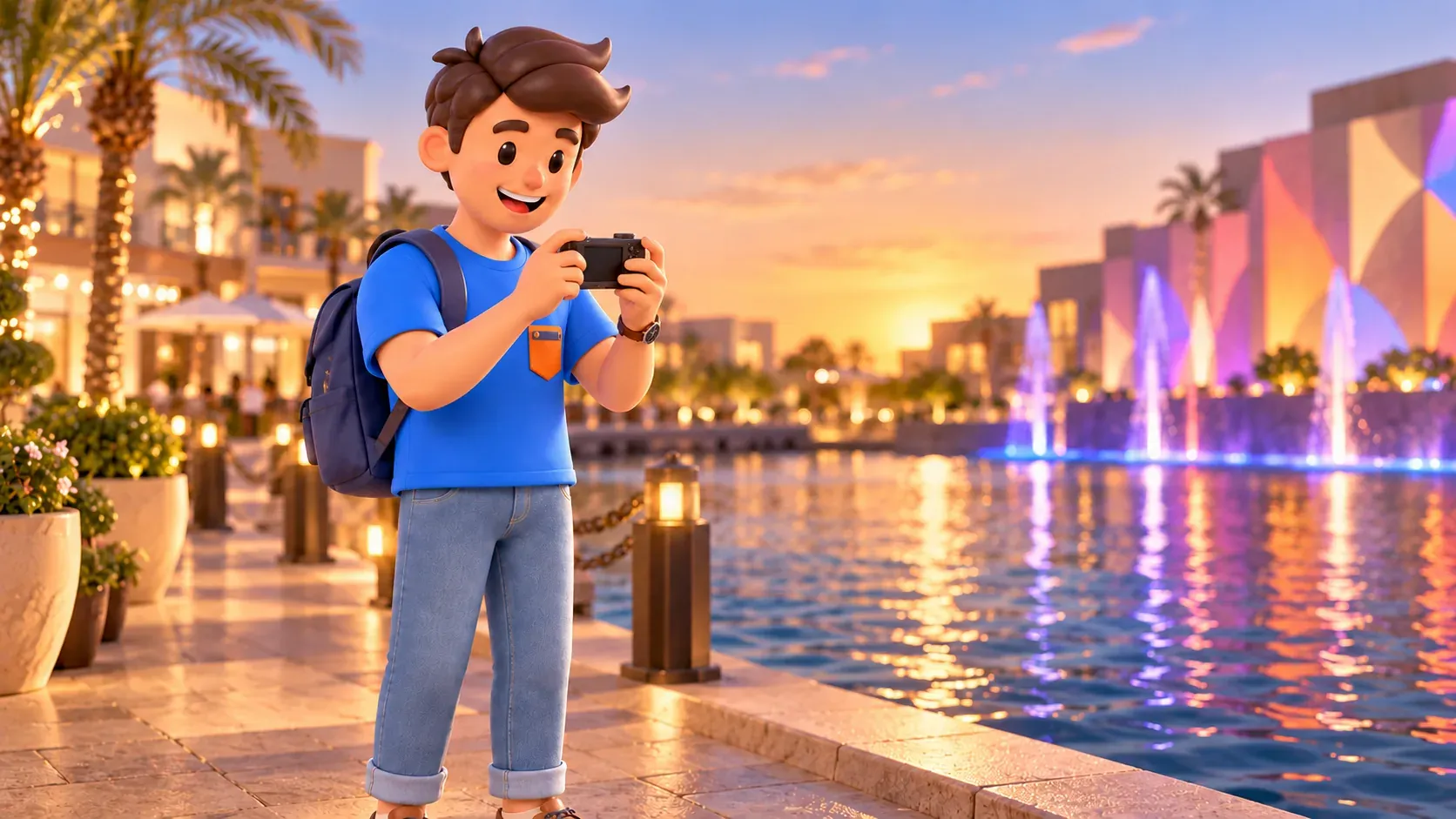
Leave circulation routes clear and consider people behind you. A raised phone can block someone else’s main experience even when the photograph seems important. If you want pictures, choose a few moments and then give yourself time to watch without a device between you and the scene.
Try noticing how the materials play different roles: moving water can make a surface, a light line can draw a direction and a musical change can connect one image with the next. You do not need technical expertise to see that coordination.
The performance is more enjoyable when you let its actual rhythm lead. An effect that looks dramatic in a still image may be only a brief part of a larger sequence. Resist turning the experience into a search for one saved photograph.
With a child, a simple question afterwards works better than talking through every moment: what seemed to change in the space? Leave room for their own answer. Some will remember the water, others the sound, colours or a particular movement.
Give the meal or drink break its own time
Food can sit before or after the show, depending on the confirmed programme and your preferences. The important thing is to avoid a plan that requires leaving a meal unfinished or reaching the viewing space in a hurry.
Choose an option that is actually available and suitable for your group. Do not assume that every terrace has the same view, that seating is guaranteed or that a meal automatically provides an ideal show position. If a particular table is essential to your plan, confirm its arrangements separately.
A simple pause can be enough. Sit, drink something and decide whether another short look at the water appeals. The extra time is not a gap that needs another attraction. It gives the main experience a comfortable ending.
After a visually busy performance, a quieter moment can make the visit feel more complete. You may notice ordinary reflections and movement differently now that you have seen the bay used as a stage. That is a small reward for not immediately rushing back to transport.
If the group is tired, let the break become the final part. There is no need to wait for another performance simply because a later programme is listed. A single well-timed visit can be enough for the evening.
Adjust the plan to the people with you
For a family: keep the arrival simple, allow a comfortable pause and choose a finish that fits the children’s energy. A longer evening is not automatically a better one. Check the current format if sound, lighting or the setting is an important consideration for your group.
For a couple or a solo visitor: use the walk and the water as part of the experience, not only the minutes of the performance. The visit can have an enjoyable rhythm without a large dinner booking or a full photography session.
RoadMe makes the wider trip more convenient with a personal day-by-day plan shaped around your interests and pace. Use the app to balance this relaxed evening with the parts of Dubai you most want to explore, instead of filling every spare hour.
For photography: choose a small number of ideas, such as the water surface, an abstract colour pattern and one wider scene. Keep your position considerate and follow current rules. A good evening does not depend on recording the entire show.
With limited time: organise arrival around the confirmed programme and leave out the longer meal. Give the main experience enough margin, rather than trying to include a full waterfront visit in the last minutes before another appointment.

Finish with the bay, not another transfer
Before leaving, check your return point, gather belongings and allow an easy walk to the appropriate exit. A clear departure matters more than adding one last stop in another district. Keep the whole evening proportionate to the energy you actually have.
If the programme changes or the performance you expected is unavailable, decide whether a simple walk and a break still suit you. The waterfront is a setting for an outing, while the show is a specific operating experience. Knowing the difference keeps expectations practical.
Festival Bay is most rewarding when it remains a focused evening: a little walking, attention to the way light reshapes water and architecture, and time to slow down afterwards. That is a complete Dubai plan without turning the night into a race between attractions.


