
Fener and Balat in Half a Day: Red School, Churches and Hillside Streets
Fener and Balat are easy to remember through colourful facades, but a walk becomes richer when several subjects share the day. The patriarchal Church of St George introduces religious life, the Red School draws attention uphill, neighbourhood streets return to everyday scale and the Iron Church adds an unusual building story. Between them, leave room for food, curiosity and your own way of looking at Istanbul.
Allow roughly four to five hours after arriving in Fener. This editorial estimate includes walking and lunch, without a measured time claim. The base route uses public streets and views the Red School from outside; church interiors depend on actual visitor access. Travel from your accommodation and back is additional. Finish in the lower district, nearer the Golden Horn and transport rather than starting another long climb.
Give the half-day a recognisable shape
Fener stop on the T5 is a useful starting reference. Continue towards the patriarchal complex and St George, then take public streets uphill towards Fener's Greek school. After the school, give Balat streets and lunch their time before ending at Sveti Stefan, the Iron Church. This is the order of experiences; specific passages should suit available access, weather and the people travelling together.
Planning the whole walk or trip is much more convenient in RoadMe, which develops a personal itinerary around your interests, available days and pace. Choose more religious history, architecture or neighbourhood time so Fener and Balat become your own outing and combine comfortably with the Istanbul experiences planned for other days.
Keep thirty-five to forty-five minutes for the patriarchal stop when entry is possible, and forty-five to sixty for the school approach and exterior. Give streets another forty-five to sixty, lunch about forty-five and the Iron Church thirty to forty. Reserve covers orientation and crossings. These blocks are flexible: if one place deserves more attention, make room within the day instead of adding everything invisibly above the plan.
Daylight suits slopes, detail and orientation. Bring suitable shoes, water and clothing for possible religious entry. Even a short climb feels different after a museum morning. Give the outing its own half-day with energy remaining. If step-free travel matters, inspect actual sections: nearby points and an accessible transport stop do not describe every lane between them or guarantee the same ease along the entire route.
St George: begin with a living place
The patriarchal Church of St George in Fener belongs to the life of the Ecumenical Patriarchate. This is a separate complex from the conspicuous red school uphill. Distinguish the two references early: church and educational building have different functions and appearances. You will then avoid looking for the principal church interior inside the impressive brick building or treating the school's entrance as part of a patriarchal visit.
Check visitor arrangements for your chosen day before approaching. A divine-service schedule is not a tourist opening schedule. When entry is permitted, allow quiet attention and follow indications on site. Worship belongs to the place's life. If access is closed, keep an exterior introduction and the streets; if the interior is the principal purpose of the day, choose a more suitable opportunity rather than expecting the same visit outside.
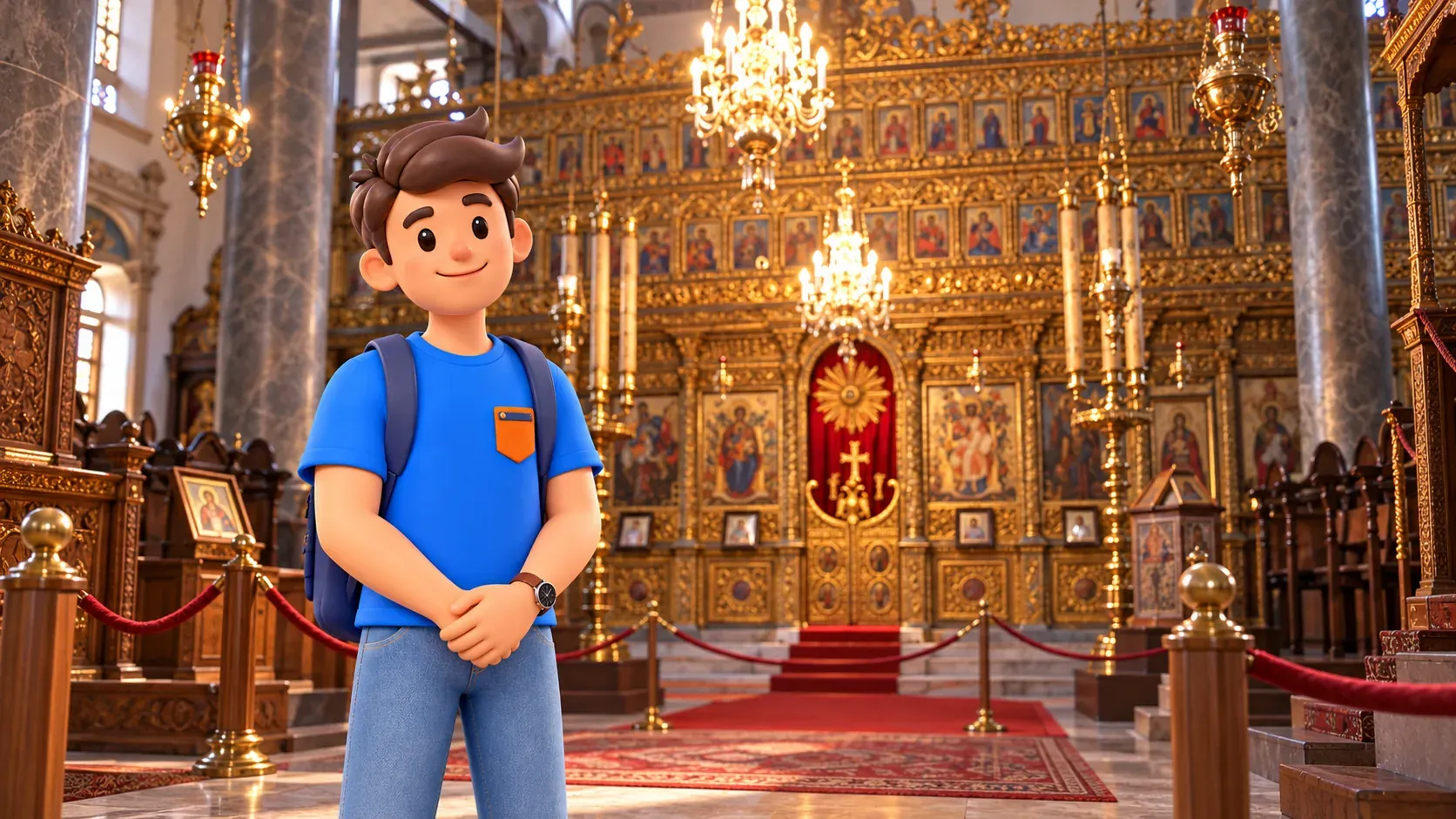
Inside, where visiting is possible, one or two observations are enough: how dark columns frame the space, or the effect of the carved gilded iconostasis. Every sacred object need not become an inventory. A quiet voice and an unhurried pace reveal character. Photograph only where and as allowed. Attention to the room can leave a stronger memory than trying to record every small object or detail within it.
After leaving, take a few minutes before the climb. Compare the church complex's scale with the streets: a historically important place may be less visible from a distance than the school. This difference already makes Fener interesting. A building's significance does not always follow its strength in photographs or its prominence on a skyline. Carry that thought towards the architectural reference that does attract immediate visual attention.
The Red School: an uphill approach with a purpose
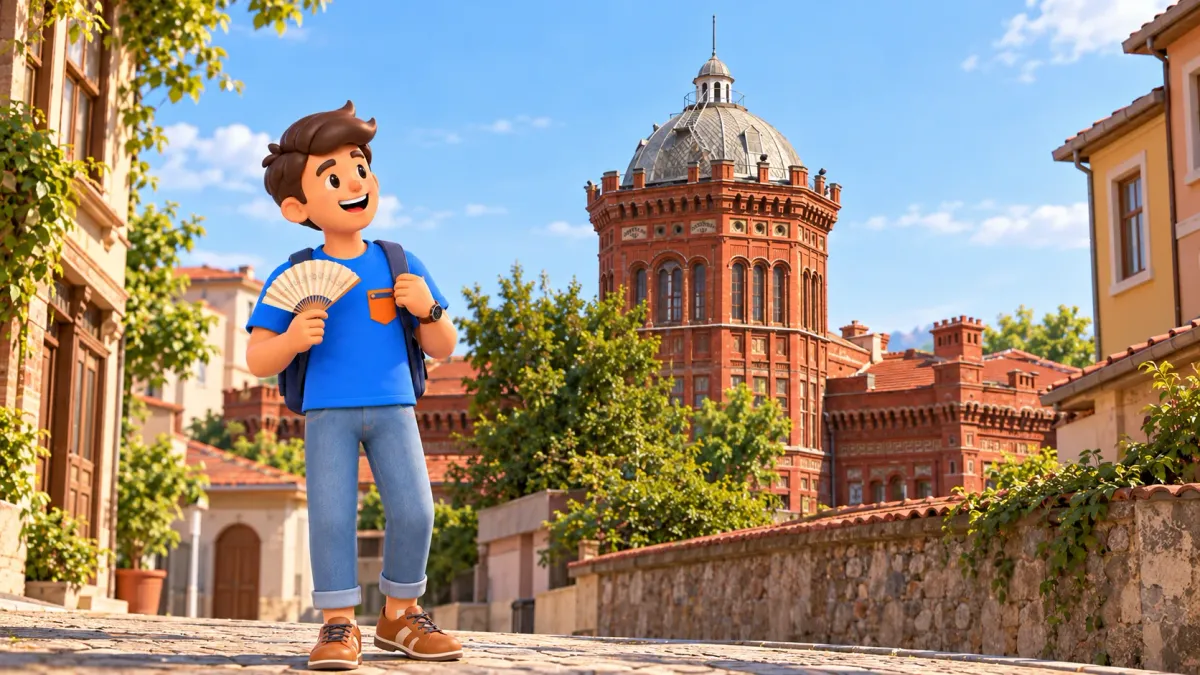
Follow a chosen public path towards Fener Rum Lisesi. The neighbourhood rises from its lower streets, and a small rest is appropriate along the way. Let the approach have its own interest. Stop where movement remains clear, notice changing height and the red outline becoming closer. Part of the pleasure is seeing a conspicuous building appear between neighbouring facades and alter in scale as you move.
The present red-brick building belongs to the nineteenth century; the educational institution's history is older. That brief context explains value without turning the walk into an education chronology. Brick, the tall central tower and a grey domed roof make it a strong reference. Look first at the outline, then window groups and repeated decoration visible from an available public street rather than requiring one perfect full-building photograph.
The base plan uses an exterior view. This remains an educational institution, without a promised tourist palace interior open freely throughout the day. Choose a public position where a portion of architecture is interesting. A partial view between streets also explains its setting. Keep movement and active entrances clear while photographing, and direct attention to architecture rather than specifically photographing pupils as part of the travel experience.
Compare it with St George: a striking hillside school and a less demonstrative church complex represent different aspects of Fener's history. One clear contrast can preserve both places without long lists. If architecture holds attention, extend the school and shorten the later street loop. If tired, make a few observations and take an earlier break, retaining interest and energy for the second half of the outing.

Balat: streets as part of a residential city
After the school, choose a small public-street loop through Balat with a clear return towards the lower district. Forty-five to sixty minutes can work without seeing every house. Facades, stepped changes of level, doorways and shifting perspectives provide variety. Look beyond the bright surfaces. A quiet window row or turn can explain the district as well as the most recognisable coloured backdrop selected for a portrait.
Balat's interest includes different communities and present-day urban life. Avoid assigning every doorway one period or giving every house the same past. A first introduction can simply notice differences: materials, storeys, relationship with the slope and ground-floor uses. That leaves room for the actual place. A street may be busy, ordinary, undergoing repair or unlike a saved picture while still telling something worthwhile about Istanbul today.
Choose a personal subject: two colours, a window frame or a change of sightline on the hill. In company, each person can find a detail to share over lunch. This gives direction without collecting exact photographic addresses. Waiting for one backdrop is optional. A few observations of your own can preserve the walk more clearly because they belong to your attention rather than reproduction of another person's completed image.
The streets remain residential. An open courtyard is not automatically a public passage, and an attractive doorstep is still an entrance people use. Photograph from available public space, ask for close portraits when appropriate and leave people room. Attentive conduct supports curiosity. It allows the district to remain a city of ordinary activities instead of becoming scenery imagined to exist solely for the visitor's photograph or performance.
Climbs and descents alternate, so the shortest line may not be the most comfortable. If frequent rest is needed, shorten the loop and reach a table earlier. With a pushchair or limited mobility, inspect sections and surfaces beforehand; this article promises no fully step-free scheme. After the school approach, enough impressions already exist for a shorter street section to retain the outing's meaning and distinctive character.
Lunch before returning towards the water
Leave about forty-five minutes for food somewhere convenient in the district. Choose by menu, current prices and an actual seat, considering the route down afterwards. One famous café is unnecessary. Restoring attention matters more here than adding a business name. The break separates slopes and residential streets from the Iron Church, which deserves a fresh look rather than becoming the final tick before searching for transport home.
At the table, discuss what interested you most: religious life, architectural expression or the structure of the streets. The answer helps allocate the remaining time. Save a question for another visit if useful. This route need not explain every community and building. It offers different impressions that form your own picture and help decide where a later return with a more specific interest could be rewarding.
Check water, remaining time and the direction of Sveti Stefan. Between table and next stop, crossings and busy sections may require attention. Preserve room for them. If photographs and conversation took longer, make the ending quieter and shorter. Choosing pace is more comfortable than continually chasing an imagined schedule, especially in a district where streets repeatedly offer something small that encourages you to pause and look again.
The Iron Church: a material that changes the view
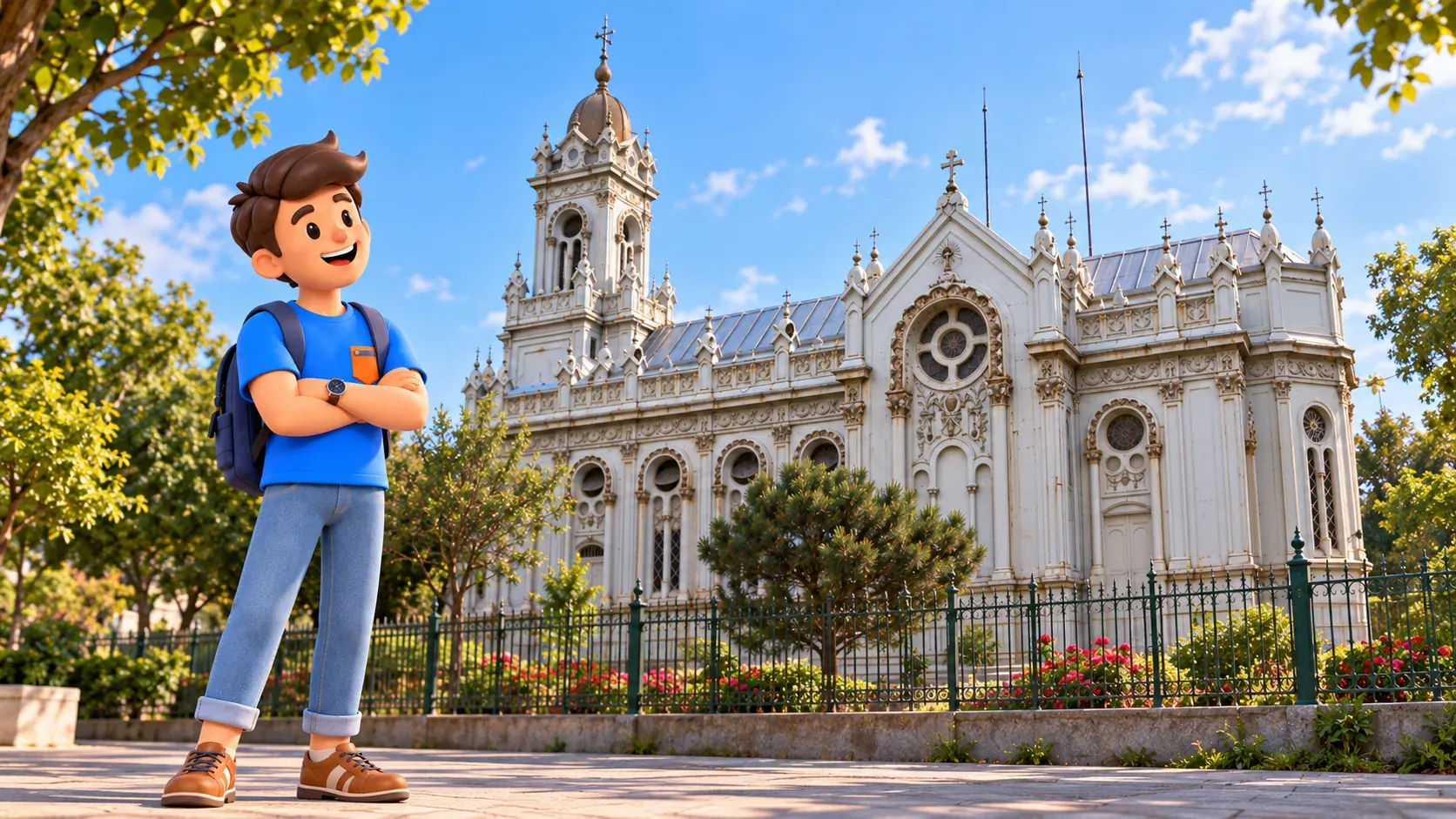
Sveti Stefan is a Bulgarian Orthodox church known as the Iron Church. Its building belongs to the late nineteenth century; metal elements were made in Vienna, transported and assembled in Istanbul. This brief fact makes the stop distinctive. Alongside a community's religious life comes construction technology. What might appear at first to be pale carved architecture is also connected with an industrial way of producing a building.
Begin with an available exterior look: tower, openings and decorative rhythm. Architectural vocabulary is unnecessary for comparing it with the school's red brick and the gilded interior of the first stop. Material becomes another way of reading the neighbourhood. If entry is allowed and desired, follow local rules and give it proper time. The outside remains the itinerary's base and offers a worthwhile introduction on its own.
Allow thirty to forty minutes with approach and orientation. If this particular interior is your main goal, check its access independently before departure. Building history and a map pin do not establish visitor hours on your date. Preserve an unhurried finish. This stop connects cultural variety with unusual architecture and gives the half-day a clear ending, without requiring another substantial journey to make the route feel complete.
Finish the half-day with energy left
In the lower district, choose a convenient path to your transport. T5 connects Fener and Balat stops with Eminönü; pick the actual stop and direction according to your position and destination. Return travel adds to the four-to-five-hour estimate. This is enough for an introduction. A longer journey along the water can become a deliberate continuation if desired, with time and energy assigned to it separately.
Using the whole personal plan is more convenient in RoadMe, where interests, days and chosen places form a coherent trip itinerary that stays easy to consult. Download Istanbul beforehand with an internet connection to use maps and navigation offline afterwards.
Fener and Balat become more memorable when colourful houses join a broader account: church, school, streets and another unusual building in the lower district. Give room to a large outline, a small detail and a proper lunch. The half-day then becomes its own introduction, leaving energy for rest and a personal question that might bring you back to Istanbul later.


