
El Raval art walk: Botero’s cat, Haring and the story of Miró
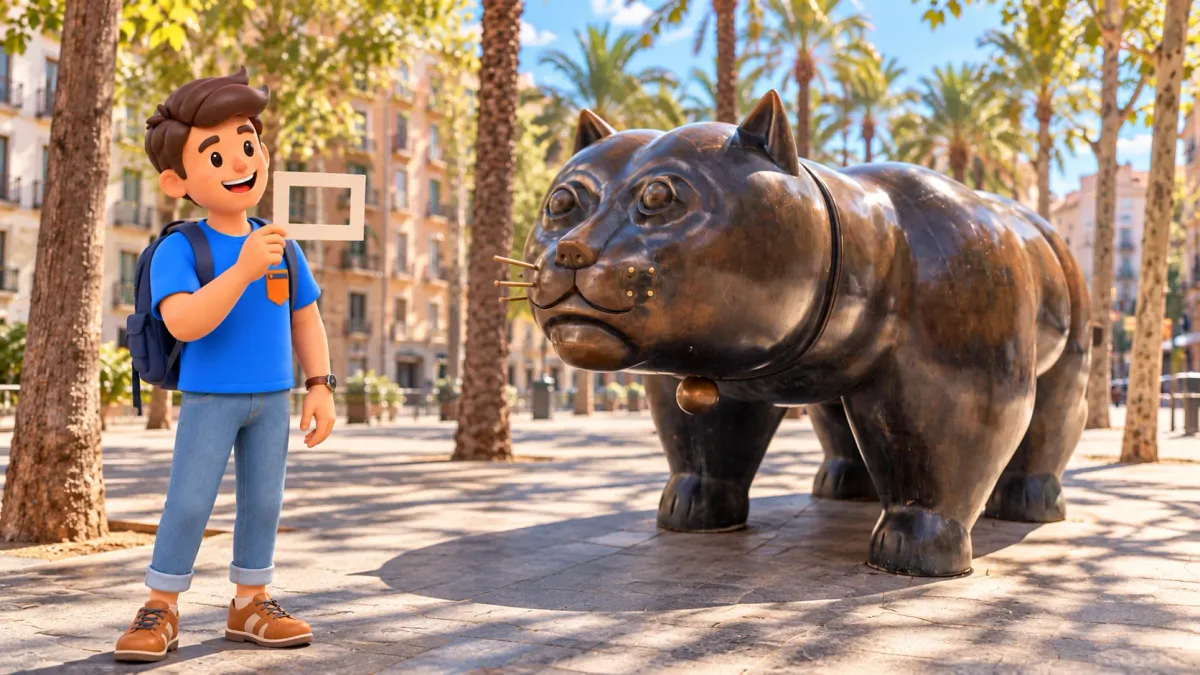
Public art in El Raval comes in more than one scale. Fernando Botero’s bronze cat occupies space almost like a small building, Keith Haring’s red line turns a wall into a public statement, and Joan Miró’s pavement mosaic was conceived for everyday movement through Barcelona. Comparing volume, drawing and surface makes a more rewarding walk than simply collecting three photographs.
Seeing all three works cannot currently be promised. At the 17 October 2026 check, Miró’s mosaic on La Rambla was already covered for protection during works. MACBA’s Catalan page labels the Haring work as under restoration, while its English page carries no equivalent warning. This free ninety-minute exterior walk therefore runs from Botero’s cat to MACBA, with the mural included only if its visibility and approach are confirmed.
A ninety-minute plan from the cat to the museum square
Begin at 11:00 beside the cat on Rambla del Raval and spend twenty-five minutes here. Allow 11:25–11:45 for the walk towards MACBA, then thirty minutes for the museum’s exterior and, where conditions allow, Haring’s work. The final fifteen minutes, until 12:30, are a quiet pause. Finish in Plaça dels Àngels; returning to the cat is additional.
The total is ninety minutes: twenty-five, twenty, thirty and fifteen. These are planning estimates, not timings measured on the ground. Miró’s covered mosaic is excluded from the main line. There is no need to visit a protected work just to complete a checklist; its history can explain an artist’s idea of the city even if seeing the actual surface must wait for another visit.
For a trip balancing public art, walks and rest, try RoadMe: the app develops a personal itinerary around your interests, dates, pace and budget. A complete day-by-day programme is more convenient to use in Barcelona than separate ideas still waiting to be joined into a workable trip.
Choose daylight for this walk. The basic programme uses public outdoor spaces, without paid entrances or museum galleries. A full lunch, MACBA’s collection and travel from your accommodation need their own allowances. If the mural cannot be viewed, the cat and museum architecture still make a coherent outing: spend longer looking or finish earlier rather than adding unrelated stops.
Botero’s cat: begin with volume
Rambla del Raval and the better-known La Rambla are different places. The cat stands on the former, within El Raval. Colombian artist Fernando Botero created this bronze animal with a rounded body, substantial short legs, small ears and an expressive face. Naturalistic domestic-cat proportions are not the point: enlarged form is central to the encounter.
The sculpture has stood on Rambla del Raval since 2003, after occupying other Barcelona locations. Rather than memorising every previous address, notice how confidently its broad volume sits within a relatively open pedestrian setting. It becomes a landmark for meeting people while the ordinary life of the neighbourhood continues around it.
Use the first five minutes for the overall shape. Step back where space allows and compare the head with the back. Then change your angle: the side emphasises the body’s length, while the front brings the face and paws forward. Bronze catches different highlights, so the same silhouette changes without requiring a complicated explanation.
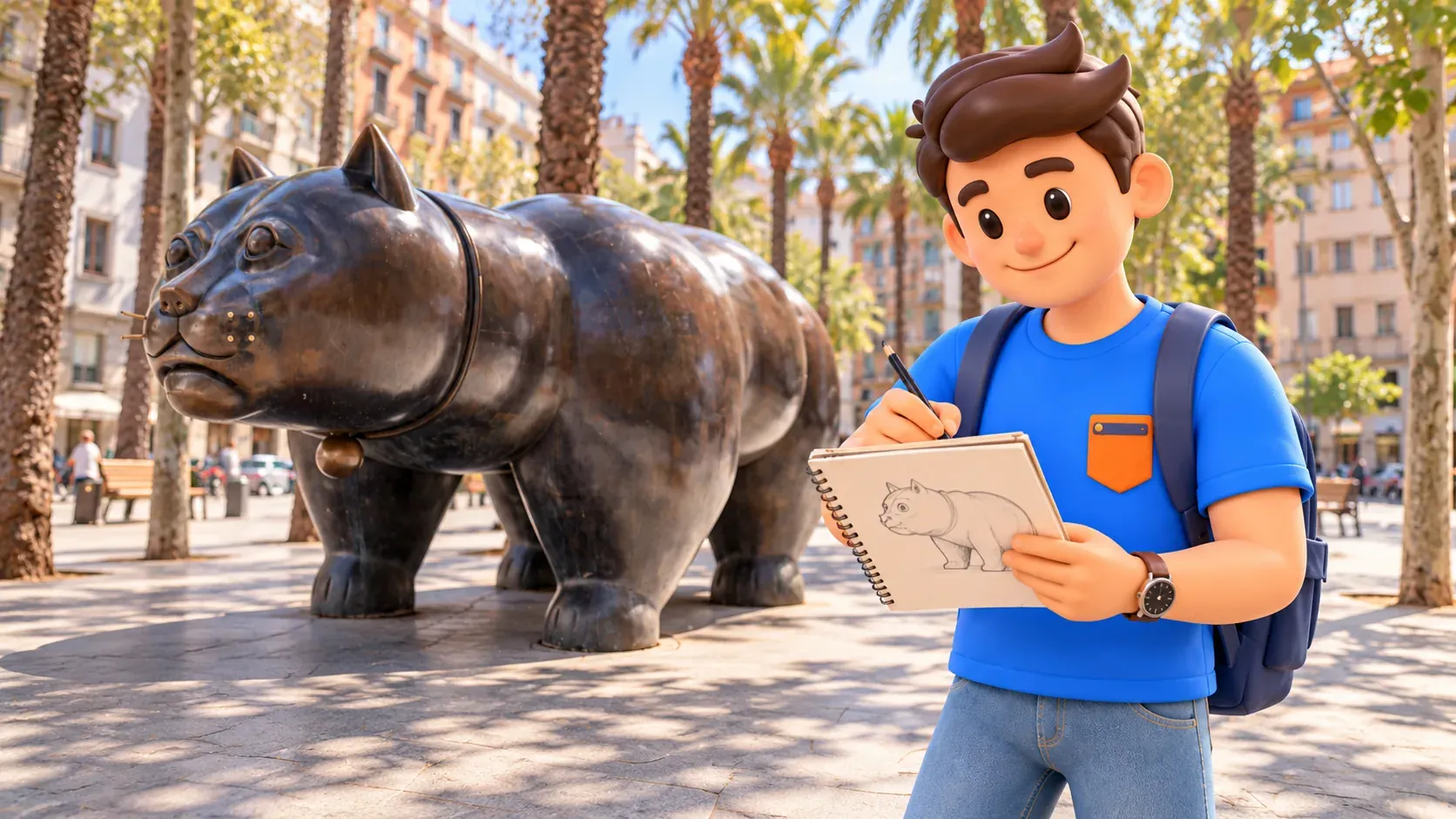
Use the remaining time for one careful comparison: what looks heavy, and what appears unexpectedly soft? The sculpture remains a hard metal object, yet rounded transitions can suggest another physical quality. That question is more useful than deciding whether the animal is anatomically correct. Looking closely does not require passing an art-history test.
Take photographs from ground level, without climbing onto the back or asking other visitors to clear the setting for you. Being able to approach public art does not turn it into play equipment. You need not repeat a tourist ritual or touch a particular detail for luck; the work is interesting enough on its own.
Twenty minutes between two open spaces
Around 11:25, head towards the northern end of Rambla del Raval, then use public streets towards Hospital, Riera Alta and Plaça dels Àngels. Follow current signs and open pavements for the precise connection. This walk does not require La Rambla, a hospital courtyard or an indoor shortcut through the museum.
The twenty-minute allowance includes ordinary crossings and a little orientation time. You do not need to turn every shopfront into another scheduled stop. Notice the progression from a broad pedestrian axis through a tighter street network to an open museum square. That sequence changes how art is encountered: a compact object among trees gives way to architecture and a long wall.
El Raval remains a place where people live and work. A passer-by’s face need not become part of your photograph, and an attractive doorway is not automatically somewhere to hold a lengthy conversation. Keep entrances clear and give residents space. The neighbourhood’s daily life provides context without becoming a performance staged for visitors.
MACBA outside: white geometry as a subject of its own
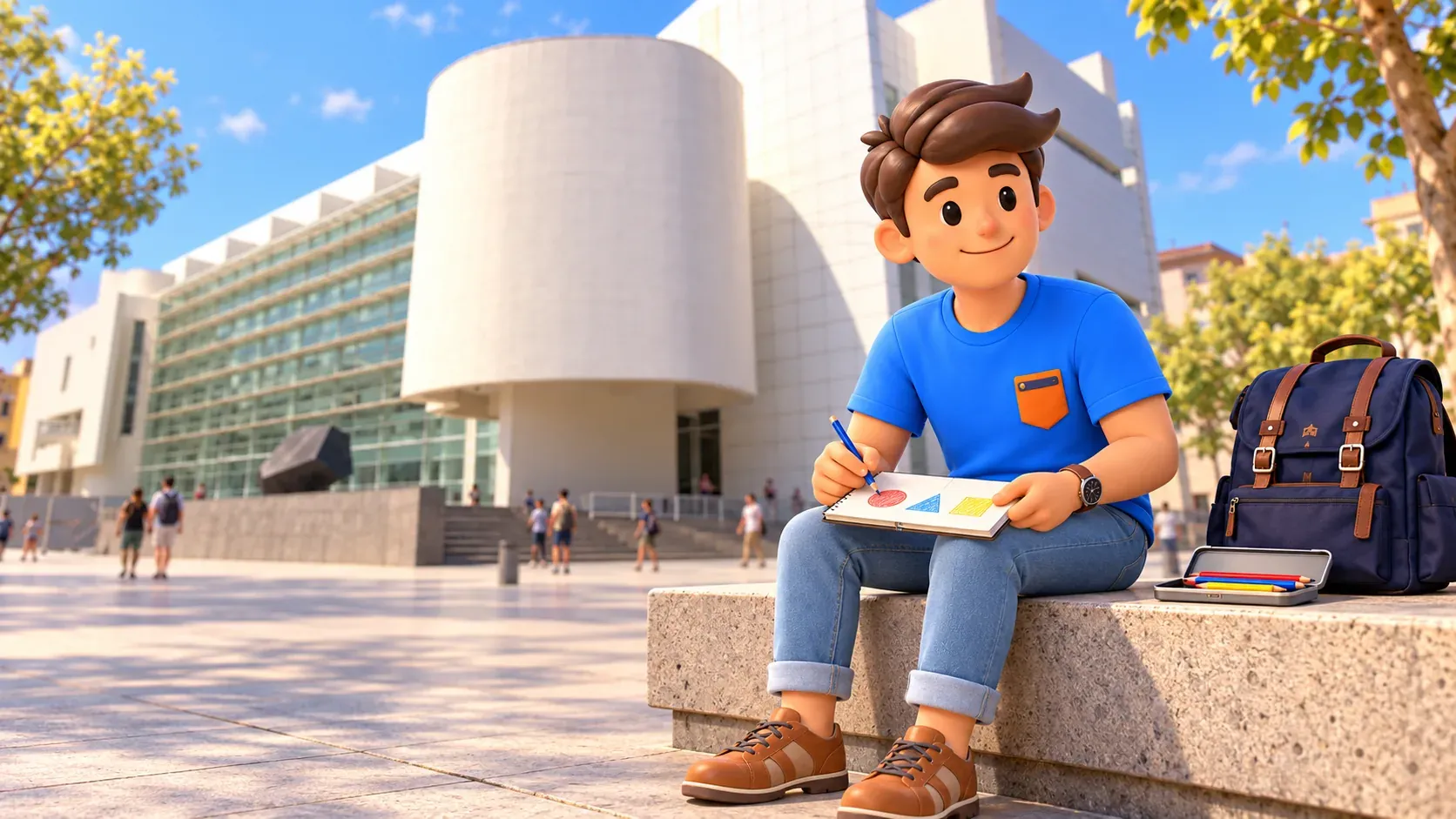
The landmark near the finish is the white Museu d’Art Contemporani de Barcelona building, MACBA, in Plaça dels Àngels. Richard Meier designed it, with construction taking place from 1991 to 1995. Rectilinear and curved volumes sit together, while broad glazing makes light part of its architectural identity. You do not need to enter the galleries to make this comparison.
From an open public approach, look first at the composition and then at one junction. Where does a flat wall meet a curve? How does glass differ from the white surface? After Botero’s cat, this is another encounter with volume using a different vocabulary. The sculpture flows between rounded forms; the building makes its edges and connections clearly readable.
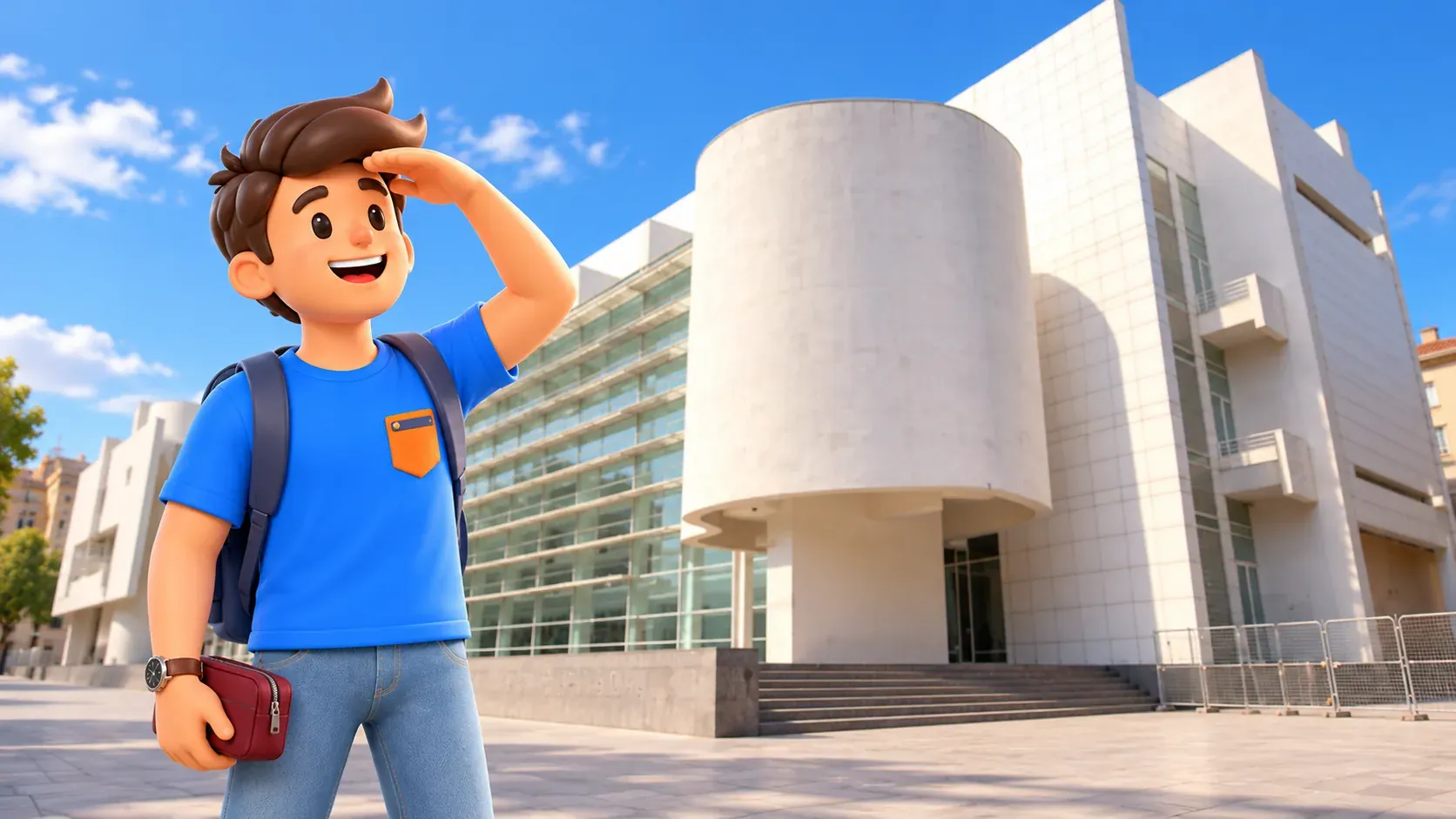
Allow for the museum expansion. MACBA describes work in the square between January 2025 and February 2027, with a passage maintained to Plaça dels Àngels. This is a planned period, not a promise that every familiar viewpoint remains available on every date. Follow the marked routes; fencing may change where it is practical to study the façade.
The exterior and any possible mural viewing share thirty minutes, 11:45–12:15. If architecture holds your interest, there is no requirement to divide the time rigidly. Ten minutes on the façade and twenty observing the setting can work well. Where an approach is restricted, remain on permitted public ground rather than seeking a route through a service entrance.
Haring: one line, and the difference between original and reproduction
Todos juntos podemos parar el sida belongs to Keith Haring’s 1989 visit to Barcelona. He made the original mural on 27 February in Plaça de Salvador Seguí. Its public message concerned AIDS and solidarity. This is a historical artwork with a particular statement, rather than current medical guidance or a description of the people who live in the neighbourhood today.
The mural beside MACBA, towards Ferlandina and Plaça de Joan Coromines, occupies a different site. An authorised reproduction was made here in 2014 through work involving the Keith Haring Foundation, the city and the museum. The present surface should not be described as the very wall on which Haring painted in 1989. Keeping an image publicly readable also creates a later history of preservation.
If access and visibility are confirmed, allow roughly fifteen minutes within the museum half-hour. Look along the composition before selecting a few figures. Red outlines connect people, movements and snake-like forms into a continuing rhythm. Line holds attention here, whereas volume dominated beside Botero’s cat. You do not need a hunt for graffiti on every corner to appreciate that difference.
At the October check, the Catalan collection entry included En restauració, while the English version did not. This does not establish exactly how much of the outdoor reproduction is obstructed on a particular day, but it prevents a reliable promise of a complete viewing. Ask MACBA about current conditions before setting out. If the work is not visible or its approach is restricted, the façade and a pause retain the walk’s purpose.
Miró: art meeting an everyday pedestrian
The Pla de l’Os mosaic dates from 1976, created by Joan Miró in collaboration with Joan Gardy Artigas. It belongs to La Rambla, not Rambla del Raval. Coloured forms at pavement level change the encounter: a viewer does not simply stand before an object but moves through an urban surface. Its conception was associated with welcoming people arriving from the sea.
Red, blue and yellow beside black and white offer another vocabulary after the bronze cat and Haring’s red line. You need not memorise every individual shape to grasp that idea. Imagine noticing colour before recognising a named artwork. An everyday walk becomes part of an artistic encounter without passing through a museum threshold.
The historical intention is different from present access. An on-site report dated 14 October 2026 shows the mosaic already covered for protection during paving. We therefore do not suggest walking across it now or promise an unobstructed view. The timetable for the whole Rambla does not establish when this individual work will be uncovered; wait for a specific access update before planning to see it.
To spread street art, museums and rest across different days, prepare your trip in RoadMe. The app creates a personal programme around your interests and pace, making a complete itinerary easier and more effective to use while exploring.
Finish without adding another compulsory checklist
Keep 12:15–12:30 for water, a conversation or a short note about what you noticed near the accessible part of the museum square. A café stop or a proper lunch adds time and spending. MACBA’s collection normally requires paid admission; this exterior programme includes neither a museum visit nor a promise of coinciding with a free session or special offer.
Before leaving, check the mural’s current status, the permitted passages around MACBA and the weather. Afterwards, avoid treating the covered mosaic as a failed stop. For particular mobility requirements, check the whole street connection separately: a maintained passage into the square does not describe every kerb or temporary barrier along the way.
On another day, the industrial Poblenou walk explores buildings, labour and new cultural uses. For El Raval, three ways of looking are enough: volume, line and colour. They connect very different works even when conservation temporarily changes which one can be seen.


