Dubai without expensive attraction tickets: building a rewarding itinerary

A rewarding Dubai programme does not need a major attraction ticket at every turn. Streets, waterfronts, architecture and working market areas can provide the main subject of a day. The useful question is what you want to understand, then which places give that interest a clear setting.
This approach is about reducing reliance on expensive admissions, rather than promising a trip with no costs. Transport, food, access conditions and optional visits still belong in the plan. Start with one coherent area and leave any paid highlight to a deliberate decision, instead of treating every famous name as a necessary purchase.
Give the day a subject before giving it a shopping list
Choose a theme you can follow on the ground: trade around the Creek, the relationship between towers and public space, or the way water organises a modern district. A subject helps you notice details between named attractions and gives an ordinary stretch of walking a purpose.
RoadMe develops a personal Dubai trip plan around your interests, dates, pace and budget, making it much easier to build a useful programme from the places that suit you. The app connects those choices into a coherent journey rather than leaving you with unrelated attraction lists.
Next, choose a modest geographical base for the day. Several distant places with no major admission can still make an awkward and costly programme once journeys are included. A smaller cluster often gives more time for the actual experience.
Keep the difference between a public setting and a particular venue clear. Being able to see a building does not establish entry to its interior, and a waterfront location does not make every terrace or pier public. Confirm the access you actually intend to use.
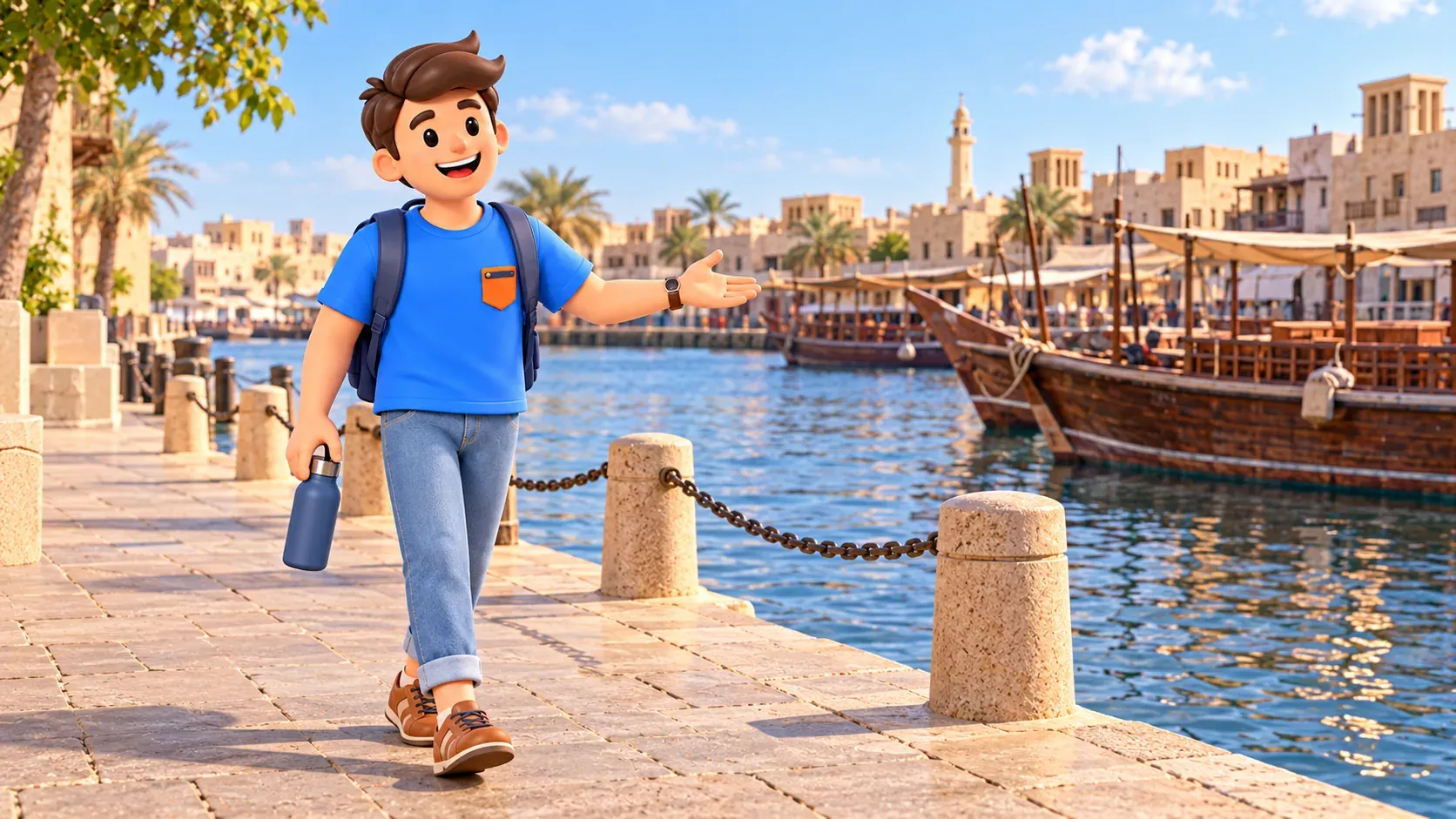
Use the Creek to understand trade and the older city
The Creek gives a strong subject without requiring a sequence of interior visits. Water, boats, trading areas and smaller streets reveal how the city developed around a working connection. Observe the relationship between the waterfront and the places where goods are displayed and exchanged.
Al Fahidi offers courtyards, shaded passages and wind-tower forms. These details connect architecture to the management of air, light and enclosure. Rather than racing between doorways, follow a simple question: how does the shape of a building change the experience of heat and shade?
Al Fahidi Fort supplies a historical reference. The fort dates from the late eighteenth century, and a museum opened there in 1971. Keep this history separate from any assumption about current museum access. An exterior observation and a confirmed interior visit are different parts of an itinerary.
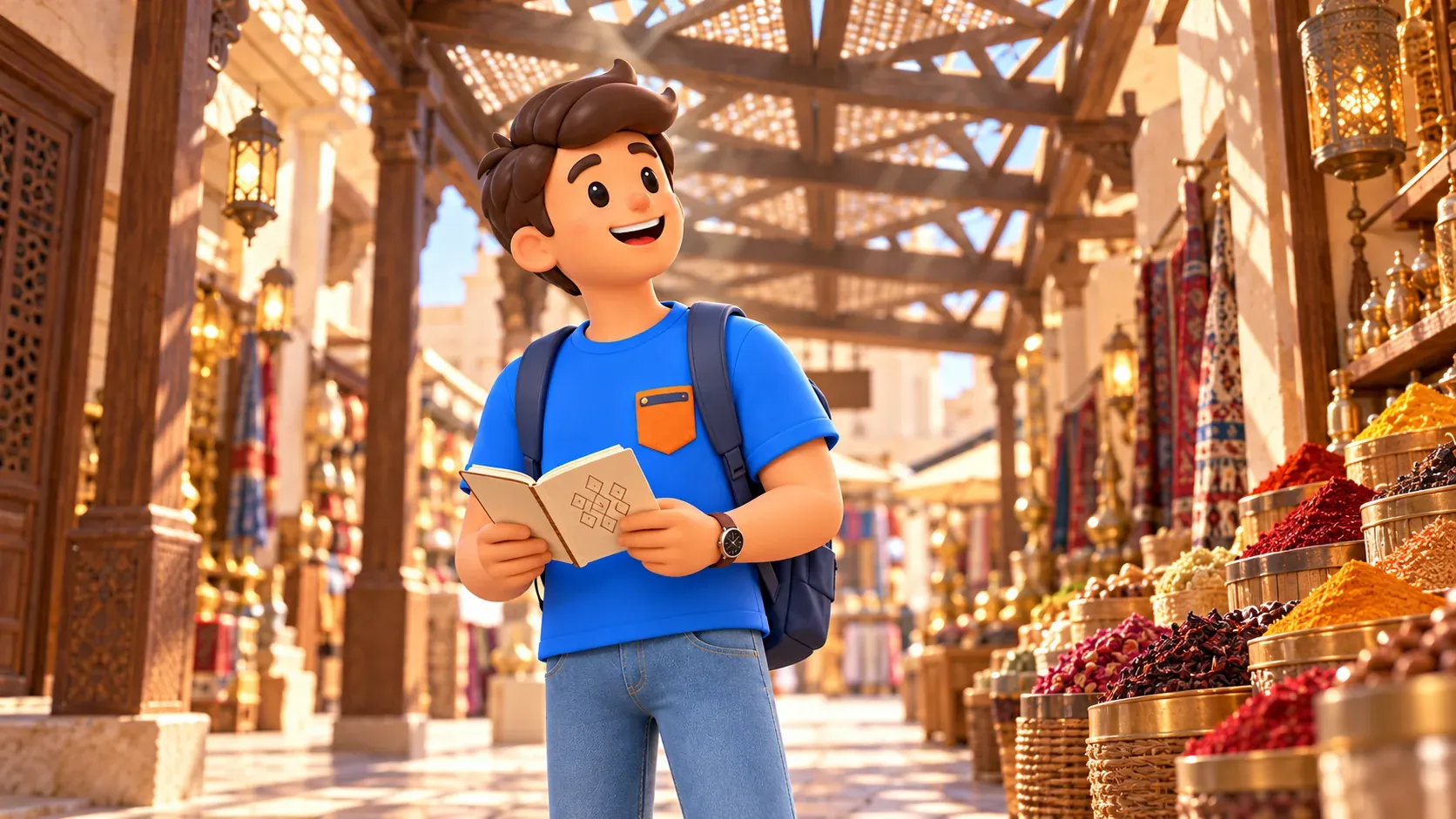
In Deira, the Gold Souk and Spice Souk connect you to continuing commercial life. Their interest is not conditional on buying jewellery or spices. The arrangement of shops, canopies and displays is itself worth observing, while remembering that businesses and customers are using the same space.
If you want to cross the water, verify the current boarding point, service and fare separately. Include that movement because it contributes to the day, not because an old price copied into a list makes it sound effortless. A crossing is transport and an experience, with real operating conditions.
A first version can stay on one side of the Creek and still be satisfying. Leave a pause and a clear return rather than expanding to every market and heritage area. Small-scale observation becomes more useful when you have enough attention to understand what you are seeing.
Look at Downtown from the ground before deciding to ascend
Burj Khalifa is an important part of Dubai even when you do not choose an observation ticket. Its stepped silhouette and relationship to surrounding buildings can be studied from permitted ground-level spaces. The building’s architectural story is not confined to the experience sold inside it.
The tower opened in 2010, designed by SOM, and its full height reaches 828 metres. Three wings support a central core while setbacks change the profile upwards. From below, those changes help explain why the building appears slender and different from several directions.
Dubai Opera adds another subject. The theatre opened in 2016, and its design refers to a dhow. Its exterior can introduce a conversation about the connection between maritime references and a contemporary cultural building, without implying access to a performance or interior.
The lake and Dubai Fountain form part of the district’s setting. Treat the waterfront itself separately from any show, whose current operation needs checking. Do not make the success of the whole day depend on an unverified programme or a particular viewing position.
If an ascent is a personal priority, it can become the one deliberate paid highlight. The important decision is whether that experience answers your interest. You do not need to buy several similar views merely because they are all prominent in visitor advertising.
Let market architecture and small details carry some of the interest
A travel day becomes cheaper to fill when you learn to look between headline attractions. A canopy, a doorway or the rhythm of a courtyard can explain something about a place. This is not a demand to turn every walk into a lesson: choose the details that actually catch your attention.
In a trading area, watch how a covered passage organises movement and shade. Compare the scale of the walkway with the size of a shop opening. These observations connect commerce and architecture without requiring a purchase or a full inventory of every stall.
Give working spaces room to function. Keep entrances clear and ask before photographing people closely. Curiosity does not create a right to enter private premises or use a business as an unlimited photographic set.
A small notebook can help keep the day personal. Record one shape or question rather than copying long descriptions. For children, looking for a repeated pattern or a patch of shade can be more engaging than memorising a sequence of dates.
Use waterfront time as a main chapter
Dubai Marina gives water and residential architecture a shared setting. Cayan Tower, completed in 2013 to a SOM design, provides a concrete example: similar floor plans rotate upwards to produce a roughly 90-degree turn. One building can anchor the walk without becoming an interior visit.
Observe how reflections and gaps between towers change as you move. The water gives continuity, while bridges, property boundaries and entrances determine the real route. Choose a usable start and finish rather than assuming every edge forms one unrestricted loop.
JBR and Bluewaters are related coastal destinations, but adding them requires its own geographical decision. A Marina walk does not automatically include a beach or an island. If you want time on a beach, confirm the public area, current access and practical facilities you need.
A pause with your own water or a simple snack can belong to a modest programme where permitted. Use a suitable space and leave it clean. The point is to give the day a comfortable rhythm, not to assume an unverified facility or unrestricted use of any patch of waterfront.
Count the journeys and the small decisions
Before judging the cost of a day, consider transport between all stops, food, the return and any access you choose. A venue without a large admission does not automatically create an inexpensive outing if it requires several long transfers.
Group the programme by area and give meals and rest a deliberate place. Compare the current terms of any product before booking, including what is actually included. A lower advertised entry figure is not enough information to judge the whole visit.
RoadMe makes the wider trip more convenient through a personal day-by-day plan built around your priorities and budget. Use the app to balance architecture, neighbourhoods and one chosen highlight without overloading the journey.
Keep one part of the day flexible. If a venue is not available or the weather changes your preference, a checked nearby option can preserve the programme. There is no need to cross the city to replace every missed interior with another paid experience.
For a mixed group, discuss the one thing each person would value most. Someone may care about a particular museum, another a skyline or a long waterside pause. A shared plan can include one meaningful paid visit and let the rest of the day support it.

Choose the experience you would miss
Before booking an optional highlight, ask what you would regret not experiencing. A particular collection, the ascent of a specific tower or a performance may have personal value that another ticket cannot replace. Give that choice a clear role and let the rest of the day provide context.
If a skyline is the priority, our comparison of Dubai viewpoints can help distinguish the subjects of the views. Do not assume that every ascent adds the same value. Choose for your own question, then compare the current options and conditions.
A programme that feels complete
Build the day from one area, one subject and enough room to notice it. The Creek can explain trade and older architectural spaces; Downtown can show how a major landmark shapes a district; Marina can introduce the relationship between water and residential towers.
Then decide whether any ticket genuinely adds the experience you want. Confirm the current conditions and include the full journey around it. You can give a city serious attention without turning every hour into an admission purchase.
The result should feel like a trip you chose, not a reduced version of someone else’s expensive checklist. A clear interest, practical geography and a few unhurried observations can make a modest Dubai programme both useful and memorable.