
Sunset at Dubai Creek Harbour: A Short Walk by the Water
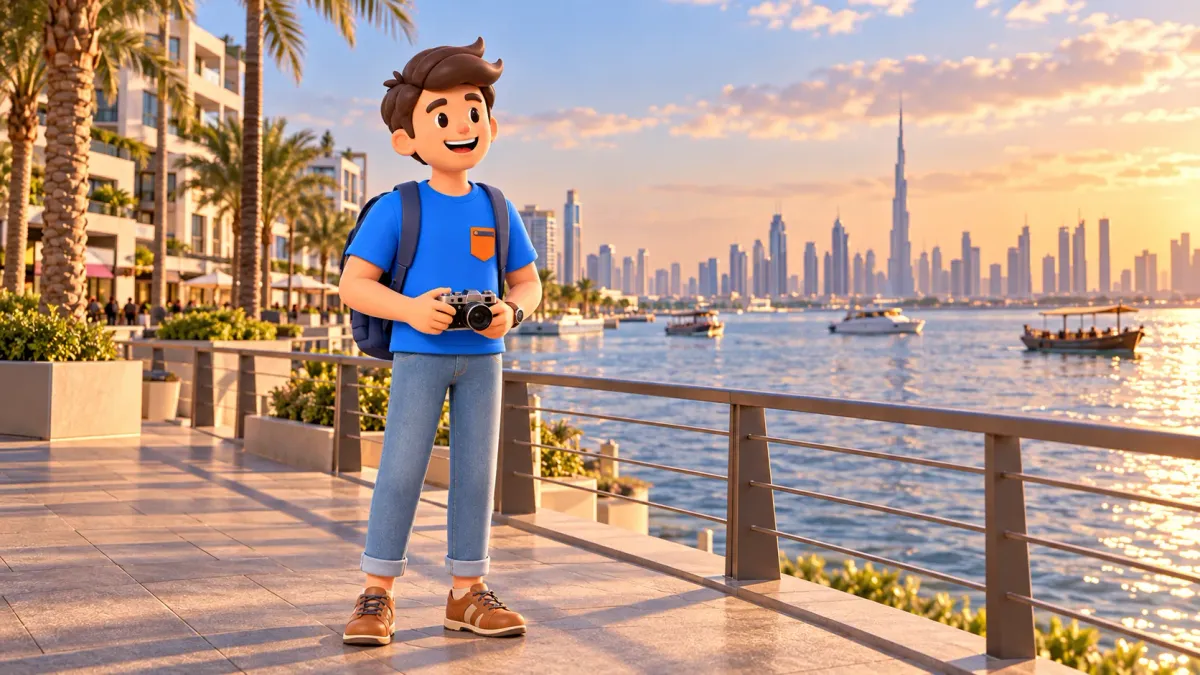
Dubai Creek Harbour offers a simple evening idea: arrive while the city is still readable in daylight, walk a manageable section beside the water and let the distant Downtown skyline change as evening arrives. The main subject is the relationship between a broad horizontal Creek and the vertical buildings beyond it. You do not need a long attraction list for that contrast to become memorable.
This plan centres on The Viewing Point and a waterside pause. Allow roughly an hour to an hour and a half for the walk and rest, plus your actual journey to and from the district. The duration is an estimate, not a measured route. Choose the window around the sunset time for your date; weather, visibility and colours remain part of the day rather than a guaranteed scene.
Choose the time window before adding the route
RoadMe can create a personal route or whole Dubai trip around your interests, dates and pace. Prepare this evening in the app: fitting a waterfront walk and time to rest into the rest of your visit is much more convenient than coordinating separate lists of places.
Start with the date, the daylight window and how you will actually arrive. Keep enough time before sunset to find the public approach and look at the view without rushing. Arriving at the exact minute the sun disappears can turn a calm plan into a search for a door or a stopping place.
Save the precise public entrance or meeting point you intend to use, along with the onward transport point. Dubai Creek Harbour names a broad contemporary district; it is not one doorway. The Viewing Point is the specific architectural stop within that wider setting. That distinction helps you make a small outing instead of accidentally planning a much longer waterfront search.
The three useful parts are arrival in usable light, time at the view and a pause as the setting changes. Keep them flexible. If you enjoy photography, protect the first two; if you want a relaxed conversation, give the pause more room. Neither version requires a full circuit of the district.
This walk has its own place in the trip. The historic souks around the Creek and the contemporary Harbour are different outings with different approaches. Choose the actual district you want rather than treating every mention of Dubai Creek as a promise of the same scene. Here, the aim is a wider skyline relationship across the water.
Before the platform, read the waterfront at ground level
Begin with a short available section of public promenade. Notice the near edge first: path, planting, rail and the buildings beside your walk. Then let the eye move across the water to the far skyline. These layers are part of the experience, even if a tightly cropped photograph later removes most of the immediate setting.
The water creates distance between you and Downtown. Towers that feel separate within the city can gather into a single silhouette from here. Look for the way one recognisable vertical helps organise the rest of the group. The view becomes more interesting when height is seen together with spacing rather than only as a collection of named landmarks.
Keep the first section short enough to leave attention for the viewpoint. You are not trying to inspect every residential frontage. One stretch that lets you understand the near and far relationship is enough. The promenade gives context to the raised platform, so the change in position will be clearer when you reach it.
Choose stopping places that leave movement comfortable for other people. A quiet view is easier to enjoy when your group is not standing across the path. A few deliberate pauses can feel more relaxed than repeatedly halting wherever the next phone photograph looks possible. Give each stop one small purpose, then continue.
The Viewing Point: a modest rise changes the view
The Viewing Point projects above the Creek as a directed walkway. It uses a relatively small height and a position over the water rather than the top of a skyscraper. That is its architectural idea: changing where the observer stands can be enough to separate the panorama from nearby buildings and make the view a subject in itself.
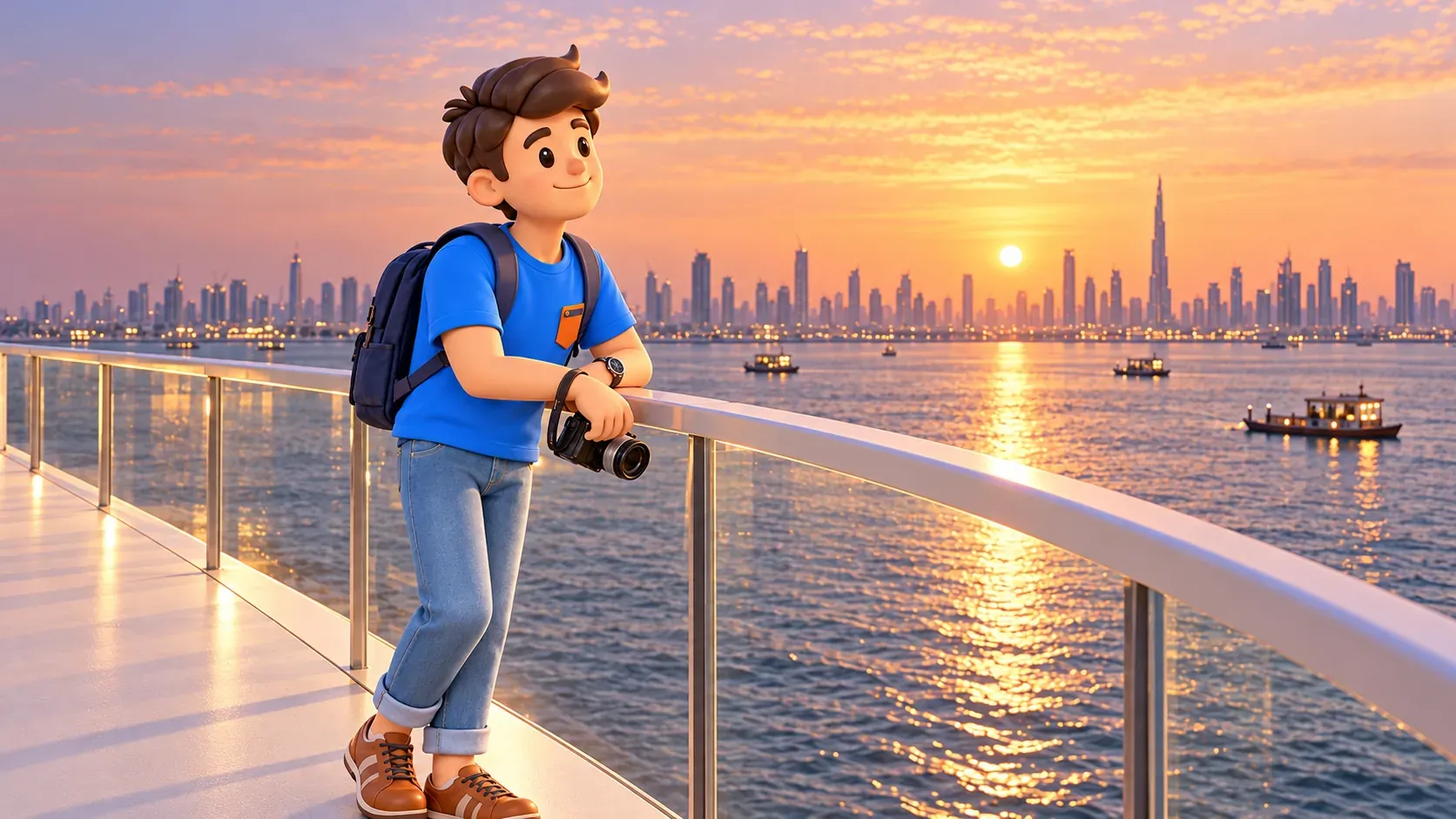
The structure is about seventy metres long, with a cantilever extending roughly twenty-six metres over the water. Those dimensions describe the platform, not the length of the surrounding promenade. You do not need every measurement to appreciate it. The important relationship is a supported approach continuing towards open space.
A cantilever is the portion that extends beyond its final support. From the walkway, you mainly experience direction and the view opening ahead. Where a public side view is available, the profile can reveal the projection more clearly. Those are two ways to understand the same object, without turning the visit into a structural inspection.
Use the platform according to the actual public access and on-site guidance. The article does not replace its current organisation. Stay within the visitor area and let people pass when stopping. A higher or more exposed position is not required for a better memory; the designed path already supplies the intended relationship with the water.
Once settled, spend a short moment looking without the camera. Compare the width of the water in front with the height of the far buildings. Notice whether you see individual towers or one connected band. This observation gives the place more meaning than arriving, taking a familiar frame and immediately leaving for another address.
Choose a few photographs with different jobs
A small set of varied images can tell this walk clearly. Start with a wide composition that includes water and skyline. It records the distance and the horizontal-to-vertical contrast. Then make one image that includes a nearby edge or part of the viewpoint, showing where you stood rather than only what was far away.
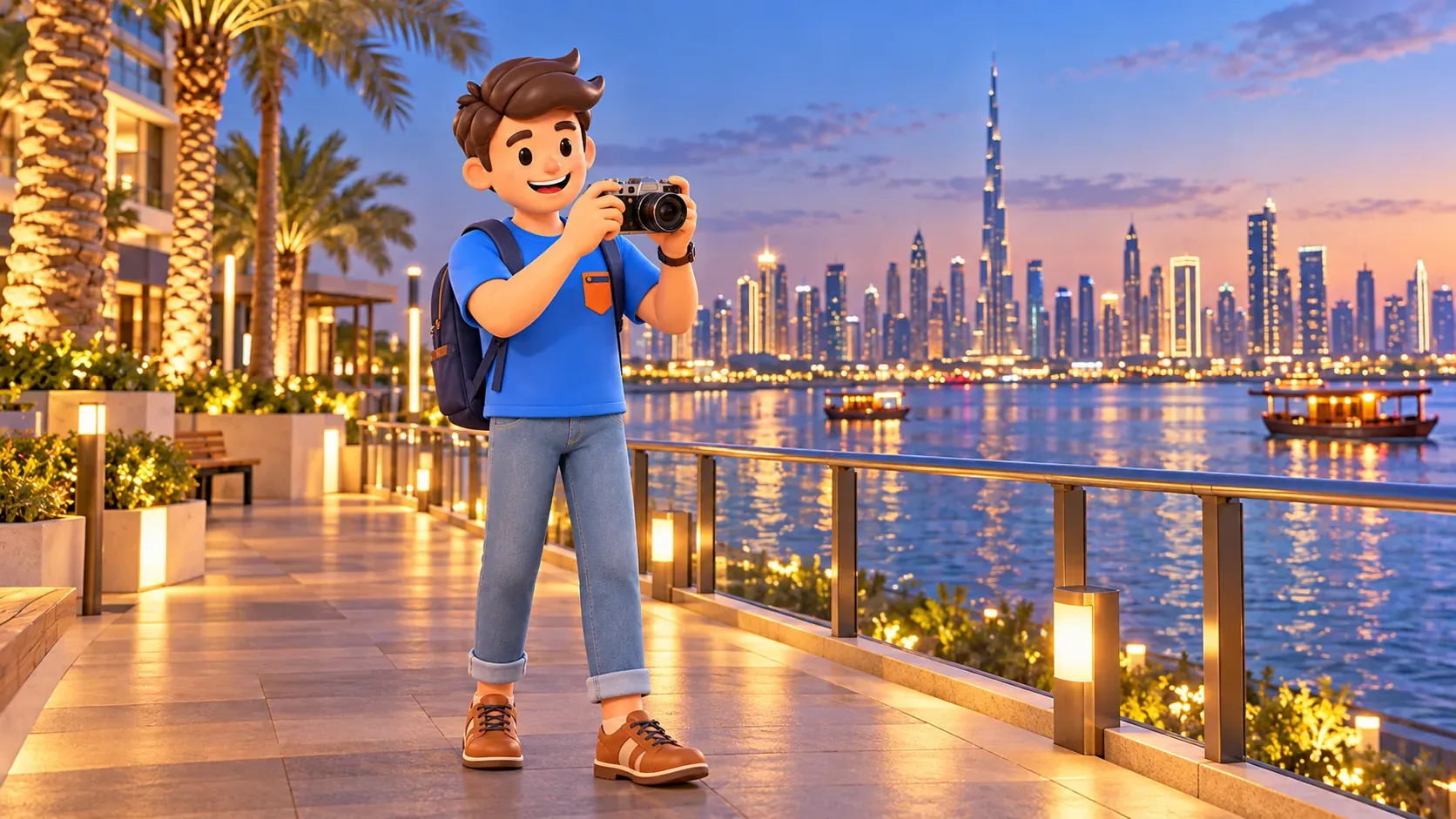
A third image can follow a change in light later. The three photographs then have different purposes: place, viewpoint and time. They need not become a formal project. The simple distinction helps avoid making dozens of similar skyline pictures while scarcely noticing the actual evening passing around you.
For phone photography, first decide what matters in the composition. An extra moment arranging a near edge and the horizon is often more useful than continually changing settings. Keep the device secure and work from a comfortable public position. There is no special shot that requires leaning beyond the available visitor space.
Consider including a person or a modest part of the promenade in one frame. That can give scale to the broad water and relate the distant skyline to an ordinary walk. Ask companions whether they want to appear, and leave other visitors room. The image should serve the memory of the outing rather than take over its entire duration.
Then put the camera away for a while. The point of being present through a changing light window is that not every change needs to be saved. Some impressions are easier to notice when you are no longer comparing the screen with an ideal photograph seen before the trip.
Let dusk be a change, not a deadline
The useful evening sequence can extend beyond the sun itself. Daylight makes surfaces and groups of buildings easier to distinguish; later, silhouettes and lights may organise the view differently. Stay with one of those changes if it interests you. The outing does not have to end at the same instant as a countdown on the phone.
Visibility shapes what you can see. If the far skyline is softer than expected, bring attention nearer: the water surface, the edge of the platform or reflections of the immediate waterfront. The place offers several scales. One imperfect distant panorama does not need to define the whole walk.
Light on the water may move while the building outline stays still. That gives a small comparison to follow without adding another attraction. Which part of the view is stable, and which keeps changing? A simple question can make ten quiet minutes feel like observation rather than waiting for a spectacular colour that may never arrive.
If the group is tired, shorten the later section. The purpose is a pleasant small evening, not proving that you stayed through every stage of darkness. Comfortable conditions and interest should determine the finish. Keeping that freedom makes the walk easier to fit between bigger sightseeing days.
Give the pause a real place
Choose an available seat or a suitable place for a drink according to the day. A named café is not essential to make the plan work. The pause belongs to the route because it gives the view time to settle. Let it be an intentional part rather than a reward allowed only after a long list of extra stops.
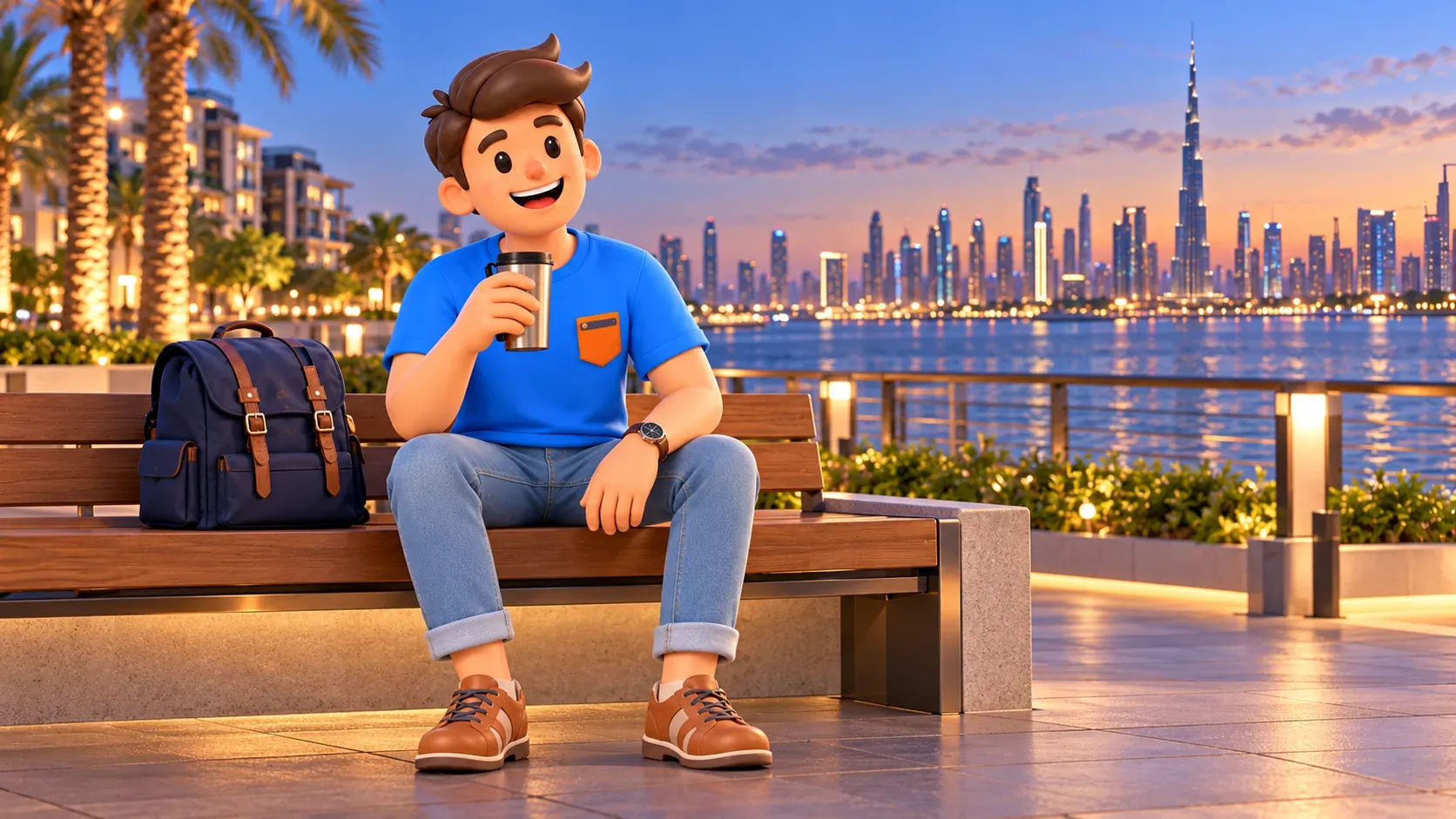
Ask which part of the evening remains clearest without checking photographs. It may be the width of the water, the platform's projection or the first lights across the skyline. A companion may remember a different moment. Those differences can make a relaxed conversation, without needing agreement on the one best frame.
With children, use one concrete question: which buildings were easy to recognise, and did the water change more than the skyline? They can answer by showing rather than naming. Adults can make the same comparison. A short outing becomes meaningful through a clear observation, not only through more facts or a longer route.
Keep the pause proportional to the plan and the onward journey. If you want a longer meal, choose it deliberately and allow its time. If the evening is meant to stay short, a simple rest can be enough. The useful distinction is between a chosen extension and an outing that drifts into a larger commitment without discussion.
Finish the short walk while it still feels relaxed
Allow the actual path from the last view to your transport or meeting point. That ordinary section is part of the evening, especially after dark when you are leaving an unfamiliar district. Save the destination beforehand so the finish has the same clarity as the viewpoint. A good short route includes a workable end.
There is no need to add another far viewpoint immediately. The walk has already offered a specific relationship between water, architecture and time. A different district can receive its own attention on another day. Leave with one clear memory rather than trying to turn every small outing into the complete Dubai experience.
RoadMe can place this Creek Harbour evening in a personal multi-day plan, balancing your interests, pace and time for rest. Use the app to organise Dubai more efficiently, so short walks and major visits fit together without rebuilding the programme every evening.
For a different Creek-side cultural outing, the Jameel and sculpture park half-day connects galleries, gardens and water. The historic Creek walk explores another setting around the old city's banks. Choose those separately across the trip, leaving this evening its simple focus on the view.


