
Creek Park with kids: science and a waterfront walk in one day
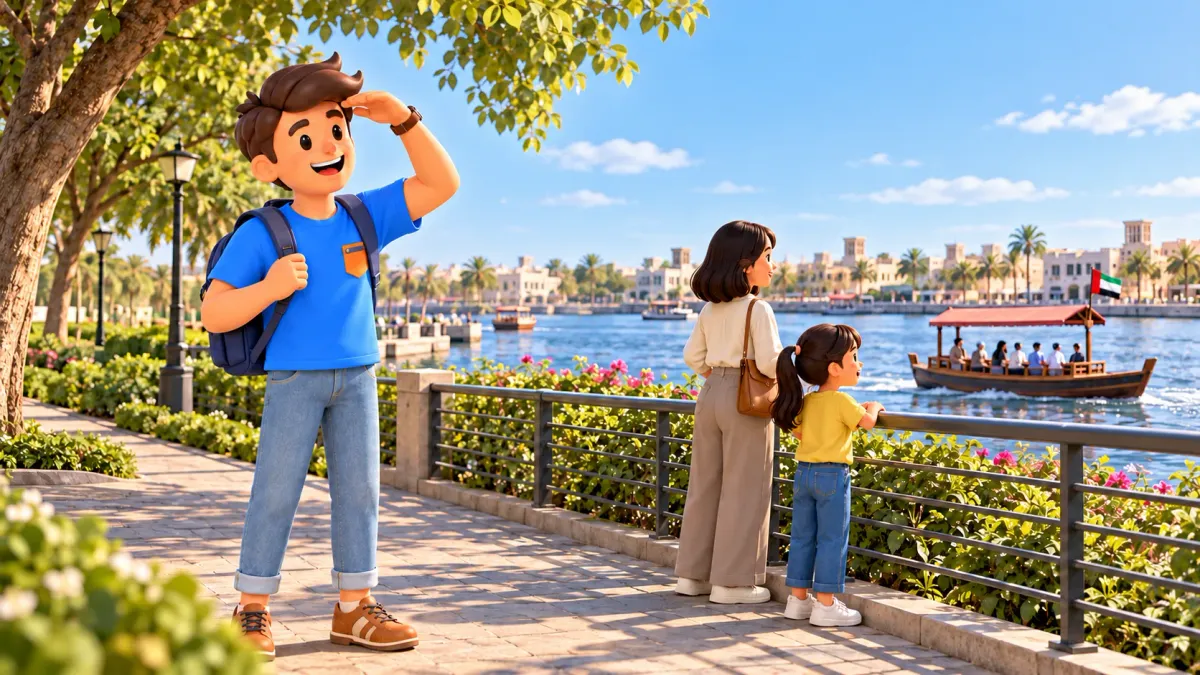
A family day in Dubai does not have to revolve around a huge attraction and a timetable packed with shows. Creek Park offers a different rhythm: investigate something indoors, walk beneath trees, watch the water and leave before everyone becomes tired. The park and Children’s City make a particularly useful pairing when your child enjoys asking how things work.
This plan gives one educational visit a generous outdoor setting. Allow roughly four to six hours including a meal and pauses, rather than treating that estimate as a target to fill. With a younger child, the same idea can become a shorter outing. The reward is a shared experience with room for curiosity.
Start with your child’s interests, then build the day
The central decision is simple: will Children’s City be the main event, or is your family mainly coming for the park? Choose the first version for an enthusiastic young explorer who enjoys interactive learning. Choose the second when your child needs open space more than another indoor programme. A place can suit a family without every activity inside it being necessary.
RoadMe can build a personal Dubai trip plan around your interests, dates and preferred pace, making it much easier to fit a family day into the whole holiday. Let the app work out a coherent itinerary instead of assembling disconnected attraction lists.
Give the day one clear promise: discover something, then enjoy being outside. That is easier for a child to understand than several competing appointments. It also leaves adults free to notice whether the energy in the group calls for a longer visit, an early snack or a quiet return.
Before setting out, check that the centre is operating on your chosen date and read the current entry arrangements for both the park and the activity. They are separate places for planning purposes: do not assume one payment or booking covers everything. The sequence below is flexible, with the centre placed wherever its actual opening window fits.
Why Creek Park is more than a green space between attractions
Opened in 1994, Creek Park belongs to a period when Dubai was expanding its public places for everyday recreation. The city’s relationship with the Creek is much older: this waterway supported movement, trade and settlement long before the familiar skyline. The park offers another way of understanding that relationship, through leisure and landscape rather than a market street.
That difference matters on a family visit. A view of water gives the eye somewhere to travel, while trees and planted areas bring the scene back to a smaller scale. Children can notice the difference between an open bank and a shaded path without needing a lesson about urban development.
It is also useful to keep the geography straight. Creek Park is not Creek Harbour, and it is not a short extension of the old souks simply because all three involve the Creek. Keep this outing concentrated in the park. Trying to collect every famous waterfront in one afternoon would turn an easy day into a series of transfers.
Use Children’s City as a focus for discovery
Children’s City opened in the park in 2002 as a municipal educational centre. Its purpose is learning through exploration and interaction. Even the building’s colourful geometric forms suggest something assembled and investigated, rather than a museum that expects visitors to stand still in front of every object.
The centre’s educational history includes themes such as the human body, nature, technology, space and culture. Treat those as a guide to its character, rather than a promise that every named display is available on your date. Once inside, begin with the area that catches your child’s attention and let that interest set the direction.
A useful visiting method is to pause at one activity, predict what might happen and then compare the result with the prediction. You do not need to supply the explanation immediately. “What changed?” or “What would you try next?” can turn a brief interaction into a conversation without making the visit feel like schoolwork.
For an initial plan, reserve about ninety minutes to two hours, with permission to leave sooner or stay longer. This is an editorial estimate, not a measured visit time. Avoid promising a specific workshop, planetarium session or demonstration until you have confirmed its programme separately.

Make the first walk an easy transition
After an indoor visit, the most useful next activity may be a short, unhurried walk. Start with a nearby shaded stretch and see how everyone feels before choosing a longer circuit. You do not have to reach the far end of the park to justify coming.
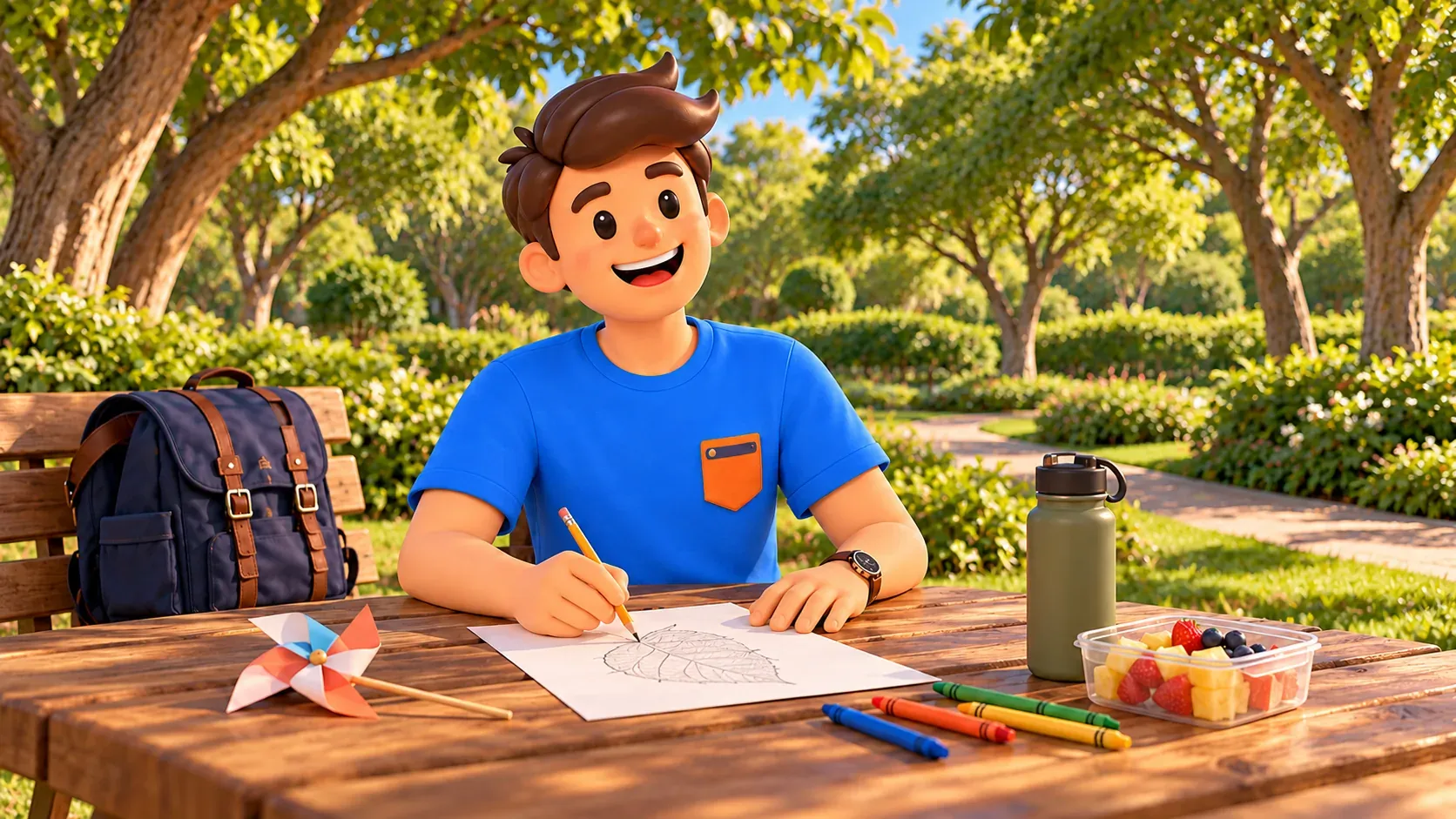
Give the transition a small theme. Look for a pattern in leaves, compare the shapes of tree shadows or listen for the difference between a garden path and the waterfront. A child who has just explored an interactive display may enjoy testing the same habit of close observation outdoors.
Keep any challenge optional and brief. Three things to notice are plenty; a long checklist quickly creates another task for the adults to manage. If your child would rather move, talk or sit quietly, follow that response. The point is to carry curiosity into the park, not to reconstruct the science centre on the lawn.
Let comfortable paths and the available shade determine the direction. A line on a map does not tell you whether a particular stretch will feel pleasant at that moment. On a hot day, reduce the outdoor part rather than treating trees as a guarantee of comfortable conditions.
Give Dubai Creek a proper place in the afternoon
The waterfront is worth a pause of its own. Watch the texture of the water, the changing reflections and the movement of boats when they pass. These are ordinary details, but they help a child understand that the Creek is a working part of the city rather than scenery placed beside a park.
You can connect that observation with a short piece of history: before modern roads and towers changed Dubai’s scale, water routes helped link people and goods. Keep the explanation concrete. Ask what would be easier to move by boat, or how the opposite bank looks different from the path beside you.
Choose a comfortable public viewing position and supervise children near the water. A waterfront stop is not a swimming stop, and the presence of a boat is not a promise of an excursion from where you are standing. Enjoy the view without adding an unplanned transport project to the day.
If attention fades, leave the conversation there. One remembered detail is more valuable than several facts delivered after a child has stopped listening. The water can simply be the place where everyone slows down.

Protect the meal break instead of squeezing it in
Food is part of the route, not an interruption to it. Place a proper break between the concentrated indoor visit and any longer outdoor stretch. Where and how you eat should follow the park’s current rules and the facilities available that day; do not build the outing around an assumed café or an unrestricted picnic spot.
Carry water and a practical snack, and think about what your child actually eats when tired. A small familiar option can make the journey home easier than an ambitious meal at the wrong moment. Keep enough time for washing hands, finding facilities and sorting the bag without rushing to another booking.
This is also the moment to decide whether to continue. Ask a specific question: another short look at the Creek, or time to head back? A bounded choice is easier than asking an exhausted child to design the rest of the afternoon. Adults should keep the decision about heat, fatigue and transport.
Choose the version that matches your family
For a shorter outing: make the centre the main visit, take one comfortable park walk and finish after a snack. Leave the rest of the day open. A successful family trip does not need to last from breakfast to evening.
For a slower full afternoon: allow more time for exploring the centre, add a meal and keep a substantial pause by the water. Spread the same ingredients out rather than adding more attractions. This version suits families who enjoy lingering and have no need to hurry to another district.
RoadMe makes the wider trip easier by shaping a personal day-by-day plan around what your family enjoys and the pace you want. Use it to give this relaxed afternoon a sensible place among the rest of your Dubai experiences.
With children of different ages: agree on one shared activity, then allow different levels of engagement. One child might investigate a mechanism while another simply enjoys making something happen. Avoid turning the older child into a guide responsible for entertaining everyone else.
When it is too hot for a pleasant walk: shorten the outing around the indoor visit and your transport arrangements. There is no need to preserve the outdoor section just because it appeared in the original plan.
Keep extra attractions as a separate decision
Dubai Dolphinarium is another institution within Creek Park, with a different format built around an indoor arena and its own programme. Its presence does not mean it belongs automatically in this science-and-walk itinerary. A timed show changes the structure of the day and needs an independent decision about your family’s preferences and the current arrangements.
The same principle applies to any additional activity you notice on arrival. Ask whether it adds something your child particularly wants, or whether it is merely nearby. If the answer is the second, the park already provides enough room for a complete outing.
Finish by making the departure simple. Save the correct arrival point for your chosen entrance, plan the return journey and keep a little energy for reaching it. The nicest memory may be an experiment your child wants to describe over dinner, a leaf pattern noticed on a bench or a boat moving across the Creek. Those small discoveries are a good reason to give this part of Dubai an unhurried day.


