
Charlottenburg in half a day: palace, gardens and one museum

Spend half a day in Charlottenburg with a simple combination: the palace from outside, a walk through its gardens and one nearby museum chosen for your interests. Allow around four hours from U Richard-Wagner-Platz and back, including a break. Palace interiors are not included in this base plan. Your final stop is either the Bröhan-Museum for decorative arts and design or Villa Oppenheim for a more local view of the district.
This works particularly well after a busy day in central Berlin. A broad palace frontage, garden paths and a focused museum visit offer a different rhythm from moving between major squares. The aim is to notice a few things properly. Trying to include every royal room, distant garden building and neighbouring collection would change the outing considerably. Keep the palace exterior and garden as your shared foundation, then let the museum provide the subject you most want to explore.
A four-hour Charlottenburg route
Start at U Richard-Wagner-Platz and follow public pavements north along Schloßstraße towards the palace. After looking at the exterior, use an available garden entrance and combine the formal parterre with a short landscape-garden loop. Return towards Spandauer Damm and cross at a designated crossing. Then choose the Bröhan-Museum near the palace or Villa Oppenheim farther south along Schloßstraße, before returning to the station.
RoadMe makes it much easier to develop a personal plan for your whole trip around your interests, dates and pace, giving Charlottenburg a sensible place among your other Berlin days. Try planning in the app so the palace, gardens and your chosen museum fit into a day that feels considered.
Allow roughly 20 minutes for the approach, 25 for the palace exterior, 60 for the gardens and 20 for a break. Add 15 minutes to reach your chosen museum, 75 for admission and the visit, 15 to return towards the station and a ten-minute reserve. That totals 240 minutes. These are editorial estimates rather than a measured walking track; the entrance you use, queues, your garden loop and your group's pace will affect the actual duration.
Plan for Tuesday to Sunday if you want the museum element. Under the published conditions checked on 17 October 2026, both suggested museums normally close on Mondays, with holiday exceptions requiring a separate look. Decide which museum interests you before choosing a departure time. In winter, protect the daylight portion of the plan: a very late start can make a garden-first outing awkward even when a museum remains open indoors.
The palace exterior: give the building some space
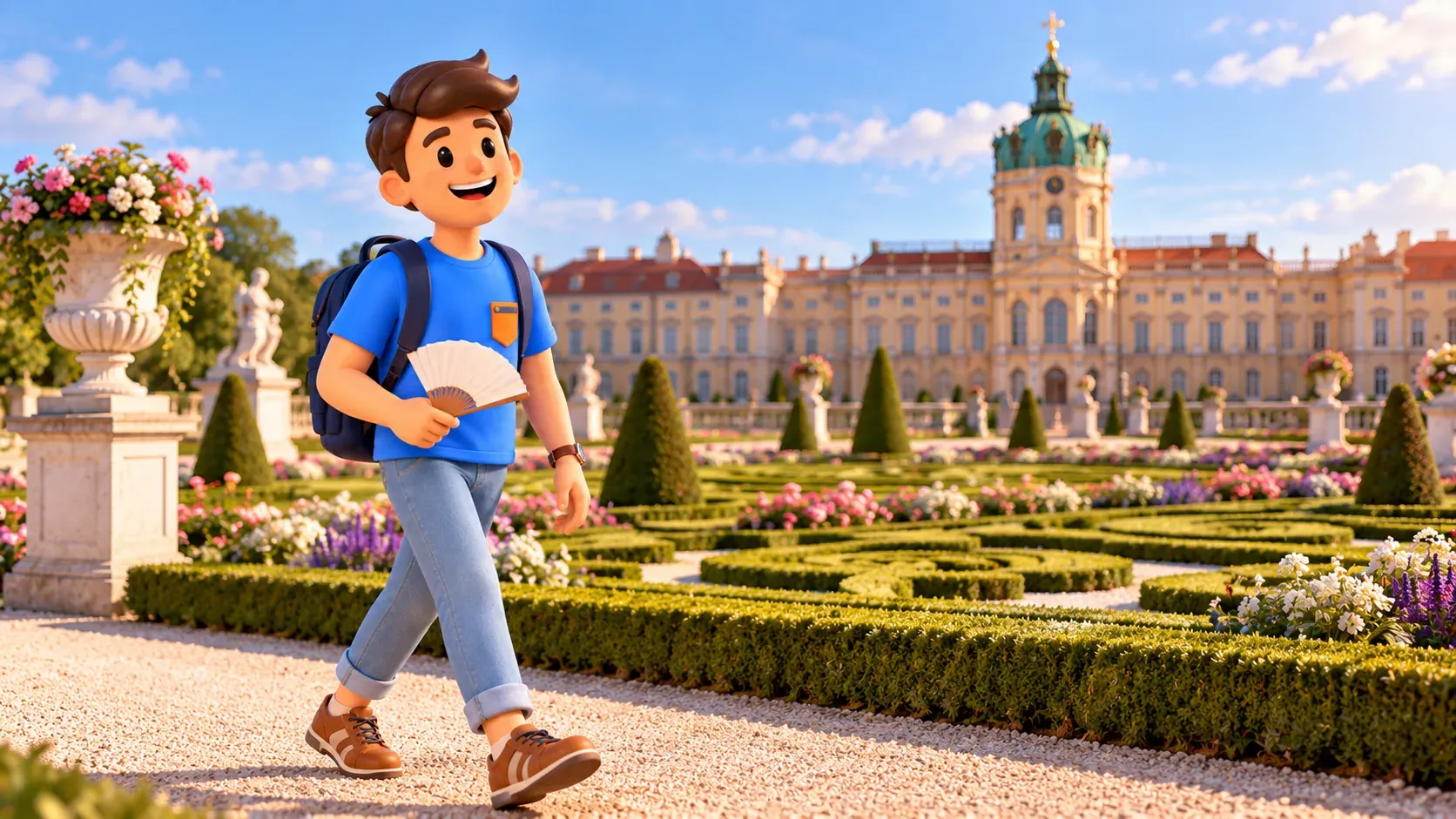
Begin far enough back to take in the central section and the long wings together. Notice how the lower side buildings lead your eye towards the dome. It is a useful first exercise because the palace becomes an arrangement of spaces rather than a decorative backdrop. Look at the relationship between the frontage, the open area in front and the garden beyond, instead of immediately concentrating on the smallest ornament you can photograph.
Charlottenburg was a royal summer residence associated with Sophie Charlotte and Frederick I. The palace was rebuilt after destruction during the Second World War. Those two historical anchors are enough for this short exterior visit: you are looking at a courtly ensemble and at the outcome of substantial reconstruction. An outdoor walk alone cannot reliably tell you which individual details survived and which were recreated, so leave that more specialised question for a dedicated visit.
The suggested 25 minutes are for the accessible exterior area, the overall silhouette and perhaps one closer architectural detail. If works or barriers interrupt your preferred view, use another open viewpoint. There is no need to spend your garden time trying to reproduce a photograph taken under different conditions. The pleasure of this half day comes from connecting the building with its grounds, rather than treating the front façade as the only successful moment.
Two garden styles in one walk
Sophie Charlotte commissioned Siméon Godeau to create the garden in 1697. Its French Baroque composition was later joined by English landscape design. That makes the change in spatial character especially rewarding: ordered planting and clear axes establish one way of looking, while trees, water and curving paths encourage another. You do not need specialist vocabulary to notice the contrast. Simply ask where the garden directs your eye and where it allows you to wander more freely.
Start with the available part of the formal parterre and find a place where its layout is easy to read. Flowers are seasonal, so do not build the visit around a promise of colourful beds on any particular date. The relationships between paths, low planting and the palace remain interesting beyond peak flowering. Then take a modest loop into the landscape section. An hour here means a selected walk, not a complete circuit of the estate and all its buildings.
Agree on a turning point if you are visiting with other people. Someone may want more photographs of the formal garden, another person may prefer trees and water, and someone else may need a seat. A shared short loop followed by a deliberate pause works better than losing track of each other. Use open visitor paths and a current map. A green area on a screen is not automatically a public connection to the next museum entrance.
The garden operator lists free entry and ordinary access daily from 08:00 until dark. Garden access is separate from admission to buildings within the grounds. The Belvedere, for example, is closed at the time of checking and is not an indoor stop in this plan. You can enjoy a meaningful palace-garden visit without entering a pavilion or a royal room. The changing landscape is a substantial part of the experience in its own right.

Take a break before changing scale
After your garden loop, allow around twenty minutes to sit down. Use an available bench or a café if there is room, rather than assuming a particular table will be waiting. A full lunch needs additional time. This break helps you change from looking across a landscape to concentrating on smaller things indoors. If everyone is tired or hungry, the answer is to adjust the schedule openly, not silently remove most of the museum visit.
Confirm your choice before crossing Spandauer Damm. The Bröhan-Museum is at Schloßstraße 1a, opposite the palace; Villa Oppenheim is farther south at Schloßstraße 55, with Otto-Grüneberg-Weg as an additional location reference. Your connection time depends on where you finish the garden and break. These are alternatives with different subjects, not two compulsory stops. Choosing a museum because its theme appeals to you is more useful than selecting whichever produces the longest list of addresses.
Choose the Bröhan-Museum for decorative arts
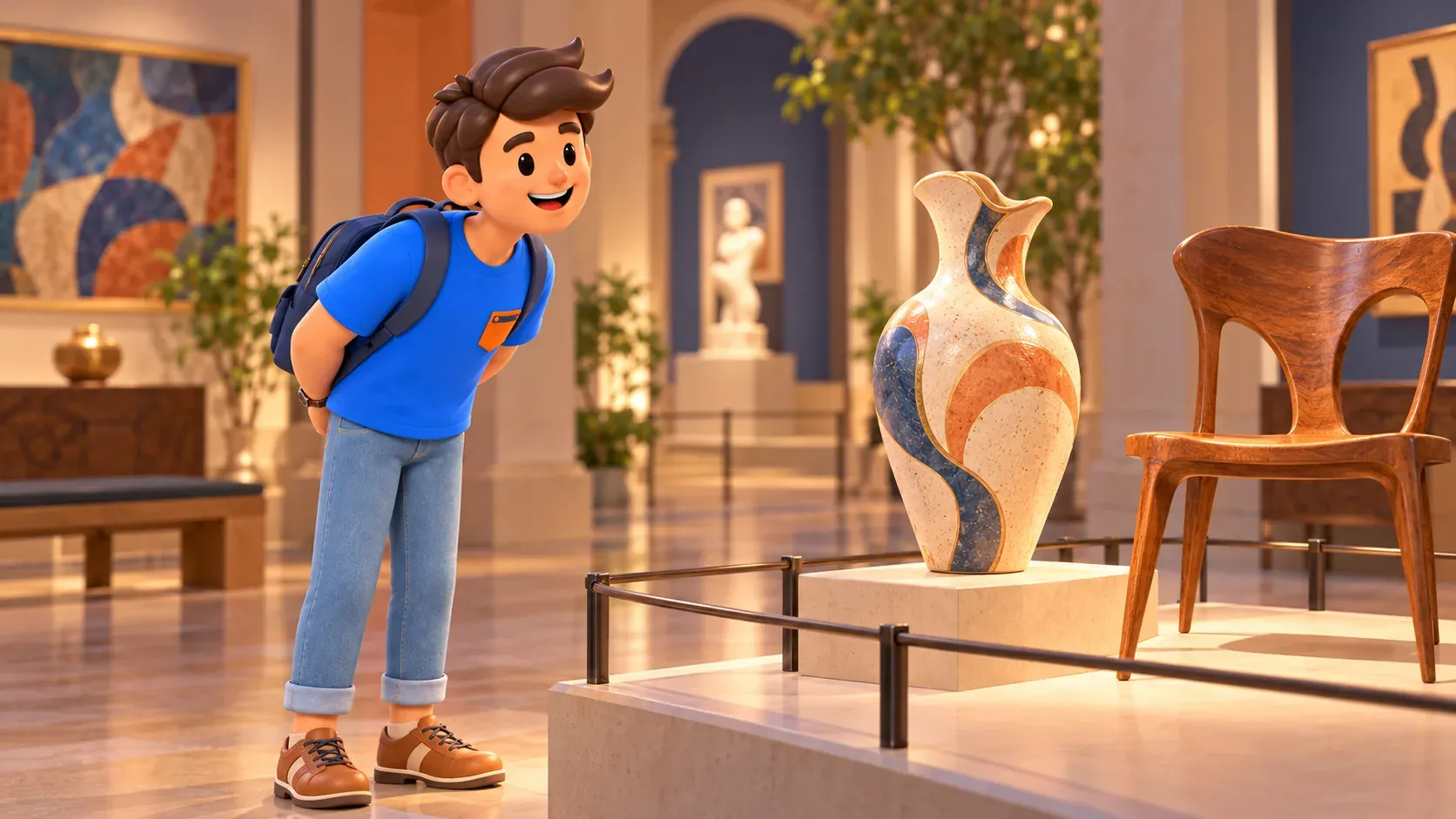
The Bröhan-Museum focuses on decorative and fine arts, including Art Nouveau, Art Deco and functionalism. After the broad palace composition, the shape of a single object becomes the attraction: a curve, a surface or the relationship between material and purpose. This is a good choice if you enjoy noticing furniture, ceramics, lighting and interior details while travelling. You do not need to arrive knowing every movement; curiosity about how objects look and work is enough.
A collection description does not guarantee that every object is currently on display. Look at the exhibition programme rather than planning around a particular work whose presence you have not confirmed. With 75 minutes including entry, choose a few areas or one exhibition theme to explore properly. Compare a small number of objects and notice what catches your attention. The museum can provide a satisfying conclusion without becoming an attempt to investigate the entire collection in one afternoon.
Ordinary opening hours are Tuesday to Sunday, 11:00–18:00, with specific holiday exceptions. Admission is paid. Advance booking is recommended, while tickets on arrival depend on availability. Check current arrangements before committing to a date. The museum also announces a complete renovation planned from spring 2027, so this option needs a fresh availability check for a later trip. That announcement does not provide grounds to invent a precise closure date or promise that today's arrangements will continue.
Choose Villa Oppenheim for the district's story
Villa Oppenheim offers a different focus through the Charlottenburg-Wilmersdorf district museum and its art collection. Choose it if you are curious about the city around the palace rather than only its ceremonial frontage. The shift from a royal summer residence to a local museum changes the questions you bring indoors. The streets you walked become part of the subject, rather than remaining a practical link between sightseeing stops.
Do not expect another palace complex or a smaller version of a major national gallery. Follow an available exhibition theme and let the material guide your attention. Independent admission is free, which does not imply that every guided service is also free. Ordinary opening hours are Tuesday to Friday, 10:00–17:00, and Saturday, Sunday and public holidays, 11:00–17:00. Its earlier closing time matters if you begin the outing after lunch.
Use the museum hour to pursue one question that grew out of the walk. How does a royal landmark relate to the surrounding district? What changes when the story is told through local material rather than a grand façade? You do not have to find a complete answer in every room. A district museum is most rewarding when it adds perspective to the place you have just seen, rather than becoming another venue to finish as quickly as possible.
What if the palace rooms are your priority?
Replace the chosen museum with a palace interior visit, or extend the programme. The royal rooms are not a quick extra hidden inside the existing four-hour allowance. The Old Palace has its own admission arrangements and normally closes on Mondays. A combined palace ticket covers the specified palace-foundation venues, not automatically every independent museum nearby. Decide what you want to see before buying, and account for any booked entry time rather than treating all doors as interchangeable.
The Museum Berggruen is not an available backup in this plan: at the time of checking it remains closed for major renovations. Nor is there a need to assemble a long chain of alternatives. If neither suggested museum suits you, keep the palace exterior and a longer garden visit, and call it a garden afternoon. Matching the plan to what you actually enjoy is more useful than preserving the word “museum” at any cost.
RoadMe makes a personal trip plan easier and more effective to use, bringing culture, walks and breaks together around your interests and available time. Try shaping your museum days in the app so your favourite subjects receive enough attention without overloading the journey.
Finish with a complete half day
Return towards U Richard-Wagner-Platz on public streets, retaining a little time to find your way. The Memorial Church and photography venues of City West belong to a separate outing rather than an automatic extension. For the wider trip, use our first-time Berlin planning guide. Charlottenburg already offers a coherent sequence: the palace silhouette, two contrasting garden styles and one museum subject that you chose for yourself.


