
Changdeokgung and the Secret Garden: Plan Your Palace Day

Plan Changdeokgung and Huwon as one substantial palace outing with two separate admission arrangements. Choose a suitable garden session first, then organise ceremonial courts, residential spaces and rest around it. The result reveals a transition from official court life to landscape, rather than a collection of attractive roofs.
Allow roughly three and a half to four and a half hours for the main programme, adding accommodation travel and a proper lunch separately. This is an editorial planning estimate, not a measured complete circuit. Approach from Anguk through Donhwamun, the principal gate; your finish depends on the permitted exit after the garden visit.
Choose the Huwon session first
Huwon is the royal garden within the palace complex, widely called the Secret Garden. Admission is limited by session time and capacity. An ordinary palace ticket does not let you turn into the garden whenever you wish: check the two parts separately before arranging the day.
Working through this day is much more convenient with RoadMe: the app prepares a personal plan around your interests, dates and pace. Choose your preferred depth of history and nature to distribute the palace, garden and rest more effectively across your trip.
| Block | Planning guide | Decision |
|---|---|---|
| Entry and ceremonial area | 60–75 minutes | Gate, bridge and Injeongjeon |
| Residential spaces and pause | 45–60 minutes | Adjust to time before the garden |
| Approach to Huwon entry | Separate reserve | Different from the main gate |
| Garden | According to your session | Seasonal route and duration |
This framework does not require every pavilion. A confirmed session matters more than equal time at every hall. If the garden comes early, move some palace viewing to available time afterwards, first confirming permitted movement and exit arrangements. Avoid assuming that one fixed sequence suits every ticket.
Two admissions and one checked calendar
Huwon needs its own garden admission as well as valid access to the palace grounds. A concession or palace pass does not automatically allow garden entry without a session. Check the conditions of your actual ticket category rather than applying another traveller's eligibility to yourself.
The institution's current reservation page opens online garden sales six days before the visit at 10 a.m. Korean time, continuing until the preceding day. Places are limited. The existence of on-site sales does not guarantee a convenient available session. Before paying, check current conditions and make sure the order is completed.
The palace normally closes on Mondays, with holiday exceptions and a shifted closure. Hours change seasonally and last admission precedes closing. Garden sessions also differ by time and language. Do not use a summer timetable for a winter trip or assume that every session has an explanation in your language.
Donhwamun is the starting gate
Save the principal gate, Donhwamun, rather than only the palace's central map pin. Visitors enter the front part of the complex from the city. The controlled garden entrance lies further inside. Reaching the outer gate at the hour printed for Huwon leaves too little time for the actual approach.
Check ticket validation and the internal route in advance. Keep a separate margin for entry checks, walking and orientation. Find where the garden entrance is before deciding how many courts fit comfortably ahead of it. A suitable reserve is part of the programme rather than wasted sightseeing time.
Beyond the gate, notice how spaces unfold gradually. Changdeokgung does not need to reveal itself through a single straight perspective. Turns and passages help shape the visit. A small selection of considered stops can therefore say more than a fast circuit of every label on the plan.
Geumcheongyo and the ceremonial court
Geumcheongyo helps express the transition from an outer area to the official residence. The stone bridge belongs to the progression between gates and courts. Observe how water, balustrade and a change of direction make even a short crossing meaningful. Its role extends beyond a convenient route over a stream.
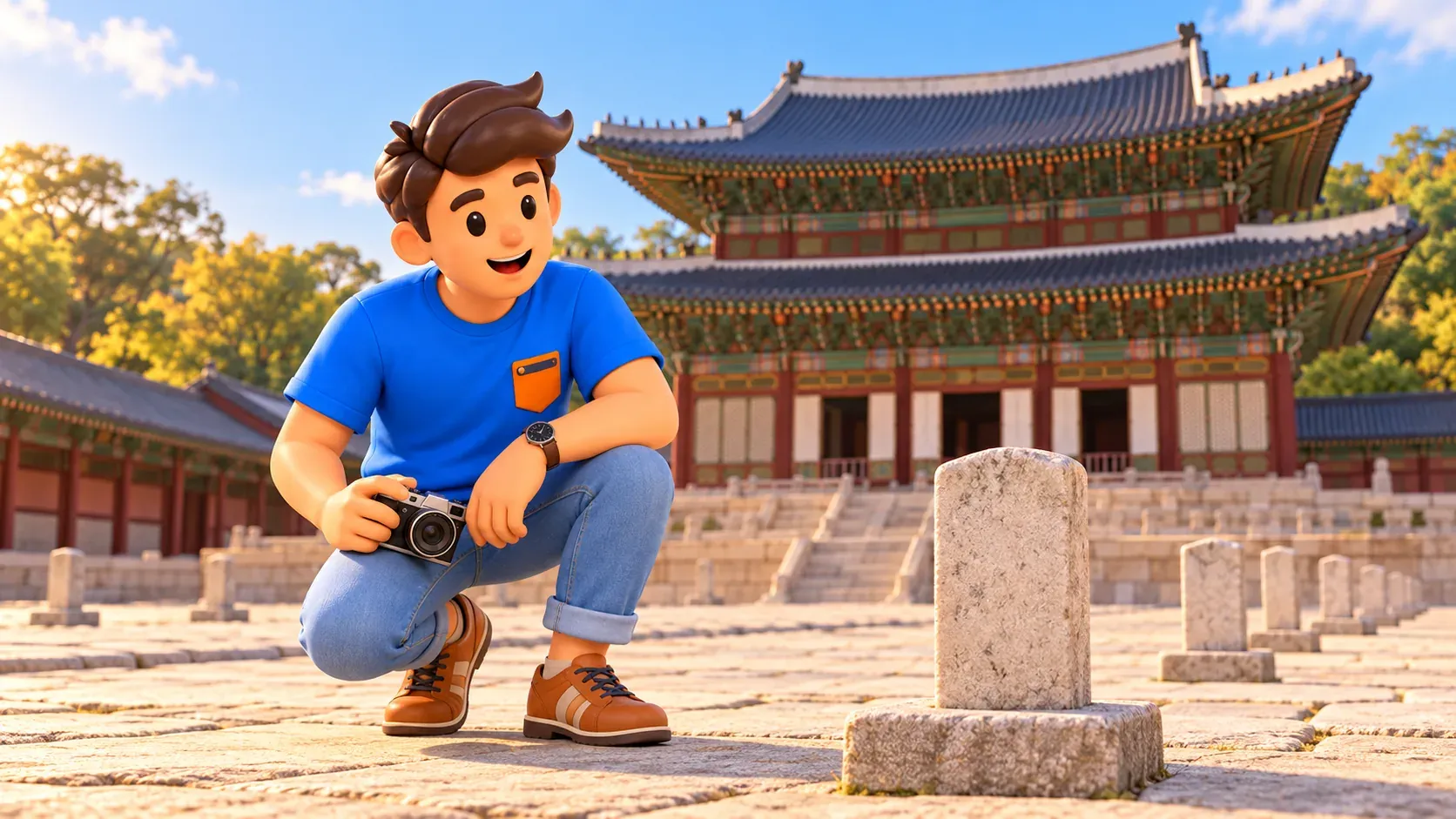
Continue to Injeongjeon, the principal throne hall. Its court served state ceremonies, and stone rank markers indicate the ordered positioning of officials. The large open space expressed protocol rather than simply leaving room in front of an attractive building. That distinction makes the court itself worth looking at.
First view the hall and its platform as a whole, then the supports and roof. You do not need to approach every marker or seek perfect symmetry among other visitors. One clear observation connecting rank and space already explains why the ceremonial area takes this form.
Why the palace changes direction
Changdeokgung was founded in 1405 as a secondary palace to Gyeongbokgung. After destruction in 1592, it was rebuilt in 1610 and became the court's principal residence for a long period. It is a significant centre of later royal life, rather than simply an attractive garden attached to another palace.
Its layout adapts to the natural terrain. Individual courts and buildings have their own alignments, while the northern grounds move into wooded landscape. The relationship with the surroundings is central to understanding the complex, inscribed on the UNESCO World Heritage List in 1997.
Look for changing scale: ceremonial ground, working hall, quieter court. Do not expect one viewpoint to make the entire palace appear complete. Reading the sequence of spaces is more useful here than judging every building as an isolated object. The connections explain much of the experience.
Seonjeongjeon and quieter spaces
Near the ceremonial area, Seonjeongjeon was associated with discussions of state affairs. Its blue glazed roof tiles make differences of function visible among buildings with related materials. A roof detail becomes a way to understand the palace's internal hierarchy, without needing a full architectural vocabulary.
Do not make this a compulsory tour of every royal room. Interior access and special programmes have their own arrangements. Open grounds do not imply open rooms, and an ordinary ticket does not confirm participation in every additional visit. Respect boundaries even if a doorway looks inviting.
With enough time before Huwon, continue to more intimate spaces. If the reserve is shrinking, leave extra halls for another opportunity. It is better to reach the garden attentive than arrive after a continuous rush between names. The outing benefits from a change of pace.
Nakseonjae: expression without bright decoration
Nakseonjae, established in 1847, presents a different architectural character. Timber, window latticework, proportions and the relationship between rooms and small courts take the lead. The restrained finish allows a comparison between residential and ceremonial space without a long historical lecture.
Observe from permitted paths and platforms. Do not promise yourself every interior: a special visit and normal exterior viewing can be different programmes. For this palace day, noticing the change of scale is enough. A quieter colour scheme does not mean the residence lacked status or carefully worked details.

Reach Huwon's own entrance on time
Finish your break, prepare a valid ticket and head to the specified internal entrance. Match both language and session time. The palace's broad opening hours do not mean Huwon admits any ticket continuously throughout the day. The two clocks matter differently.
Follow current staff instructions about the designated route and visit format. Independent movement, an accompanied programme and seasonal restrictions can have different conditions. Even when commentary is optional, the wooded grounds do not become a public park with unrestricted trail choice. Stay within the visit you have actually arranged.
Confirm your session's duration. Summer heat, winter conditions and path maintenance can influence the course. Do not add up separate pavilion durations from a place directory: the garden works as a sequence, not a collection of independent stops with separate entry times. Leave the remainder of the day flexible.
Ponds, pavilions and royal reading
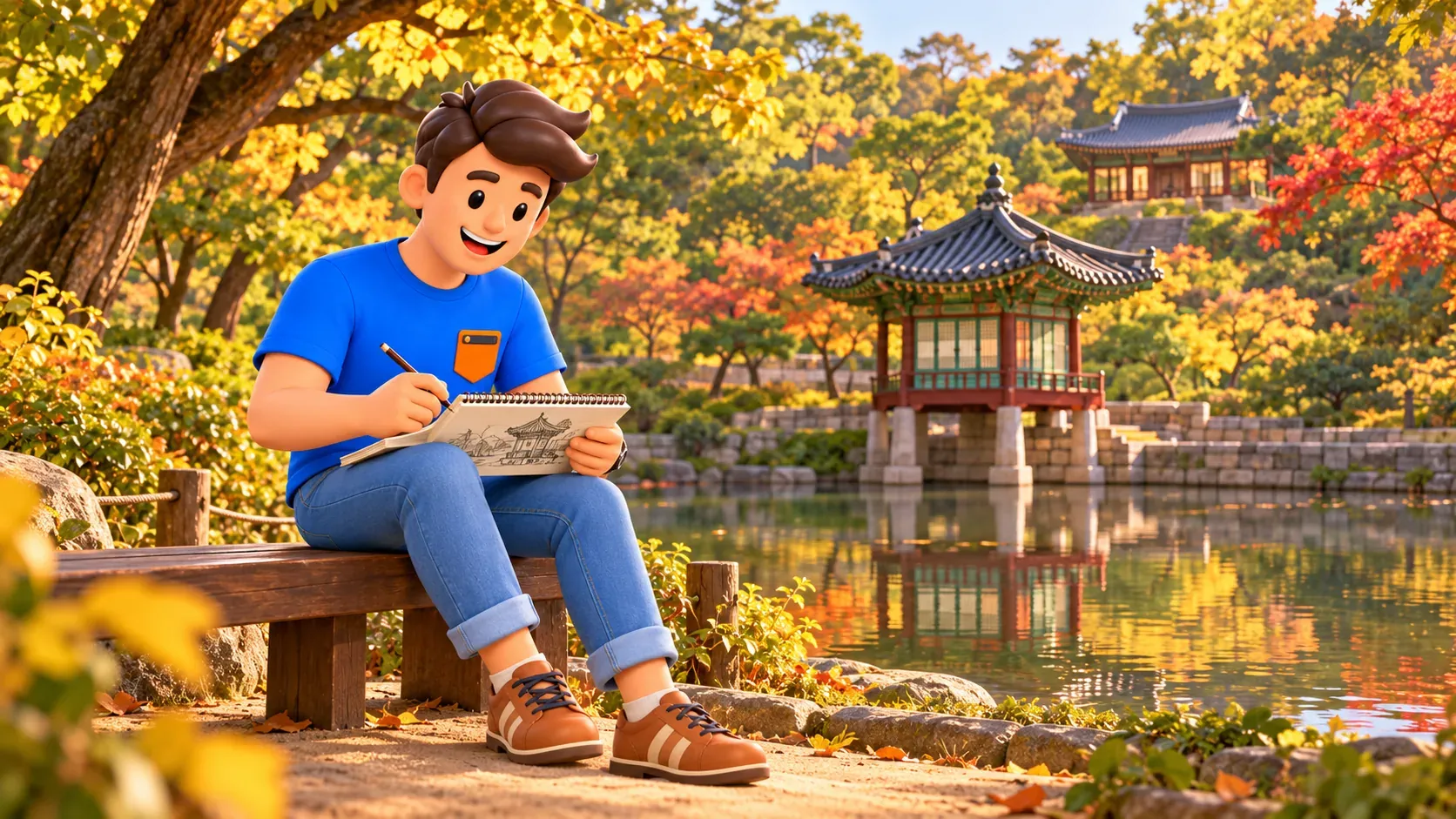
In Huwon, landscape forms the framework while ponds and pavilions mark places for recreation and courtly activities. Around Buyongji Pond, the small Buyongjeong pavilion relates to Juhamnu above, associated with the royal library. The setting connects landscape with scholarly ideals as well as the beauty of a waterside view.
If this area forms part of the available programme, observe differences in height and the reflection of a roof. You do not have to enter the library building to understand the spatial connection. Elsewhere, consider how a small pavilion frames water or trees instead of trying to see every object in a directory.
The actual route follows the operating arrangements. A particular pavilion may fall outside your sequence or be unavailable. The garden's value remains in relationships between slopes, water and buildings. A complete list of names is not a condition of a successful visit.
Choose a season without promising perfect leaves
Autumn brings interest in changing foliage, spring in emerging greenery, summer in the wooded setting and winter in the clearer structure of branches. Exact colour stages and weather cannot be guaranteed by a calendar date. Choose by your temperature tolerance and interests rather than one photograph from somebody else's day.
For rain and heat, plan footwear, water and a reasonable pace. The visit includes outdoor paths and uneven terrain; it is not entirely covered or uniformly accessible. If mobility matters, ask about the actual programme and path conditions rather than inferring suitability from a photograph of a flat court.
Connecting this palace day with the wider trip is easier in RoadMe: the app develops a personal itinerary around your interests and a comfortable pace. History, nature, other neighbourhoods and rest receive suitable space within the whole plan.
Finish with one clear impression
After the garden, follow the authorised exit and allow time to reach transport. Do not base the continuation on an unconfirmed passage into Changgyeonggung or unrestricted re-entry. For another palace, check its own admission, gates and the actual remaining day. Proximity alone does not make two visits fit.
Lunch and free time near Anguk can provide an unhurried finish. Treat the full Insadong walk as another programme. For a different historical comparison, use Unhyeongung and Jongmyo on another suitable day.
The useful result is understanding how palace order moves from ceremonial court through residential spaces into landscape. A few attentive choices reveal that relationship while leaving energy for the next day in Seoul. You do not need every hall and pavilion to make the day feel complete.


