
Half a day in Chamberí: a historic Metro station, Beti Jai and local squares

Chamberí offers a half day built around two unusual urban spaces: an old pelota venue and a Metro station that no longer welcomes passengers. One recalls late nineteenth-century sporting entertainment; the other preserves the appearance of Madrid’s early underground railway. Residential streets connect them, and Plaza de Olavide provides a relaxed finish. Together they show how a city changes the purpose of its buildings while retaining memories of everyday life,.
The main version allows about four hours for Beti Jai, Chamberí museum station, the square above it and Olavide. This is an editorial estimate including visits, connections, a break and contingency, rather than a field measurement. For both interiors in one autumn or winter outing, choose Saturday or Sunday morning and secure a compatible station reservation first. Without that booking, select one interior and a shorter neighbourhood walk: seeing the station entrance from outside is a different experience.
Choose a manageable part of Chamberí
Chamberí is a substantial district north of the most familiar visitor centre. Half a day cannot cover all its neighbourhoods carefully, so this route concentrates on the connection between Beti Jai, Plaza de Chamberí and Olavide. It suits an interest in transport history, unusual architecture and ordinary city life, without requiring a major art museum. Decide whether both interiors matter to you and whether everyone in your group is comfortable organising the outing around a guided visit.
Organising the day is easier with RoadMe, which develops a personal route around your interests, available time and pace. Choose architecture, transport history and relaxed breaks to get a connected trip plan that fits the way you want to explore.
A shorter version can focus on one building and nearby streets. Beti Jai particularly rewards looking at spatial proportions, galleries and metal structures. The station appeals to an interest in transport, design and historic advertising. Combining them introduces both subjects, with a little more preparation. It is a rewarding possibility after Madrid’s central squares: the city’s history continues in structures once used for regular journeys and entertainment,.
Avoid automatically adding several theatres, another large exhibition and the Sorolla Museum. Chamberí contains many cultural addresses, but each changes the purpose and duration of the outing. A clear combination works well here: sporting heritage, a transport interior and a residential setting. With children, explain that the frontón is a building visit and that the Metro museum involves a guided tour. Choosing the format together helps match the plan to actual interests,.
Book the station before choosing the sequence
Chamberí museum station requires advance reservation. Its free guided visit lasts approximately thirty to forty minutes. The operator’s regular opening pattern is Friday 16:00–20:00, Saturday 10:00–14:00 and 16:00–20:00, and Sunday 10:00–14:00. An opening period does not mean every possible time is available. Find an offered session and check the confirmation conditions before leaving. The museum is in Plaza de Chamberí; it is not an operating Metro stop where you can board a train.
Beti Jai has a different arrangement. From 1 October to 14 June, it opens Tuesday to Sunday, 10:00–14:00. From 15 June to 30 September, the Tuesday-to-Sunday period is 10:00–18:00. Independent visits to areas open to the public are free, while the guided programme is separate. Recheck both operators’ calendars, including holiday exceptions, before travelling. These two access arrangements cannot be combined into a general promise that both places are open all day or can be entered in the same way.
For autumn and winter, Friday evening cannot accommodate both: the station opens after the frontón has closed. Saturday or Sunday morning is the clearest choice, with a compatible later-morning Metro booking. Start at Beti Jai after opening and allow time to walk across. If only an early station session suits, change the order and make sure a worthwhile frontón visit still fits before 14:00. Arriving five minutes before closing cannot substitute for a proper first visit.
A possible four-hour allocation
- 75 minutes: Beti Jai. Enter and independently explore accessible public areas of the frontón and interpretation centre.
- 75 minutes: connection and station visit. Walk across, arrive for the confirmed session and take the guided tour, with organisational margin inside this block.
- 15 minutes: Plaza de Chamberí. Pause above ground after the underground interior.
- 45 minutes: towards Olavide and a rest. Follow residential streets, see the square and possibly have a small snack.
- 30 minutes: flexible contingency. Allow for waiting, a slower connection or another break.
These blocks total 240 minutes, but form a time allocation rather than a timetable of available sessions. For the frontón-to-station direction, choose a booking compatible with the first visit and an unhurried connection. Contingency cannot make every session suitable. If the available visits leave a lengthy gap, separate them across different days. Travel to the start and from Olavide to your next appointment falls outside the estimate, especially when another fixed admission or a train follows later.
Begin at Calle del Marqués de Riscal, 7, then head towards Plaza de Chamberí and Plaza de Olavide. The overall direction gradually takes you west, without a substantial return to the starting address. At the finish, consider the Quevedo or Bilbao station areas according to your onward journey. This is an open route, so you do not need to return to the same doorway. Choose precise connections and useful exits according to your accommodation and everyone’s mobility requirements.
Beti Jai: sporting architecture inside the city block
Beti Jai opened in 1894 for Basque pelota. Architect Joaquín Rucoba created a venue combining its playing space with expressive galleries, brickwork and metal elements. The interest extends beyond imagining a match to understanding the relationship between the court and its spectators. Look at the levels and the direction of views from permitted areas. The building’s arrangement helps explain its original purpose.
The street frontage may not prepare you for the scale within. If you arrive during visiting hours, allow yourself more than an exterior photograph. The interpretation centre uses documents, photographs and other material to explain a building whose functions changed over time. For a first encounter, understand the shift from nineteenth-century entertainment to conserved urban heritage. You need not retain every later use to appreciate how much the space has travelled between its original purpose and its present public role.
Restoration was completed in 2019, and the restored venue reopened for public visits in 2024. Approach it as the result of conservation and renewed use, rather than an abandoned arena discovered by chance. Keep to open areas and follow staff directions. Beti Jai is open for viewing; playing ball is prohibited. A heritage visit also does not promise a live match or access to a sporting practice session. Its architectural character is already sufficient reason to spend time here.
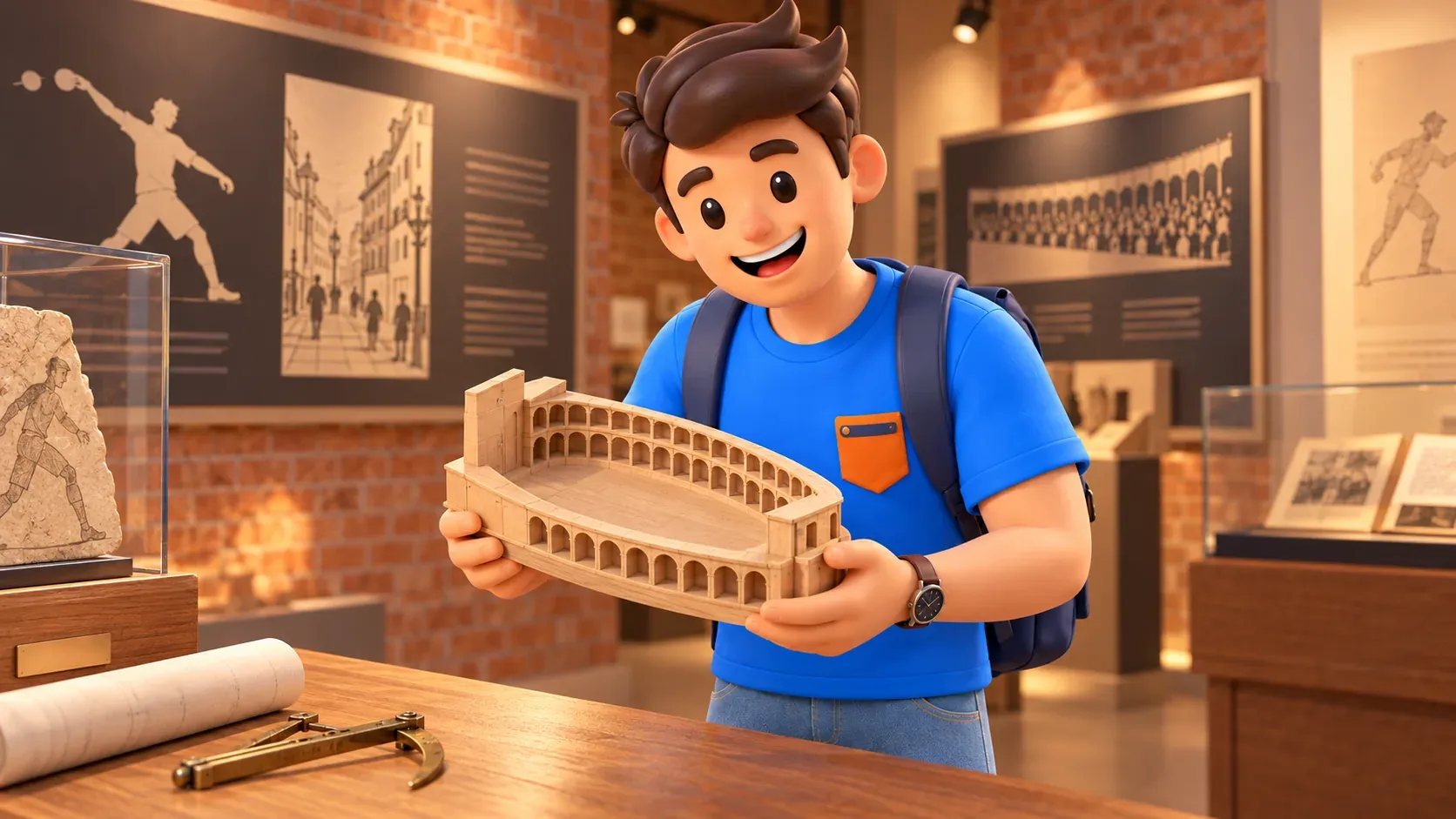
Try following one gallery line with your eyes. How does it relate to the playing area? What does the repetition of supports add to the overall shape? Then compare that broad view with one close detail. This gives an accessible way into architecture without specialist vocabulary. Large spaces become easier to understand through repeated elements, open areas and former spectator positions. Let the interpretation material add context afterwards, instead of treating the building merely as a background for reading every panel.
Chamberí station: an everyday journey becomes history
Chamberí was one of the first eight stations on Madrid Metro’s original line, inaugurated in 1919. Its design is associated with Antonio Palacios. The attraction is an everyday urban function seen at another moment in time: the descent, waiting space, finishes and advertisements. Visiting can also change how you look at present-day journeys. Familiar transport features turn out to depend on technical and design decisions that were once new,.
The station closed permanently on 22 May 1966. Longer trains required longer platforms, and Chamberí could not be extended accordingly. Following restoration, it opened as a museum in 2008. This is a clear story about changing urban infrastructure, without needing a mysterious explanation for abandonment. It encourages a more interesting question: why can a growing transport network leave behind a small, familiar place? The answer connects the preserved station to practical changes occurring throughout the wider city.
During the visit, look for bevelled white tiles and ceramic advertisements from the 1920s. Their coloured frames and positioning recall how station design accompanied everyday consumption as well as movement. Choose one advertisement and compare it with the surrounding finish: where does the background end, how does the frame work, and what draws a passing traveller’s attention? Let your eyes do some of the work instead of viewing the entire experience through a phone screen.
The thirty-to-forty-minute duration describes the tour itself, not everything between leaving Beti Jai and returning to the surface. That explains the larger block in this plan. Arrive according to your confirmed visit and follow the operator’s arrangements. Free admission does not imply independent walk-in access. If the museum is your main reason for coming, secure a suitable reservation first and organise the remaining sections around it. Preserve a comfortable walking margin rather than relying on every transition happening immediately.
The operator describes the station as adapted for people with reduced mobility. Check the arrangements for your particular visit and the street connections as well, especially if you need a specific entrance method. Nearby map points do not establish how comfortable an entire outing will feel. Agree on the group’s pace beforehand and allow time to arrive. The guided visit should be something everyone can enjoy, rather than the only opportunity to recover after an unnecessarily hurried walk.
Two squares after two unusual interiors
Pause briefly in Plaza de Chamberí before continuing. Daylight, residential façades and the directions of ordinary streets reconnect the underground museum with its neighbourhood. There is no need to find another major monument immediately. A few minutes above ground allow you to discuss what stayed with you: tiles and advertisements, the technical reason for closure, or differences from the Metro in your own city. This small transition helps the station remain part of Madrid’s lived history.
To combine these visits with the rest of Madrid, ask RoadMe to prepare a personal trip plan around your dates and preferences. The app makes it much easier to organise places, connections and rest across your days, keeping time for the experiences that matter most to you.
Olavide brings attention back to daily neighbourhood life. Today it is a planted square with a fountain, places to rest and terraces nearby. A municipal market formerly stood here and was demolished in 1974; the latest substantial square renovation was completed in 2024. These moments show that local gathering spaces change too. The present square is not a preserved market interior. Its interest includes the changing use of public space and the people who give it a purpose now.

Rest in a public seating area or choose somewhere for a snack. A leisurely lunch needs more than the forty-five-minute approach-and-break allocation: neither an available table nor rapid service is guaranteed. For a separate outing, our half-day Lavapiés route explores other buildings with renewed cultural roles. Chamberí leaves its own combination of sporting memory, early Metro history and an easy finish in a neighbourhood square, without needing another distant attraction to complete the day.


