
Central Park in Two Hours: A First Walk with One Finish

A first Central Park visit works well with a small sequence: a southern entrance, a tree-lined promenade, Bethesda Terrace and one chosen finish. Two hours can hold changing landscapes, a little architecture and time to stop. The northern woods and long circuits around larger bodies of water can wait for another walk with a different amount of time.
Start near the southeast corner at Fifth Avenue and 59th Street, head toward the Mall, then continue to Bethesda. From the terrace, choose west toward Strawberry Fields or east toward Alice in Wonderland. One of these endings belongs in the standard two-hour plan. Choosing gives the route a manageable size and a reason that reflects your interests.
Decide what you want your first walk to feel like
The western finish suits an interest in John Lennon and a quiet memorial landscape. The eastern option offers literary characters and sculpture. Both share an introduction to the southern and middle sections of the park. Your choice determines the meaning of the final stop and the side where you leave, rather than treating every available landmark as compulsory.
RoadMe makes it easier to prepare a personal walk or trip plan around your interests, from landscapes and architecture to music history and literary stories. Try planning in the app so your free time supports the experiences you want.
There is no single correct set of park sights. Sometimes the lasting memory is the avenue of trees, a carved detail or a chance to sit. Leave yourself permission to linger and shorten the ending. If both branches, Bow Bridge, Belvedere Castle and the northern landscapes are essential, give that larger programme more time and energy instead.
Ordinary entry and walking are free. The zoo, skating, boat hire, guided tours and other activities have their own arrangements and are outside this plan. The park opens daily from 6am to 1am, but daylight is the useful choice for a first visit. Paths, details and temporary barriers are easier to understand when you can see the landscape clearly.
A two-hour plan with one exit
As an illustrative budget, allow 15 minutes for arrival and the first impressions, 20 for approaching the Mall, ten for a pause among the trees, 15 for continuing north and 20 for Bethesda Terrace. Then keep about 15 minutes for your chosen branch, ten for its final stop and five for leaving. Another ten minutes remain spare.
These are estimates for planning, not measured walking times. Depending on open paths and the chosen ending, expect roughly two to two and a half kilometres. Getting here from your hotel, a subway journey and a later museum visit are separate. If your next booking has a fixed time, finish the park earlier and preserve a margin for the onward journey.
The western branch ends near Central Park West and 72nd Street. The eastern one finishes by Fifth Avenue around 75th Street. Neither returns to the start. Check your exit side before beginning, particularly if you have a meeting afterwards. Otherwise a short walk can acquire another crossing of the park simply to get back to where you first arrived.
Curving paths, water, slopes and temporary closures affect the approaches. Nearby names on a map do not always indicate a direct path. Use the current park map and signs, following permitted pedestrian routes. This article supplies a sequence and time budget rather than a measured navigation track for every turn. A short pause to check direction is part of the outing.
The park map distinguishes pedestrian paths, park drives and transverse vehicle roads. Do not choose a line solely because it looks shorter between two labels. Pause at crossings with cycle traffic. With limited mobility, check the accessibility map for steps and slopes that could change an approach. Reducing the number of stops is more useful than keeping an uncomfortable pace.
The southern entrance: let the city gradually recede
At the southeast corner, enter on an available pedestrian path and slow down. The first few minutes are less about finding an attraction than observing changes in sound, light and glimpses of towers between trees. There is no need to circle every nearby bridge or pond. The purpose is to settle into walking and find your way toward the central promenade.
Central Park is a designed landscape. Frederick Law Olmsted and Calvert Vaux developed its plan in 1858, bringing together open space, trees, water and winding routes. The sense of respite is itself the result of design and continuing care. Looking at how one scene gives way to another can be as interesting as identifying separate monuments along the way.
On the approach to the Mall, use designated crossings and check cycle traffic. Step outside the main flow before stopping. A two-hour itinerary does not require saving seconds at every junction. A few minutes of attentive walking offer more than watching only a phone and noticing the trees after you have already passed the next turning.
The Mall: see how trees make a space
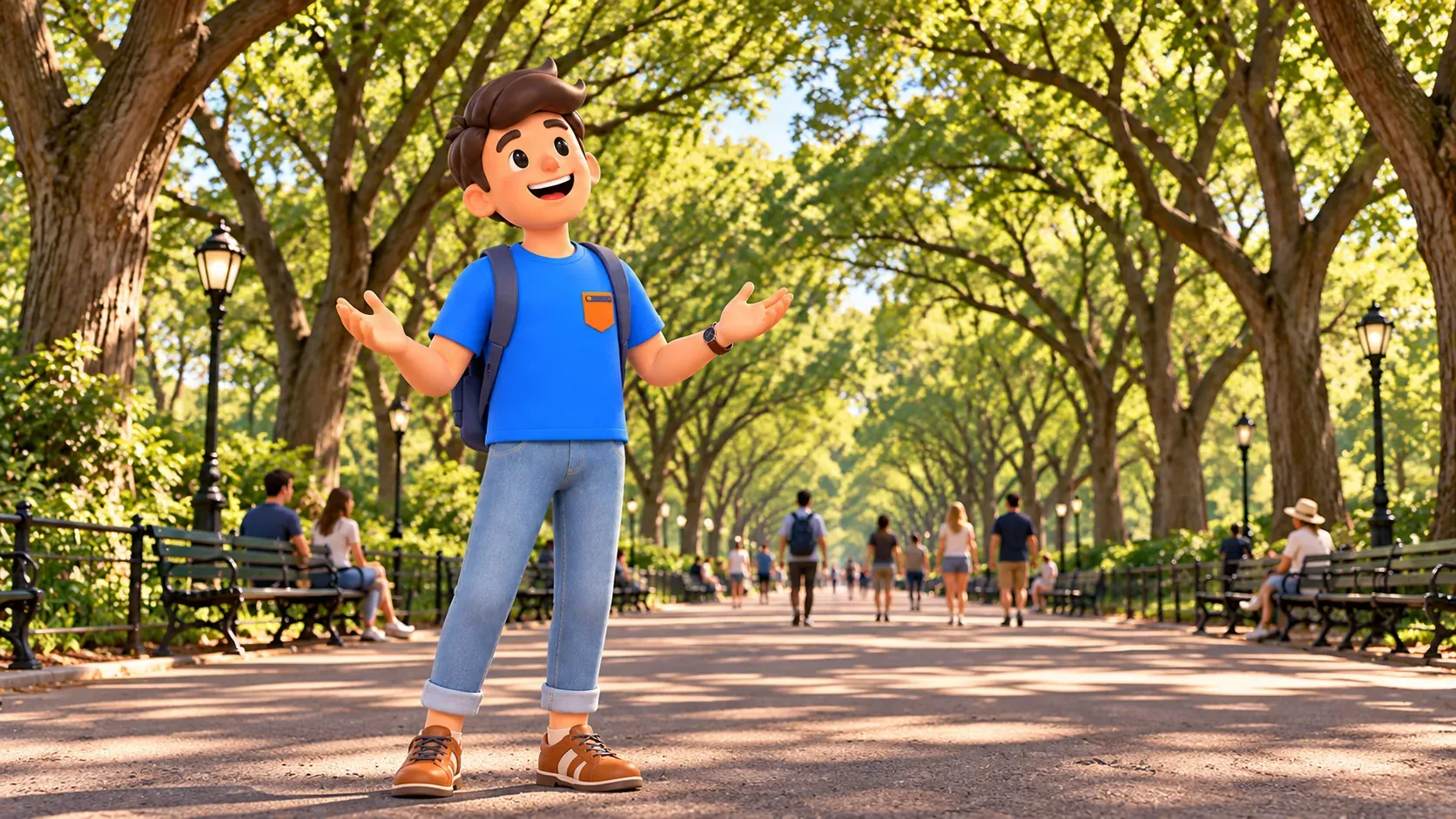
The Mall is a broad, straight promenade leading toward Bethesda Terrace. Regular rows of American elms create a living canopy overhead. After the park's winding routes, this order becomes especially noticeable. The landscape works almost architecturally: branches suggest height, trunks give direction and the wide path leaves room for people to share the space.
Olmsted and Vaux intended the promenade as a gathering place. It need not be crossed only to reach the next address. Use an available bench when there is room, or simply look along the rows of trees. A ten-minute pause helps you see the overall composition without turning the route into a detailed inspection of every monument and side path.
At the time of checking, selected benches and paths on the Concert Ground near the northern Mall are temporarily closed for construction. That does not mean the whole promenade is shut, but your approach may differ from an older photograph. Follow open routes and do not make one particular bench essential. The spare time is there for modest adjustments like these.
The same avenue changes with the season: a full canopy, coloured leaves or the exposed pattern of branches creates a different impression. Avoid expecting one seasonal scene regardless of the month. Even without dramatic colour, there are proportions, people and the transition toward the stone terrace ahead. Those are enough to give the first stop its own interest.
Bethesda: architecture still matters without flowing water
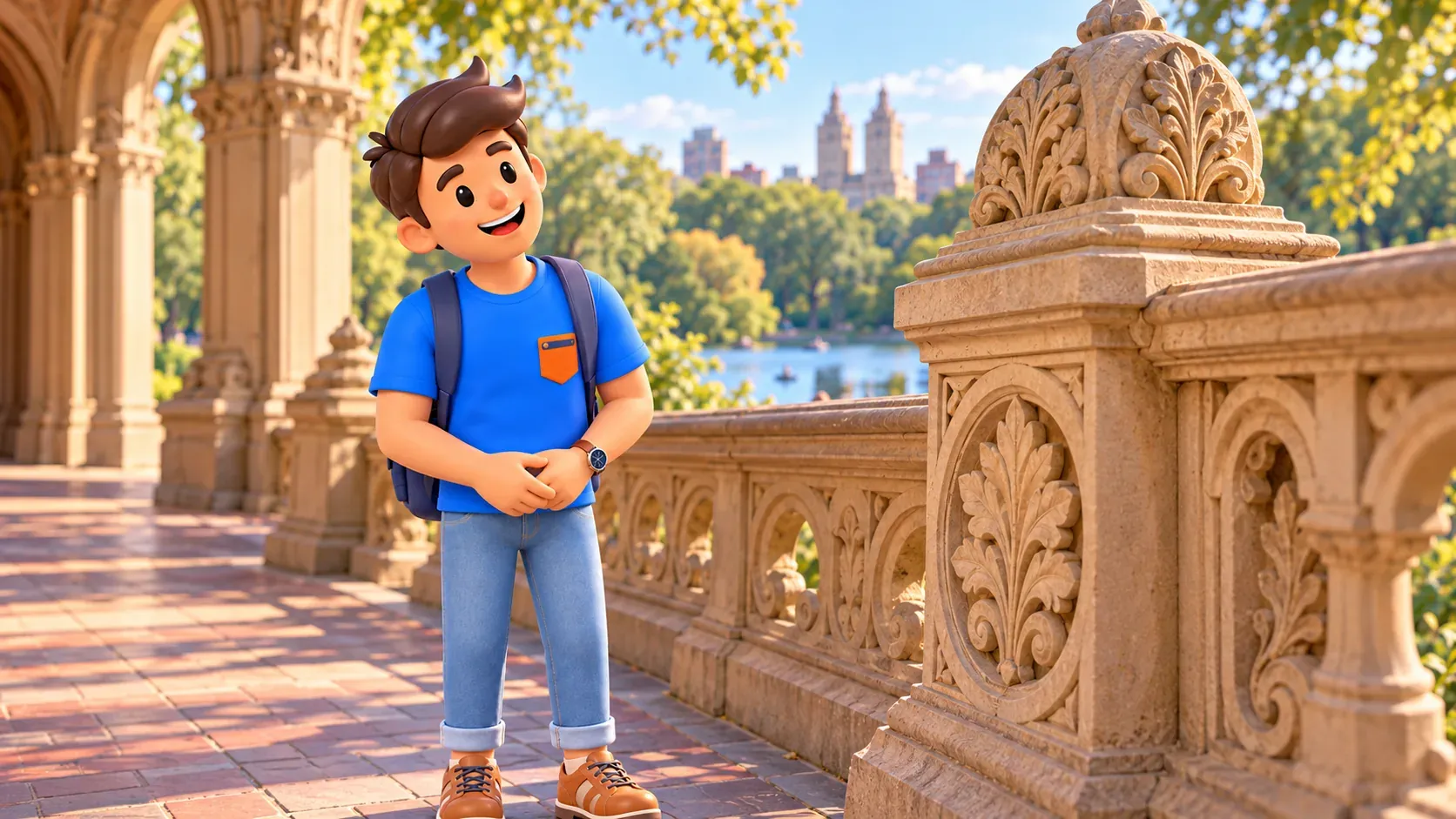
Bethesda Terrace stands at the Mall's northern end and faces the Lake. Its two levels, arcade and carved details form one of the park's most distinctive architectural settings. Calvert Vaux and Jacob Wrey Mould contributed to its design. Notice how stone, stairs and framed views connect with the landscape, rather than seeing the plaza only as an approach to a fountain photograph.
The important current condition is that Bethesda Fountain is off for restoration, which began in August 2026. The Conservancy says the terrace itself remains open. Do not expect flowing water or an approach through the enclosure to the basin. The stop still deserves time for architecture, the public space and views toward the Lake wherever access is available.
Choose a detail to study: plant-inspired carving, the pattern of the arcade or the relationship between upper and lower levels. You do not need to decode every ornament at once. If stairs are difficult, check an appropriate accessible approach in advance and enjoy the part you can reach. Restroom and route access need their own checks; a public landmark is not step-free everywhere.
RoadMe helps build a personal plan focused on what interests you and fit the walk into your wider trip. In the app, it is more convenient to choose a quiet memorial finish or a literary stop on the park's eastern side before setting out.
Bethesda is a designated Quiet Zone. Speak softly and leave speakers and musical instruments out of your visit. If the terrace is busy, shorten the photo pause rather than waiting for everyone to disappear. Twenty minutes is a useful first-visit allowance, after which it is time to follow the direction you chose for the finish.
Choose the finish: Strawberry Fields or Alice
For the western ending, take open pedestrian paths toward Strawberry Fields and the West 72nd Street entrance. This memorial to John Lennon was dedicated in 1985. Its meaning comes from the surrounding landscape as well as the familiar Imagine mosaic. Slow down, look at the place of remembrance and give other visitors room to do the same.
The mosaic was donated by Naples and set into the paving as the focus of a small gathering area. For a short visit, look at it, then step aside and notice the trees and benches around it. Strawberry Fields is a Quiet Zone. Do not plan your own musical performance or treat other visitors as a promise of a concert. Leave by Central Park West near 72nd Street.
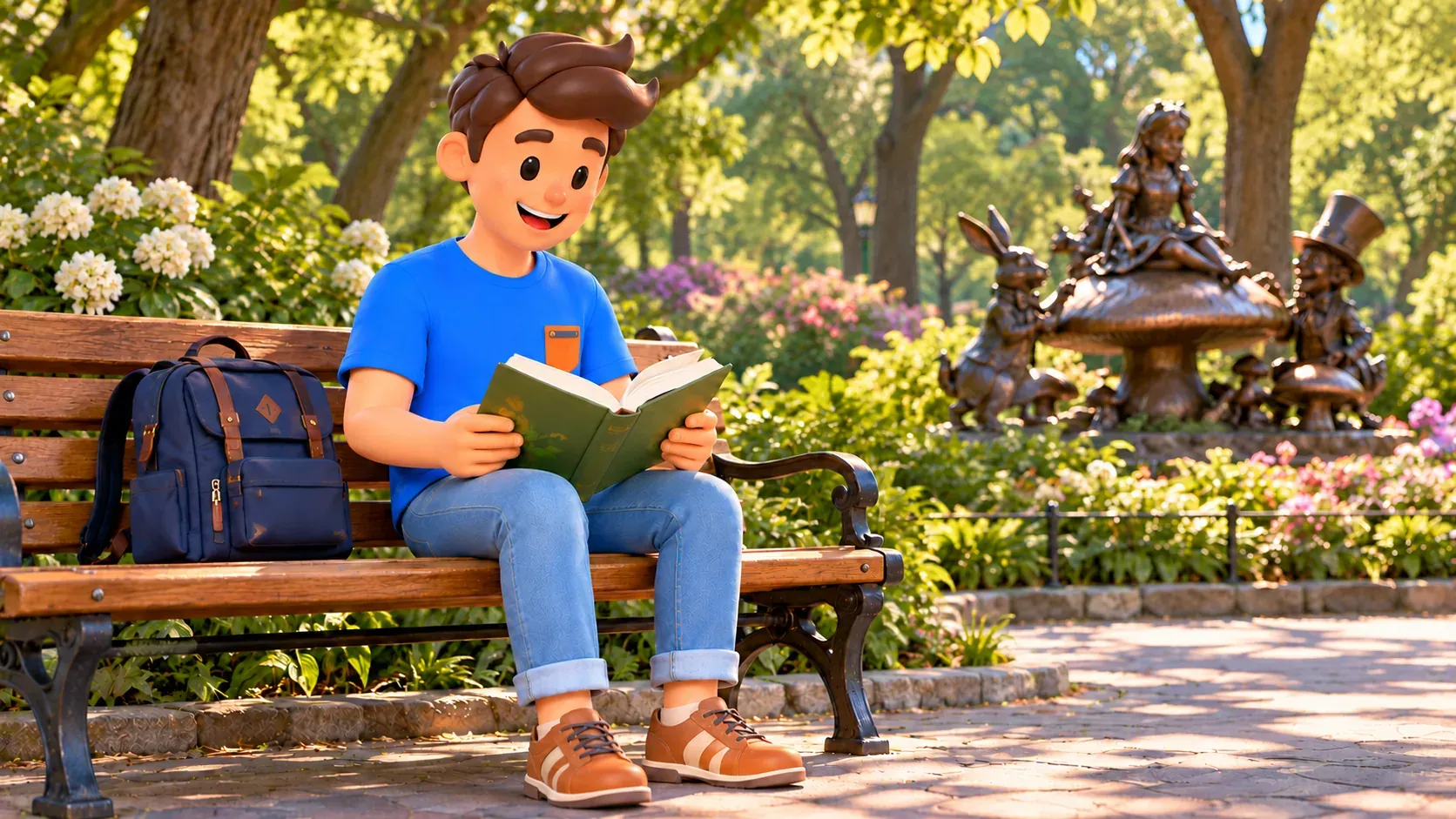
The eastern ending takes you toward the bronze Alice in Wonderland group at the northern end of Conservatory Water, around East 75th Street. José de Creeft's sculpture was dedicated in 1959 as a gift from George Delacorte. The literary figures suit anyone who would enjoy finishing with a playful story and details to examine rather than a memorial.
Before choosing east, check the current approaches near Conservatory Water. The Conservancy announced work on the pond starting in late 2026, followed by work on the boathouse. That is not evidence that the whole area is already closed, but an unrestricted circuit and model-boat activity should not be promised. If access is inconvenient, choose the western ending or shorten the route.
Allow about ten minutes at the sculpture while considering other visitors, then continue to Fifth Avenue around 75th Street. The standard plan does not send you back across the park to Strawberry Fields afterwards. Choosing one finish and saving the other for another visit is part of what makes a short walk enjoyable, rather than a failure to see enough.
Leave room for the weather and your own pause
In heat, lengthen a restful pause and shorten optional detours. In rain, consider the surfaces and whether an outdoor route still appeals. Respect barriers and closed lawns instead of taking a shortcut through them. If you are already ready to finish at Bethesda, choose a suitable nearby exit rather than treating the final stop as an obligation.
Conditions were checked on October 17, 2026. Recheck current works and restrictions for your chosen side of the park. One clear ending, realistic walks and some genuinely spare minutes make two hours enough for an introduction that leaves room for returning.


