
Half a day in Casa de Campo: the lake and a break from central Madrid
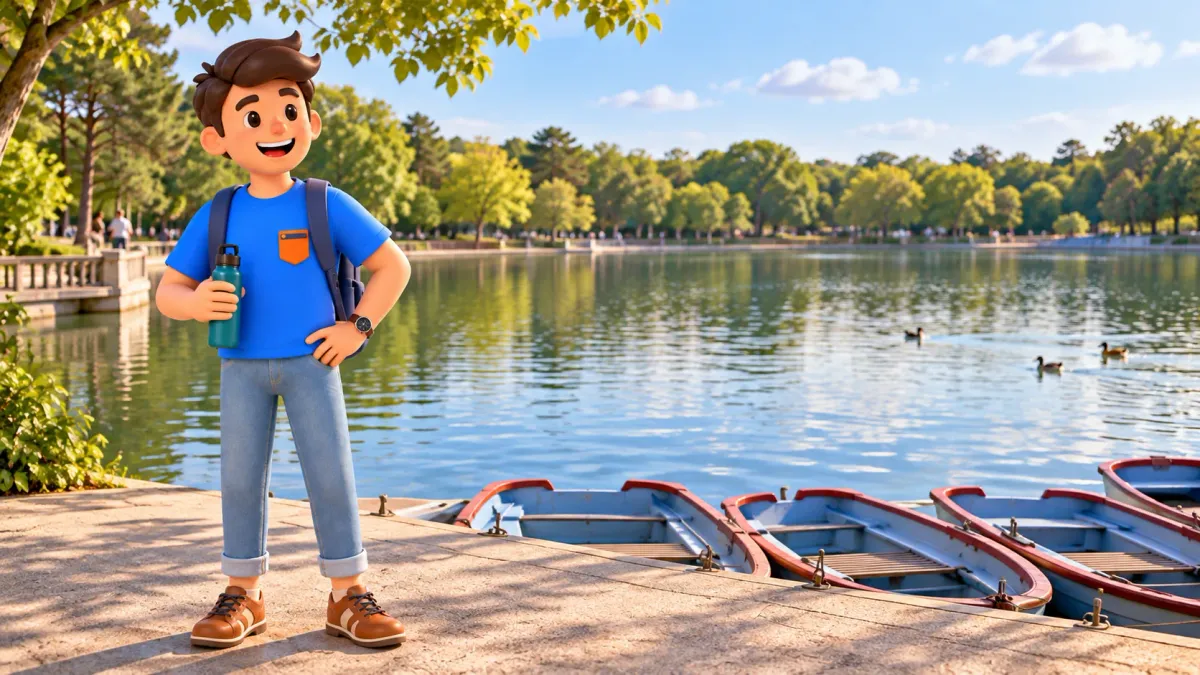
A relaxed half-day in Casa de Campo needs only the lake, nearby woodland paths and an unhurried lunch. Begin at Lago station, walk around the water, leave the busy shore briefly and return for a rest. This changes the dense centre for open space without trying to explore the entire vast park. Water and tree canopies move into the foreground, while Madrid becomes a distant backdrop rather than a continuous sequence of compulsory stops.
Allow about four hours, including connections, pauses and lunch. This is an editorial estimate without a timed field walk; metro journeys before and afterwards are additional. The main loop returns to Lago and excludes the zoo, amusement park, boating and a long hike across Casa de Campo. The cable car is also excluded: at the check date, municipal tourism information reported it closed for refurbishment. The plan remains understandable without depending on its operation or on a particular available boat.
Choose the park as a change of pace
Casa de Campo suits time after an intensive exploration of the centre, when fewer admissions and more open air appeal. Rest does not have to mean a long hike. Around the lake, combine several simple activities: look at the water, make a short circuit, listen among trees and eat without rushing. Decide what matters to the group. If one person expects woodland exercise and another a table with a view, agree on a small shared section and a clear meeting time.
It is more convenient to fit this half-day into your trip with RoadMe, which develops a personal plan around your interests, dates and pace. Choose nature, walking and relaxation to create a connected journey with a suitable level of activity each day.
Understand the park’s scale before starting. It covers more than fifteen hundred hectares, so a Casa de Campo map marker is not the same as an agreed lakeside meeting place. Lago and the shore are the reference points here, rather than the centre of the whole green area. This clarifies where the four hours begin and where to return. Visiting another end of the park may be worthwhile, but changes the character and length of this particular outing.
Half a day means an available block of approximately four hours, not a compulsory noon start. In hot weather, choose a cooler period, carry water and avoid assuming continuous shade. Parts of the shore are exposed, and woodland does not make every summer day cool. Shorten the outing if conditions do not suit a long stay outdoors. Rest does not require keeping the original schedule regardless of changing weather or how the group feels.
How to distribute four hours by the lake
- 20 minutes — Lago and the approach. Orient yourself, assess nearby paths and choose a direction around the shore.
- 60 minutes — the lake. A relaxed perimeter walk with observation and photography pauses.
- 60 minutes — a little woodland. Open paths west of the lake, walking out for up to thirty minutes and returning the same way.
- 60 minutes — lunch and rest. A place chosen beforehand, or your own small snack with a longer quiet pause.
- 20 minutes — a final shore view and return to Lago. No new distant branch before the metro.
- 20 minutes — spare time. A slower approach, another bench or a minor delay.
Connections within this small outing are included, totalling two hundred and forty minutes. Municipal information gives the lake perimeter as about 1,370 metres. An hour for the shore includes observation and stops; it does not mean walking that distance necessarily takes sixty minutes. Your actual route depends on pace and open connections. If completing the circuit is inconvenient, choose an available out-and-back section instead. The walk can keep its purpose without requiring a closed line on a map.
The woodland portion need not last exactly an hour either. The idea is to preserve time for returning, rather than walk away for sixty minutes before thinking about the lake. Select an understandable open path, note junctions and turn around by the middle of the allocation, or earlier when appropriate. Check surfaces, slopes and step-free connections for your needs. A large green space does not make every path equally accessible or replace sensible navigation preparation.
The lake: notice a designed landscape
Begin with the water. Casa de Campo’s lake is artificial, with origins in sixteenth-century landscaping under Philip II and the work of Juan Bautista de Toledo. That short context makes the shore more interesting: it belongs to a country estate shaped over time rather than being an accidental natural pool. The lake subsequently changed and underwent substantial restoration in 2018. Today its surroundings show how a historic place continues to serve contemporary recreation and sport without needing to become a museum.
As you move, compare the broad water surface with closer details: a tree’s reflection, the shore edge, ripples and a distant boat if one is present. Enjoyment need not depend on a working water jet or a particular sky colour. Light, wind and equipment arrangements alter the picture. Several different viewpoints are enough for a first outing, without searching for the only correct photograph. A small change in position can alter the relationship between water, trees and distant buildings.
The shore is used by residents and athletes as well as visitors. Keep passages clear and respect marked areas. Visible boats do not invite you to board any vessel: rentals and sports activities are separately organised. This outing assumes neither swimming nor independent access to the water. A first encounter from the bank is enough to understand the lake’s scale and decide whether you would enjoy returning for a specifically planned water activity.

From royal estate to public park
The name Casa de Campo evokes a country house, but the place has a wider history than one building. Under Philip II, an estate grew around an initial core as neighbouring land was added. It served royal country pursuits and later included agricultural activities. In 1931 it became public. For this walk, the important change is in use: land previously associated with the court became part of residents’ everyday recreation. The lake offers a particularly understandable place to notice that transition.
Historic value and ordinary life coexist. Some people come to train, others to walk with family or simply eat beside the water. In 2010 Casa de Campo received protection as a historic site. That does not make every visible object a royal-period original or mean every building is open. Distinguish the landscape’s long history from present-day features that let a large contemporary city use it.
Do not automatically add admission to the Vargas palace because of its connection with the park’s origins. It is a separate property with its own access situation; this plan concerns the lake and rest. Military structures, distant hills and other traces of the wider area also deserve their own outing. A first half-day needs only a broad understanding of the transition from estate to public space before returning to the immediate experience of water and trees.
A little woodland without a long hike
After the shore circuit, choose open paths west of the lake for a short out-and-back walk. The botanical direction following Arroyo Meaques towards Puerta del Zarzón also begins on this side. Do not attempt to fit the complete botanical trail and your return into this hour. If interested, take only a nearby portion after checking local plans and open connections. The deciding factor is a comfortable return to the lake, not reaching another distant compulsory destination because its name looks attractive on a map.
Change the way you observe. At the water, the eye travelled into the distance; among trees, small intervals become interesting: bark patterns, gaps between branches and different leaf shapes. Identifying every plant is unnecessary. Notice several contrasts and listen for changes as you move away from the busier shore. With a child, look for two different canopy shapes while remaining on the path and leaving living plants intact. The activity can be enjoyable without carrying specimens away or turning the walk into a lesson.
Set a return condition beforehand. Reach an unclear junction, find substantially different terrain or notice someone tiring, and turn earlier. The hour is not an endurance test and does not promise paths free from other users. Cyclists and runners also use the park, so pause to one side. Wet ground after rain may require another pace. Comfortable shoes and flexibility are more useful than reaching an abstract central point in an enormous park.
Lunch and boats: decide where the time goes
Back at the lake, keep about an hour for lunch and rest. There are several waterside venues, but a lake view does not guarantee a free table at the desired minute. Choose beforehand and check current arrangements if the restaurant matters; a long wait extends the programme. Alternatively, bring a small snack for an appropriate public place and enjoy a longer quiet sit. Keep the area clean and passages open. The outing should not depend on one particular table or an old venue name from somebody else’s review.
To combine walks, meals and substantial visits more comfortably, try a personal trip plan in RoadMe. The app distributes suitable places across your days around your preferences, helping preserve time for the experiences and pauses that matter to you.
Boat hire is an extra activity. Current municipal information describes a standard forty-five-minute session, plus your own allowance for arrangements and boarding. Check operation, booking options, child rules and weather before deciding. Do not add that episode to the four hours as though it takes only minutes. Either extend the half-day or consciously change its contents, keeping planned shore relaxation distinct from time on the water.
The zoo and amusement park also require their own decision. Being within Casa de Campo does not put them inside every short lakeside circuit or into the spare-time allowance. If one is your main aim, organise the day around that visit and treat the lake as a possible separate addition. Walking and rest remain the priorities of this quieter version. This avoids an unexpected race between very different activities that each member of the group may have imagined differently,.

Return to Lago and keep the rest of the day flexible
Finish near the water and return towards Lago station. The final twenty minutes allow departure and a last shore view, while the separate reserve prevents minor delays from causing a rush. Check onward travel if you have an appointment afterwards. Deciding to finish lunch is not the same as already boarding a train. This route ends at the station rather than at your accommodation, museum or evening restaurant elsewhere in Madrid. Those destinations need their own connections and margins.
Afterwards, leave a flexible continuation: a small neighbourhood outing or simply free time according to your energy. For another kind of waterside experience, our three-hour Madrid Río bridges walk links the river and its crossings, but deserves separate planning. Casa de Campo already provides a complete change of pace: lake, short woodland section, lunch and a return to the city without needing to see the entire park at once.


