
Canary Wharf in Three Hours: Docks, Towers and a Roof Garden

For three hours in Canary Wharf, start by the old warehouses at West India Quay, spend a focused hour at London Museum Docklands, then continue to Crossrail Place Roof Garden and Canada Square. Finish near the Canary Wharf Jubilee line station. This gives you dock history, modern architecture and a garden above railway infrastructure within one compact outing, with time for a short refreshment break.
The plan uses free general museum galleries and public outdoor spaces. A temporary exhibition, a family activity, a restaurant lunch or a substantial shopping session needs separate time and, where applicable, a ticket. Choose daylight for the dockside walking and confirm the garden’s current access before your visit. Three hours are enough for a thoughtful introduction, rather than a complete exploration of every gallery and square.
A three-hour plan from the docks
Begin at West India Quay DLR station and follow the public quayside towards London Museum Docklands in No. 1 Warehouse. Give the setting a few minutes before going indoors. After your selected gallery visit, use the signposted public pedestrian connections towards the western end of Crossrail Place, then the garden access. Continue south towards Canada Square before heading to the Jubilee line entrance for the finish.
Try RoadMe to make organising your complete London day or trip more convenient. The app develops a personal plan around your interests, dates, pace and budget, so a museum visit, neighbourhood walk, garden pause and longer activities fit comfortably across the journey.
Allow roughly one and a half to two kilometres, depending on your choices inside the museum and garden. This is an estimate, not a measured track. A useful division gives fifteen minutes to the quayside, sixty to selected museum spaces, thirty to connections, thirty to the garden, fifteen to Canada Square, twenty to a break and ten as flexibility. The journey after the final station approach is additional.
A start around ten can work well, with the museum visit beginning after the first dockside pause. The museum normally opens daily from ten to five and starts clearing galleries twenty minutes before closing. Check your actual date before relying on that pattern. If you want several hours indoors, let the museum become the main visit and shorten or move the outdoor section to another day.
West India Quay: begin with the water
Before looking up at the towers, look across the dock basin and along the old warehouse frontage. Straight water edges, repeated windows and the scale of the buildings help explain why this area developed as a place of trade and storage. The water here belongs to the dock system; it is not the open Thames riverbank. That distinction makes the surrounding geography easier to understand.
The West India Docks opened in 1802 as London’s first enclosed dock system away from the open river. The museum’s nineteenth-century building stored imported goods including sugar, rum and tea. These details give an ordinary-looking stretch of waterfront another meaning. You are seeing part of the infrastructure behind the movement of goods, rather than a row of decorative old buildings placed beside a modern business district.
Choose an appropriate place to pause without obstructing restaurant entrances or people walking to work. Look for the relationship between the building’s repeated openings, the former handling areas and the water. A short architectural observation is enough here. You do not need to locate every surviving fitting or identify a particular crane to make the dockside stop worthwhile, and contemporary businesses have their own visitor arrangements.
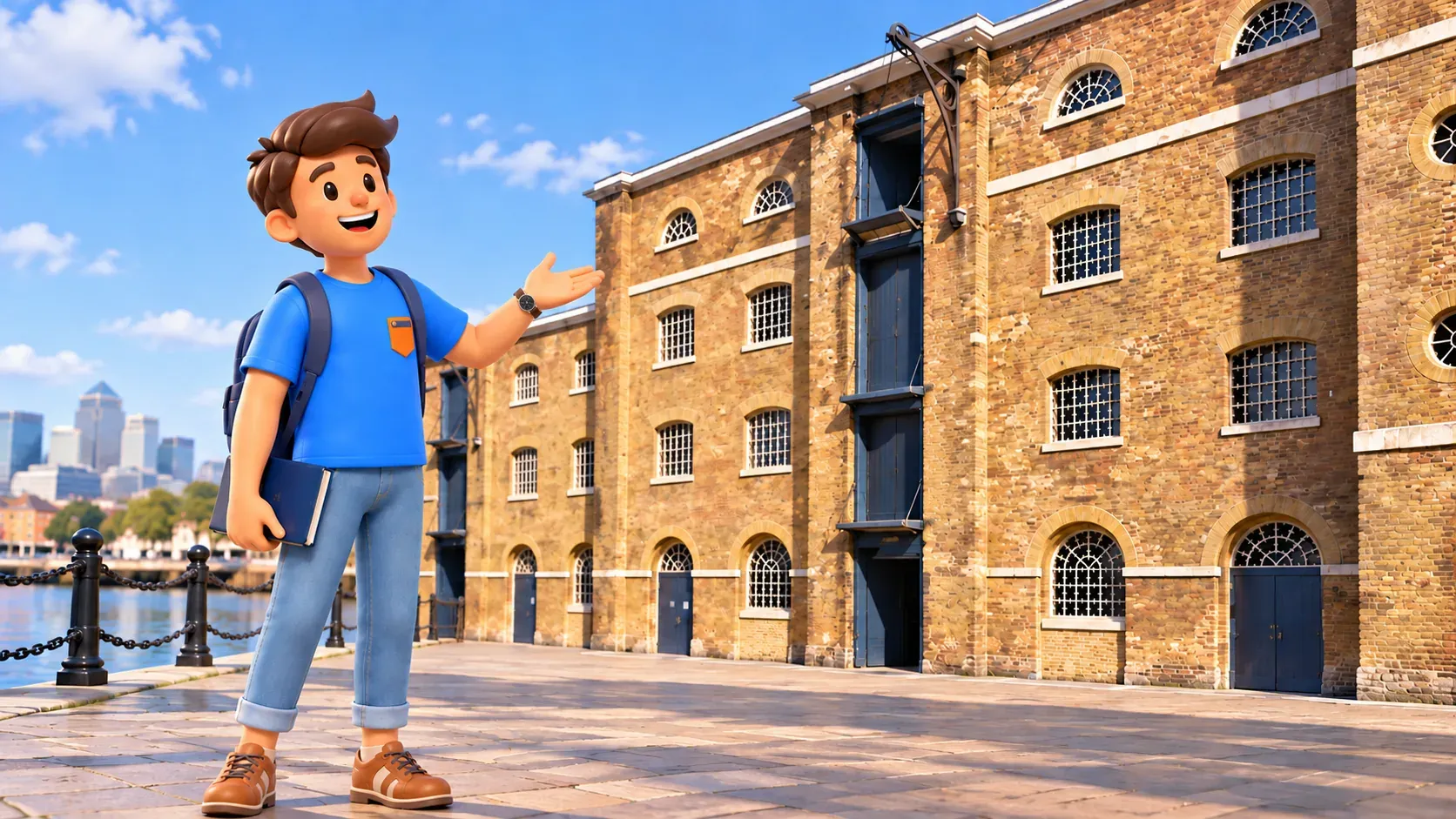
The museum entrance faces the quayside, so approach it from the pedestrian waterfront rather than expecting a car-access entrance on the road behind. Keep your group together near the water and follow the public route. This is a working neighbourhood as well as a visitor area.
London Museum Docklands: choose one thread
The building provides a useful starting point for the collections inside. London Museum Docklands has nine free galleries exploring different periods and themes of the docks’ history. General entry does not require advance booking at the time of checking. Special exhibitions and activities can have different arrangements. For a three-hour neighbourhood walk, choose a manageable thread through selected galleries instead of promising yourself the whole museum.
One possible thread is the relationship between storage, trade and the people whose lives supported the port. Begin with the story of No. 1 Warehouse and let it change the way you read the exterior afterwards. That practical function connects the architecture to the history without requiring a detailed technical explanation.
Include the human cost of trade in that understanding. The London, Sugar & Slavery gallery examines the city’s connections with the trade in enslaved Africans and plantation economies. It gives the dock story necessary depth beyond ships and valuable cargo. Approach the material with attention and leave room to reflect. Families can choose appropriate content and pace rather than treating every gallery as equally light entertainment.
An hour is a selective allowance, not a claim that the museum is small. If a subject draws you in, stay longer and adjust the rest of the plan consciously. Read an object or display carefully instead of hurrying between rooms just to increase the count. The museum’s current floor plan and staff guidance can help you choose where to concentrate, especially when moving between levels.
This museum remains at West India Quay. Do not confuse it with the separate London Museum project at Smithfield when checking opening information. Names and search results can bring up both sites. Use the Docklands address and current visitor details for this outing. Before leaving, decide whether a short break now or after the garden will suit your group better; either can fit the same overall allowance.
Crossrail Place: a new structure over an old dock
Return to the public quayside and follow the pedestrian signs towards Crossrail Place. Use the designated dock crossings and connections rather than assuming a straight line on a map is walkable along every edge of the water. The route is short enough to keep the transition meaningful. Notice how brick warehouse proportions give way to glazing, newer structures and a different pattern of pedestrian movement.
Crossrail Place brings public amenities and a garden above railway infrastructure. It opened in 2015, with Foster and Partners involved in the architecture and Gillespies in the landscape design. Its long canopy makes an immediately different impression from the old warehouses. The shared idea is that transport and public space can be designed together, giving visitors somewhere to pause beyond the practical business of catching a train.
Follow the current garden access signs for lifts, stairs or escalators as appropriate. The garden belongs to the public spaces of the development, while restaurants and other businesses have separate conditions. You do not need to purchase a meal simply to make the garden the focus of this stop. Check local notices if an event or maintenance changes an entrance, and do not use restricted service areas as shortcuts.
The roof garden: look at plants and structure
Spend about thirty minutes among the paths and planted areas of Crossrail Place Roof Garden. The curved timber lattice and translucent ETFE roof panels make the structure part of the experience. The roof is partly open in the centre, allowing natural light and rain into the garden. It is a sheltered outdoor environment, rather than a sealed, climate-controlled glasshouse that guarantees a completely dry visit.
The planting draws on the area’s maritime connections and the idea of eastern and western hemispheres near the meridian. Ferns associated with the west and plants such as bamboo associated with the east give you a simple theme to notice. Treat this as landscape design inspired by geography, rather than a substitute for the meridian experience at Greenwich or a precision navigation marker running through every path.

Choose a small number of plants to examine. Leaf shape, texture and the way foliage sits against the timber can be more memorable than trying to identify every species. Stay on paths and leave planting undisturbed. A bench pause, if a seat is available, belongs naturally in the visit. The attraction is the garden and its structure; this is not a promise of an unrestricted high-level panorama over all London.
Check current access for your date rather than relying on an exact closing time copied from an old guide. The three-hour route works best as a daytime plan. If the garden is unavailable, keep to public dockside spaces and consider returning when it can be visited properly. You can also give the museum more time.
Canada Square: towers at ground level
Continue south on the public pedestrian connections towards Canada Square. Here the open space and surrounding towers bring the modern district into focus. Look at the difference between close views of entrances and the larger skyline above. One Canada Square’s pyramid-topped profile helps orient the scene. Viewing it from a public square does not require, or imply, access to the upper floors of an office building.
Spend a few minutes noticing how the ground level works: places to sit, planted areas, entrances and the routes between them. Office districts can feel abstract when seen only as a distant skyline. At walking pace, their spaces become more specific. The square may change with events and seasonal installations, so enjoy what is present rather than expecting a particular lawn layout, stage or display from an old photograph.

For winter 2026, do not add ice skating at Canada Square to this plan: the rink operator announced that it would not run that season. Older guides describing the annual rink are not confirmation of current availability. Other activities and events should likewise be checked for your actual dates. The basic walk remains a museum, dock, garden and architecture outing with no event booking required.
A break and a clear finish
Use the twenty-minute refreshment allowance where a suitable business and available place fit your day. Include ordering time and choose something simple if preserving the three-hour outline matters. A restaurant meal or extensive shopping deserves an extension. There is no need to make buying something a condition of appreciating the district: the main visits and public spaces already give the walk substance.
Finish by following signs towards the Canary Wharf Jubilee line station. The district also has DLR and Elizabeth line stations carrying the Canary Wharf name, but their entrances are not identical. Select the actual service for your onward journey and allow time to reach its platform. Greenwich or the O2 begins a separate outing with travel and visitor arrangements; neither is an automatic final stop within these three hours.
With RoadMe, it is easier to turn your preferred mix of history, architecture, greenery and rest into a complete personal trip. Let the app organise the days around your interests and pace, so this Canary Wharf walk fits comfortably alongside the rest of London.
For another example of London’s industrial spaces finding a new role, our half-day Battersea walk offers a different district on another day. Here, keep the compact sequence as its own experience. Old storage buildings, museum stories, dock water, contemporary infrastructure and a garden above a station make Canary Wharf more layered than its skyline first suggests.


