
Bunkyo: Koishikawa Korakuen and a Future City View
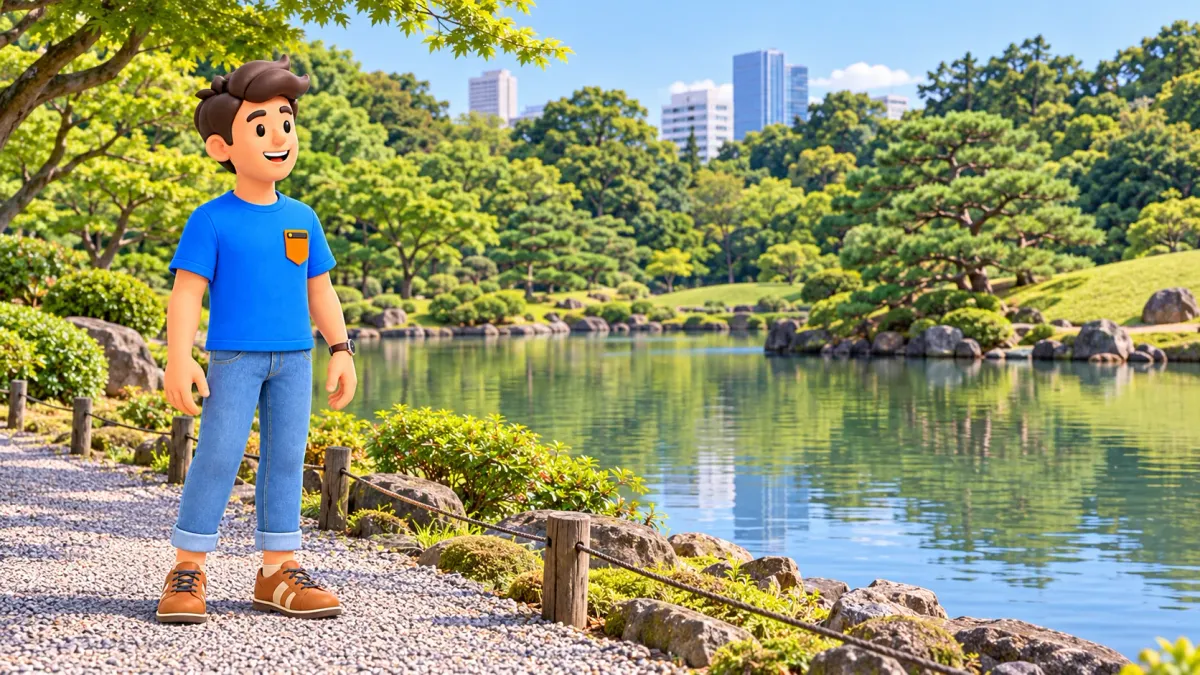
A half day in Bunkyo can focus on Koishikawa Korakuen: water, paths and Engetsukyo's stone arch. A panorama from Bunkyo Civic Center can be added only after access is confirmed. Checked on October 23, 2026, the 25th-floor lounge has been closed since March 1, 2025 for refurbishment, with reopening planned for early December 2026. That is an expected future period, not permission to go up now.
The current core is therefore an independent garden visit, a break and a practical finish. A future version with the viewpoint needs its own checks below. Garden, bridge and observation lounge are not three equivalent admissions: the bridge belongs to one garden visit, and a closed floor should not remain compulsory merely to preserve an older programme copied before refurbishment began.
Make the garden the centre of the half day
Allow roughly three to four hours for garden, food and local walking. This is an editorial estimate, not measured timing. A landscape enthusiast may want longer, while limited time can mean a shorter internal circuit. Koishikawa Korakuen is not simply a filler before a high view. In the current version it is the main destination that gives a neighbourhood half day its own purpose.
RoadMe helps develop a personal programme around your interests, giving the garden enough time and leaving a panorama dependent on real access. Try preparing the day at your pace, with a genuine pause rather than an attempt to complete an outdated combination at any cost.
If height was the main attraction, first decide whether you want a separate garden outing. If not, choose another confirmed destination within another plan instead of arriving at a closed lift hoping for an exception. A short Bunkyo walk can be worthwhile, but it should not silently replace the experience you wanted without an intentional change of purpose agreed within your own group.
Check the garden calendar and choose an entrance
Normal opening is 9:00–17:00, with last entry at 16:30. The regular listed closure is December 29 to January 1, not every weekend. Special events may have separate hours and conditions. Read the current notice for your date; a normal daytime admission should not automatically be treated as entry to an evening event whose photograph happened to attract your attention while planning.
The garden is at Koraku 1-6-6 in Bunkyo. It has eastern and western approaches, so choose a station together with the intended gate. The official map relates the site to Suidobashi, Iidabashi and Korakuen; these are alternatives rather than stations you must all visit. Check the current entrance map, particularly if you later intend to leave towards Civic Center rather than return to your starting point.
Do not confuse it with Koishikawa Botanical Gardens. A similar part of the name does not make them the same place. Save 小石川後楽園, the complete address and entrance. Near major urban and sports complexes, do not simply follow the first green map symbol. A naming error can move you to another outing entirely and create the misleading impression that the promised bridge has somehow disappeared from the garden.
Begin with water and scale
After admission, use the plan and choose a route along available paths. Start with a comfortable broad view where water, bank and trees read together. There is no need to hurry immediately to the best-known bridge. One wide scene provides a basis for later details and helps explain the shifts between open space and a more enclosed shaded section without constantly consulting the next marker.
The operator connects the garden's beginning with the Mito Tokugawa residence in early Edo and its further development with Tokugawa Mitsukuni. That frame is sufficient for an ordinary visit. A historic garden need not become an examination in every ruler and borrowed landscape reference. Notice how path and water affect the experience now while recognising that the site has a layered history beyond its current seasonal appearance.
The city may appear between trees. Do not treat that as an error to remove from the whole experience. Old landscape and dense modern surroundings help establish the garden's position in Tokyo. Compare one view where the urban background is visible with another where it nearly disappears. This can explain the setting better than a continuous hunt for a picture that looks historically isolated from the contemporary city.
Look at Engetsukyo and its reflection
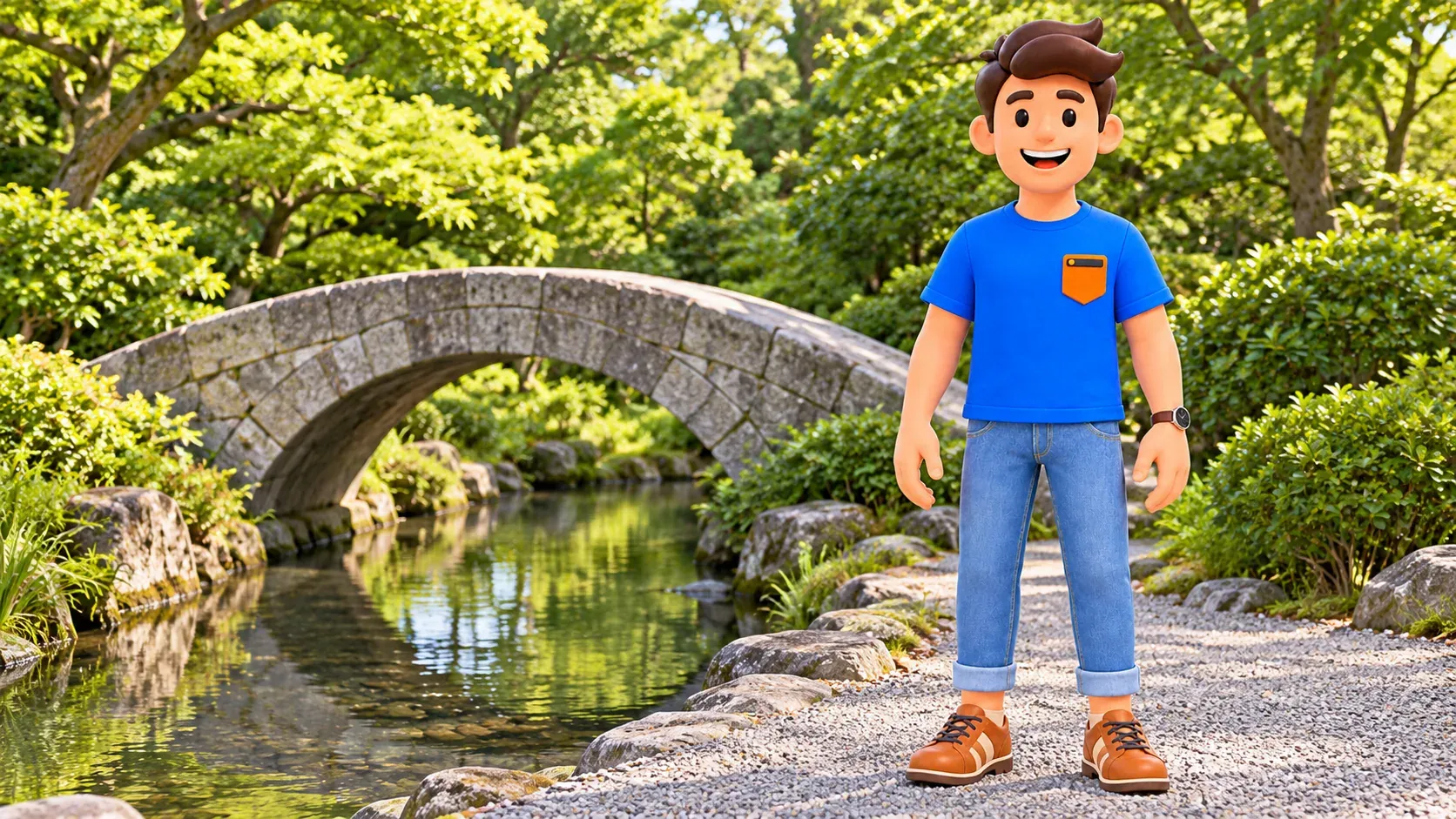
Engetsukyo is inside the garden and requires no separate journey. The operator explains its name through the full-moon image made by the arch and its reflection. Pause at a permitted viewing point to observe how stone and water relate instead of simply photographing the bridge and leaving for the next name. Its interest lies in that relationship as well as the recognisable shape.
A complete reflection depends on the water surface, light, angle and currently accessible viewing positions. Do not promise yourself a perfect circle at every moment. If the surface moves or access is limited, the arch remains meaningful. Do not cross barriers, approach the water off-path or assume permission to walk over the bridge simply because it is called a bridge. Follow the actual routes and signs in place.
A good position need not be occupied for a long time. When people gather, allow others a view and return later if you wish. A worthwhile detail is not a private studio for an indefinite photo session. A short walk only needs the arch, its relation to water and its green surroundings to register. That observation does not require ten nearly identical photographs with small changes in camera angle.
Choose a manageable circuit rather than every path
After the bridge, continue towards an available part that genuinely interests you. Water and shaded transitions can be the focus, or tree forms and changing ground levels. No compulsory number of features is needed. Keep the route simple enough to sit, study one detail or reach the next place comfortably without repeatedly checking the application. A clear sequence helps attention remain on the garden rather than the logistics of completeness.
Season changes the appearance without guaranteeing particular blossoms or leaf colours. Read current garden updates if a specific phase is your reason for travelling. For an ordinary visit, green foliage and the structure of the banks already provide enough to observe. Heavy rain or uncomfortable surfaces may shorten the circuit. Do not compensate by walking faster on wet stone or seeking a path whose closure blocks the planned line.
With reduced mobility, use the official accessible-route plan. Do not promise identical surfaces and no steps throughout a historic garden. Asking at the entrance is more useful than discovering a difficult section after a long walk. The important relationship of water and trees can be experienced without crossing every bridge or climbing every small hill visible in the layout, particularly when comfort matters more than a complete circuit.

Have lunch before any city continuation
After finishing the garden, choose an open place by current menu, price and queue near a convenient exit. For a venue within or attached to the garden, check its separate operation; admission hours do not promise an available table. Several suitable options nearby can make a more dependable break than letting the entire rest period rely on one selected address and a lengthy wait to get seated.
Treat leaving the paid grounds as completing the visit unless current re-entry rules are confirmed. Do not plan to leave for lunch and return for a second circuit without checking. The simple version is garden, food and public transport. An exterior look at the city setting can be added from public streets if useful, but it is not equivalent to an indoor panorama from the 25th floor.
Use RoadMe to develop a personal programme in which the garden, food and a suitable continuation get time according to your interests. The app helps prepare your pace: finish after a good walk or add a viewpoint only when its actual access has been confirmed.
Understand what is closed at Civic Center
The affected facility is specifically Bunkyo Civic Center's 25th-floor observation lounge. The municipal page says it has been closed since March 1, 2025, with reopening planned for early December 2026. At preparation this remains a future expectation. Older hours of 9:00–20:30 on the same page do not mean that you may enter today in spite of the refurbishment notice at the top.
Do not look for an automatic substitute on a neighbouring floor, in an office area or in a canteen recommended by an old guide. Part of a municipal building operating is not equivalent to tourist panorama access. Temporary openings announced for particular days do not establish a permanent service either. Respect the restrictions and building's purpose instead of trying another lift as a way around closure.
Civic Center's official address is Kasuga 1-16-21. If the exterior interests you and naturally fits your route, look from public space. A compulsory separate detour to a closed entrance is unnecessary for the garden version to count as completed. Preserving time for rest and a convenient onward journey is often the more useful choice, especially after a satisfying walk that already achieved its purpose.
Build a future version only after reopening is confirmed
For travel after the announced period, read the official page again: has reopening actually occurred, what hours and closures apply, and how is admission organised? Planned early December is not a guaranteed exact unchanging date. Once operation is confirmed, add the lounge after garden and food with time for the approach, lift, view and return to transport. Each of those remains a real part of the visit.
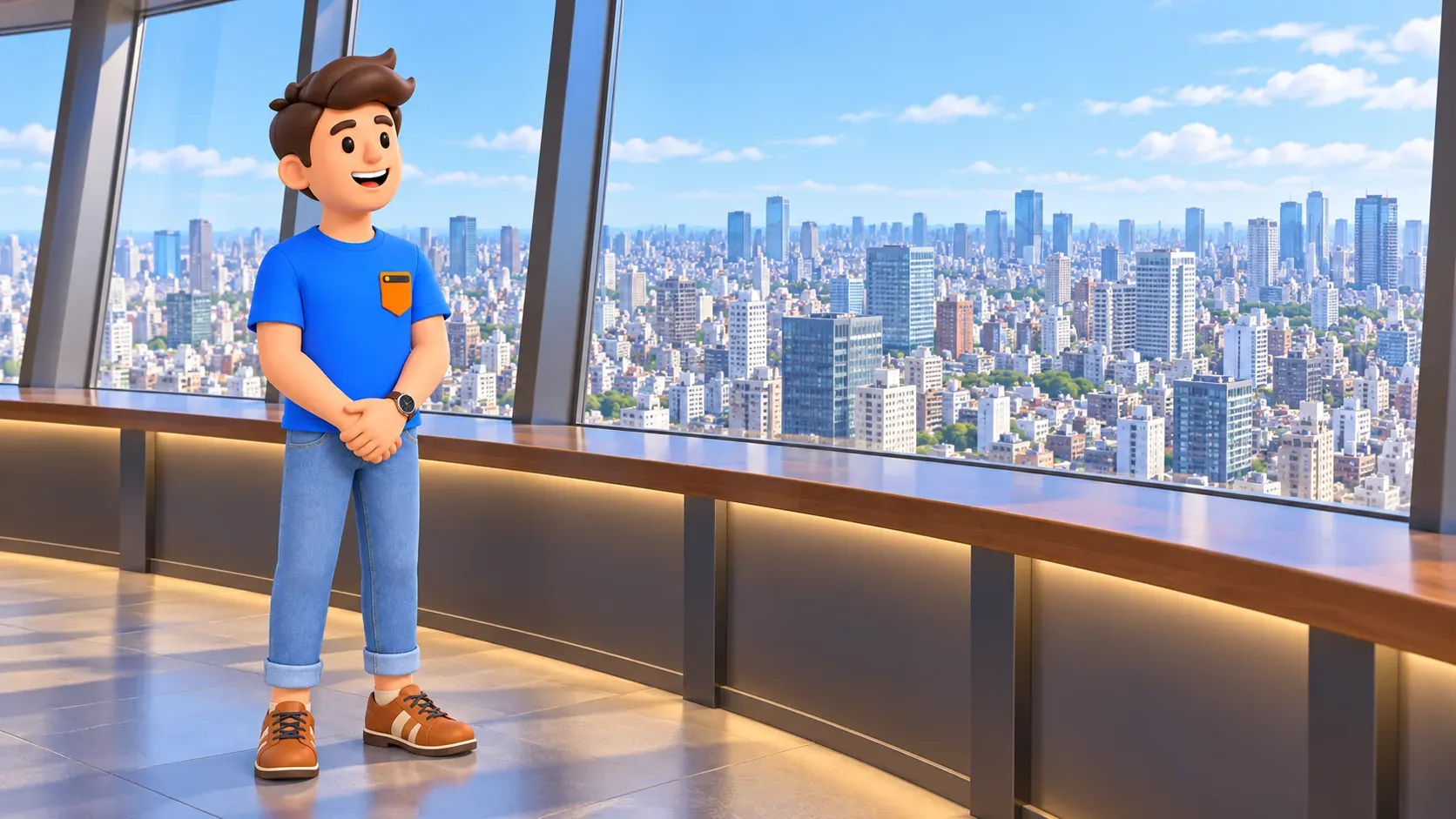
The municipal description covers the lounge's northern, eastern and western sides. Do not promise a full 360-degree view or guaranteed Mount Fuji. Distant landmarks depend on visibility, cloud and current use of the space. Even when open, choose a couple of directions and read the nearby city instead of measuring the visit only by whether a distant mountain appeared. A city panorama offers other relationships worth noticing.
Follow rules on occupation of space, belongings and standing on counters or barriers. Check equipment-based photography separately. The panorama changes scale after a garden detail: first water and stone arch at close range, then the relationship between larger urban areas. That makes the future combination meaningful rather than simply adding another floor to a list. It should complement what you observed below instead of replace attention with height alone.
Finish the current shorter version comfortably
Choose the finish according to the actual garden exit and onward route. Suidobashi, Korakuen, Kasuga or Iidabashi may help in different versions, but their lines and entrances are not interchangeable. Check the specific connection. Do not return to the first station only to form a loop, or extend an urban walk simply because the high viewing room is currently unavailable and leaves an imagined gap.
A good current result is a garden genuinely observed, a bridge understood and an unhurried break. The future lounge remains a separate access check rather than a promise of going up today. This preserves a useful Bunkyo half day and avoids disappointment at a closed lift after an itinerary built around operating conditions that had already changed well before the trip began.


