Bruges in Summer and Winter: How to Adapt Your Walking Plan

In summer and winter, change the rhythm of your Bruges walk: the length of outdoor sections, the museum's position in the day and room for breaks. Longer summer daylight makes it easier to linger beside canals and ramparts. In winter, see the outdoor views you care about before dark, alternating short walks with a meaningful visit and a warm pause. Neither season guarantees the weather you want.
You do not need two completely different cities or separate lists of compulsory seasonal attractions. Keep one interest, such as painting, water, architecture or craft, and change how you encounter it. The plan remains personal, while the season helps decide when to walk longer, where to stop and which interior you actually want to enter.
Start with the interest, then adapt the pace
If water attracts you, summer may allow a longer waterfront outing, while winter suggests a few short views and time to discuss them indoors. For a painting enthusiast, the museum remains central in either season; the approach and later walk change. Seasonal preparation works best when it supports an interest instead of replacing it with whichever events happen to be advertised.
RoadMe makes it much easier to develop a personalised plan for your whole trip around your interests, dates and pace. Try planning Bruges in the app so walks, museums and rest form a day that suits you in any season.
Identify the main experience and available time, then decide how much of it you want outdoors. A long summer evening need not become an additional obligation, and short winter daylight is not a reason to rush through every door. Seeing fewer places can let you notice one relationship more clearly: square and tower, canal and houses, or a museum object and the city's history.
Consider the actual conditions on your date. A rainy summer day may call for shorter sections than a clear winter day. Strong wind changes an exposed walk even without extreme cold. The season provides an initial structure, while the duration should remain flexible. Avoid making the whole outing depend on one promised sunset or a street you expect to find empty.
Summer: more outdoor time, with genuine pauses
On a suitable warm day, you might choose one longer outdoor subject, allowing approximately two to three hours with stops. This is an editorial format, not a measured requirement or a duration everyone should copy. It needs room to sit, drink water and look quietly. Good light does not remove the effort of paving, repeated movement and constant attention to new sights.
Kruisvest and its windmills offer one summer possibility. The ramparts recall a fortified city's organisation, while mills connect everyday work with wind and terrain. An exterior walk does not require each mill to become an indoor stop. Four visible structures do not mean four equally operational mechanisms or four available entrances, even when photographs make them look like a single attraction.
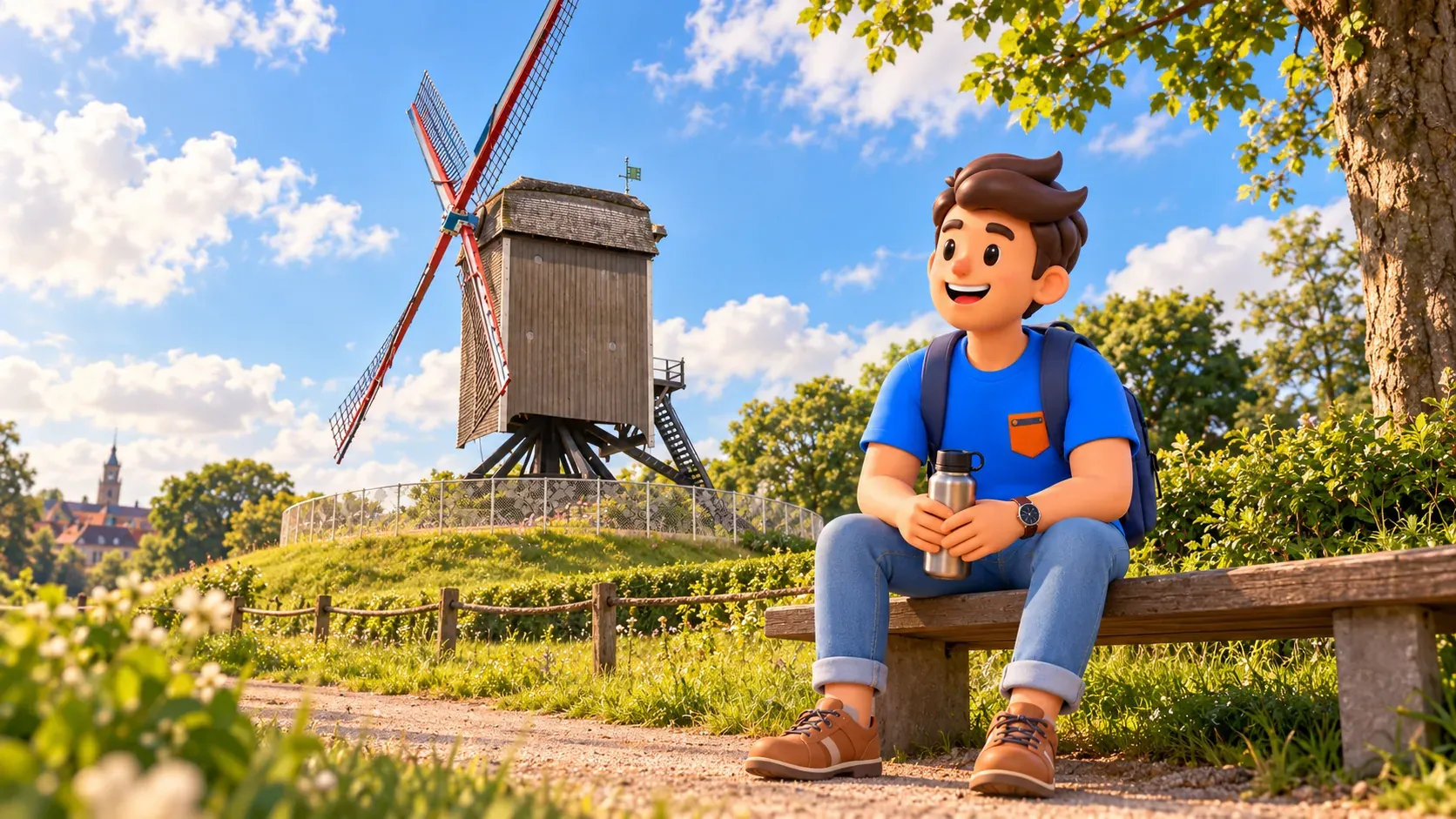
Sint-Janshuismolen dates from the eighteenth century and retains a working connection with milling; other mills along the section have different stories of relocation and use. Do not expect moving sails at every moment. Looking at the wooden body supported above the rampart can be enough, with a detailed visit reserved for a time when the interior is actually available.
Even in summer, avoid placing an outdoor section immediately against another paid admission. A buffer lets you linger when conditions are pleasant. If it feels too hot or windy, shorten stops and take a break. You do not need to finish a lengthy sequence simply because daylight continues or because the outing was described as a summer walk when first planned.
A longer evening does not extend museum hours
Summer light helps with exterior views, but does not open museum doors after their working day. Place the museum in its real calendar first and arrange a walk around it. Gruuthuse's regular closing day is Wednesday, not a universal closing day shared by all museums. If its palace interior matters, do not assume high season means daily access until late.
Individual gardens have their own conditions too. Tudor's herb garden opens 09:00–19:00 from 1 March to 30 November, and until 17:00 from 1 December to 28 February. These hours concern the herb garden, not the entire estate. Tudor also lies beyond a short central walk: getting there needs separate time, rather than being a tiny detour between Markt and a canal.
Keep one summer evening section free from another ticket: return to favourite water, look at façades in different light or eat without hurrying. Do not promise yourself an empty centre after a particular hour. An event, a weekend and an ordinary weekday evening can create different conditions. A season's name alone cannot tell you which atmosphere you will find.
Winter: shorter outings with a clear purpose
A winter plan is easier to shape through small outdoor sections. For example, allow around 30–45 minutes for selected views before an interior and pause. This is a planning example rather than a weather or medical rule. For architecture, choose Markt and Burg; for water, choose one small central section. Do not ask a short outing to cover every famous waterfront.
If a daylight water view matters, avoid automatically leaving it until the end. In winter, museum time and lunch can occupy most of the shorter daylight period. Choose the important outdoor episode first and add the rest. Twilight can be a separate pleasure, but it does not replace daytime observation if that was the reason for your choice.
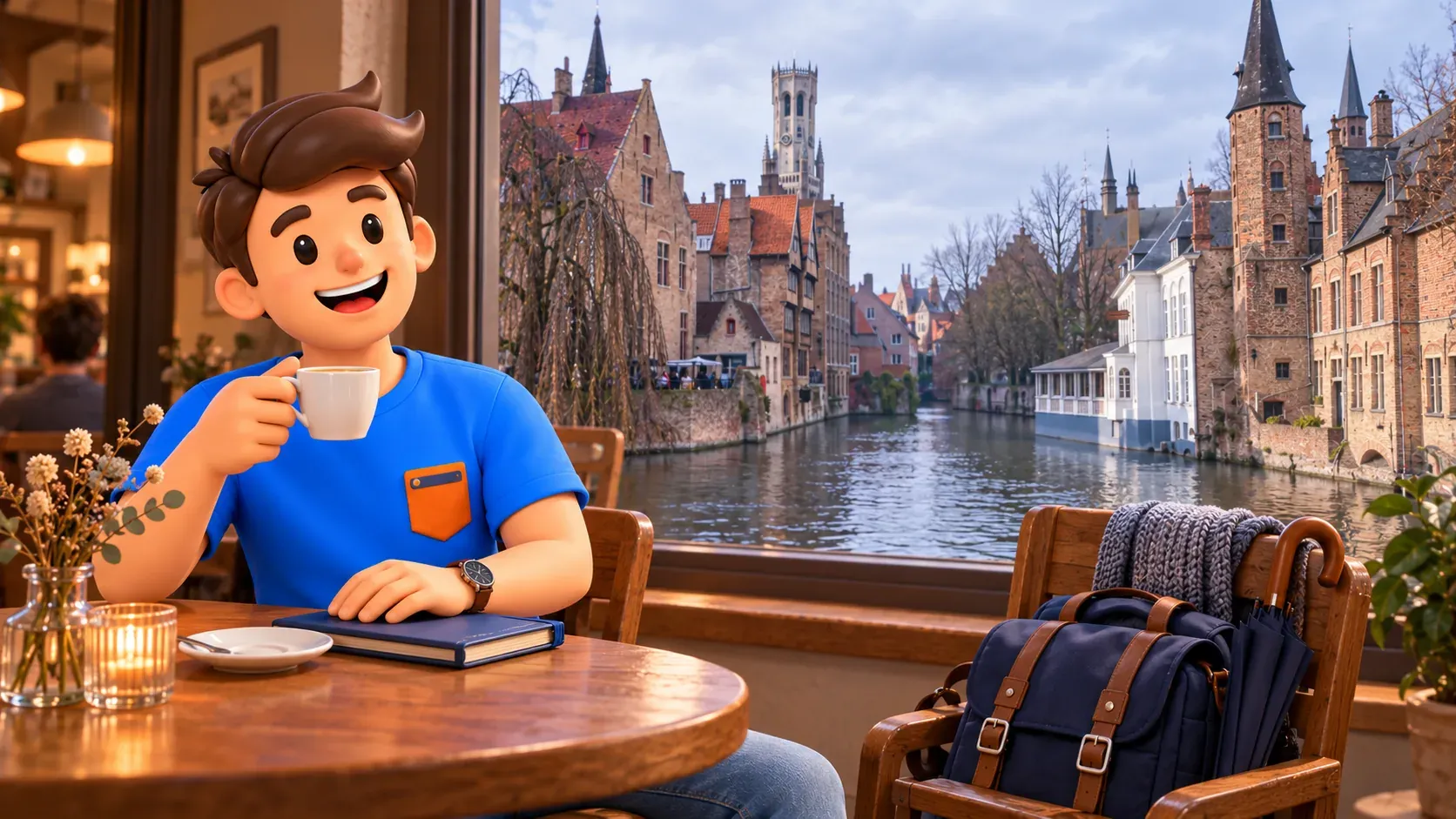
At Rozenhoedkaai, notice the relationship between water, brick façades and the distant Belfry rather than waiting for a compulsory snowy picture. Winter appears in light, bare branches and a different rhythm of pauses without snow. Do not plan to walk on a frozen canal or treat ice as part of the visitor programme. Illustrations and other people's photographs are not a forecast for your dates.
A warm pause is part of the day in its own right. After a short outing, allow time to sit, discuss what you noticed and decide whether to continue. A café table need not be only a waiting room before the next attraction. If an earlier finish suits today's conditions, the centre you already enjoyed does not become an incomplete or incorrect visit.
Winter museum days begin with the calendar
The Folk Museum changes regular closing days by season: from 1 April to 2 November it normally closes on Mondays; from 3 November to 31 March, on Mondays and Tuesdays. A summer photograph of an open entrance cannot help on a winter Tuesday. If an interior anchors your day, establish its working date before selecting the outdoor approach.
Do not extend that rule to neighbouring institutions. Gruuthuse has its own closing day; a craft demonstration depends on the hour too. At Kantcentrum, regular lace demonstrations run Monday to Saturday, 14:00–17:00, with holiday and special-date exceptions. Morning admission and watching living craft answer different wishes, requiring a different order of activities even when the address is the same.
For winter 2027, Groeningemuseum brings a major change: renovation closure starts on 11 January 2027. A display of its collection at BRUSK is scheduled from 12 March 2027 to 30 June 2031. Do not assume continuous replacement between closure and display. The renovated Groeninge is planned to reopen in 2031; match the actual collection and building to your travel date.
One meaningful museum visit is more useful than a chain of backup interiors. You might allow around 75–90 minutes for a selected introduction, understanding that this is our editorial estimate, not the official duration of a complete visit to every museum. If a subject holds your attention, shorten the later walk. Winter does not require compensating for limited light with the largest possible number of tickets.
Winter events: a programme is not one market
Winter Glow is announced for 20 November 2026–31 January 2027. Individual activities have their own dates; the programme period does not mean every Christmas market runs throughout.
If a particular event motivates the trip, choose it from the current calendar and leave a short walk and rest around it. Do not transfer last year's layout, installation photographs or hours automatically to a new edition. A festive December outing and an ordinary winter day can need different preparation. Winter alone promises neither a market on every date nor quiet empty squares.
A seasonal evening activity should not simply sit on top of an already full day. Reduce one earlier episode so you arrive with energy to enjoy it. A couple, family and traveller with a specialist interest will prefer different balances. The seasonal calendar should support your choice, rather than turning the holiday into a contest to cover every available event.
Rain can change the plan in either season
Choose one genuinely interesting interior that opens on your date, rather than keeping ten interchangeable replacements ready. If rain arrives, shorten the walk and give the selected museum enough time. Two nearby doors do not oblige you to buy both admissions. A museum quarter does not promise identical timetables or access conditions, even when distances between buildings are small.
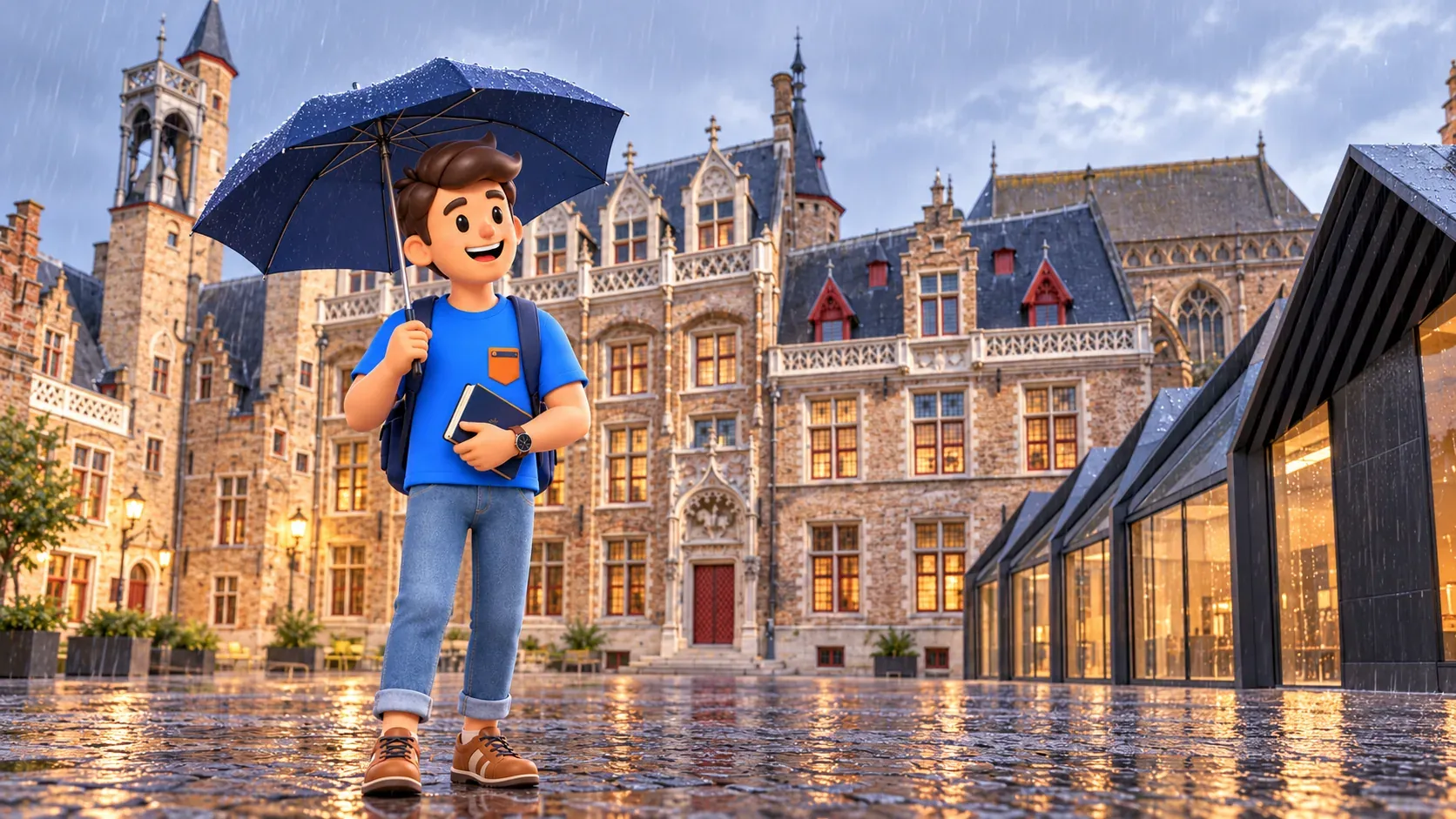
At Gruuthuse, for example, city-history objects and the unusual relationship between a private oratory and the Church of Our Lady provide a focused subject. A short rainy visit can explore that connection without retelling the whole city. However, reaching the courtyard does not make the stair-based palace museum convenient for everyone. Discuss individual mobility requirements separately before committing.
For the Church of Our Lady, distinguish the working church from the museum section. Sunday museum access starts in the afternoon; services and events can alter visiting arrangements. A roof does not mean the space is ready to receive your group at any moment. Treat the transition as a visit with its own purpose and rules, rather than merely shelter from weather.
Choose a structure that fits your day
In suitable summer weather, try one longer outdoor subject, a break and an optional separate visit based on interest. In winter, begin with a short daylight walk, one chosen interior and a small finish. These are structures, not compulsory routes. Rain, calendars and your own attention can rearrange their parts in either season, without requiring a completely new list of places.
With RoadMe, it is much more convenient to develop a personalised itinerary for the whole trip, arranging favourite subjects, walks and rest around your dates and pace. Try the app for a considered Bruges plan with less effort spent assembling individual days manually.
Summer can give more space to the Kruisvest windmill walk; a suitable rainy day can use the museum-quarter plan with two neighbouring museums. That longer programme needs more time and remains optional. Choose the elements that match your interests, rather than trying to cover the entire city identically in July and January.
Before leaving, consider today's light and weather, the places actually open and your available time, then remove what does not fit. A useful seasonal plan preserves the reason for your trip and changes how you enjoy it. Bruges remains a city of squares, water and different periods; you need not encounter all of it at the same pace throughout the year.