
Across Brooklyn Bridge to DUMBO: A Half-Day Walk
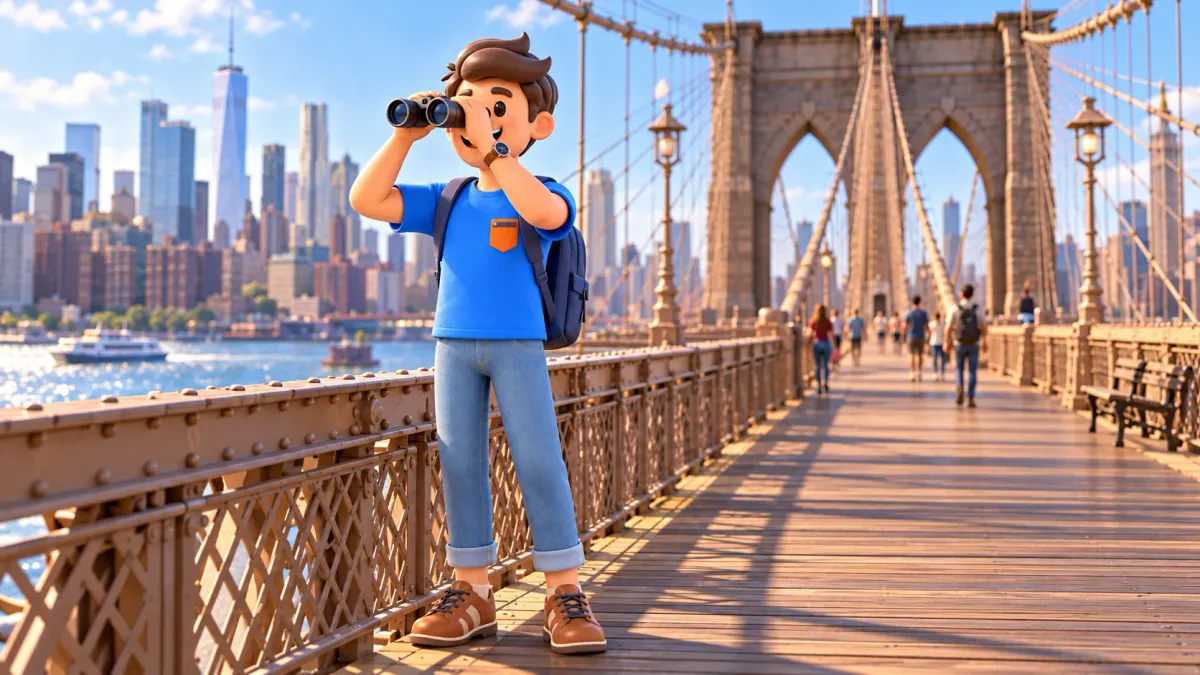
Crossing the Brooklyn Bridge into DUMBO works best as a half-day with a clear finish on the Brooklyn waterfront. Walk over the East River, look at the Manhattan Bridge from the neighbourhood below it, then slow down near Jane's Carousel and the brick walls of St. Ann's Warehouse. The crossing provides the big experience; the smaller streets and river edge give it somewhere to settle.
This route finishes in DUMBO. It does not add a full Brooklyn Heights walk or another bridge crossing. Riding the carousel and attending a theatre performance are choices with their own conditions, not requirements for completing the outing. You can enjoy the street and waterfront version even when those activities do not fit your date.
A half-day that gives the bridge enough time
Allow roughly three to four hours for the crossing, a few DUMBO stops and a proper food or seated rest break. The walking may total around three to four kilometres, depending on the bridge exit and waterfront paths. These are editorial planning estimates, not a measured walking test. A leisurely crossing with photos can take around forty-five minutes to an hour; crowds and your pace matter more than a fast transfer estimate.
The broad order is Lower Manhattan near City Hall Park, the Brooklyn Bridge pedestrian promenade, the DUMBO exit or longer street approach, Washington Street, the waterfront by Jane's Carousel, and St. Ann's Warehouse on Water Street. Decide your onward journey from Brooklyn before setting off. Walking back over the bridge is another substantial activity, not an automatic way to close the same short route.
For a personal New York or trip plan that connects bridges, neighbourhood discoveries and your preferred pace, try RoadMe: the app prepares a programme around your interests. Using one coherent plan for worthwhile stops and real breaks is much more convenient than fitting every recommendation together manually.
Choose the outing for a day when the open-air crossing suits you. In heavy rain, strong wind or uncomfortable heat, a shorter waterfront visit on another plan may be more useful than forcing the bridge. You need enough energy left for the district, rather than using the whole allowance reaching the Brooklyn side.
Find the pedestrian entrance in Lower Manhattan
Start near City Hall Park and Centre Street, following current signs for the Brooklyn Bridge pedestrian promenade. Use the public crossings to reach the walking approach. A bridge's visible roadway is not the same thing as its pedestrian entrance, so check the actual approach before beginning rather than simply heading towards the nearest stone tower.
The Manhattan entrance has been the subject of access redesign in 2026. The practical lesson is to follow present pedestrian signs and markings rather than an old photograph showing exactly where walkers and cyclists shared space. This article does not certify the completion of every announced street improvement. The starting area is still Centre Street by the City Hall side, not a vehicle ramp chosen from the bridge's outline.
NYC DOT describes a pedestrian promenade and a separate protected bicycle path on the bridge. Use the walking promenade, leaving cycling approaches to cyclists. Once there, settle into a pace that allows other people to pass. A popular bridge is a moving public route as well as a destination for photographs.
Take water and address practical needs before the exposed crossing. Keep belongings comfortable to carry, especially if you have a stroller or luggage. The gradual climb and long approach are part of the effort; a straight line over water does not describe the experience at street level. No part of the outing requires balancing on an edge or stepping onto the traffic deck.
Cross the Brooklyn Bridge as an experience, not a transfer
The Brooklyn Bridge was completed in 1883 to a design by John A. Roebling. Its stone towers, pointed arches and web of cables make the structure recognisable before any skyline appears. Rather than trying to absorb an engineering history while moving, choose one visual thread: the changing relationship between the towers and the lines that support the crossing.
At a suitable stopping position, look along the cables, then back at the space you have walked through. The view changes as the towers grow nearer and pass behind you. Walking towards Brooklyn gives DUMBO as the natural finish; it does not prevent you from turning to appreciate Lower Manhattan when you have stopped safely and left room for others.
A few deliberate photographs are more useful than repeatedly stopping in the centre of the flow. Avoid forming a group across the promenade for a shot. Put the camera away at narrow or busy sections and continue until there is a better opportunity. This leaves more attention for the actual crossing and reduces the temptation to hurry the district afterwards.
Do not confuse the Brooklyn Bridge with the blue-grey steel Manhattan Bridge seen nearby. They are separate crossings with separate approaches. The route crosses the Brooklyn Bridge first, then looks at the Manhattan Bridge from DUMBO. That distinction is worth knowing before choosing a meeting point or following a familiar photograph.
Choose the Brooklyn exit before you need it
For the shorter connection into DUMBO, Brooklyn Bridge Park identifies the staircase in the underpass at Washington Street, also named Cadman Plaza East here, and Prospect Street. Use current signs for this pedestrian stair exit. It brings you closer to the neighbourhood, but it is a stair option rather than a step-free descent.
If stairs do not suit, the bridge walkway continues to the approach at Tillary Street and Boerum Place. From that end, you have a longer street walk back towards DUMBO. Do not assume that taking the longer ramped approach makes the entire neighbourhood route a measured accessible itinerary: slopes, crossings, stone paving and the distance still need consideration for your circumstances.
With a stroller or reduced mobility, decide which option is workable before committing to the crossing. A staircase should not become a surprise at the moment everyone is tired. Leave additional time for the longer approach if you use it, and keep the waterfront section smaller if necessary. The aim is an enjoyable arrival, not a contest to follow the shortest line.
Washington Street: look at a different bridge
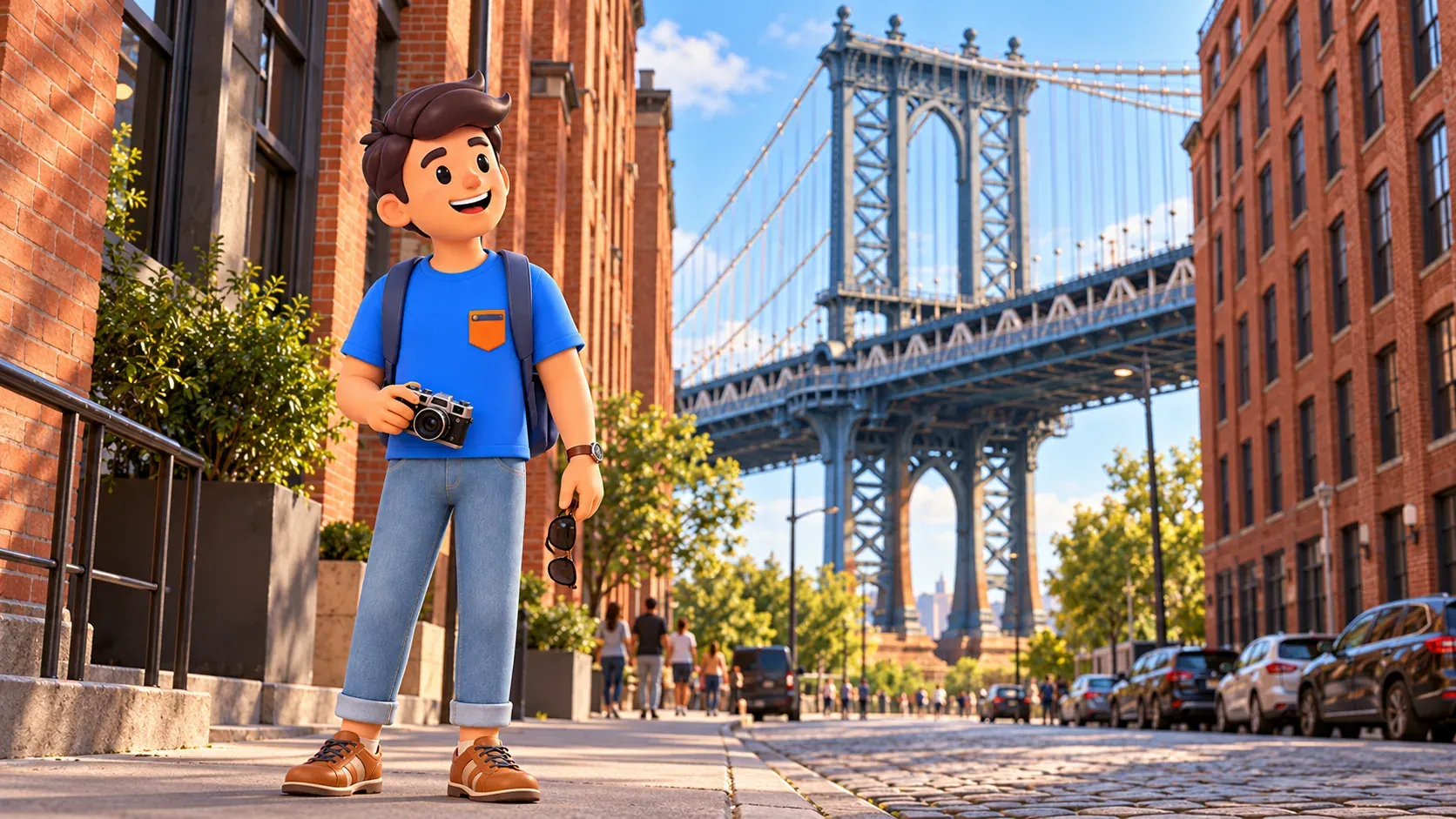
From the neighbourhood approach, use Washington Street towards Water Street for the familiar view of the Manhattan Bridge between former industrial buildings. This is a separate stop from the bridge you have just crossed. The Manhattan Bridge was completed in 1909, and its steel structure gives a very different impression from the Brooklyn Bridge's stone towers.
DUMBO's commonly used expanded name is Down Under the Manhattan Bridge Overpass. The bridges and the former industrial setting are therefore useful ways to read the district, not just photo backdrops. Notice the repeated warehouse windows and the way a large piece of transport infrastructure cuts across the scale of the streets below.
You do not have to reproduce an exact photograph to enjoy the place. Work, scaffolding, light and other visitors can alter the frame. Look from a sensible public position, allow normal street movement and do not treat a desired camera angle as a right to occupy the roadway. A partial view of the steelwork and brick façades can tell the story just as well.
Keep this stop short enough to preserve the waterfront pause. Waiting for an empty street may consume more of the half-day than the photograph is worth to you. The next stage changes the setting again, from an enclosed street view to space beside the river, so there is a reason to continue rather than spending the entire visit at one corner.
Jane's Carousel: a historic object beside an open view
Continue towards the waterfront and Jane's Carousel. Built in 1922 by the Philadelphia Toboggan Company, the carousel originally stood in Youngstown, Ohio. Jane and David Walentas acquired it and it was restored before opening in Brooklyn Bridge Park in 2011, in a pavilion designed by Jean Nouvel. The old carousel and the modern enclosure offer a compact example of a historic object finding a new setting.
At the 17 October 2026 check, the operator's autumn schedule covered 14 September to 31 December 2026: closed Monday and Tuesday, open Wednesday to Sunday from 11am to 5:50pm. The operator uses seasonal schedules, so a later trip requires a new check. A transparent pavilion does not mean the ride runs at every hour of a waterfront visit.
Choose whether a ride interests you and allow for its current arrangements and any wait. Looking at the pavilion from the surrounding public area and taking a waterfront break is a different activity from riding. If the carousel is closed, the bridge views and river-edge walk still make sense. Do not make the whole half-day depend on a single optional attraction.
If you want this balance of engineering, restored objects and time by the water to shape more of your trip, use RoadMe for a personal plan based on those interests. It is easier to connect a focused DUMBO visit with the rest of your New York days in one considered programme.

St. Ann's Warehouse: finish with the district's changing use
Include the exterior of St. Ann's Warehouse at 45 Water Street near the carousel area. The theatre occupies the former Tobacco Warehouse, retaining historic brick walls and archways within its adapted home. It gives the outing another point of interest beyond bridges: a working cultural venue within the waterfront's older built fabric.
For this daylight walk, the outside is enough. An evening performance is a separate decision involving the current programme, tickets and arrival arrangements. Do not assume that a theatre auditorium is open for casual daytime sightseeing. If a performance appeals, give it its own time in the day's plan rather than treating it as a small final detour.

Finish with a seated break or your planned onward journey from DUMBO. Keep a long meal queue, another bridge crossing or Brooklyn Heights as an additional activity if you choose one. Historical and visitor information was checked on 17 October 2026; review current access and seasonal conditions for your date.


