
Brandenburg Gate and the Reichstag: a two-hour Berlin walk
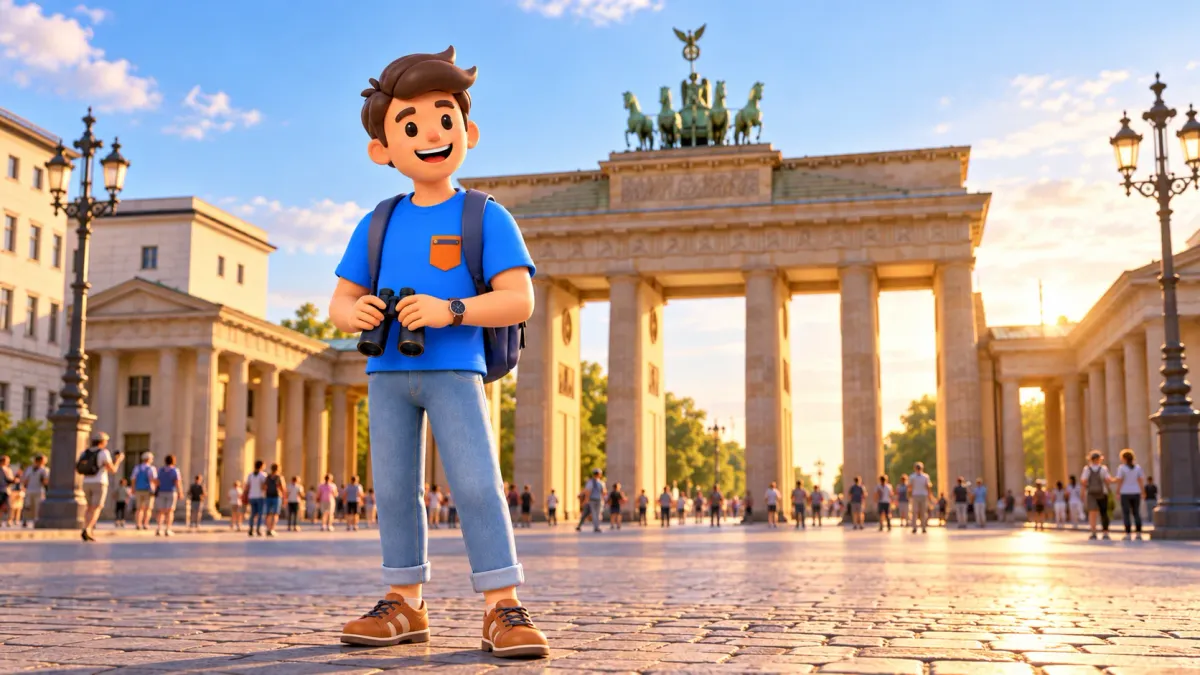
For two useful hours in central Berlin, begin at Pariser Platz, look at Brandenburg Gate from both sides, then walk to the Reichstag and continue to the Spree. Finish near the Paul Löbe Building and Bundestag underground station. This compact sequence combines a famous landmark, parliamentary architecture and a quiet memorial stop without trying to cover the whole centre.
The two-hour plan stays outdoors. It does not include the Reichstag dome, an interior tour or a meal. Those are separate visits with their own conditions. All time allowances below are editorial estimates, including ordinary movement and a small reserve, rather than measured walking times. Add the journey from your accommodation and your onward transport.
A route that fits a short gap in the day
Use Pariser Platz as the actual starting point, rather than counting your approach from a station as sightseeing time. Walk through the gate towards the Tiergarten side, turn towards the Reichstag, then continue to the riverside White Crosses memorial. Follow the public riverside route towards the Paul Löbe Building and finish by the Bundestag station area.
To give this short walk a useful place in your whole trip, try RoadMe: the app builds a personal itinerary around your dates, interests and pace. It is more convenient to organise a compact central walk alongside the rest of your Berlin plans than to fit every visit together manually.
| Part of the walk | Approximate allowance |
|---|---|
| Pariser Platz and both sides of Brandenburg Gate | 30 minutes |
| Connection to the Reichstag | 10 minutes |
| Reichstag exterior and Platz der Republik | 20 minutes |
| White Crosses memorial | 10 minutes |
| Spree and the Paul Löbe Building | 20 minutes |
| Final approach and orientation near Bundestag station | 15 minutes |
| Flexible reserve | 15 minutes |
That totals 120 minutes. The river section includes its connecting movement; the last block includes getting to the planned finish, not an additional attraction. If a barrier or a longer pause uses the reserve, shorten the final riverside section. The two anchors remain the gate and the Reichstag, with the other stops adding context.
Begin at Pariser Platz: look before walking through
Stand back on the eastern side of Brandenburg Gate so you can see its full outline. Notice the rhythm of the columns, the passages below and the quadriga above. The point is to register the structure before joining the movement through it. A moment spent looking from the side can be more useful than searching for a perfectly empty foreground.
The gate was built between 1788 and 1791 to a design by Carl Gotthard Langhans. Its classical references become easier to recognise when you look at the columns and the strong horizontal roofline. You do not need to memorise measurements to understand why it reads as a monumental entrance rather than a small opening in a street.
Give the square and gate one shared half-hour, not half an hour each. Begin with the overall view, move closer for a detail and then cross to the western side. Respect temporary barriers and leave the passages clear for other pedestrians. This is a public city space with other people's journeys passing through your sightseeing stop.
If you are travelling with someone, agree on a meeting point beside the main pedestrian flow before separating for photographs. Avoid fixing it in the middle of the gate. This small decision keeps a short walk from becoming a search for each other in a busy square.
Across the gate: a change of meaning as well as viewpoint
On the western side, turn and look back rather than immediately setting off. The same monument now frames a different urban view. This makes a simple comparison possible: how does the building relate to the open space on one side and the enclosed square on the other? You can enjoy the difference without turning the stop into an architectural survey.
During the period of division, the gate stood in a restricted border area. Its later association with reunification gives the short crossing a historical meaning that is easy to miss if you are only collecting a photograph. Today's ordinary movement through the passages is part of what makes this a useful first stop.
The trees and broad spaces towards Tiergarten can tempt you westwards, but the planned walk now turns towards the Reichstag. A park walk is a good separate continuation, not something to absorb invisibly into these two hours. Keep the direction clear before moving on: the next major stop is the parliamentary building, not the Victory Column.
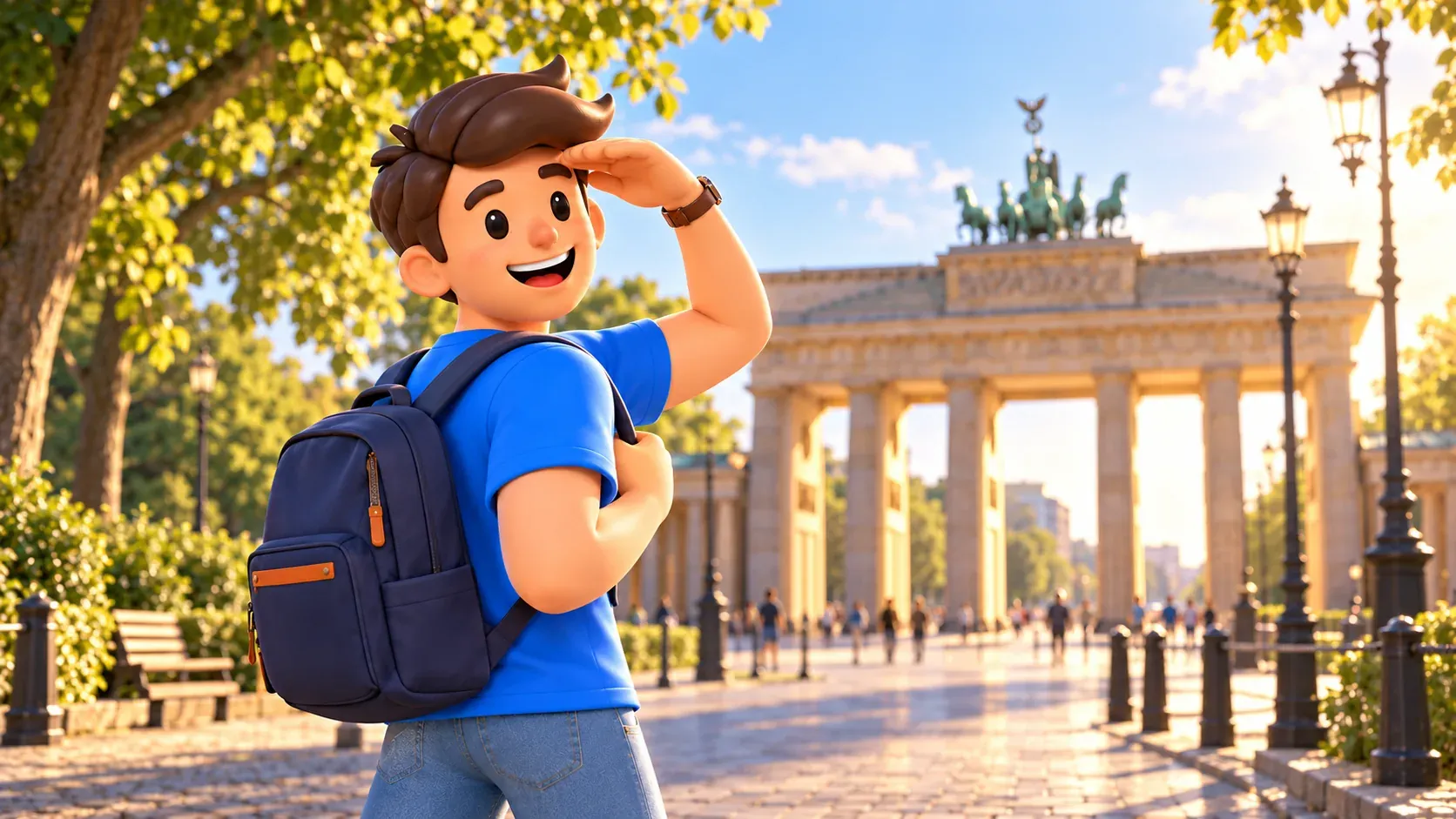
The Reichstag: compare the historic building and its glass dome
Allow around ten minutes for the connection, using open public pavements towards the Reichstag and Platz der Republik. On arrival, find a view of the western facade from the public space rather than approaching a controlled entrance out of curiosity. Parliamentary security arrangements and temporary diversions take priority over a suggested sightseeing line.
Paul Wallot designed the historic Reichstag building; Norman Foster later reshaped it for the modern Bundestag. From outside, the relationship between the heavier masonry and the glass dome is the useful thing to notice. It brings different building periods into one view. This twenty-minute exterior stop is enough to introduce that idea without attempting the building's entire history.
Look at the facade first, then step back enough to see the dome in relation to it. Consider how the entrance, roof and open space organise the building's presence. There is no need to stand in one place until you have identified every sculpture or inscription. A short route works by choosing a few things to observe well.
When photographing, keep to open public areas and avoid blocking people who are moving towards their own entrance or appointment. Treat fences, instructions and staff areas as real boundaries. An architectural viewpoint does not imply access to everything behind it, and a building in public view is still a working place.
A dome visit needs a different time budget
The dome and roof terrace can be visited free of charge, but registration is required. A submitted request is not a confirmed visit. The two-hour outdoor route therefore does not depend on finding a place, passing security or arranging an interior visit after arrival. If you already have a confirmation, plan around its actual time and conditions.
For October 2026, the dome is scheduled to close from 19 to 30 October for maintenance; the roof terrace can remain accessible. The distinction matters when reading a confirmation. A terrace view is not the same as a walk inside the dome, even though the two are closely connected in many visitors' minds.
If you are adding an interior visit, separate it from these 120 minutes. You can walk first and arrive for a later booking, or shorten the outdoor route around the gate and Reichstag before your entrance time. Do not claim the full walk and the full building visit fit the same unchanged slot. Keep time for the procedures stated in your confirmation.
At the Spree: the White Crosses
Continue towards Reichstagsufer and the White Crosses memorial by the river. The crosses remember people who died while trying to flee across the Berlin Wall. This small place changes the scale of the walk from monumental architecture to individual loss. Allow a quiet pause rather than treating it as another background for a portrait.
Read what is available on site and let the river become part of your understanding of the former border landscape. Do not assume that a present-day bank or an easy modern crossing explains the old boundary by itself. The memorial gives a reason to stop without requiring a full reconstruction of the border in this short article.
Ten minutes is a planning allowance, not a limit on reflection. If you need longer, use the flexible reserve and reduce the final architecture section. The route can finish earlier near the Reichstag area if that feels appropriate. A memorial stop should not become hurried merely because an itinerary has a neat total.
Finish with modern parliamentary architecture
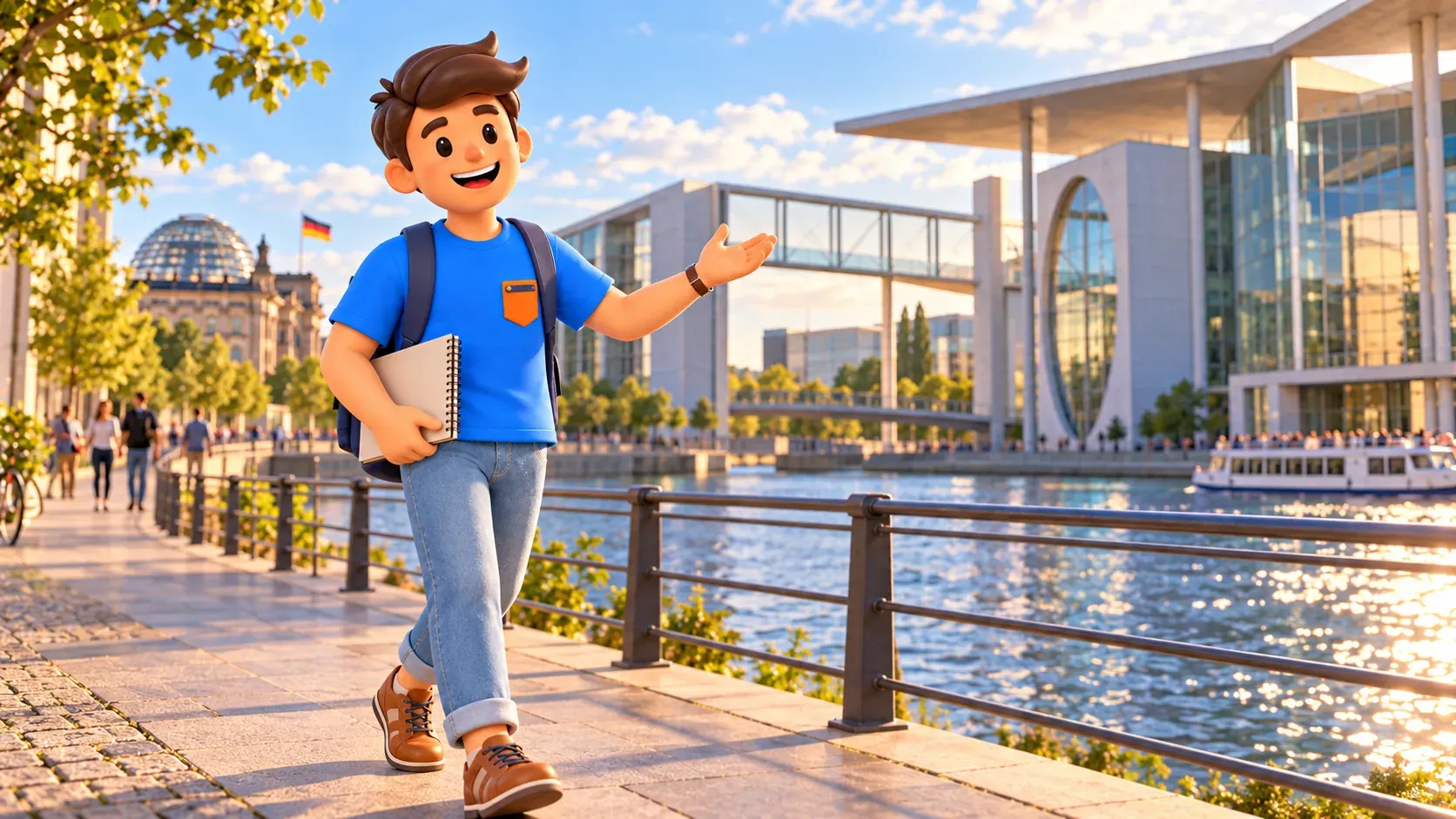
Continue along the open public riverside paths towards the Paul Löbe Building. Its committees and parliamentary functions belong to the working Bundestag. Architect Stephan Braunfels designed a building whose lighter surfaces and repeated forms offer a clear contrast with the Reichstag. Look at that contrast from outside; this walk does not include entering the building.
Across the Spree, the Marie Elisabeth Lüders Building helps explain the wider parliamentary ensemble. You can compare the two banks from a public viewpoint without crossing every bridge. Some connections between parliamentary buildings serve official functions. A bridge visible in the composition is not automatically a public continuation of the route.
After the river section, turn towards the Bundestag station area and treat that as your finish. Check your next journey separately. The generous final allowance lets you orient yourself, take a short rest or make a necessary detour without inventing another attraction. If your next appointment is elsewhere, leave the area with enough time to travel.
Choose a continuation without stretching the promise
If you have more time, choose one new idea after the two-hour walk: a limited part of Tiergarten, a meal or a later confirmed building visit. The Memorial to the Murdered Jews of Europe lies south of Brandenburg Gate and deserves its own respectful allowance. It is not included in this northward riverside sequence.
For a longer Berlin stay, RoadMe can develop the personal trip plan around the interests and pace that suit you. Try planning the wider visit there, so this short walk, a museum and time in the neighbourhoods fit into different parts of the trip comfortably.
For other ways to shape your first visit, see our Berlin route guide by interest. If your only free window is shorter than two hours, retain the gate and the Reichstag exterior, then finish; do not try to compress every riverside stop. In rain or strong wind, reduce exposed pauses and give the main views your attention.
Before setting out, confirm the start, the finish and any separate reservation. Bring water and comfortable shoes, and keep enough flexibility for a slower crossing or a changed public path. Two hours are enough for a coherent introduction when the goal is to understand the relationship between a few places, rather than to leave with the longest possible checklist.


