
Bookish Verona: a Walk from the Capitolare to the Civic Library

Verona has a walk whose most memorable object may be a book. It begins with old bindings and the work of a manuscript copyist, continues through a few streets in the historic centre, and ends at a working public library. Along the way, the city becomes more than the setting for famous stories: it becomes a place where texts are preserved, studied and still read.
This is a good choice when you want a quieter subject after churches and busy squares. You do not need to read Latin or know how a manuscript catalogue works. Curiosity about how words survive is enough. Allow roughly two and a half to three hours for a museum visit, the connecting walk, a brief introduction to the Civic Library and a proper pause.
How to shape the library walk
Start at the Biblioteca Capitolare beside Piazza Duomo. Continue towards Piazza dei Signori, pause by Dante's statue, cross Piazza delle Erbe and follow Via Cappello to the Biblioteca Civica. The sequence brings two different kinds of library visit into one manageable outing. It is an introduction, rather than a promise to explore both collections in depth.
RoadMe makes it easier to turn your interest in books, history and architecture into a personal plan for the whole trip, shaped around your preferences and available time. Try building your Verona day in the app so this quieter walk fits naturally alongside your other interests.
Our suggested allowance is 60–75 minutes for the Capitolare museum route, 25–30 minutes for the connecting walk with short stops, 20–25 minutes for a first look at the Civica, and another 40–50 minutes for a break and flexibility. These are planning estimates, not measured tour times. If you enjoy reading every exhibition label, give the first visit longer.
Tuesday, Thursday or Friday is usually the simplest choice for combining the two institutions. The Capitolare's ordinary museum closing day is Wednesday; the Civic Library follows its own timetable and holiday arrangements. Two nearby addresses do not mean identical visiting hours. Let the more restricted visit set your starting point.
The Capitolare: begin with one person's work
The museum visitor entrance is at Piazza Duomo, 19. Distinguish this from the research entrance on the same square: seeing an exhibition and consulting the library's holdings are separate activities. A museum ticket opens the designated visitor route; it does not let you browse rare books in the stores or choose a manuscript to handle.
There is a wonderfully tangible starting point to the Capitolare's long history. In 517, the scribe Ursicinus finished a manuscript and recorded his name and the date. That small act connects a vast chronology to an individual task. It is easier to grasp than an abstract competition over which library deserves the oldest label: someone copied these pages, and left a trace.
Imagine a book before the familiar printed edition. Another copy needed materials, skill and time; its later survival depended on many more decisions. Look beyond the most decorative page. The spacing of lines, the proportions of the sheet and the presence of marginal notes can suggest how a text was used, even when its language remains unfamiliar.
Avoid making the visit a hunt for every celebrated title. The originals on view depend on the exhibition and conservation needs. Choose one available object and establish what you are looking at: an original, a reproduction or an explanatory display. That distinction can change your understanding more than learning another author's name.
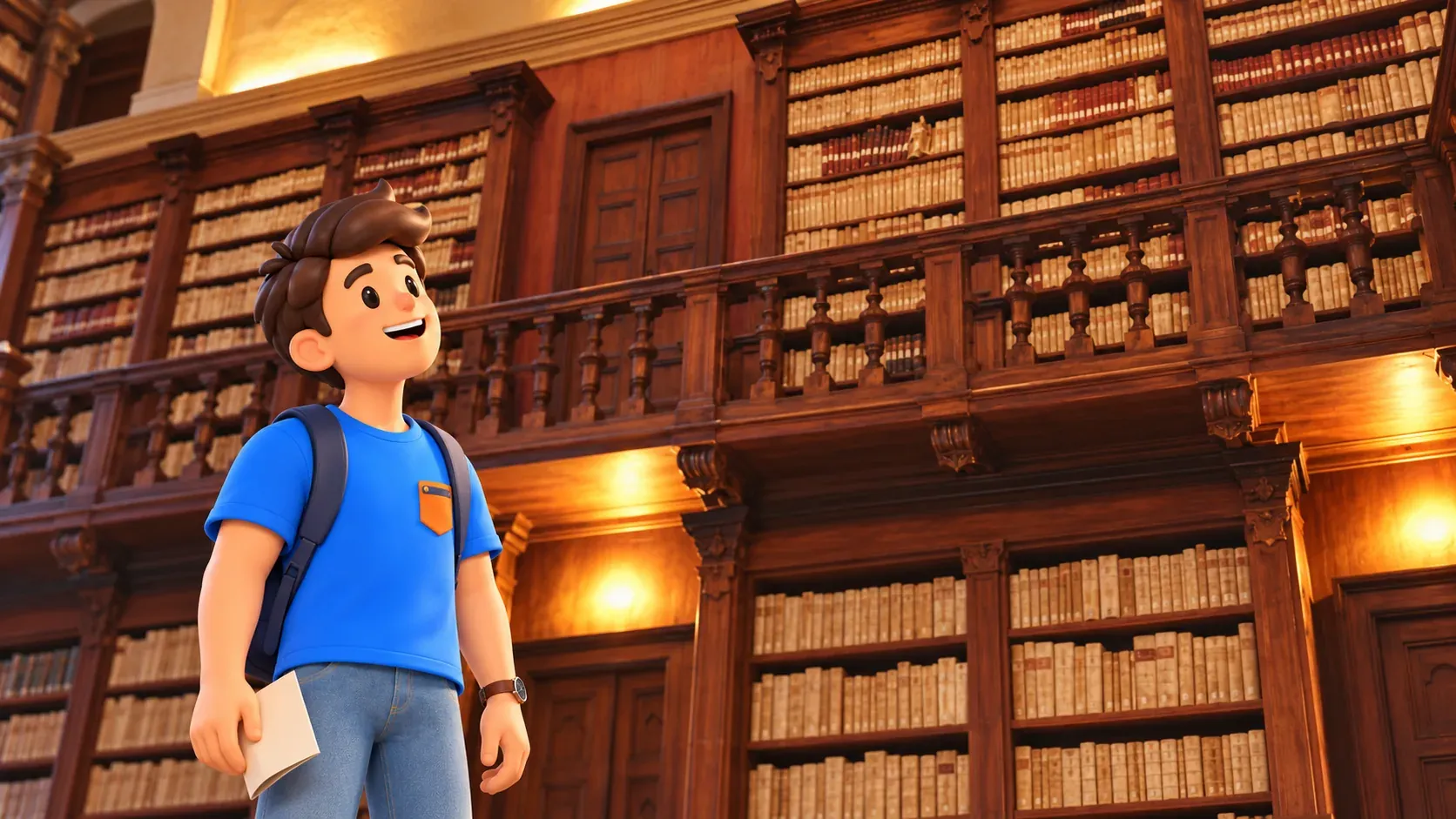
Read the room as well as the books
The monumental hall's wooden bookcases make an impression before you reach an individual display. But the age of a collection should not be transferred automatically to every board or architectural feature around it. The books, the building and the current exhibition belong to different layers of history. Their relationship is more interesting than imagining a room untouched for fifteen centuries.
Take one question into the galleries: what helped this text reach later readers? The answer might involve copying, study, careful storage or recovery. This gives each object a human action and makes the visit easier to remember. You leave with a story about the survival of knowledge, rather than a list of treasures whose names have already blurred.
An independent visit and a special guided tour may differ in content and language. Choose a clearly advertised session if you need a particular language; do not assume every ticket includes it. Groups of more than six visitors and groups with an external guide must contact the institution beforehand. Visitors with reduced mobility should also ask before buying, as the museum route may not be fully accessible.
Treat photography as a separate condition. Admission does not imply permission to photograph every object with flash. Follow the rules in each room. If photography is restricted, a brief note after leaving can preserve your response without turning conservation rules into an obstacle to the day.
From the cathedral quarter to Dante
After concentrated looking indoors, give the visit some breathing space. Walk from Piazza Duomo towards Piazza dei Signori through the central streets. This is a short connection within the historic centre, not a separate river excursion. Bridges and the hilltop viewpoint do not need to join this particular programme.
At Piazza dei Signori, pause beside Dante's statue. Here the figure provides a link between a book in a collection and a writer in public memory. A few minutes are enough to notice how the monument sits among the surrounding façades and the everyday movement of the square. A complete Dante itinerary deserves its own outing.
A statue is not evidence that the poet wrote a particular passage on that exact spot. In a literary city, it helps to distinguish a documented biographical location, a later memorial and a fictional setting. You can enjoy Verona's atmosphere without treating every appealing story as a verified episode.
If you are walking with someone, share one observation from the library: the object you understood best, rather than necessarily the oldest or most valuable. On your own, note a question to follow up later. Either approach carries the museum experience into the street, making the transition part of the subject rather than empty distance.
Across Piazza delle Erbe and along Via Cappello
Reach Piazza delle Erbe through the passage by Arco della Costa. Among the tables, market activity and decorated façades, the library theme can seem to disappear. There is no need to maintain museum silence outdoors. Instead, notice another life of words: signs, posters, menus and conversations, all serving a very different purpose from a preserved manuscript.
This is a sensible place for a break if your eyes need a rest after the exhibition. Have a drink before the next library rather than treating a working reading room as a café. The proposed time includes a pause, but no particular business is an essential attraction. Choose somewhere comfortable without adding another obligation to the walk.
Continue along Via Cappello towards the Civic Library. Do not automatically add Juliet's House because it shares the street. That visit has its own admission arrangements and time requirements. You can simply keep walking: a famous literary symbol and an everyday place of reading can be neighbours without needing to become a single programme.
If books are only one part of your ideal trip, let RoadMe develop a personal plan around the combination of art, food, history and relaxed exploring that interests you. The app makes it more convenient to turn those preferences into a coherent route and choose a comfortable amount for each day.
The Civic Library: books in everyday Verona
The Biblioteca Civica is at Via Cappello, 43. The character of the visit changes here: this is a working institution used by readers as well as visitors. Ordinary entry is free and the library is open to everyone, while individual services and special collections have their own procedures.
For a first introduction, enter the areas currently open to visitors, ask staff what can be seen and consider a temporary exhibition if one is running. There is no need to request every historic room. Guided visits to the building are arranged separately in advance; they do not come automatically with free admission.
The Civica has historical depth of its own. Established in 1792, it opened to the public in 1802. A simple division between ancient books at the first library and exclusively new ones at the second would therefore miss the point. The difference on this walk is principally how you encounter them: a museum presentation gives way to the everyday activity of a public library.
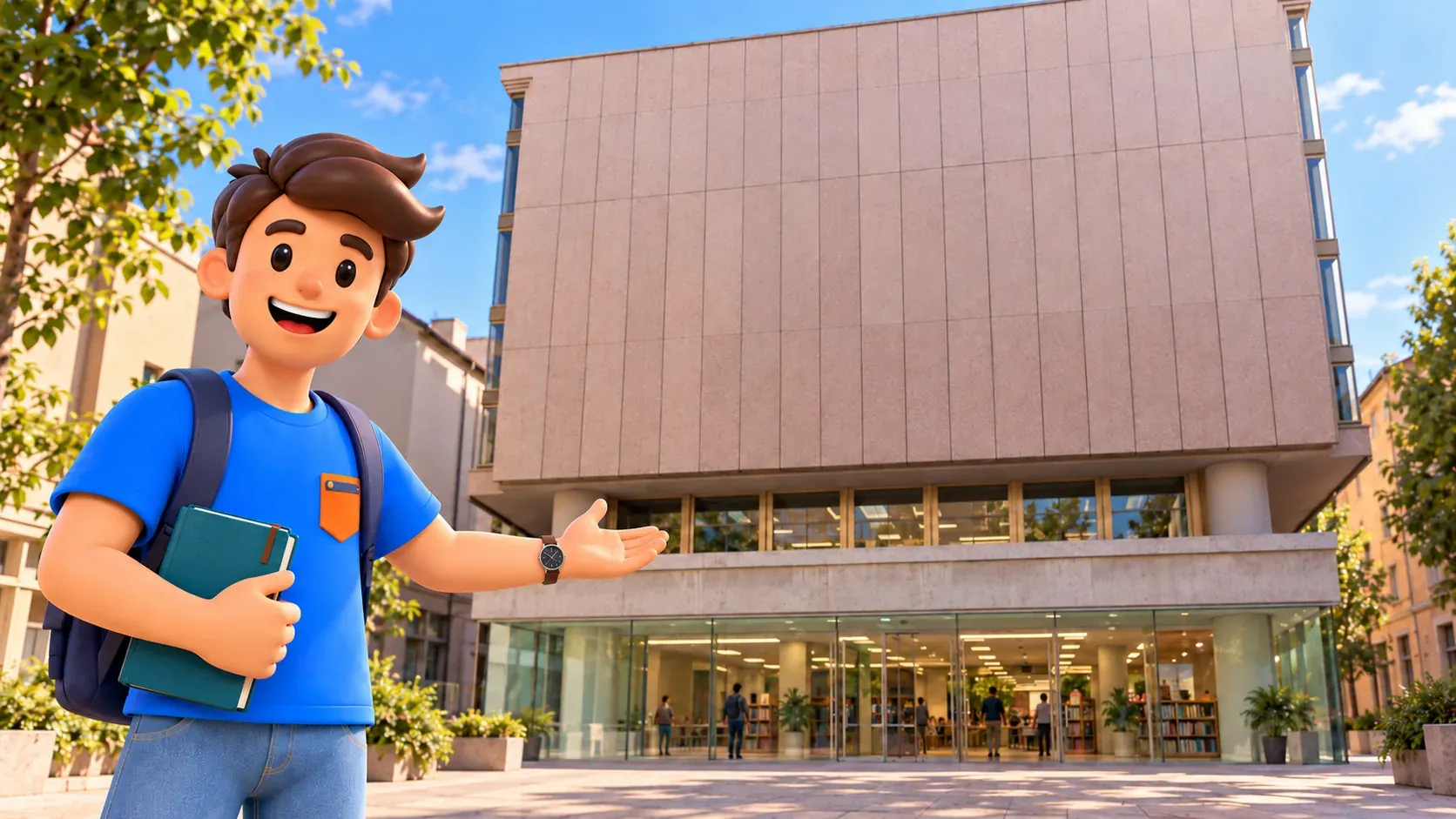
Look at the building, too. Its modern component and glazed entrance are reminders that bookish Verona continued to change in the twentieth and twenty-first centuries. Cultural value does not always arrive inside a medieval arch. Here contemporary architecture also helps you see a library as functioning city infrastructure, with practical needs for storage, light and access.
A short visit that respects the readers
Silence your phone, keep conversation low and avoid close photographs of people without their agreement. If you want to look through a book, ask which materials can be taken from the shelves directly. An ordinary open shelf and a special collection are different situations. A library card is required for borrowing, reservations and collecting requested books; free entry does not remove those procedures.
Avoid occupying a study place solely to photograph the interior. For a brief stop, understanding the layout and the rhythm of the library matters more. If you would like to stay and read, ask about a suitable place and the current arrangements. That can become a rewarding longer visit, but it needs a larger place in your day than a quick introduction.
At preparation, the ordinary Civica timetable provides Monday afternoon opening, daytime opening Tuesday to Friday, and an earlier Saturday finish. A normal Tuesday, Thursday or Friday after a morning Capitolare visit is an uncomplicated starting idea. Check holidays and the relevant department: children's library hours or a special evening event should not be treated as the timetable for the entire institution.
Choose a satisfying finish
End at the Civic Library, or nearby with a little reading from your own book. Recall the two roles of a text: a rare object carefully presented, and part of the city's daily life. You do not need to see every famous manuscript to understand that relationship.
If the day already contains several museums, keep just one substantial library visit. If this is your main interest, spend longer at the Capitolare or choose a scheduled Civica event after checking its date and conditions. Our three-day Verona plan can help place quieter subjects across a longer stay; this walk works well as a distinct half-day.
Rain does not turn the connecting streets into an indoor route, and hot weather makes the pause worth keeping. There is no required hill climb, but historic buildings may have level changes. Ask specifically about the route inside each library if access matters to your visit. A compact centre shortens the walk without automatically resolving every entrance issue.
The best souvenir may be a new curiosity: the work of a scribe, a wish to read Dante or a fresh interest in modern library architecture. Two well-chosen stops offer enough to discover Verona as a city of readers.


