
Bluewaters in Two Hours: Walk to the Island by the Pedestrian Bridge
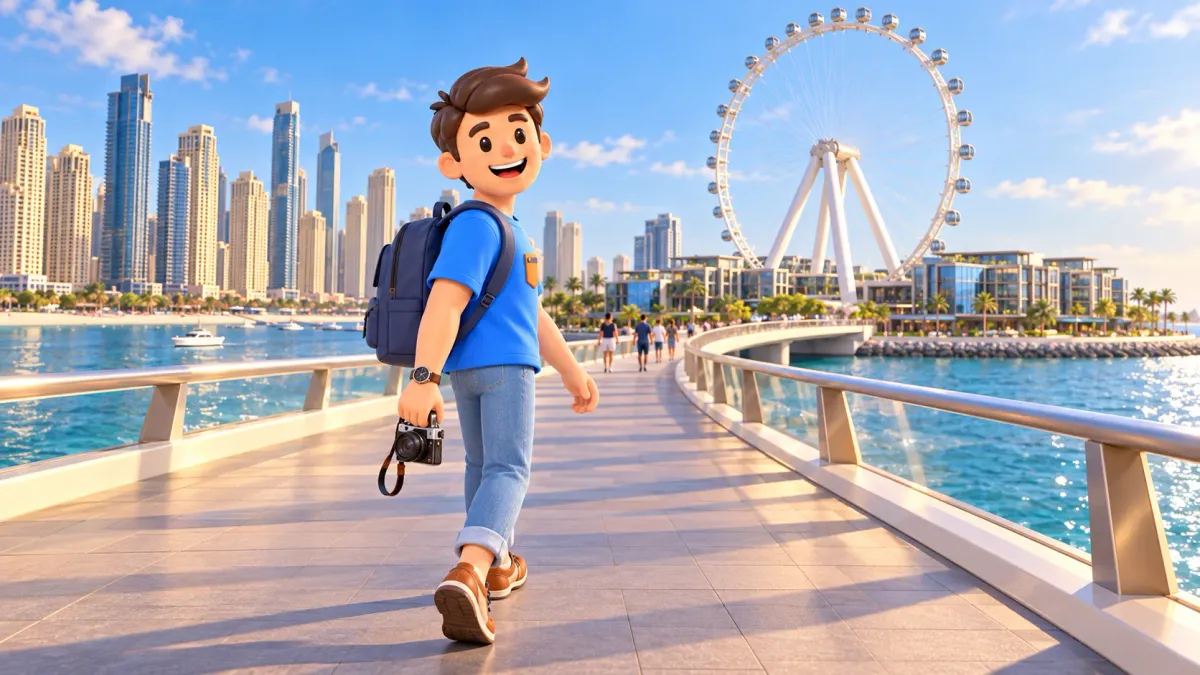
The walk to Bluewaters begins before you reach the island. On the pedestrian bridge, the distance from JBR becomes visible: water opens around the path, the island's outline grows clearer and Ain Dubai changes from a landmark across the bay into a structure you can study from the ground.
For a short visit, make that transition the main experience. Cross by the available public route, take a manageable waterfront walk, look at the wheel and leave time for a pause before returning. Allow about two hours according to your start, pace and access. This is a planning estimate, not a measured schedule, and it does not include a ticketed ride or museum visit.
Give the two hours one clear shape
RoadMe can create a personal route or whole trip around your interests, dates and pace. Prepare Bluewaters in the app: connecting the bridge, island walk and the rest of Dubai is much more convenient than trying to coordinate separate lists of places.
Start by choosing a real public approach to the bridge from the JBR side. Save that starting point and the place you need to reach afterwards. A general island label does not describe the whole journey. The useful short plan includes the approach, crossing, a selected island section and the return, rather than counting only the time spent beside the wheel.
As a rough balance, allow a first block for approaching and crossing, the largest share for the island and its views, a proper pause and another block for returning. You can keep the island section small and still have a complete outing. There is no need to follow every edge or turn every visible attraction into a stop.
Choose a comfortable outdoor period for the group. Water on both sides does not automatically make every exposed part pleasant in all conditions. The best timing is the one that supports the walk and onward journey together. If anyone wants a shorter outing, agree on the turnaround before arriving rather than discovering different expectations halfway across.
Keep ticketed experiences separate from this walking plan. If a ride or museum is the main reason to visit, check its current offer and make it the anchor of a longer programme. This two-hour version remains useful as an island introduction with architecture, water and a pause, without depending on a particular attraction operating.
The bridge is part of the visit
The Bluewaters pedestrian bridge was completed in 2017. It links the shore near Jumeirah Beach Residence with the artificial island. At roughly 350 metres long, it is more than a small step across water: the crossing gives the island enough separation for the change in viewpoint to become part of the experience.
The path curves rather than behaving like a straight line laid over the bay. That movement gradually changes the relationship between shore, water and wheel. Look ahead, then briefly back towards JBR. The same crossing can contain two different compositions without needing a separate viewpoint or a lengthy detour.
An earlier design considered a tall support and cable structure. The developed solution used a lower profile, leaving the coastal panorama a stronger subject. This is a useful example of an engineering decision changing what a pedestrian notices. The bridge connects the places while avoiding a single vertical element dominating the view.
Keep moving along the usable public path and choose appropriate places for longer stops. A view is more enjoyable when you are not blocking people behind you. The crossing does not need continuous photography. One image in each direction can preserve the idea while leaving time to notice the changing distance from the mainland.
Ain Dubai: read the circle from ground level
Ain Dubai opened in 2021 and immediately gave Bluewaters a distinctive circular outline. Its name means the Eye of Dubai. At more than 250 metres high, the observation wheel was the largest of its type when it opened. That historical scale is part of the story, but the form itself is more useful than a record claim for this walk.
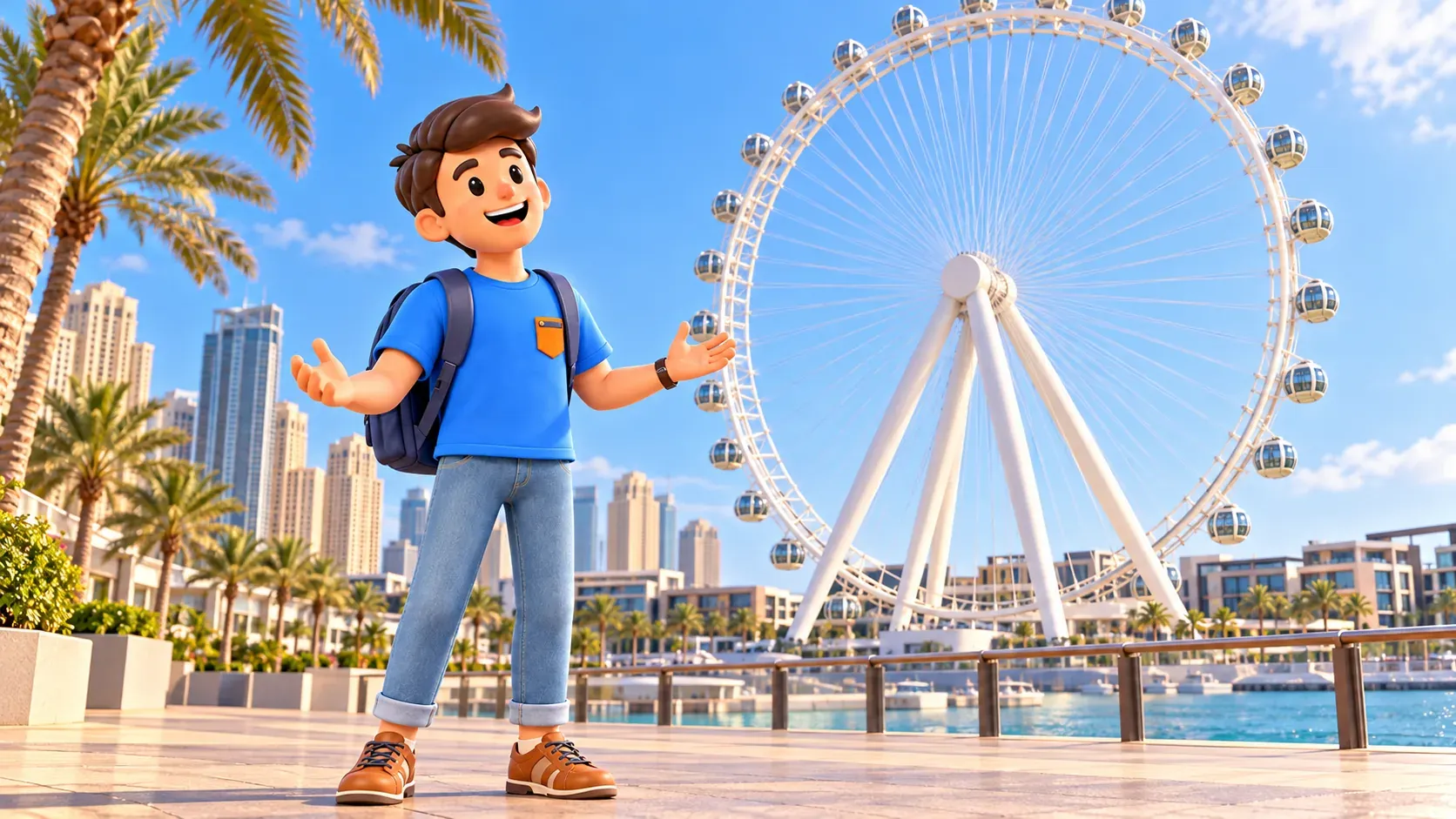
Compare the circle with the dense vertical groups across the water. Towers organise a skyline through height and repeated edges; the wheel encloses a broad area while leaving much of it visually open. Its outline becomes easy to recognise precisely because it differs from the surrounding residential buildings.
From an available public position, notice the major parts: inclined supports, central hub, rim, spoke cables and enclosed cabins. Four sloping supports carry the centre. The fine lines inside the circle contrast with the heavier elements around the hub. The apparent lightness of a distant silhouette does not mean the structure is simple.
The forty-eight glazed cabins were developed by POMA for the project. At ground level, they help reveal the scale: the little forms around the rim are passenger spaces rather than merely decorative points. You do not need to count each one to understand the difference between this structure and a small fairground wheel.
Look from a slightly different public angle if the route allows it. Frontally, the circle is the clearest feature; from the side, depth and the inclination of the supports become more noticeable. This comparison is a complete architectural subject. It does not depend on entering a cabin or assuming a particular ticket is available on your date.
Look at the coast from the island side
After studying the wheel, turn some attention back to the shore. JBR's residential frontage and the taller groups behind it form a different image from this side of the water. You can see more of the relationship between the built edge and the open bay instead of standing within the tower composition itself.
Choose one contrast to follow. How does the broad horizontal water change the apparent density of the buildings? Which parts of the skyline remain distinct and which merge into a single group? A panorama becomes easier to remember when you select a relationship rather than attempt to identify every tower.
Bluewaters is an artificial island, so the coastline is also a story of urban construction. The shore, connections and buildings belong to a deliberately organised setting. That does not reduce the pleasure of the sea view. It adds a useful question: how do water, land and movement work together in the city's coastal image?
Keep the waterfront section manageable. The purpose is a different view and an island atmosphere, not a complete survey of every building. Follow the available public space and allow the route to turn back when it has delivered those impressions. A shorter coherent walk often leaves a clearer memory than a longer circuit walked only for completeness.
Leave room for an ordinary pause
Choose an available place for a drink, a small meal or simple rest according to your day. You do not need a particular restaurant to make the programme work. A pause in suitable conditions gives the island visit a different pace after the bridge and the large structure. Let it be part of the plan rather than time left over by accident.

Ask which impression felt strongest: the crossing, the wheel's circle or the mainland seen from across water. Those are three different ways the island changes the city view. A companion may choose something else. Comparing answers makes the pause useful without turning it into a quiz about construction dates or the names of all the towers.
For children, use an easy shape question: where did they notice a circle, a straight edge and a curve? The wheel, buildings and bridge provide different answers. They can show what they mean rather than learn a technical description. For adults, the same exercise can reveal how simple geometries make a complicated urban scene readable.
If the group needs more rest, shorten the next walking section. The return still belongs to the outing, so it should not begin only after everyone has used all their energy. Protecting a comfortable finish is usually a better choice than adding one more shoreline segment because it appears nearby.
Decide separately about an indoor visit
Madame Tussauds Dubai opened on Bluewaters in 2021. It brings the long tradition of wax portraiture into a setting shaped by contemporary public images. If that subject interests you, it can form the reason for a longer island visit rather than a quick compulsory addition to the two-hour walk.
The interesting question is how likeness is made. Face, hair, clothing, gesture and posture work together to create recognition. That is a different kind of looking from reading the wheel's structure or a distant skyline. Choose the museum because you want that change of subject, not because every nearby attraction needs to be included.
Check the current visit, admission and presentation when making that choice. Adding an interior changes the balance, timing and perhaps the best finishing point. The walking version stays complete without it. Likewise, a ticketed wheel experience should receive its own time and current checks rather than being squeezed between a short crossing and a promised quick return.
The return crossing offers a second view
Returning on the same bridge need not feel like repeating the opening. JBR now becomes the destination in front of you, while the island recedes. The relationship between close deck, middle-distance water and distant buildings reverses. Notice the change before reaching for the camera again.
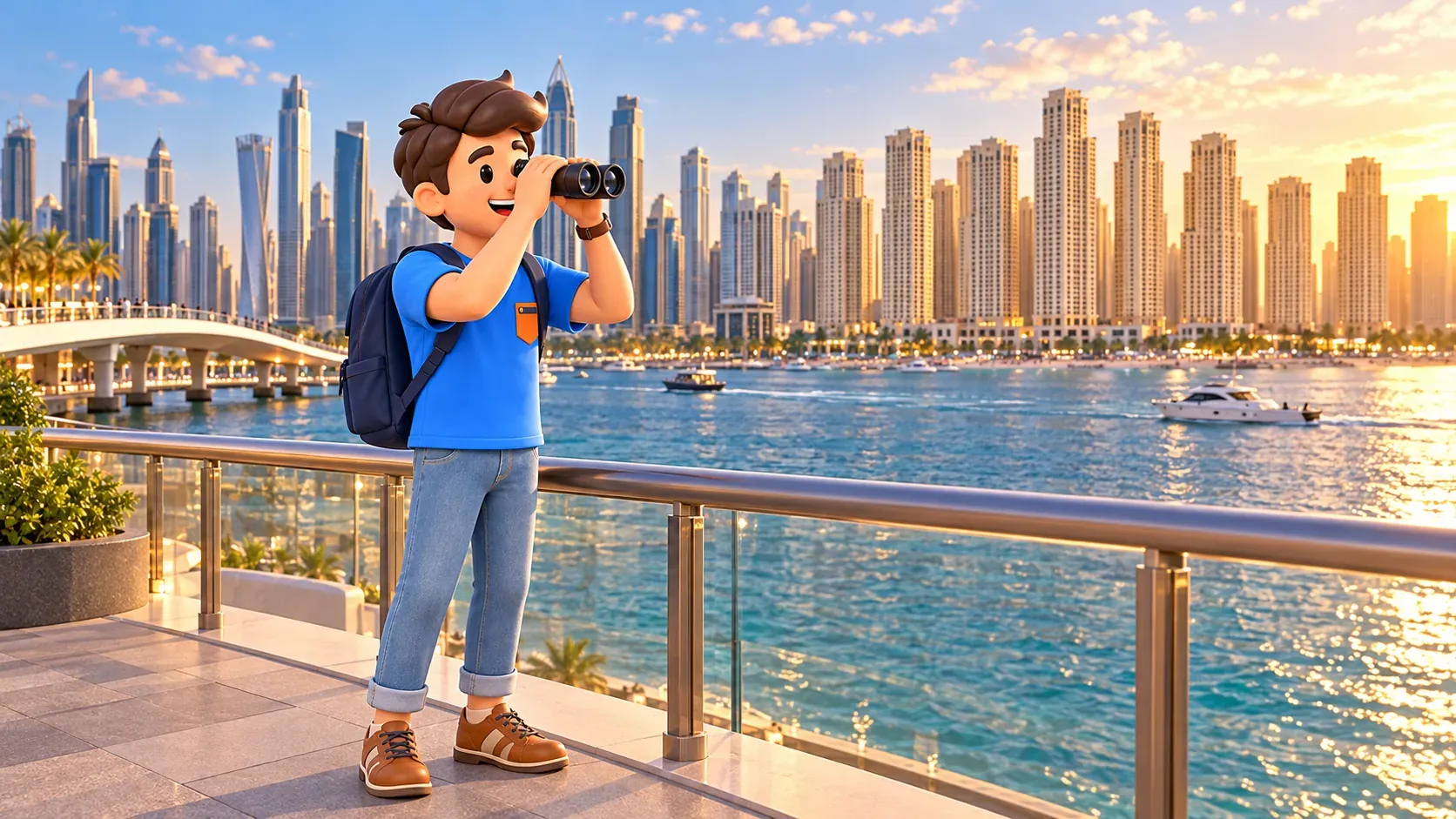
Choose a small number of photographs with different purposes: one showing the crossing, one explaining the wheel's form and one placing the mainland across the water. That is enough for a coherent visual memory. Similar images from every few steps can make the outing feel busier without adding much to what you remember.
Light, weather and visibility will shape the actual view. Do not make the success of the walk depend on one exact sunset photograph. If the distant skyline is softer, attend to the bridge's curve, the rim and the nearer water instead. The route contains several scales of observation, so one imperfect panorama need not define the whole visit.
Finish before the short outing becomes another full day
Allow time from the bridge approach to your actual transport or next meeting point. Two hours are an approximate container, not an obligation to keep adding places until you are tired. After crossing, observing the island and pausing, the visit can have a proper ending. The remaining day can serve a different interest or a slower meal elsewhere.
RoadMe can place Bluewaters in a personal multi-day Dubai plan and balance coastal walks, cultural stops and rest around your interests. Use the app to organise the whole trip more efficiently, so each outing fits the days without rebuilding the plan every evening.
The Marina-to-JBR walk offers a different approach to this coast, moving from enclosed urban water to the open sea. For a wider stay, the three-day Dubai itinerary gives contrasting parts of the city their own time. Choose these connections across your trip rather than automatically joining every walk into one long day.


