
A Day towards Bexley: Red House or Hall Place?
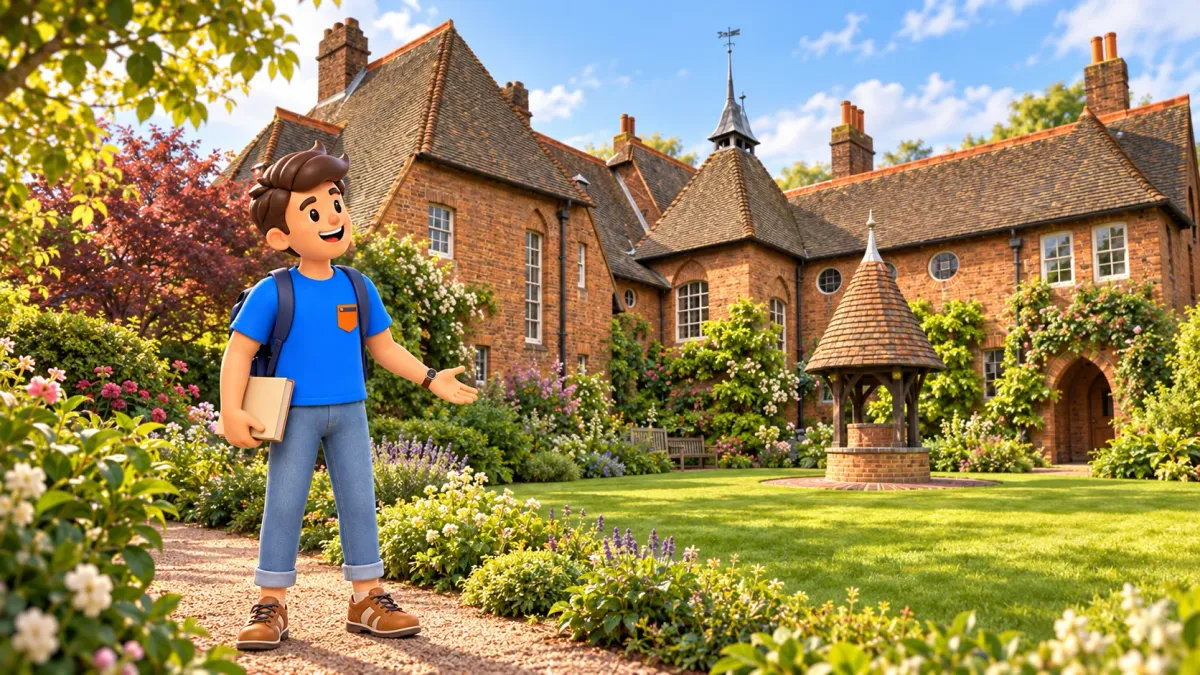
For a day towards Bexley, choose Red House for a booked encounter with William and Jane Morris’s Arts and Crafts home, or Hall Place for a freer garden walk around a historic house. They offer different kinds of attention: design, making and domestic life at one; topiary, planting and changing views at the other. One well-chosen destination can give the day a clearer shape than trying to fit both into the same afternoon.
The main Red House option allows two and a half hours locally, with lunch additional. The Hall Place garden option allows three hours, including a simple lunch. Both exclude travel from your accommodation, railway journeys and the approach from the station. Neither is a claim that the whole outing fits those hours door to door. Choose the experience first, then fit the transport and the confirmed visiting date around it.
Which kind of day would you enjoy?
Choose Red House if the relationship between a home, its makers and a wider artistic movement interests you enough to reserve a guided visit. Choose Hall Place if you want more time outdoors with a selected garden walk and a look at the house from outside. Hall Place’s gardens are free to enter; its historic house and exhibitions require their own pre-booked tour on selected dates. Free gardens do not mean a free walk-in museum.
Try RoadMe to develop a personal plan for your whole London trip around your interests, dates, budget and pace. In the app, it is much more convenient to give a design-focused excursion or a garden day its place alongside city walks, cultural visits, meals and recovery throughout your stay.
For Red House, reserve fifteen minutes for arrival, up to sixty for the tour, twenty-five for selected garden time when access is available, fifteen for the exterior, twenty for the remaining on-site connections and fifteen as reserve. That totals 150 minutes. With a confirmed eleven o’clock tour, an illustrative start is 10:45 at the property approach and a finish around 13:15 back at the same approach. Add lunch and all station travel separately.
For Hall Place, allow a hundred minutes for selected garden walking and looking, twenty for the house exterior, thirty for a simple lunch and thirty for orientation and reserve. That is 180 minutes, starting and ending at the same visitor approach. Ten until one is a useful daylight outline when the site is open. It is not a circuit of the whole estate, an interior house visit or a promise that every path will be available.
Red House: a home made around artistic ideas
Philip Webb designed Red House, completed in 1860, for the world of William and Jane Morris. Its red brick, steep roofs and relationship with the garden make the building itself part of the encounter. The Arts and Crafts connection becomes more tangible when you think about decisions made for everyday life: how a room might be used, how a surface is decorated and how making things belongs within a home.
The National Trust’s account includes original features, furniture associated with Morris and Webb, stained glass, paintings and embroidery connected with the artistic circle. A guided visit helps link those different forms of work without requiring you to know every name in advance. Bring one interest, such as a material, a pattern or a particular way of using a room.
The house has also had later residents and changes. The Morris family left in 1865, and what you see reflects layers of history rather than an untouched single moment. That makes the guide’s explanation useful: a surviving feature, a later alteration and a modern interpretation do not all tell the same story.
Afterwards, in your own space, try drawing a simple pattern from a leaf or another ordinary object you own. Repetition, spacing and the shape between motifs can become a small way to think about design. This is a personal activity after the outing, not a promised workshop at Red House or permission to handle historical fabric and furniture. A visit can make everyday objects more interesting without requiring a complete lesson in decorative arts.

A reservation comes before the journey
Red House visits are by pre-booked guided tour. The operator describes tours as approximately forty-five minutes to an hour, starting promptly at the time on your ticket. The main planning page describes a May-to-October season with Thursday-to-Saturday tour slots, but a general seasonal pattern does not establish that your chosen date is open. Confirm the actual booking and the areas included before arranging the journey around it.
Older guides describing a free, unbooked afternoon visit should not determine this plan. The present arrangement is a paid guided visit, with separate eligibility conditions where applicable. Choose the correct ticket for each person and read the confirmation. A saved address, a previous visitor’s experience or a typical opening day is not a substitute for an available slot. If no suitable visit is offered, choose another date or a different day’s destination.
Our fifteen-minute arrival allowance is a planning buffer, not a requirement to enter the property before your booked time. Keep enough additional time for the journey from the station, and follow the instructions on your ticket. The short local schedule begins at the property approach, not at a central London railway terminal. Adding a late start to an exact tour appointment is less forgiving than arriving for an unstructured garden walk.
The garden belongs with the house
When garden access is available with your visit, use twenty-five minutes for a selected look rather than an exhaustive circuit. The original well in the courtyard was designed by Webb with a turreted tiled roof, echoing the house’s medieval influences. Look at that relationship between a small structure and the larger building.
The orchard offers another useful distinction. The current orchard was added in the early twentieth century; the National Trust notes that none of its present trees were alive when the Morrises lived here. The garden can evoke an earlier world without every living element being original. Plants, flowers and access change with the season, so do not base an autumn or winter journey on a photograph showing roses in full summer bloom.
Check individual access needs in advance. The property has gravel, lawns and uneven brick paths; ramp access is available to the house’s ground floor, while the first floor has no step-free access. These are different experiences, not a general guarantee of accessibility. Ask the team what arrangements will support your visit. The main plan does not include a meal at the property, so keep food and the next journey as separate blocks afterwards.
Hall Place: the outside can be the main event
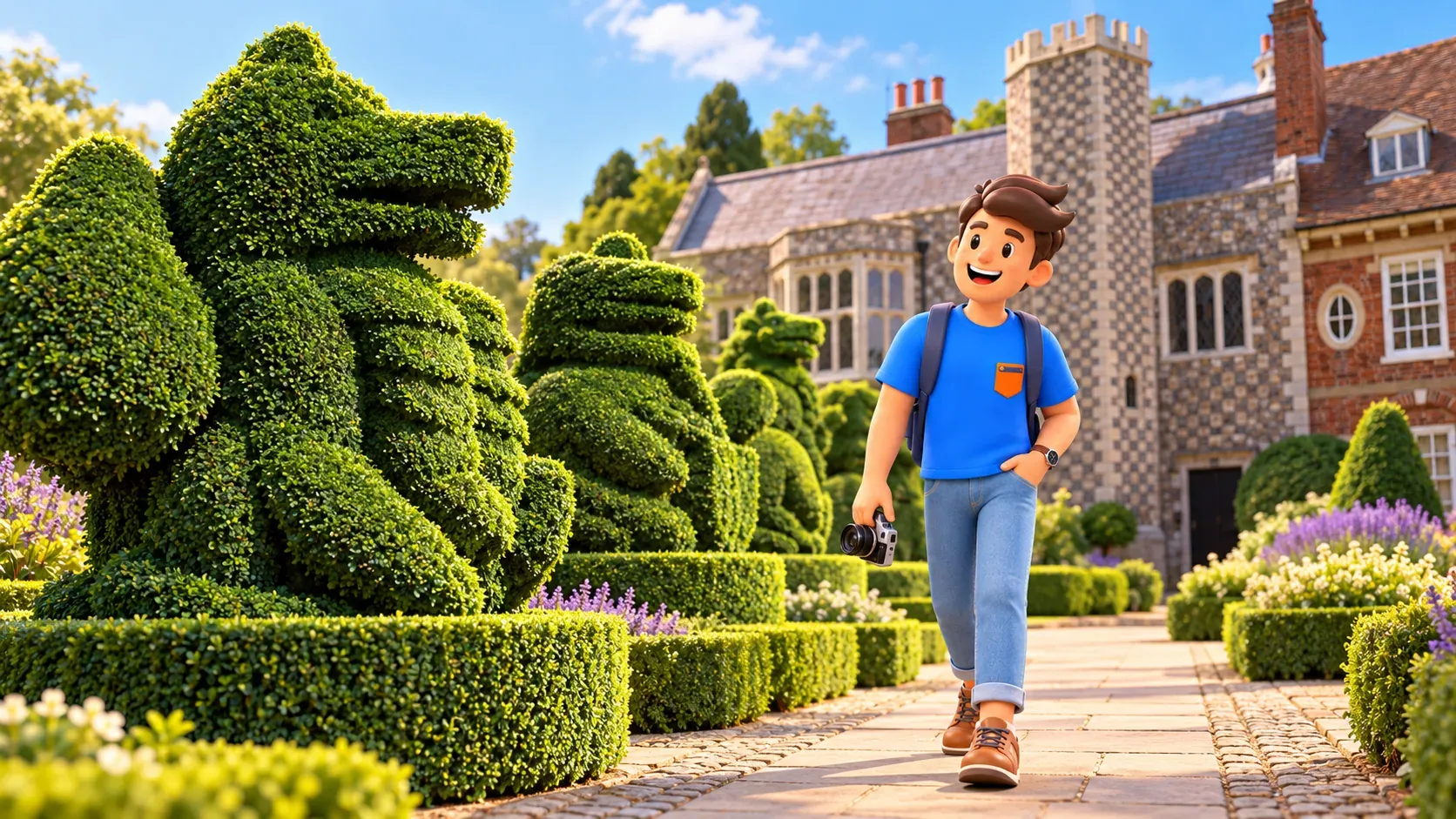
Hall Place offers a different starting point. The historic house dates from 1537, with a distinctive checkerboard effect made from flint and rubble and later red-brick work from the seventeenth century. From an available garden viewpoint, compare the surfaces and the rhythm of windows. You can enjoy the contrast without going inside or treating the building as a perfectly uniform piece from one period of English history.
Choose a manageable out-and-back or short loop through the available formal garden paths, returning to the same visitor approach. Let the topiary and a few changes of view provide the structure. The hundred-minute garden allowance includes walking between the selected features as well as looking and resting. It is not extra time on top of a complete estate circuit. A distant viewpoint or an extended walk along the River Cray would need its own allowance.
The Queen’s Beasts topiary was planted in 1953 to mark Elizabeth II’s coronation. The animal shapes offer a different kind of sculpture: living material needs continuing care to maintain a recognisable form. Look first at a silhouette, then at how several figures relate to the house behind them. There is no need to identify every heraldic creature to appreciate the contrast between a soft planted shape and patterned masonry.
The house interior is a separate decision
Hall Place’s historic house is open to visitors through pre-booked guided tours on selected dates. The exhibitions inside belong to those arrangements, rather than to ordinary free garden admission. A tour can be a good reason to return if the building’s history particularly interests you. Its duration, arrival instructions and available programme require a new timetable, not a hidden addition inside the twenty minutes reserved for looking at the exterior.
The house’s history includes wartime work as the Santa Fe intercept station. Encoded messages intercepted here were sent to Bletchley Park for decoding, a distinction worth preserving if that subject attracts you. The garden route does not include a visit to the wartime display. Choose a relevant confirmed tour if you want that deeper encounter, rather than assuming that every interesting story mentioned about a property is accessible through its free outdoor areas.
Other attractions on the site, including animal experiences and the miniature railway, have separate calendars and conditions. They are not part of this garden outline. The most useful question is whether an additional activity matters more than the quiet time you came for. If it does, check its booking and adjust the day openly. Otherwise, a garden, a house exterior and a meal are enough to give the outing a complete shape.
Give the practical details their own time
Check current garden hours and gate notices before travelling, and keep the main Hall Place visit in daylight with an early finish. Facilities and individual gates can close at different times; private events can also affect access. The café’s availability and a suitable thirty-minute lunch are separate matters. Choose a simple meal when service fits your time, or extend the lunch honestly. A free garden does not remove food and transport from the budget.
Hall Place lists some hard-surfaced routes within the formal gardens, with individual mobility arrangements requiring a check. Do not assume the whole estate or the railway approach is step-free. Respect the posted garden rules and use the available paths. If one section is unsuitable or unavailable, make the chosen garden visit smaller instead of treating the entire map as a list of compulsory stops.

The two destinations have different railway approaches: Bexleyheath is the nearest station named for Red House, while Hall Place names Bexley. They are not interchangeable stations. Check the current journey from your own starting point and allow the public-street approach separately. Follow official pedestrian directions and crossings around major roads; a road interchange is not a walking shortcut. The main choice here does not require a transfer between the two properties.
With RoadMe, these preferences become a complete personal London programme that is easier to prepare and use across the stay. Let the app work through your dates and pace, giving an excursion, central sights, cultural interests, meals and recovery time a convenient place in the whole trip.
For another kind of garden day, our first-visit plan for Kew Gardens has its own paid admission and longer local route. The Hampton Court and Bushy Park day gives a palace much more time. These are alternatives for other days. Let the Bexley choice remain focused enough that the journey home follows a satisfying visit, rather than a race between addresses.


