
Bernauer Strasse: a walk through the Berlin Wall Memorial
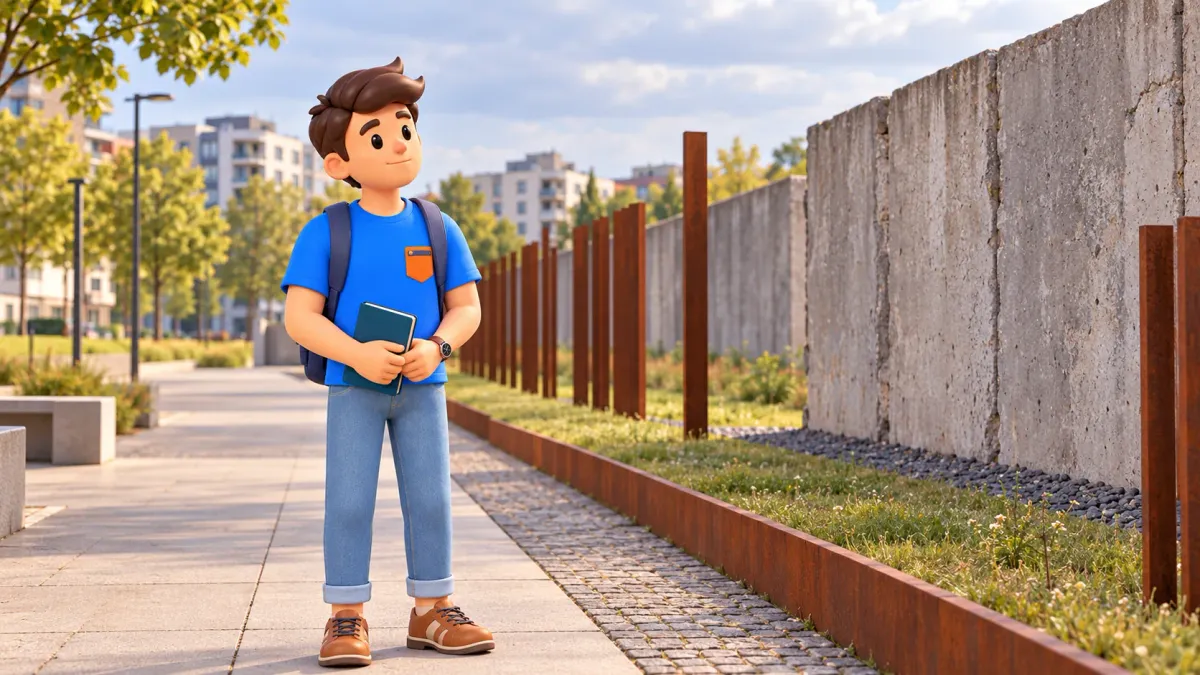
To understand the Berlin Wall as a border that divided everyday life, begin at Nordbahnhof and follow Bernauer Strasse through the memorial. Allow around two hours outdoors for orientation, traces of the border system, the Window of Remembrance, the Chapel of Reconciliation and the sites of former homes. A convenient finish is the junction with Brunnenstrasse, beside the U8 station Bernauer Strasse.
This is a walk through a historical site, with time to read and reflect. The duration is an editorial estimate, not a measured track. A full Documentation Center exhibition visit, the viewing platform or a guided tour needs additional time. There is no need to fit every Berlin Wall location into the same day: this street already shows how history changed particular homes, journeys and relationships.
Give the walk two unhurried hours
From Nordbahnhof, head towards Gartenstrasse and Bernauer Strasse and find the Visitor Center at Bernauer Strasse 119. Continue generally east along the street, using designated crossings between the memorial’s sides. The Documentation Center is at number 111; the outdoor exhibition and commemorative places occupy the former border strip opposite. Use the memorial’s on-site plan rather than treating every reference to a museum as the same entrance.
Try RoadMe to develop a personal plan for your whole trip around your interests, dates and pace, giving historical places proper time. The app makes it more convenient to treat this walk as one thoughtful part of the day and arrange the surrounding programme to suit you.
As a guide, allow ten minutes for the station approach, ten for orientation, twenty-five for border traces and the Window of Remembrance, twenty around the chapel, twenty-five for former homes and further outdoor material, fifteen for a pause and fifteen to finish at Brunnenstrasse. Connections are included in those sections. Together they make 120 minutes, without prescribing how long you must stand before any particular panel.
The outdoor exhibition extends for about 1.4 kilometres along Bernauer Strasse, but this suggested finish does not require you to cover all of it. The central area offers a coherent introduction. If you read slowly or visit with children, select fewer subjects. Give an in-depth indoor visit its own forty-five to sixty minutes or more according to interest, rather than treating the exhibition as a shortcut between doors.
At Nordbahnhof, establish where the border ran
Start with the overall layout instead of searching for the longest concrete fragment. Bernauer Strasse illustrates an unusual situation: buildings on its southern side belonged to East Berlin, while the pavement immediately outside was already in West Berlin. The border therefore affected ordinary doors, windows and entrances. This gives a familiar everyday scale to an urban division that can otherwise seem abstract.
The Visitor Center helps you orient yourself. It is distinct from the Documentation Center, with a different address and purpose. One supports the beginning of your visit and the selection of information; the other offers a permanent exhibition and a view across the site. On a day when the buildings are closed, the outdoor exhibition remains visitable within its own hours, but indoor services should not form part of your plan.
Nordbahnhof itself also contains an exhibition about border stations and ghost stations in divided Berlin. It is a separate subject concerning the effect of the border on transport. Save it for another visit, or look when convenient, rather than making an extra exhibition an obligatory addition to the two-hour start. Even the first stage can grow considerably if you attempt to read everything.
The border strip: understand a system
On the outdoor grounds, look beyond concrete to the space between elements. The border involved several barriers, patrol routes and surveillance infrastructure. Traces and explanations on site show why a photograph of a single surface cannot convey the whole arrangement. The distance between lines matters alongside the height of a wall: it helps reveal how much space was removed from ordinary urban life.
Part of the memorial’s border section is enclosed and cannot be walked through. That is part of its design, rather than an invitation to find another entrance. Exterior views and, when open, the Documentation Center’s viewing platform help explain it. Treat the inaccessible section as a deliberate element of the memorial. The interruption of easy movement contributes to understanding what this place once did.
Distinguish original remains from later memorial interpretation. Historical traces survive, but some elements have been reconstructed or replaced; for example, the watchtower was installed to match the one formerly here. This does not diminish the memorial. It lets you read more accurately: which parts survived the border, which demonstrate its arrangement and which were added to support present-day understanding and remembrance.

Choose one small section and compare it with the site plan. Where was the line of restriction, where did control space lie, and where can a visitor now walk? You do not have to reproduce every phase of border construction. Understanding one section clearly can be more useful than quickly collecting details that remain difficult to connect or distinguish from later reconstruction.
The Window of Remembrance: lives behind the layout
At the Window of Remembrance, or Fenster des Gedenkens, change pace. It presents names, dates and photographs, where available, of civilians who died at the Berlin Wall. The focus moves from the border’s arrangement to individual lives. You do not need to read every name at once: spend time with one biography, then allow yourself a quiet moment to absorb it.
Do not attach an invented story to a photograph. If someone’s life interests you, read the memorial’s information and distinguish documented details from your own assumptions. The same place of death does not imply identical circumstances. This approach preserves the human scale without compressing every biography into one narrative or turning the memorial into a backdrop for a dramatic escape story.
This can be a place to pause conversation and put a camera away. If you photograph, consider other visitors and leave room for those who have come to remember relatives. Companions may wish to linger or move ahead independently. People respond differently to such places; the walk does not require a shared emotion or an immediate discussion after each panel.
The Chapel of Reconciliation and an absent church
Continue towards the Chapel of Reconciliation, Kapelle der Versöhnung. Dedicated in 2000, the contemporary chapel occupies the site of the earlier Reconciliation Church. After the Wall was built, that church became inaccessible within the border strip; it was demolished by explosives in 1985 during the further expansion of the border grounds. The present chapel is a different building, not the old church simply preserved between concrete barriers.
From outside, notice the smaller scale and materials. After long border lines, this is a different organisation of space, gathering around memory, a community and the possibility of pausing. The absent volume of the former church matters too. If you want to understand surviving details and foundation traces, use the interpretation on site rather than reconstructing the earlier building solely from the present architecture.
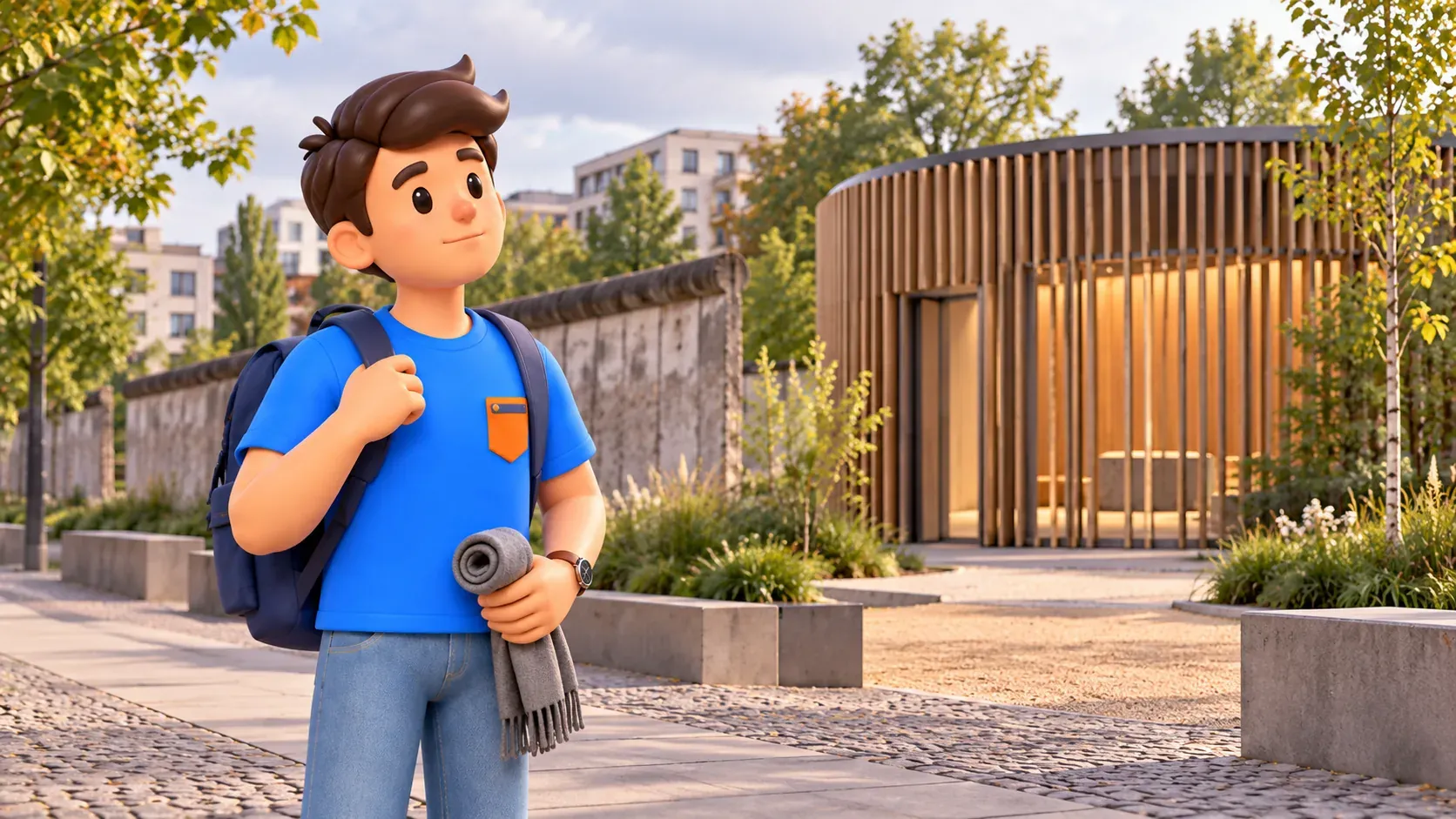
The chapel remains a place of prayer and commemoration. Our core walk looks at it from outside; entry depends on its own arrangements and what is happening at the time. Outdoor-exhibition opening hours do not guarantee an open chapel door. During a service or commemorative programme, follow the community’s guidance. The stop can be meaningful without entering every room or interrupting another visitor’s reason for being there.
Former homes: see the border at street level
Continue along available paths to marked traces of residential buildings and the excavated border-house site. After the border closed, residents were removed, entrances and windows were bricked up, and buildings were later demolished. Understand these as changes to particular living spaces. Ground that now appears open once contained stairs, rooms and daily routines; it was not always an empty space awaiting border infrastructure.
The houses reconnect the memorial to the ordinary street around it. Look at today’s buildings and imagine a normal journey from a home to the pavement, without inventing an unknown resident’s personal fate. Then compare that everyday movement with what the exhibition explains. This familiar scale can make the subject clearer than trying to visualise the entire perimeter of divided Berlin at once.
You need not reach the far end of every outdoor display. As you approach Brunnenstrasse, consider your remaining attention and energy. For this first introduction, the U8 station Bernauer Strasse provides a useful finishing landmark. The station name belongs to this junction, not a single memorial entrance: beginning at Nordbahnhof and finishing here gives the walk one general direction.

Opening times, indoor visits and the next part of the day
At the check on 17 October 2026, the outdoor exhibition is accessible daily 08:00–22:00. The Visitor Center and Documentation Center normally open Tuesday–Sunday 10:00–18:00; the last ascent to the viewing platform is 17:45. Holidays and special dates have exceptions. Admission is free, which does not mean that every guided tour or educational programme is free as well.
For the outdoor route, choose daylight if you want time to read and understand traces in the ground. In rain, reduce exterior stops and, when the buildings are open, give the indoor exhibition separate time. The operator describes the grounds as mostly accessible, but that does not establish identical surfaces and access everywhere. Check individual requirements, lifts and their operating arrangements before relying on a particular approach.
Planning the continuation is easier in RoadMe, where your personal itinerary can distribute historical visits and lighter walks according to interests and pace. Try leaving a comfortable transition after the memorial so the experience has room within the wider trip.
For another direction, use our first-visit guide to Berlin by interest. At Bernauer Strasse, connecting a few observations matters more than covering every metre: understand the border system, encounter individual lives and notice how remembrance fits into today’s street. Finish when that sequence has become a clear picture for you, rather than adding distance merely to complete a list.


