
Berlin without paid admissions: a full-day walking plan
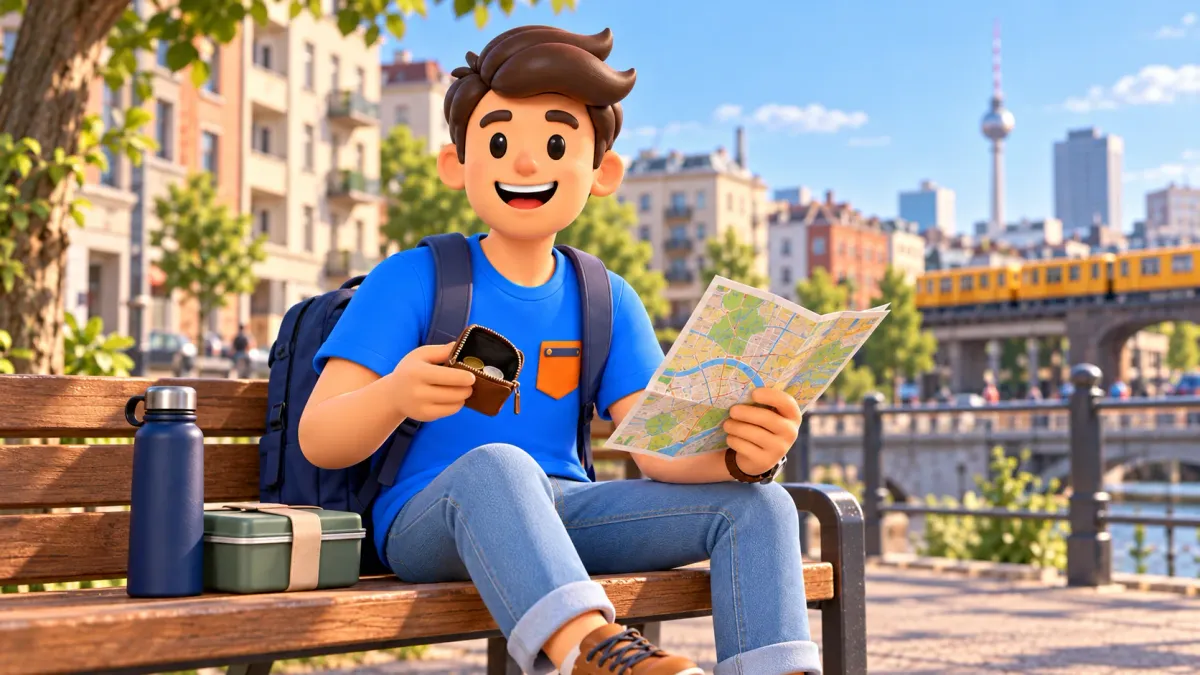
You can spend a substantial day in Berlin without paid admissions: start at Futurium, follow the Spree through the government quarter, see the Reichstag exterior and Brandenburg Gate, pause at the Memorial to the Murdered Jews of Europe, then visit the Topography of Terror. This connected walk takes about seven hours from Hauptbahnhof to U Kochstraße, including lunch and breaks. The stated core programme requires no purchased admission tickets. Food, travel to the start and after the finish, luggage storage and personal purchases remain separate expenses.
The point is to encounter different sides of Berlin rather than search for a free substitute for every paid museum. The day connects questions about the future, modern architecture, a familiar city symbol and two different approaches to difficult history. Places of remembrance belong here because of their meaning, not because they fill a budget itinerary. You need not learn everything about every stop. Preserve time for a few considered observations and resist adding another entrance simply because it happens to stand nearby.
What “without paid admissions” includes
RoadMe makes developing a personalised plan for the whole trip more convenient, fitting free visits around your interests, dates and pace. Try planning in the app so the route feels comfortable and you use your Berlin time more efficiently.
The core uses ordinary free entry to Futurium and the Topography of Terror documentation centre, with public outdoor spaces between them. It does not depend on concession status, a purchased museum pass or a guided tour. Individual events and activities have their own conditions and are outside the calculation. You may add a paid exhibition, but that changes the original promise. Understand the distinction before buying rather than discovering at the door that a free offer applied to a different category of visitor or a different part of the institution.
Do not rely on an old citywide Museum Sunday tip: the joint Museumssonntag programme ended, with its last free Sunday on 1 December 2024. Individual institutions may retain offers or concessions, but those do not make every collection free on the first Sunday in 2026. This plan needs no special free day. Choose an ordinary Monday or Wednesday–Sunday, since Futurium closes on Tuesdays. For holidays and particular closures, use your actual date rather than the weekday alone.
Seven hours with a defined start and finish
Begin outside Hauptbahnhof on Washingtonplatz, for example at 11am. Finish at U Kochstraße around 6pm including reserve. The first block is 105 minutes: 15 to approach Futurium, 15 for admission and belongings, 60 for selected displays and 15 to gather things and leave. The next block is 95 minutes: 35 along public riverside paths in the government quarter, 20 for the Reichstag exterior, 20 for the approach and Brandenburg Gate, then 20 for the approach and a brief pause at the field of stelae.
Allow 45 minutes for lunch away from the memorial, 25 to walk to the Topography of Terror, 15 for entering, 60 for selected permanent displays, 20 for a quiet pause, 25 towards U Kochstraße and 30 in reserve. That totals 420 minutes. These are editorial estimates, not an author-measured track, a queue guarantee or a set of booked admission windows. The gate and memorial blocks already include their short approaches. Do not place a full ascent, guided tour or another museum inside the same allowance simply because its admission is free.
Futurium: begin with a question about tomorrow
Put Futurium at Alexanderufer 2 first while attention is fresh. It asks about possible futures and how we want to live. Choose one question: what changes in cities, what technology can offer, or how human needs relate to nature. An hour need not cover every theme. Arriving with a question helps connect separate elements rather than seeing only a collection of striking devices. The visit can begin with uncertainty worth discussing, not a predetermined answer.
Use only designated interactive elements; participation does not mean every object can be touched. Ordinary exhibition entry is free, while individual tours and activities have separate arrangements. The roof is outside this core plan because access depends on season and weather. That keeps the first museum hour from becoming a wait for another ascent. If one subject absorbs you, stay longer and reduce something secondary later. Variety does not require everyone to switch at exactly the same pace. A route works best when its structure supports attention instead of interrupting it.

The Spree and government quarter from public paths
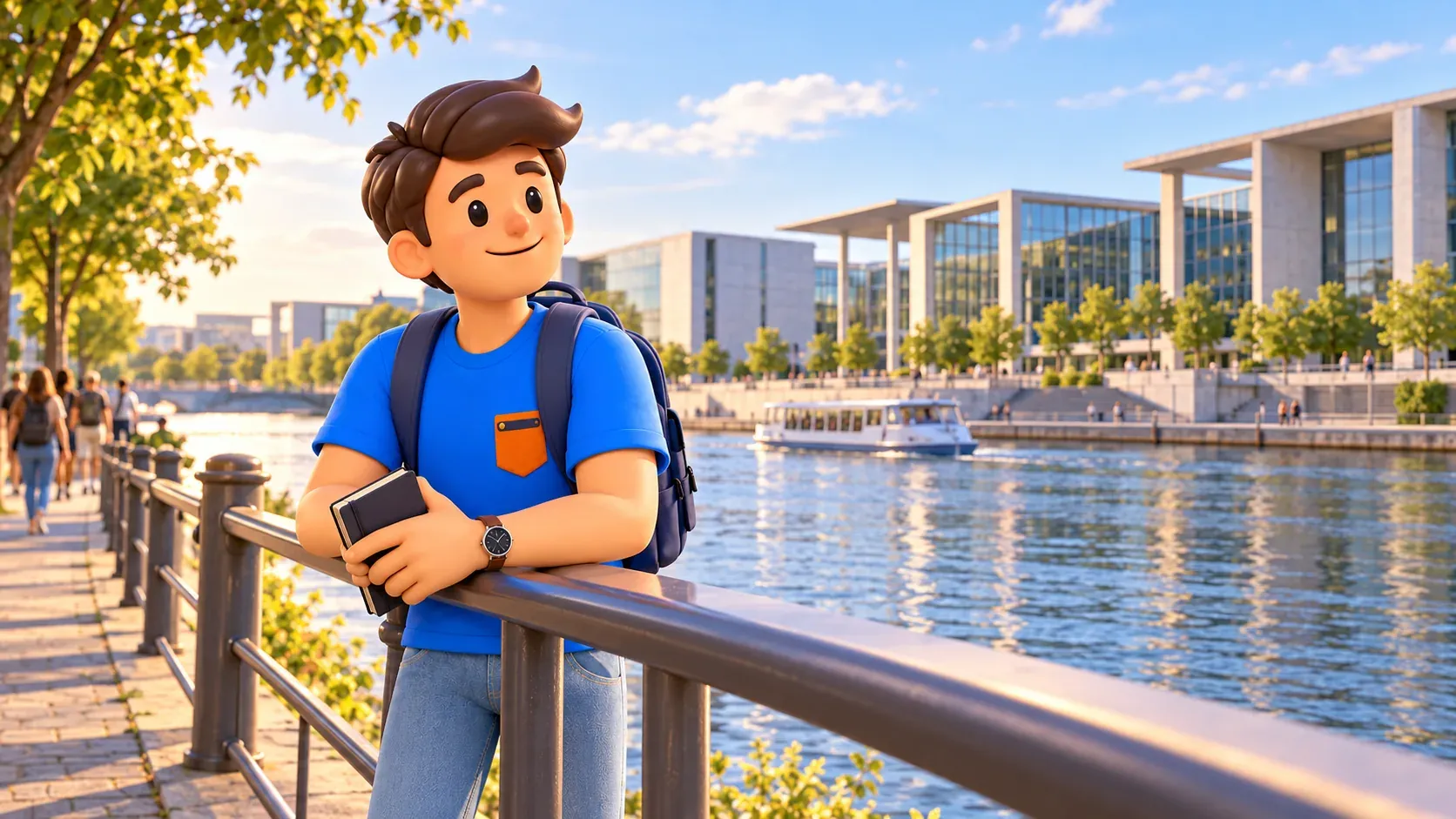
After leaving, follow open public paths beside the Spree towards the parliamentary ensemble and Reichstag exterior. The river helps you see modern buildings as an urban landscape rather than merely official addresses. Notice repeated volumes, glass, concrete and relationships between the banks. A pause can be simple: choose a view and identify the lines that hold it together. You need not list every institution or memorise each building’s functions. A detailed architectural walk deserves another day with more time, while this section offers a first way of reading the city.
The Paul-Löbe-Haus serves parliamentary work, with related buildings across the river. Public viewpoints do not grant access to offices, service areas or every visible bridge. Follow open pedestrian connections and current restrictions. If a section is closed, use a permitted alternative and retain the reserve. The riverside is part of a route, not a promise of entry to all interiors. Weather and pedestrian movement affect where a comfortable pause is possible. Looking at architecture should not require blocking other people or treating a private connection as a public shortcut.
At the Reichstag, an exterior look is sufficient. The dome ascent is not included, so its booking and security are not hidden inside twenty minutes. Dome admission can be free but requires separate confirmed registration and an appropriate date. Free does not mean immediate entry. If the ascent matters, allocate a different time budget in advance. An outside view also has value: a historic building within a modern setting suggests several architectural and historical layers at one address. You can notice that relationship without needing every experience available inside the building.
Brandenburg Gate: one recognisable reference point
Continue to Brandenburg Gate and Pariser Platz. Carl Gotthard Langhans’s late-eighteenth-century structure has changed meaning with Berlin. During division, it became associated with restricted border space; later, it became a symbol of reunification. For a short stop, see it at the scale of the square and recall that changing role. There is no hidden compulsory museum entrance to find for the ordinary exterior view. The central subject is already before you in the public city. A few attentive minutes can provide more than a longer search for the perfect photograph.
Some of the twenty-minute block belongs to the approach. Choose a suitable public viewpoint, keep movement clear and leave a moment simply to look. Events or temporary barriers can alter familiar paths. Use the actual permitted connection rather than a line on an old diagram. When busy, a short view from the edge can be better than waiting indefinitely for an empty frame. The quality of the day does not depend on removing everyone else from the scene. It comes from understanding your rhythm and the reason for stopping here.
The field of stelae: a separate pause for remembrance
Continue towards the Memorial to the Murdered Jews of Europe. The core includes only its outdoor field of stelae, not the underground Information Centre. A brief pause cannot replace historical knowledge or explain the Holocaust in a few minutes. This is a place to remember victims and approach space attentively. Peter Eisenman’s memorial opened in 2005. Rhythm and changing ground levels are experienced through movement, but they do not make the site an entertainment maze or a collection of dramatic backdrops. Give the place its own meaning within the route.
Do not assign a compulsory emotion. You might walk briefly, stop or remain near the edge according to your companions’ needs. Observe visitor rules and respect others. Lunch is separate and away from the memorial. If the Information Centre matters, allow its own visiting arrangements and additional time rather than compressing admission and displays into twenty minutes. A substantial itinerary benefits from honestly distinguishing a brief encounter with an outdoor memorial from a dedicated museum visit. The limited section then has clear boundaries without pretending to provide complete understanding of a difficult subject.
Lunch and the connection deserve real time
Forty-five minutes allow food and a change of pace. That is a time budget, not a promised bill or table. Choose somewhere suitable away from commemorative spaces and follow local rules if bringing food. No admission spending does not require skipping rest. If service takes longer, use reserve or shorten the final exhibition section. The connection remains an urban walk: cross at permitted crossings and do not compensate for lost minutes by hurrying where attention is needed. A full day becomes more comfortable when ordinary needs receive explicit space.
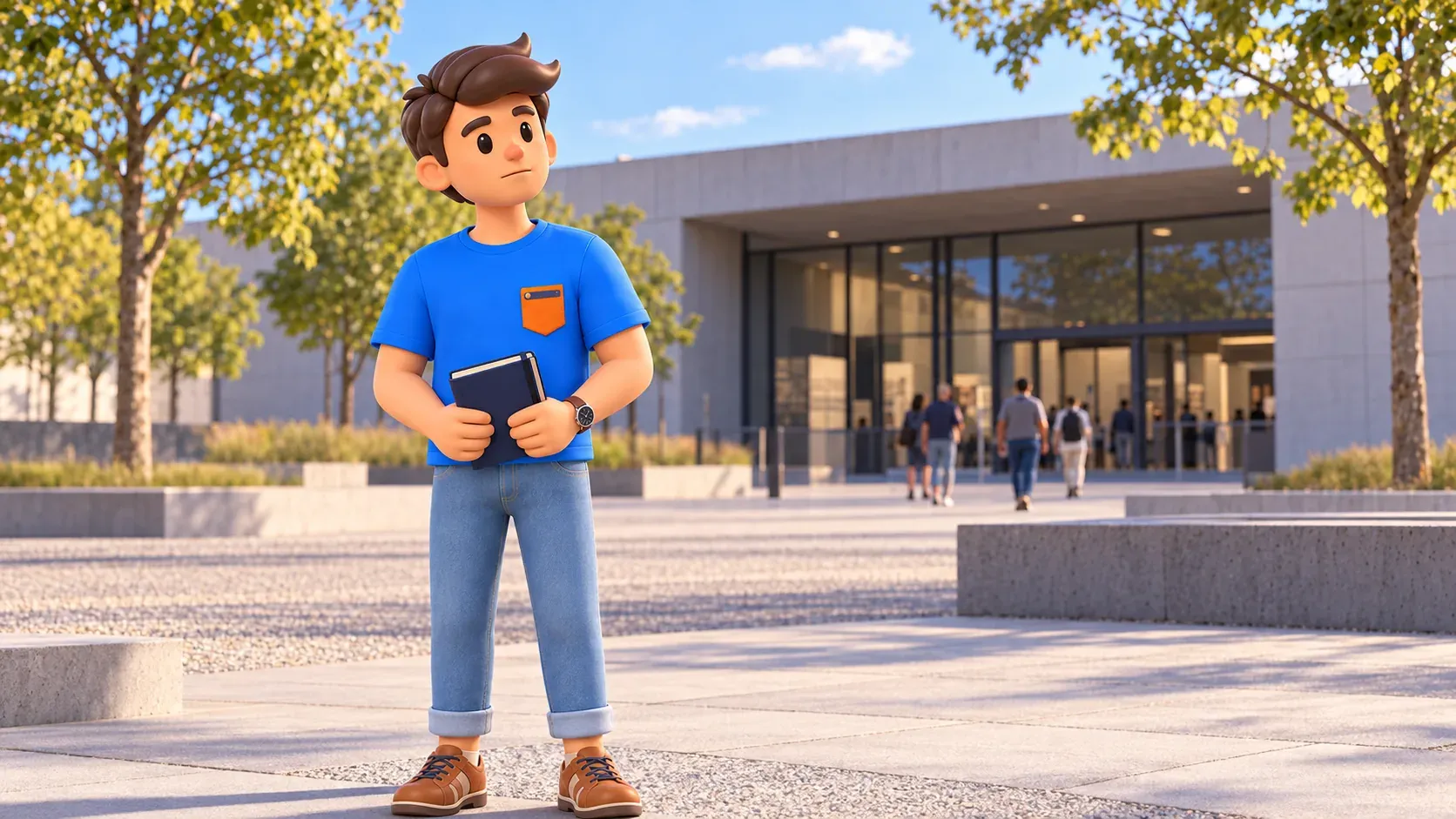
Approach the Topography of Terror at Niederkirchnerstraße 8 by open public streets. The 25 minutes are an allowance, not an instruction to follow one immutable track. Works and restrictions may change local paths. Find the current entrance, deal with belongings and choose a reading theme. After several outdoor stops, slowing down again is useful. This programme does not imply two documentation-centre visits: the underground exhibition at the stelae was deliberately excluded so the final indoor section receives attention. Keep that distinction when deciding whether to extend the day.
Topography of Terror: history at the historical site
The documentation centre examines central institutions of Nazi terror, including the SS and police, and their crimes. Its significance relates to the historical addresses of those institutions. Choose part of the permanent exhibition and follow it coherently rather than attempting the entire building and grounds in an hour. It is not simply another Berlin Wall museum. A surviving Wall section nearby belongs to a different period; do not merge its origins with Nazi institutions because historical traces stand close together. Reading their differences is part of understanding a layered city.
Ordinary individual visits are free without an admission ticket; group arrangements are separate. Exhibitions normally open daily 10am–8pm, closing on 24 and 31 December and 1 January. Other outdoor areas depend on daylight, so this afternoon plan centres on the indoor exhibition. Do not promise a complete outdoor circuit after dark. The subject is serious: a pause follows rather than an immediate switch towards cheerful photographs. Historical images and documents require reading, and sometimes an earlier stopping point. Sixty minutes is selected attention, not a claim to have completed every aspect of the site.
Finish without another compulsory entrance
RoadMe helps prepare a personalised plan for the entire journey more conveniently and efficiently, distributing museums, walks and travel around your interests and pace. Start in the app so this budget day supports the whole trip and leaves room for rest.
After the pause, continue to U Kochstraße. Travel beyond that finish is additional. If tired, shorten the programme around what matters most. For more indoor time, our rainy-day plans offer different admission arrangements. A free-admission route need not be the longest. It stays substantial when selection and rhythm help you see Berlin and preserve your budget for the parts of travel you value.


