
Berlin City West: from the Memorial Church to photography
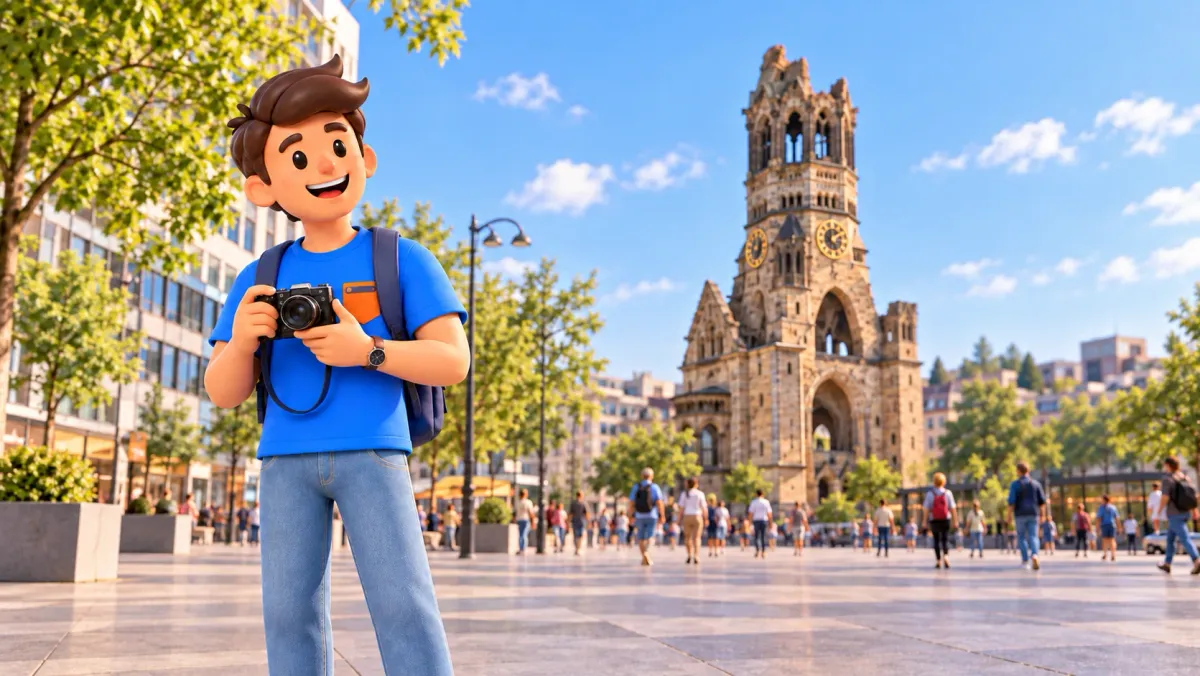
Explore Berlin’s City West in a few hours by connecting the Kaiser Wilhelm Memorial Church with one photography exhibition near Zoologischer Garten station. Begin at Breitscheidplatz, then choose C/O Berlin on Hardenbergstraße or the Museum für Fotografie on Jebensstraße. Allow around three hours for architecture, attentive looking and a short break. You do not need to visit both exhibition venues consecutively to get a useful introduction to this part of Berlin.
The thread running through the outing is how we look at a city. First, see a damaged historic tower beside postwar architecture; then exchange street impressions for photographs selected and arranged by a curator. Success does not depend on the number of rooms covered. One memorable visual encounter can be enough to make you notice different light, an unexpected composition or a small detail on the ordinary street outside afterwards.
A City West walk built around one exhibition
From S+U Zoologischer Garten, follow public pavements towards Breitscheidplatz and the Memorial Church ensemble. Afterwards, head back towards Hardenbergstraße, where C/O Berlin occupies Amerika Haus. If you choose the Museum für Fotografie, continue towards Jebensstraße 2 on the other side of the railway complex. Use normal street crossings and a current map; this outing does not require a shortcut through station platforms or a ticketed transport area.
Try RoadMe to develop a personal plan for your whole trip around interests, dates and pace. The app makes it more convenient to arrange architecture, exhibitions and rest together, giving this part of Berlin a considered place in your visit and time for what matters to you.
A three-hour outline allows fifteen minutes from the station to the square, thirty for the church ensemble, fifteen towards the selected exhibition venue, ninety for one exhibition stop including admission, twenty for rest and ten back to the station. That makes 180 minutes. These are editorial estimates rather than measured walking times; queuing, reading many texts or studying several exhibitions in detail requires an additional allowance. The outline is a starting point for choosing your pace.
Choose the exhibition before setting out. The venues are near each other, but they have separate programmes, tickets and arrangements. For a morning start, match their opening time with the church stop. A full restaurant meal, shopping and an extended Kurfürstendamm walk are not included in these three hours. Add any of them deliberately by extending the outing, rather than expecting them to fit invisibly into the same schedule.
The Memorial Church: look at the whole ensemble
On Breitscheidplatz, look at the damaged old tower and the modern volumes together. The old church was badly damaged in 1943, and the retained tower became a reminder of destruction. The new church designed by Egon Eiermann was consecrated in 1961. Their proximity matters: rebuilding did not simply remove every visible trace of loss. The ensemble keeps memory and continuing use present beside one another in the contemporary city.
Do more than search for the tower’s most recognisable angle. Compare its uneven outline with the geometry of the newer buildings, and the stone surface with the regular grid of the modern façade. A small change of position on an open part of the square is enough. You do not have to approach every volume closely, particularly where barriers affect access. The relationship between the parts can be more revealing than separate photographs stripped of their setting.
If the new church is available for visitors, step inside briefly and let your eyes adjust to the blue light. The interior can interest travellers who do not normally prioritise religious buildings: colour changes the feeling of space and creates a different atmosphere from the street. Be quiet and respect services. This remains a working place of worship, so a sightseeing stop should fit around its life rather than assume the building operates as an ordinary exhibition room.
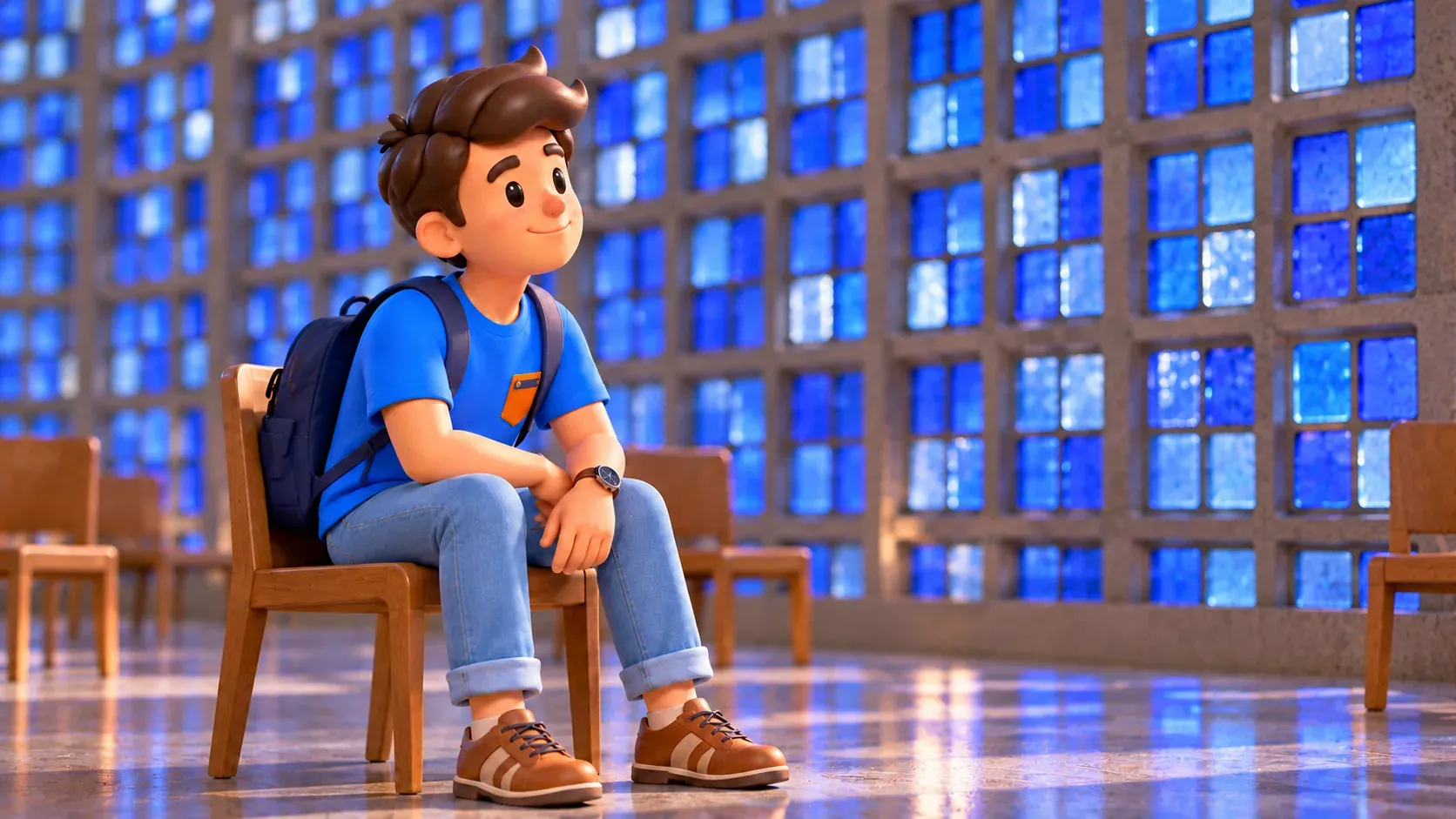
At the check on 17 October 2026, the official tourism site lists usual hours of 10:00–18:00 daily. The church’s owner also announces phased renovation work from late 2026. Check access to the particular building before visiting; general hours do not guarantee that every part of the ensemble is open. If you cannot enter, the outside view remains a worthwhile stop, with the extra time available for your chosen exhibition or a longer rest.
Start looking photographically on the way
On the walk towards Hardenbergstraße, choose one urban subject: a reflection in glass, repeated windows or the meeting of an old surface and a newer building. Taking a picture is optional. The point is to notice consciously where your eye goes. This creates a small link between architecture in the square and photography in the galleries, without requiring a professional camera, technical knowledge or an attempt to reproduce someone else’s famous image.
Stay attentive around the station’s crossings, stops and moving crowds. Short distances can make the schedule seem more generous than it is, but finding an entrance, leaving a coat and obtaining a ticket also take time. Keep the precise venue address available. Zoologischer Garten is the transport reference in this itinerary: a visit to the zoo is not included and would need a very different division of the day. The names should not obscure what you are actually choosing to visit.
With companions, agree on the exhibition before buying tickets. One person may prefer an individual artist, another the history of photography, and another a shorter visit without reading every explanation. Begin with the current programme and choose a shared question: how a photographer presents a person, builds an image of space or uses accompanying words. A simple focus helps people look together without requiring everyone to have the same response to each picture.
C/O Berlin: choose by the programme
C/O Berlin is in Amerika Haus at Hardenbergstraße 22–24. Built in 1956–1957, the building was an American cultural and information centre; C/O Berlin moved here in 2014. That brief history adds context to the stop. Visual culture is being encountered in a house previously associated with cultural exchange, even though its use and content have changed. The building is part of the visit rather than just an interchangeable container for pictures.
The current exhibition matters more than the general promise of seeing photography. Read the introduction to the programme: it might involve an individual artist, several series or different visual media. Do not assume every possible direction is represented on your date. If a subject sparks curiosity, give it the full ninety-minute stop. Trying to include the neighbouring museum simply because it is close can leave less time for the work that originally made you want to come.
On 17 October 2026, C/O Berlin lists daily opening from 11:00 to 20:00, subject to changes. A current notice says its lift is out of service. If you need access between floors without stairs, establish whether you can reach the exhibition you want before committing to the visit. A general description of accessible facilities does not cancel a temporary fault; the relevant condition is what works on your visiting day, not just what equipment appears on a permanent list.
Museum für Fotografie: more than one perspective
The Museum für Fotografie at Jebensstraße 2 opened in 2004. Exhibitions are presented by the Kunstbibliothek’s photography collection and the Newton Foundation. Helmut Newton’s name therefore should not be treated as a complete description of everything the museum offers. Check the actual programme and decide which part interests you. A familiar photographer can provide a starting point, while a temporary exhibition may become the main reason to choose this venue for your afternoon.
At the check, normal opening is Tuesday, Wednesday and Friday–Sunday 11:00–19:00, Thursday 11:00–20:00, with Monday closure; public holidays can have exceptions. The museum has also announced a full refurbishment closure from 16 November through 2 December 2026 inclusive. Do not plan admission during that period even if the normal weekly timetable shows an open day. A special closure takes priority, and looking at the exterior does not substitute for the exhibition visit promised by your plan.
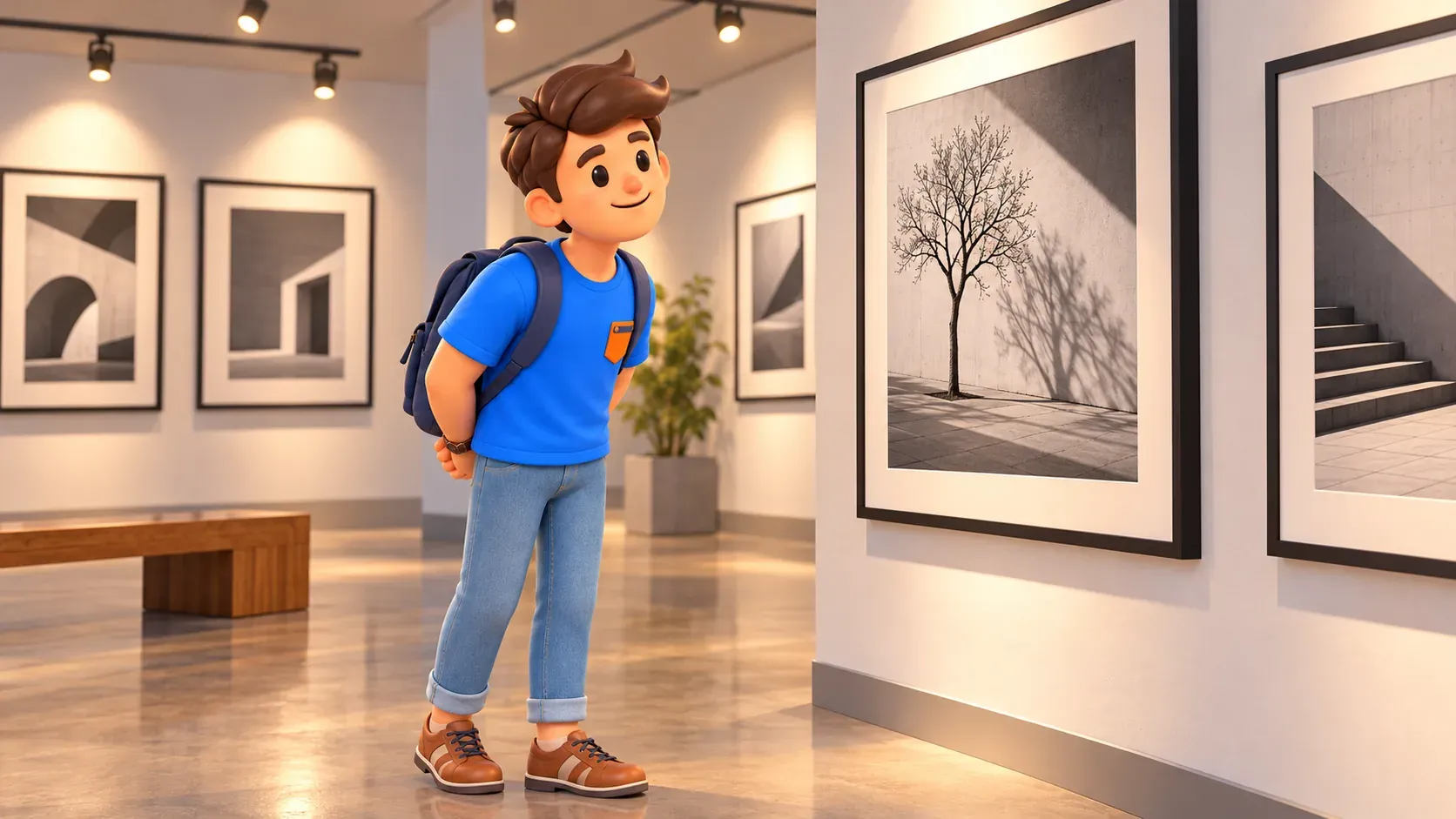
The museum states that it is wheelchair accessible. That is a useful distinction from the current lift problem at C/O Berlin, but choose according to your specific needs and the venue’s current condition. Obtain admission for the institution you select and check the conditions of your ticket category. Do not assume a neighbouring gallery’s ticket automatically opens every room here. Nearby addresses and a shared subject do not make two venues a single admission arrangement.
Look closely without exhausting your attention
Read the introduction briefly and see how the first room is organised. Then choose several works for closer attention. At one, consider composition; at another, read the explanation; at a third, compare your initial response with the artist’s context. This keeps curiosity alive without turning the visit into an obligation to read every label. If one series holds your attention, give it time that would otherwise go to a quick circuit of every room.
Do not combine looking with continuous documentation of the installation. Follow the particular venue’s photography rules and leave others room to approach works. Remembering a question or noting an artist’s name can be more useful than taking dozens of wall photographs. Notice when pictures stop feeling distinct and you move forward automatically. A pause or the end of the visit may then offer more than another room that receives little real attention. Leaving is a reasonable response to tiredness.
With children, review the content of the chosen programme beforehand: a photography exhibition is not automatically suitable for every age. Select an appropriate subject and a smaller task, such as finding unusual lighting or comparing two city images. Shorten the gallery stop if concentration runs out. Spare minutes can become rest rather than proof that a paid ticket requires every member of the group to spend exactly the same length of time in front of the displays.
A break and a comfortable return
After the exhibition, give yourself twenty minutes to rest. Sit somewhere suitable or choose a café if time and available places allow; a full table-service visit is not guaranteed within this outline. Discuss one work that stayed with you, then look at the street again. Has a different light or composition become noticeable? This brings photography back into the living city around the galleries, instead of leaving it entirely inside the exhibition.

In RoadMe, it is easier and more convenient to develop a personal trip plan in which exhibitions, walks and pauses match your interests and pace. Try distributing experiences across the days so wanting to see another museum does not take all the time from the one you already chose.
Finish at Zoologischer Garten and check current onward transport. In rain, shorten the outdoor section and stay longer at an available exhibition. If your chosen institution is closed, check the other venue’s programme and access first; if neither works, move the photography visit to another day. Our first-time Berlin plan by interests can help place this outing in the wider trip. Here, one square and one thoughtful exhibition already give City West a distinctive shape.


