
Barcelona on a second visit: a different one-day route
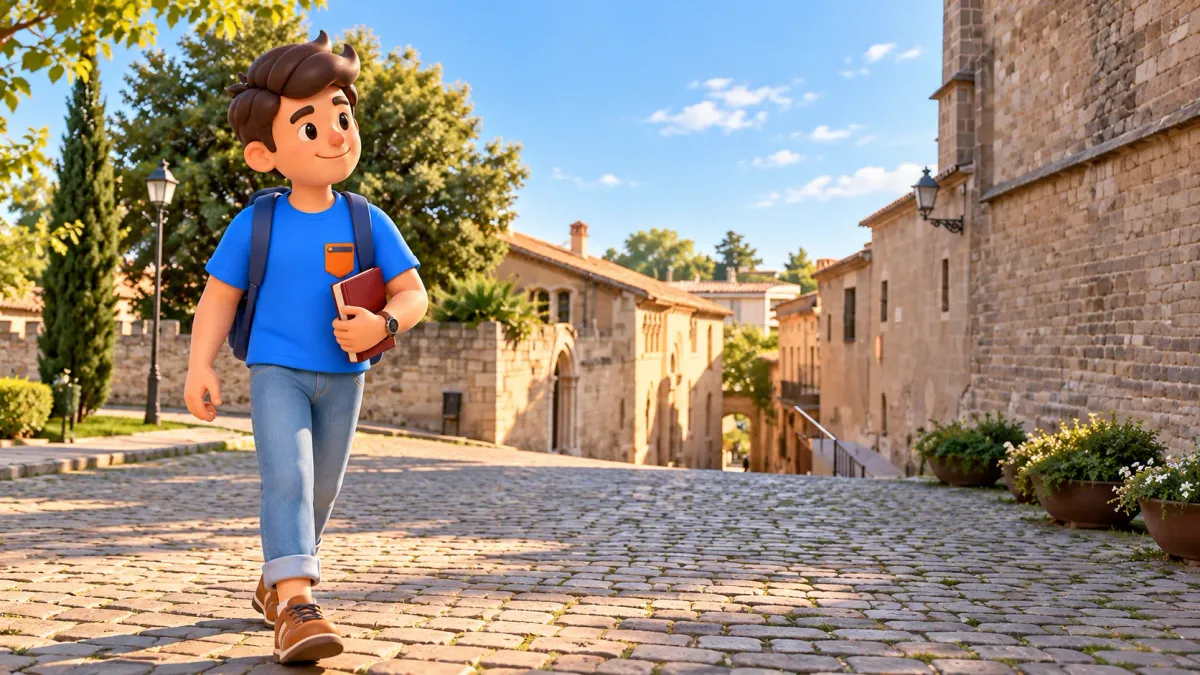
A second Barcelona trip is an opportunity to change how you explore. If the Sagrada Família, Gaudí houses and historic centre already belong to your first visit, spend a day further west. Begin at the Monastery of Pedralbes, have lunch in Sarrià and finish among the trees of Turó Park. History appears at different scales here, from a substantial monastic complex to the streets of a formerly independent town.
This one-day route suits an interest in architecture, everyday neighbourhood life and green space. It combines one museum visit with two outdoor sections. Allow approximately six to seven hours, including lunch and connections. That is an editorial planning estimate rather than a measured walk. Your journey from your accommodation to the start, and your return after the finish, come in addition.
For a longer stay, our five-day Barcelona plan gives a wider framework in which this route can become a different neighbourhood day.
Choose the kind of second visit you want
The main experience is a change of urban rhythm. At the monastery, concentrate on space and history; in Sarrià, notice the scale of streets; in the park, take time to rest. The day works well after a concentrated programme of architecture. It also leaves room to stay longer if a display interests you or lunch becomes an enjoyable part of the trip.
For a more convenient and efficient way to prepare a return trip, try RoadMe: the app develops a personal itinerary using your interests, dates, pace and budget. Say what you would like to discover this time—history, neighbourhood streets or more greenery—and explore a programme built around those preferences.
You need not know every minor monument beforehand. Keep three anchors: Reial Monestir de Santa Maria de Pedralbes, historic Sarrià and Turó Park. Save the original names for finding entrances and transport. Sarrià here means the Barcelona neighbourhood; places with similar names elsewhere in Spain are unrelated. Check the city and location whenever a journey search produces an unexpectedly long trip.
Discuss the principal interest before leaving. If everyone particularly wants the monastery, extend that visit and shorten the park. If conversation and walking matter most, choose a lighter museum introduction. Knowing the shared purpose makes it easier to decide what follows lunch. A list of places gives direction while your party’s interests determine the pace and the point at which you finish.
A return visit can include familiar favourites on other days. This route fills one different day rather than defining the whole holiday. Keep an evening open for the place you already loved, or compare this quieter programme with a first-visit day. Seeing another part of Barcelona adds context to previous memories without requiring you to abandon everything that brought you back.
Morning at Pedralbes: put the museum first
Consider arriving around 10:00 if that suits the calendar for your date. The monastery’s address is Baixada del Monestir, 9. Plan to the visitor entrance specifically: Pedralbes is a neighbourhood as well as part of the museum’s name. Allow your own approach time from your accommodation, accounting for your transport choice, waiting and the final walk.
The opening calendar matters to the whole programme. Mondays are normally closed; check public-holiday arrangements separately. From October through March, regular Tuesday-to-Friday hours are 10:00–14:00. Last admission is one hour before closing. This makes an undefined late-afternoon arrival unsuitable for a winter weekday. Other days and seasons have different hours, so use the actual date when finalising your visit.
Allow around ninety minutes for a relaxed introduction. Detailed reading of museum material takes longer. Last entry and closing time are separate limits. Choose an arrival that leaves enough time for your main interest, rather than only a hurried circuit before departure. A longer stay can replace part of the later walk; it need not push every subsequent activity into the evening.
Queen Elisenda de Montcada founded the monastery in 1327 with support from King James II. That fact gives the visit a clear theme: royal initiative and the life of a female religious community. Keeping that connection in mind helps you read the complex as more than an attractive stone backdrop. Its spaces have a purpose as well as an appearance.
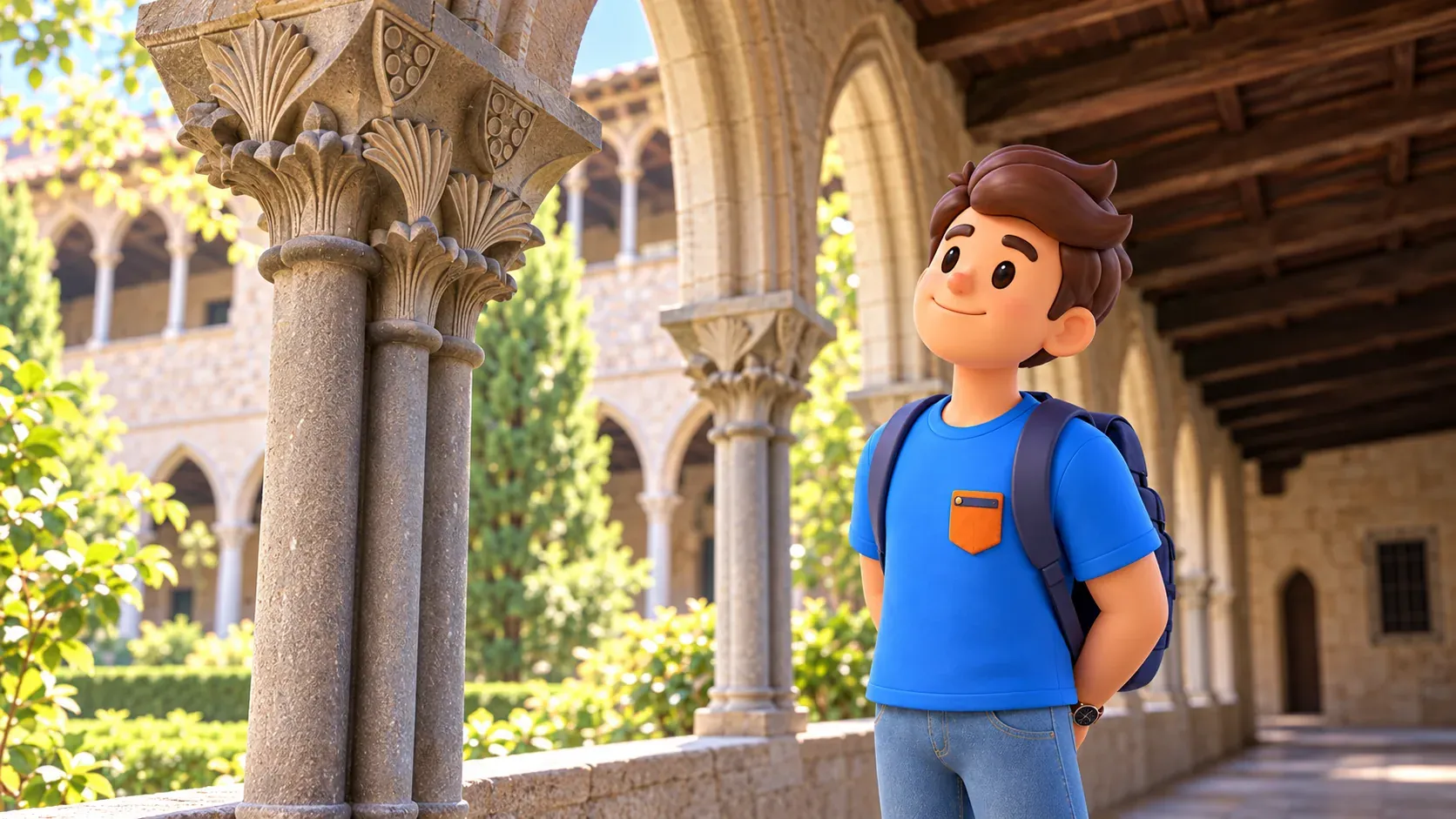
Begin with the cloister’s overall arrangement: an inner court framed by covered galleries. Notice repeated arches, light beneath the wooden ceiling and the relationship between greenery and enclosed space. Then choose whichever accessible part of the displays interests you most. Individual rooms and special visits can have their own conditions; a general itinerary does not establish that every space is included or open.
From the monastery to Sarrià
After leaving, head towards historic Sarrià, using Plaça de Sarrià as the orientation point. Allow approximately half an hour for a walking connection with wayfinding and pauses. This is a planning estimate; actual time depends on streets and pace. If walking between areas is tiring, find a suitable transport connection beforehand and save the pedestrian section for the historic centre itself.
Terrain matters in this part of Barcelona. A short distance is not automatically equivalent to the same distance along a flat promenade. Assess your energy before leaving the museum, while you can change the continuation comfortably. A direction on a map does not confirm a continuous step-free route. Wheelchair users and anyone travelling with a pushchair should check the full chosen approach separately.
During the connection, notice the change from the monastery’s setting to denser residential streets and the neighbourhood’s commercial centre. There need not be a named attraction at every turn. Keep the main anchors and use convenient public pavements. Private courtyards and closed passages are unnecessary for this programme. Allow the spaces between landmarks to reveal how the district fits together.
Sarrià: lunch in a town within the city
Sarrià remained independent until its incorporation into Barcelona in 1921. Explore around its former town centre rather than expecting a smaller version of the Gothic Quarter. Begin at the square and walk along Carrer Major de Sarrià. Notice how shops, housing, cafés and small open spaces connect over a short stretch. This is a different relationship between streets and daily activities.
The church of Sant Vicenç de Sarrià provides another nearby anchor. An exterior look is sufficient for the basic route. For an interior visit, check current access and services: an active church follows its own timetable. Including its name establishes a point in the neighbourhood’s history rather than a promise of unrestricted tourist access throughout the day.
Give lunch a full hour or longer if the conversation is good. That time is particularly enjoyable on a return trip, when there is less pressure to cross town immediately for another famous sight. Choose somewhere according to menu, available tables and your party’s preferences. No individual restaurant is required to make this route work. A suitable pause matters more than following somebody else’s meal reservation.
Afterwards, allow roughly an hour for a small neighbourhood walk with stops. Repeat a favourite part of Carrer Major, turn onto a nearby public street or sit in the square. Instead of chasing a compulsory list of secret addresses, choose one detail to observe: doorways, balconies, signs or changes in building height. A particular question makes the exploration attentive without turning it into an examination.
Remember the ordinary life around you when taking photographs. People are going about their day, businesses are working and residential entrances remain entrances. Leave a clear passage during stops. Often a better view lies a few steps away and reveals the street as a whole. You can enjoy looking closely while allowing a small pavement to continue serving everyone who uses it.

After lunch: continue towards Turó Park
For greenery, head towards Turó Park, also associated with the poet Eduard Marquina. Allow approximately forty minutes for a walking connection from central Sarrià, including orientation. This crosses a residential part of the city and is a separate journey. If tired, use transport or finish in Sarrià and keep the park for another walk. Shortening the route preserves its main historical thread.
The present park opened in 1934 on land formerly occupied by an amusement park. Its design is associated with Nicolau Maria Rubió i Tudurí. That small history changes how you see a familiar word: a green urban space can preserve a memory of very different leisure activities. Today, trees, paths, a pond and sculptures provide the main subjects for a gentle visit.
Allow about an hour for an easy circuit and rest. Expect an intimate end to the day rather than a large mountain panorama. Follow a pleasant available path, pause by a tree or sculpture and let the impressions settle. Check current hours and any restrictions before travelling; an entry in a place catalogue does not mean gates remain open around the clock.
Plan a finish towards the Avinguda de Pau Casals exit, then the Francesc Macià and Diagonal area for your return. Choose the actual stop according to your accommodation and the operating transport network. Leave time for exiting and boarding. The park ends the walk, while reaching dinner or your hotel remains a separate part of the day.

For the following day, RoadMe can develop a personal plan for the whole stay around your interests, making it convenient to combine different neighbourhoods at your own pace. Download the city beforehand while online to use maps and navigation offline during your walks.
Shorten the route or adjust the weather
The simplest shorter version is the monastery followed by lunch in Sarrià. It keeps the main historical connection and finishes after the meal. If the museum is closed, move this day or deliberately choose Sarrià and the park, recognising that the principal interior is absent. The Pedralbes palace gardens are a different green alternative after checking access, separate from this linear route.
In sustained rain, spend longer in the available museum sections and reduce outdoor connections using transport. In heat, extend the lunch pause and keep the park for a more comfortable time within its opening hours. There is no need to return late to recover a missing section. Finish according to your energy and preserve something for the following day of the trip.
Count admission, food and transport separately. An exterior church stop replaces none of those costs. Agree on a return option for anyone who wants to finish earlier. A repeat visit lets you follow your tastes more precisely. This route offers one clear way to see another side of Barcelona, while leaving the most personal discoveries to the time you spend there.


