
Old El Raval: Santa Creu Hospital to Sant Pau del Camp
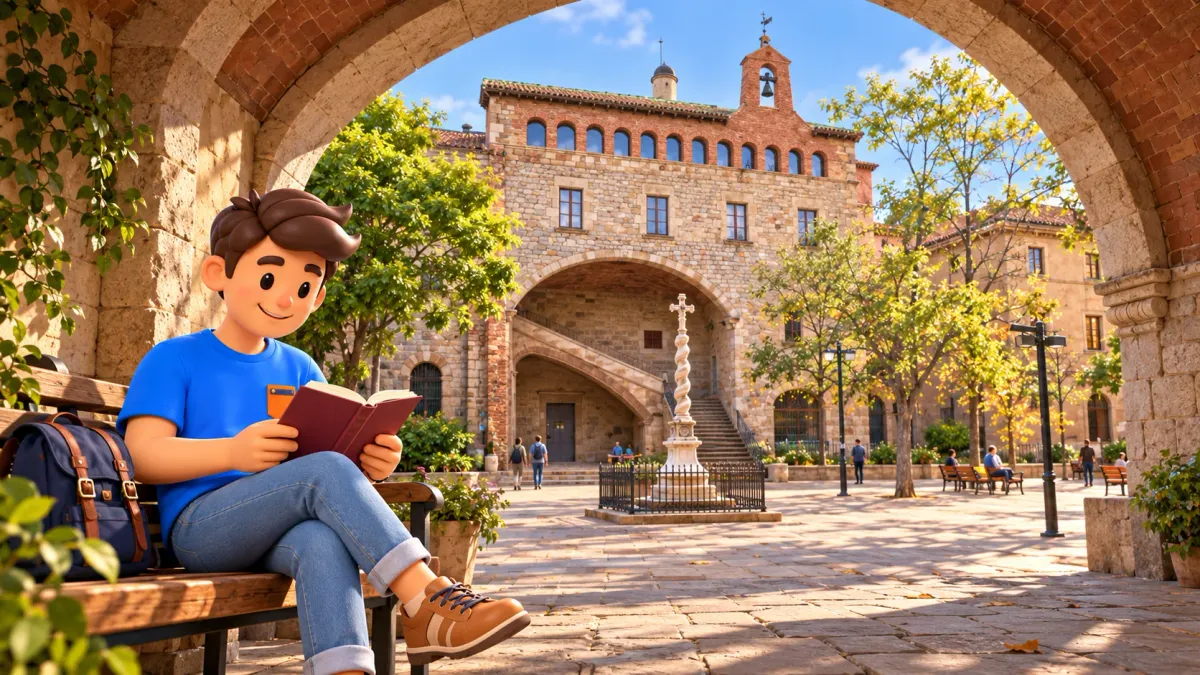
See an older side of El Raval through three contrasting spaces: the courtyard of the former Santa Creu Hospital, the broad Rambla del Raval with Botero’s Cat, and the Romanesque church of Sant Pau del Camp. This compact daytime Barcelona walk connects care, public life and monastic architecture. It suits a visit beyond the Gothic Quarter’s familiar façades while keeping a simple sequence of places.
Start at the Antic Hospital de la Santa Creu, Carrer de l’Hospital 56, and continue via Rambla del Raval towards Carrer de Sant Pau. Allow roughly ninety minutes to two hours for exterior stops, an accessible courtyard and a short break. This is an estimate, not a measured track. A cloister tour, substantial museum or long meal requires separate time, as do the approach from your accommodation and return.
A small route with names worth checking
Three similar names can send visitors to different places. The old Santa Creu Hospital in El Raval, the former monastery church Sant Pau del Camp, and the Sant Pau Art Nouveau complex are distinct sites. The first two belong to this route. The modernist pavilions are elsewhere in Barcelona. Searching only “Sant Pau” without checking the complete name can undermine an otherwise straightforward outing.
For a more convenient and efficient way to organise your stay, try RoadMe: the app develops a personal trip plan using your interests, dates, pace and budget. Choose how much history, architecture and relaxed stopping time you want, so your Barcelona walks form a programme that suits you.
Save the original names of the start and finish. They help match signs to your plan on arrival. Here the beginning is the old hospital and the finish is Sant Pau del Camp. That simple check is more useful than memorising a dozen nearby attractions. If one stop deserves a deeper visit, shorten another part instead of adding the new activity on top of the time already planned.
Choose daylight for an easier look at stonework, sculpture and entrances. The route does not need a late-night programme or an unusual bar. Discuss pace with your companions before leaving: one person may enjoy architectural details, another a courtyard and a seat. Short distances let you make room for those interests without adding many compulsory destinations. A compact plan gives each stop time to register.
Santa Creu Hospital: Gothic architecture with a civic purpose
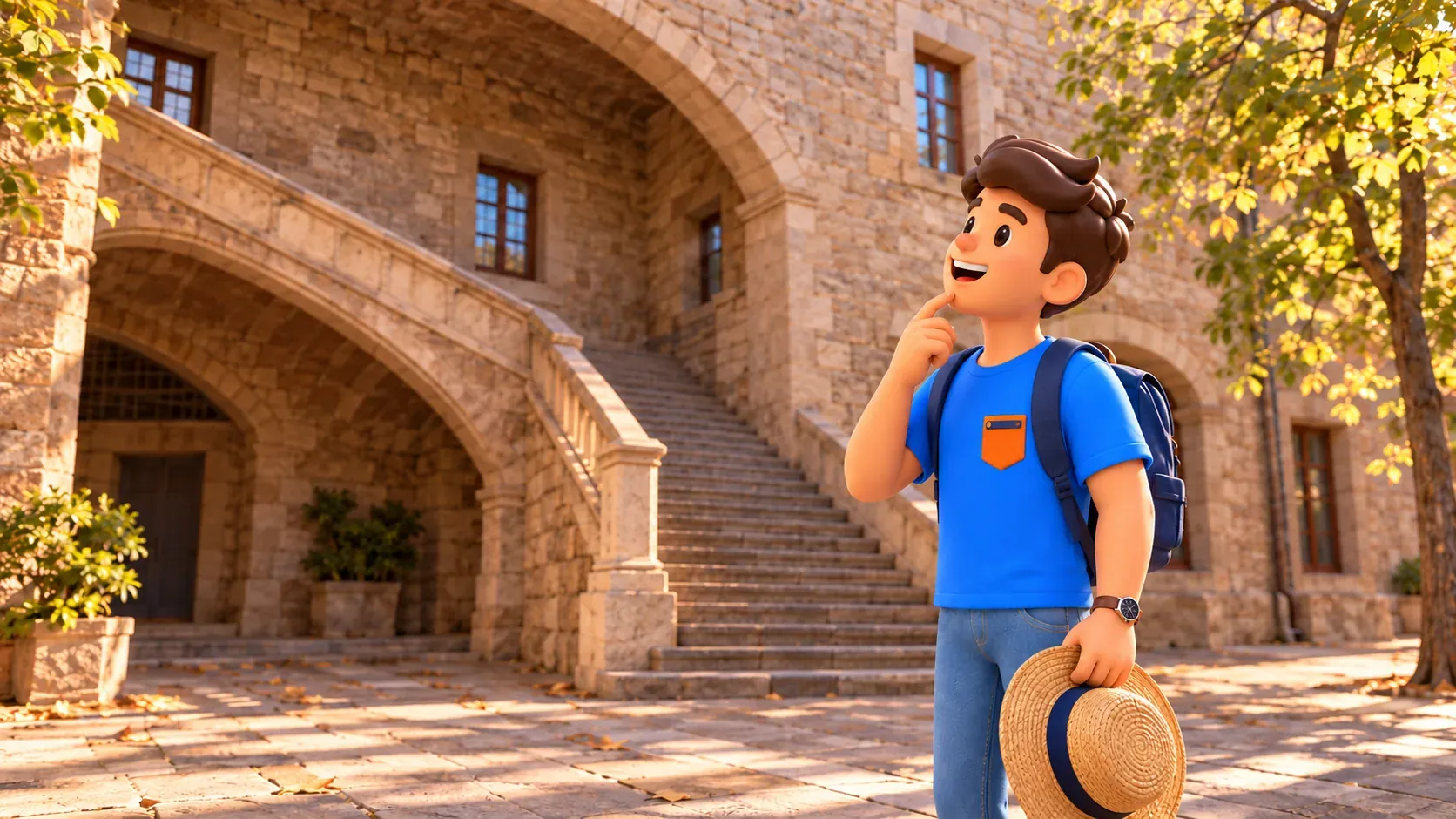
At the Carrer de l’Hospital entrance, check which parts are open to visitors. If the courtyard around the Rubió i Lluch gardens is accessible, begin there. Set aside about twenty-five to thirty-five minutes for the buildings and quiet orientation. A closed door or temporary restriction does not call for finding a way through staff areas. Keep the exterior view and continue along the street instead.
The hospital’s first stone was laid in 1401. The institution brought together several earlier city hospitals; its architecture shows that Barcelona’s Gothic building tradition extended beyond churches. The interior arrangement served a major public purpose. This brief context changes the way you see galleries and stairs: they belonged to a place of care rather than a palace built principally for display. Let that distinction guide your first look.
The complex now houses the Library of Catalonia. The change of use adds another layer: an old building continues to serve knowledge and culture. The basic walk does not require entry to reading rooms. Looking at accessible public architecture and using a research library are different activities, with different rules. A meaningful introductory visit remains possible without treating every room as a sightseeing space.
Do not assume every interior opens whenever the courtyard does. An exhibition area, vestibule, library room and guided tour each have their own arrangements. If you want to go farther, confirm the relevant visiting format. For an introduction, notice how stairs, arches and courtyard connect parts of the complex. One considered view can be more satisfying than testing every doorway or trying to see behind every window.
The hospital also belongs to Antoni Gaudí’s final story: he died here in June 1926. This was the old Raval building, not the Art Nouveau Sant Pau pavilions. The distinction resolves a common name confusion without needing a longer biographical detour. There is no reason to search for an unconfirmed particular room or recreate an alleged route through the building during this short visit.
From the courtyard to Carrer de l’Hospital
Return to Carrer de l’Hospital and head towards Rambla del Raval. The connection changes the scale: from a space arranged around an interior court to an ordinary city street and then a broad boulevard. Around ten to fifteen minutes, including orientation pauses, is a useful allowance for this short section when no shopping or café visit is added. Keep the next full name available.
Rambla del Raval and La Rambla are different places. The first is inside the neighbourhood and belongs to this sequence; the famous La Rambla is another landmark. Similar wording can create a detour, especially if a companion has heard only “the Rambla”. Agree on the complete name before setting off, so everyone is heading to the same place rather than following a different familiar label.
Notice more than monuments during the connection. Ordinary doors, shop windows and movement show a residential neighbourhood around the historical buildings. Avoid treating private interiors as opportunities to find local colour or pointing a camera at people unnecessarily. The exterior architectural walk already supplies enough to observe. Everyday life can remain part of the city around you without becoming a performance arranged for a visitor’s photograph.
Rambla del Raval and Botero’s Cat
The boulevard opens the space noticeably. Pause, regain your direction and let your eyes rest after the hospital’s stone walls. Walking along the Rambla, looking at the sculpture and taking a small break can occupy about twenty to thirty minutes. This is not a competition to collect landmarks. The broader public space itself contributes to the outing, even when you spend part of it sitting still.
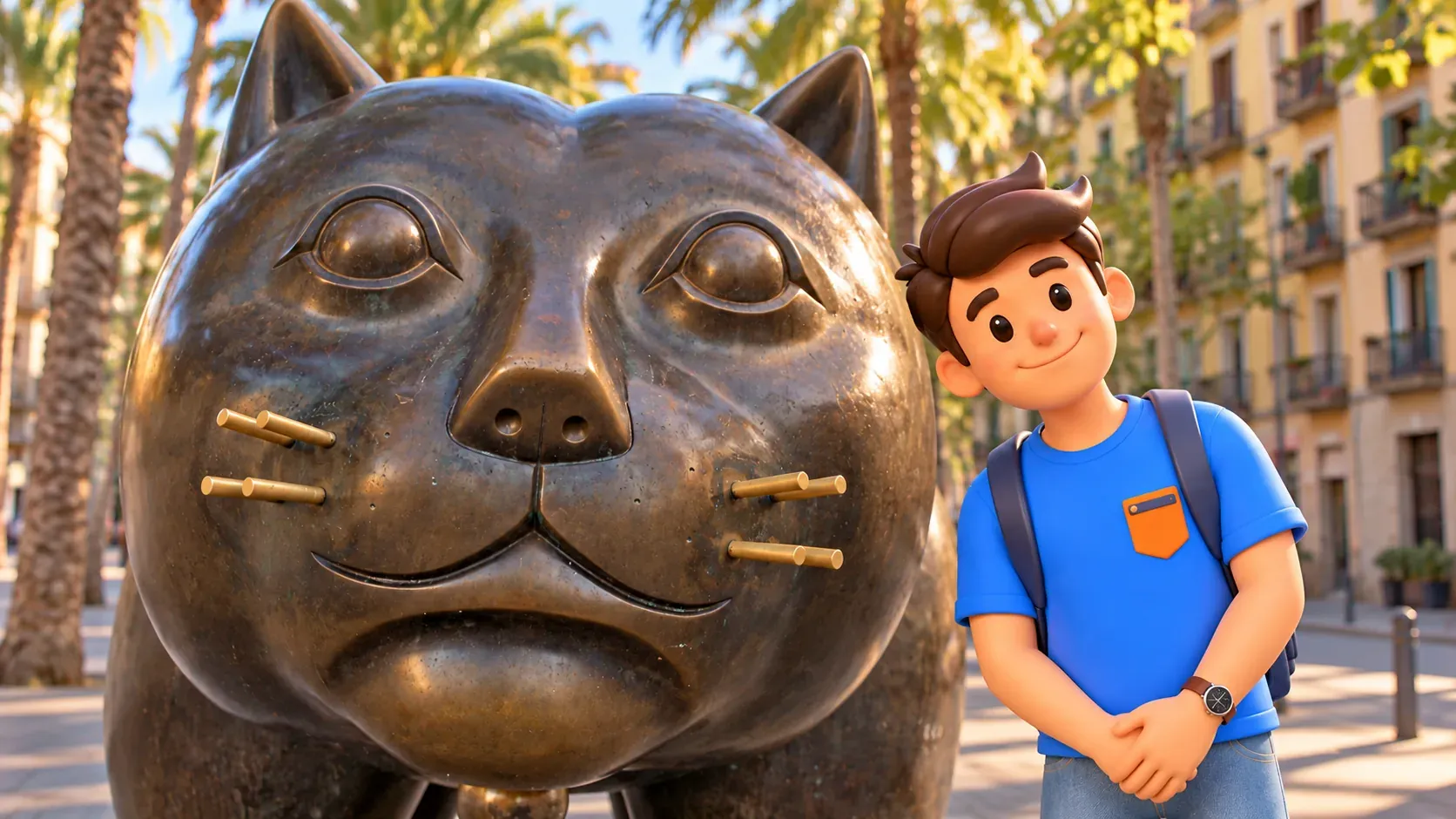
Fernando Botero’s Cat is a bronze sculpture with deliberately generous rounded proportions. It has stood on Rambla del Raval since 2003, after several earlier Barcelona locations. That history adds something beyond a photograph: an apparently settled neighbourhood symbol has not always stood where visitors now expect to find it. One short fact can make the stop memorable without requiring a catalogue of its entire journey through the city.
Look first from the side, then from an available viewpoint towards the head. Changing angle helps reveal the proportions and long tail. There is no need to climb the sculpture or block the way for a picture. If others are already photographing it, wait to one side. This short stop has no compulsory perfect composition that must be obtained before the programme can continue.
For coffee, consider remaining time and available seats. A short pause fits the overall reserve when it does not involve waiting and a long service. Leave a substantial meal until after the finish. Choose somewhere that appeals and has room, rather than making the walk depend on one particular table. The stop should give you a rest, not become another appointment to complete under pressure.
Sant Pau del Camp: a Romanesque stop
Continue towards Sant Pau del Camp on Carrer de Sant Pau. After the boulevard, the scale changes again. Allow around twenty to twenty-five minutes for the approach, exterior and a pause before the building. Its full name confirms you have reached the monastery church instead of travelling across Barcelona to a hospital complex with a related name. That modest practical distinction keeps the route compact.
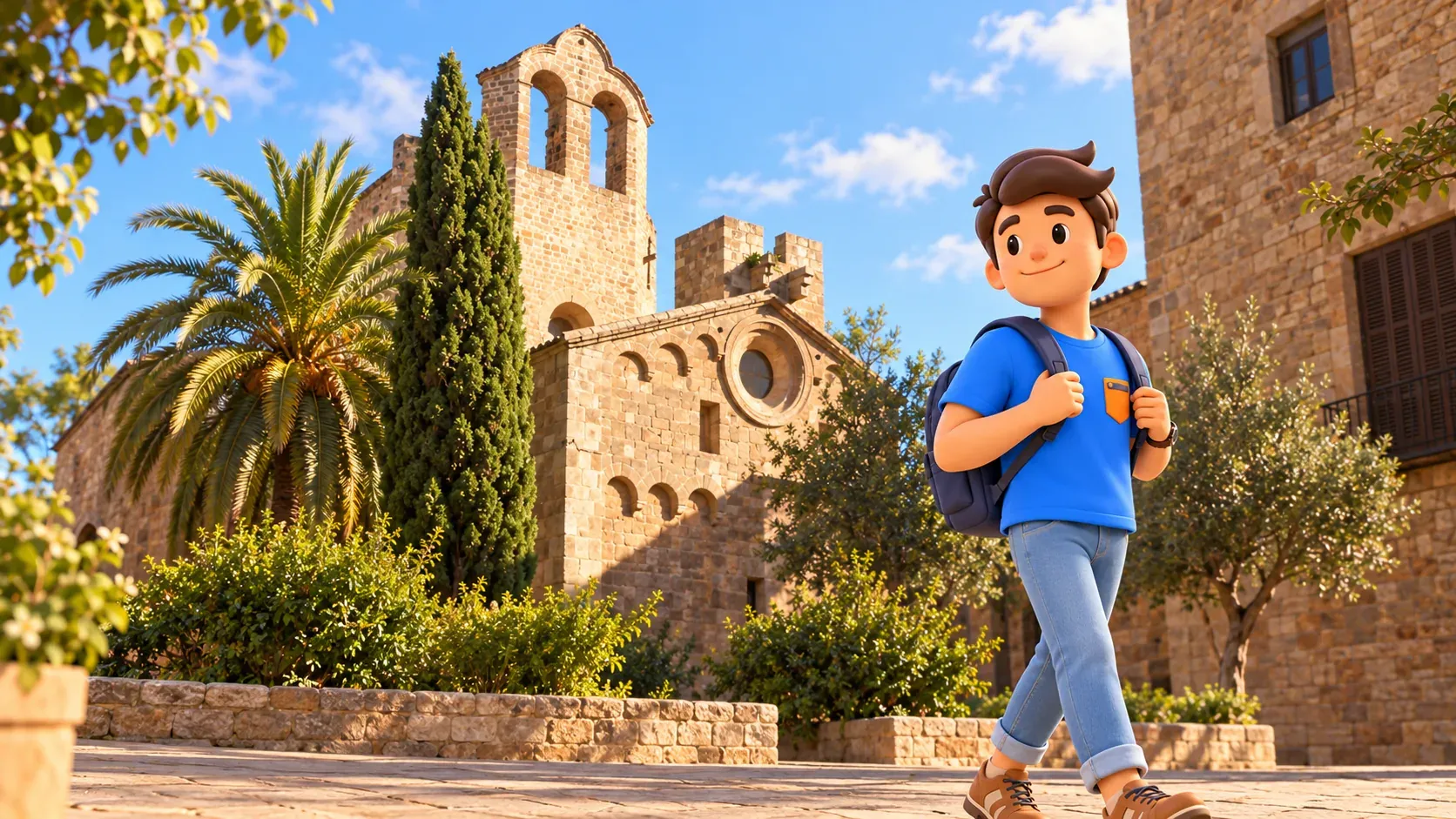
The surviving church dates from the twelfth century and is Romanesque. After the old hospital’s Gothic architecture, compare building size, stone surfaces, openings and portal. You do not need specialist knowledge to begin noticing differences. A short walk becomes more rewarding when you compare what you have seen instead of simply reading labels at separate addresses. The contrast gives the two historical sites a relationship in your memory.
The site belonged to a Benedictine monastery and also serves as a parish today. An open church therefore does not mean a cultural cloister visit happens at any moment. Worship and tours are different arrangements. If a service is taking place, keep a quiet exterior stop rather than treating it as an opportunity to walk through the entire property without checking. Religious use remains part of the place’s present life.
For the outdoor version, choose an accessible position for the overall form and then one detail. The portal or rhythm of small arches is enough for a first introduction. Adding another church immediately is unnecessary. The difference between hospital and Sant Pau del Camp already forms an understandable historical thread within a small area, leaving you with a reason to return rather than a sense of having missed an entrance.
When the cloister becomes the main interest
The small cloister is thirteenth-century, with lobed arches and paired columns. That is a reason to return for a separate visit. Confirm the current access format and whether prior registration is required. For a guided visit, give it its own block and work around its confirmed starting time. It should not depend on finding an available opening between two exterior stops during the original short walk.
A full tour does not automatically fit inside this ninety-minute to two-hour programme. Shorten the first part and build the outing around a confirmed visit, or keep the basic walk and add time. Either version makes the main activity clear before arrival. This prevents an interesting interior being rushed solely to reach another point, particularly when the content proves more engaging than you expected.
To develop an interest in monasteries, art or urban history into your stay, let RoadMe work out a personal trip plan that conveniently combines relevant places and rest time. Download the city beforehand while online so maps and navigation are available offline during your walks.
Finish without stretching the route invisibly
End at Sant Pau del Camp and decide whether you need lunch or a return journey. Another Raval cultural visit can be a separate block, but museums and distant parts of the neighbourhood are not hidden additions to these two hours. If you have a timed ticket later, first allow for reaching it. A nearby-looking destination still needs travel, entry and the time you want to spend there.
For companions with different paces, keep the short version: hospital, boulevard and church exterior. With specific access needs, check chosen entrances and surfaces separately; a historical courtyard and small distances do not guarantee every connection will suit you. Save energy for one place you want to appreciate properly. The value of this walk lies in connecting three different spaces and discovering which deserves a longer return.
For another day, try our market-to-station walk through El Born. Its focus shifts to trading, palaces and maritime history. Give it its own time rather than adding a second neighbourhood to the same two-hour allowance. The link is a choice for a later outing, not an extra compulsory section of this one.


