
Gràcia in two hours: Casa Vicens and the neighbourhood squares
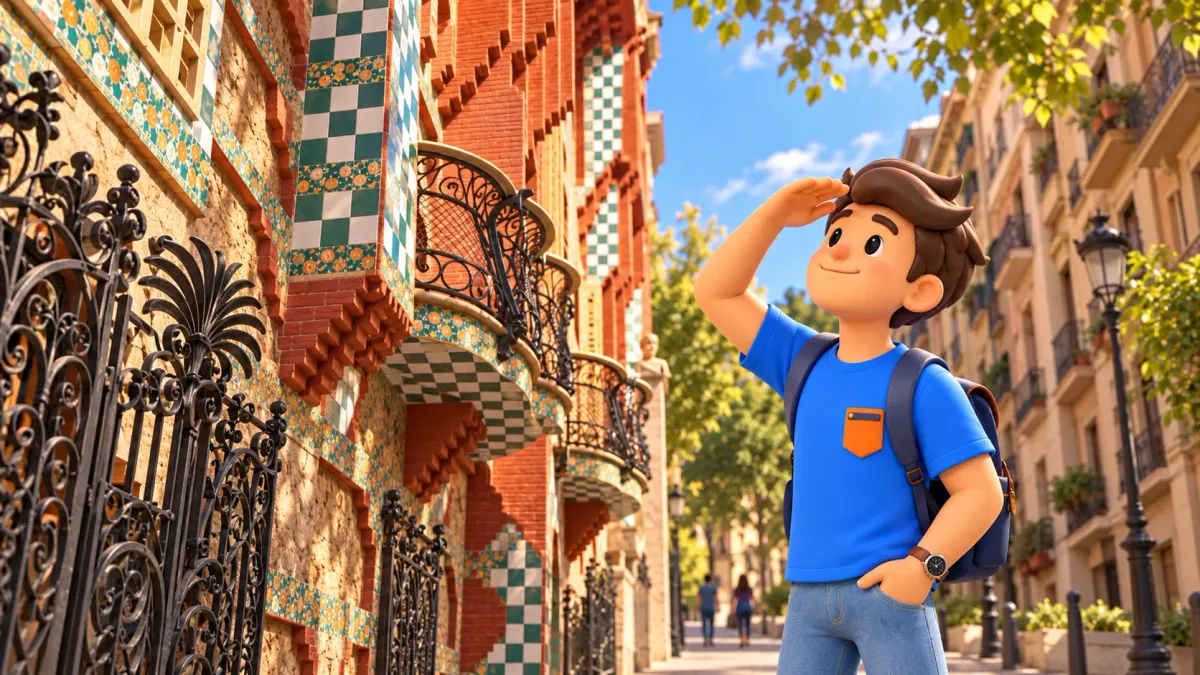
Begin with the coloured ceramics of Casa Vicens, continue to Plaça del Diamant and pass through the Carrer de Verdi area to Virreina, Sol and Plaça de la Vila de Gràcia. This Barcelona walk explores small urban spaces: early Gaudí beside ordinary houses, literary memory and squares where neighbours meet. A clear sequence makes the district understandable without turning the outing into a collection of museum entrances.
Allow about two hours for the basic version, including connections, exterior stops and a short break. This is a planning estimate rather than a measured track. The Casa Vicens interior, the shelter under Plaça del Diamant and Park Güell are outside these two hours. Your approach from accommodation and return also need their own allowance, depending on where you are staying.
Choose the right Gràcia for a short walk
This route explores Vila de Gràcia, with its smaller streets and squares. It is different from Passeig de Gràcia, where Casa Batlló and Casa Milà stand. Park Güell belongs to the wider Gràcia district but is not an adjacent stop that slips unnoticed between the village squares. Distinguishing these places at the beginning prevents a modest neighbourhood outing expanding across a much larger part of Barcelona.
For a more convenient and efficient way to include Gràcia in your stay, try RoadMe: the app develops a personal trip plan around your interests, dates, pace and budget. Choose how much architecture, urban history, walking and rest time you want, so the wider Barcelona programme reflects your way of travelling.
Two hours work for streets and exterior architecture. If Gaudí’s interior is the main interest, choose the visit first and give it its own time. The squares then become an addition after the museum rather than obligations to rush towards. Both choices can work, provided they are not presented as the same short programme. Decide what matters before the first entrance creates a new decision.
Starting at Casa Vicens gives the most visually concentrated façade your fresh attention. Afterwards the impressions become gentler: a square, a street, another square and a final tower. You need not spend equal time everywhere. Give spare minutes to a space you enjoy while retaining a clear finish at Vila de Gràcia. The route is a structure for noticing the neighbourhood, not a demand to exhaust every possibility.
Casa Vicens: early Gaudí on a narrow street
Approach Casa Vicens at Carrer de les Carolines 20–26. Give the exterior and beginning around twenty to twenty-five minutes. The street does not become a large viewing plaza: choose an available angle and leave others room to pass. Understanding the combination of materials and forms matters more than fitting the entire house into one photograph from a supposedly compulsory position.
The original project dates from 1883–1885. Gaudí designed a summer home for Manel Vicens’s family, his first major commission. Gràcia was then a separate town and joined Barcelona in 1897. That context connects the architect’s early work with the neighbourhood’s own history, without requiring a long survey of his career. Think of a house intended for a different setting from the fully urban district around it today.
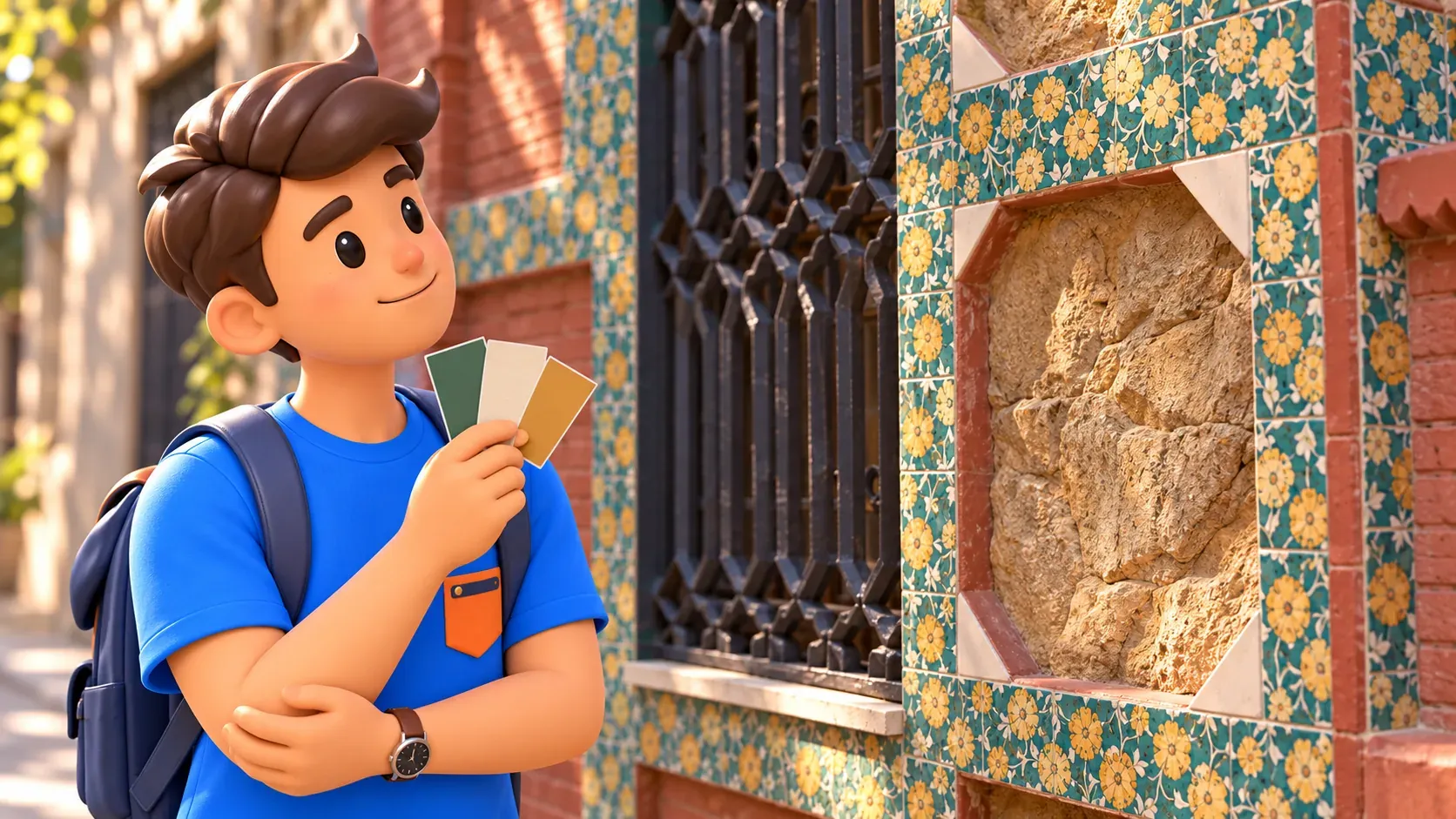
Instead of the familiar undulating forms of later Gaudí, geometry, brick and coloured ceramics are particularly noticeable here. Choose one section and look at checker patterns, floral decoration and metalwork together. An exterior stop becomes more meaningful than simply marking another Gaudí house. A small detail is enough to identify this early work’s distinctive character, without expecting it to resemble the buildings you already know from Passeig de Gràcia.
The street view and house museum offer different experiences. The façade does not reveal every interior, garden or other part of a paid visit. If you want to enter, select a format and confirm current arrangements for your date. The basic walk remains complete outdoors. Promising the full museum story within its first twenty minutes would make the rest of the itinerary difficult to enjoy at the intended pace.
Plaça del Diamant: a small literary pause
Continue towards Plaça del Diamant, using public pedestrian connections through the Gran de Gràcia area. Around twenty minutes for the connection and brief stop is a useful allowance. The contrast with Casa Vicens matters: after expressive architecture, an ordinary square holds an interest that is not immediately visible in one spectacular façade. Take a moment before deciding that the next landmark must be somewhere more obviously monumental.
The square gave its name to Mercè Rodoreda’s novel La plaça del Diamant, known in English as The Time of the Doves among other titles. Literature offers another way into a city: a modest public space can become the centre of a human story. You need not read the novel beforehand, but knowing the author helps. Do not search for an exact reconstruction of every scene within today’s square.
Look at houses, trees and how the space is used now. Literary memory adds meaning to an everyday place without replacing its ordinary role. With companions, briefly discuss a city location you remember through a book or film. That conversation connects personal experience to the neighbourhood without turning the stop into a literature lesson. It also gives different interests room within a walk otherwise shaped by architecture.
A historical air-raid shelter lies below the square, but descending is outside the exterior route. Confirm access and registration arrangements separately if it interests you. The square above and underground visit are different activities with different timing. If the shelter matters more than the later squares, change the plan deliberately and leave room rather than expecting to add a meaningful descent in a spare couple of minutes.
Through Verdi towards Plaça de la Virreina
Continue to the Carrer de Verdi area and Plaça de la Virreina. Short shop-window pauses work here without making every door a new destination. Allow roughly twenty to twenty-five minutes for the connection and square. If a shop appeals, step inside briefly, remembering that longer browsing changes the outing’s duration. The streets are part of the experience rather than blank spaces between photographs of larger buildings.
Virreina’s setting includes the church of Sant Joan and the residential surroundings of old Gràcia. An exterior look is enough for the basic version. Compare it with Diamant: where does a main façade appear, how do streets enter and where does your attention go? Squares have different characters even when none needs to be declared a compulsory attraction. Looking at those relationships helps the small stops remain distinct in memory.
This square is separate from La Virreina palace and image centre on La Rambla. A similar name refers to another place in Barcelona. Use the full Plaça de la Virreina in Gràcia when searching or discussing the next stop. That modest clarification prevents a short neighbourhood walk turning unexpectedly into a journey towards the old city. Familiar words alone do not establish that two places are nearby.
An ordinary square does not promise silence, an empty bench or a particular event. People meet here and neighbourhood life continues. If busy, take the overall view and keep the longer pause for another stop. You need not wait for perfect emptiness to appreciate the relationship between church, housing and open space. Residents moving through it also show how the place works beyond its architectural outline.
Plaça del Sol: pause within neighbourhood life
Next head towards Plaça del Sol. A short connection brings several smaller streets into a more open meeting place. Stop here or at the final square for a small break; allow about twenty to twenty-five minutes for this part. Two consecutive compulsory café stops are unnecessary. Choose one according to available seats and how you feel, leaving time to enjoy it rather than completing a prescribed order.
The name Sol does not mean Madrid’s Puerta del Sol. This is a Barcelona square used by neighbours as a meeting point. After the previous stops, it shows that Gràcia’s appeal extends beyond individual monuments. Narrow streets opening out, façades around the edge and people spending time together create the experience. You can understand that role without needing a museum label or an organised event on the day.
For coffee, choose somewhere without a long wait to preserve the compact format. Keep a full meal until after the finish. The walk does not require buying something everywhere; pause wherever appropriate without obstructing others. A break is valuable because it changes the pace, not because one specific terrace has to be secured. Leave a little room for your own judgement about where the outing feels most comfortable.

For the rest of the stay, let RoadMe develop a personal programme around your interests, conveniently combining architecture, neighbourhood walks and rest time. Download the city beforehand while online so maps and navigation are available offline during your walks.
Vila de Gràcia: finish by the clock tower
End at Plaça de la Vila de Gràcia. Give the connection from Sol, exterior observation and final pause about twenty to twenty-five minutes. The clock tower offers a clear visual anchor after the smaller streets. It is a useful finish for gathering your companions and choosing between lunch and the next part of the day. You do not need to add another attraction simply to make the ending substantial.
Antoni Rovira i Trias’s tower dates from 1862–1864. It belongs to the square’s civic life rather than a separate church you must locate. The present name is Vila de Gràcia; older descriptions may call it Rius i Taulet. Different labels can refer to the same place. Use the full current name and tower as your anchors when comparing an older account with what you find on the street.
Remember the summer house at the beginning and compare it with this final public space. Private architecture and a civic square tell different neighbourhood stories. Diamant added literature, while the connections introduced residential streets. You have several ways to understand Gràcia without making two hours an exhaustive guide to every nearby building. The point is to discover what you would like to examine more closely on a later visit.
Choose a separate interior or Park Güell block
For the Casa Vicens interior, start with a confirmed admission time and add the visit or reduce the square circuit. Park Güell needs its own approach and visitor arrangements; it does not belong to these two neighbourhood hours. To connect places within a longer stay, see our five-day Barcelona plan, which gives Gràcia a defined part of the trip.
If tired, finish at Sol and save the final square. For specific access requirements, check the chosen streets and entrances separately. The most useful version leaves room to examine a pattern, walk a block comfortably and take a break. Those small observations, rather than the number of doors seen, create a sense of getting to know the area and deciding how it fits your Barcelona.


